


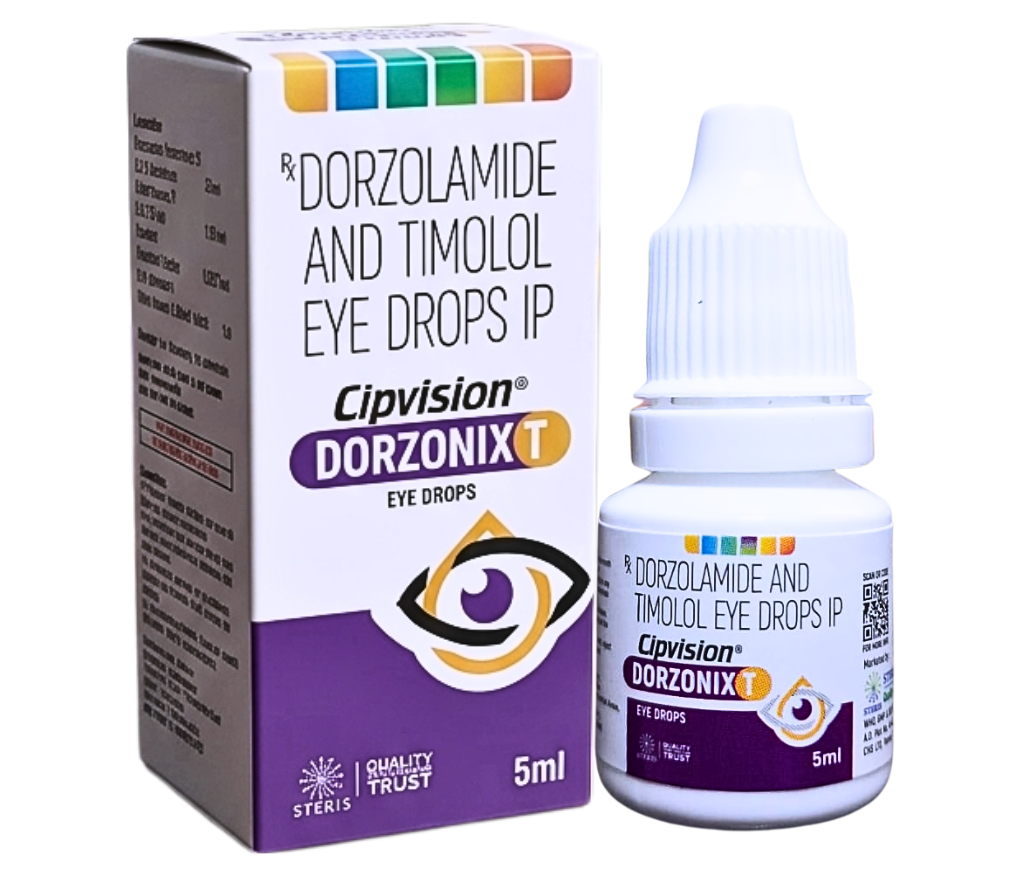
CIPVISION DORZONIX T
 Item requires a valid prescription
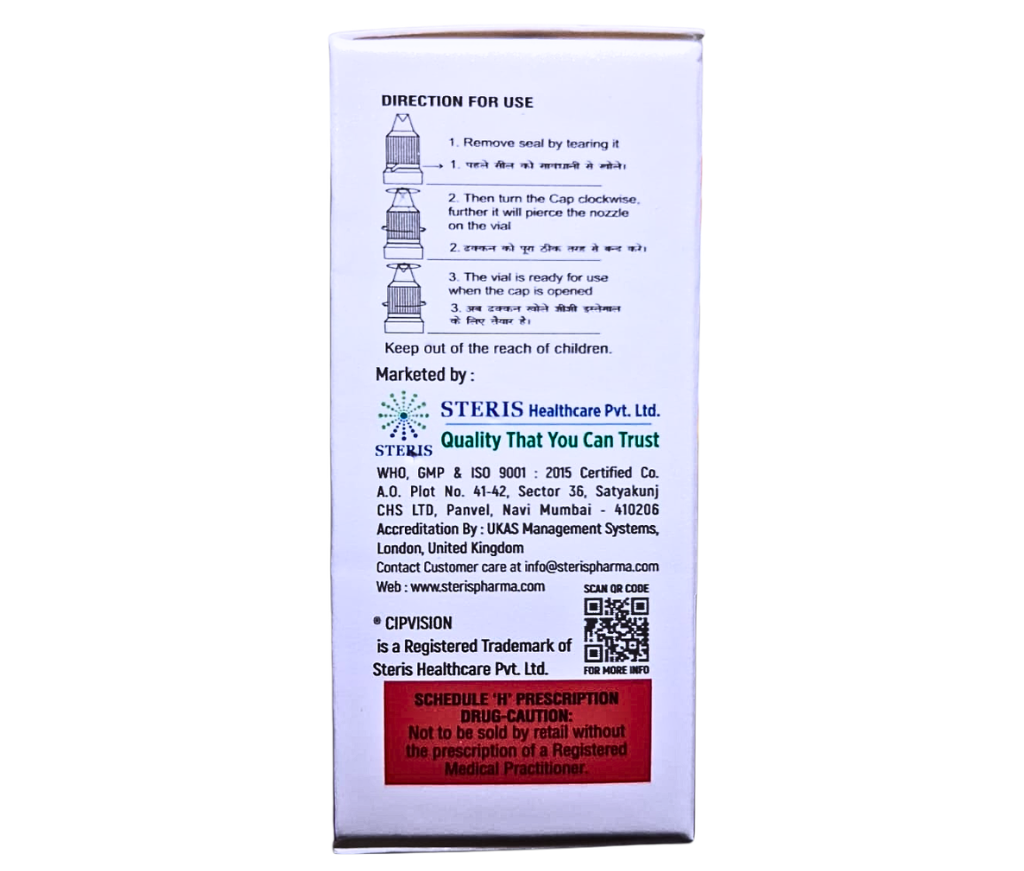
Manufactured By Steris Healthcare Pvt Ltd
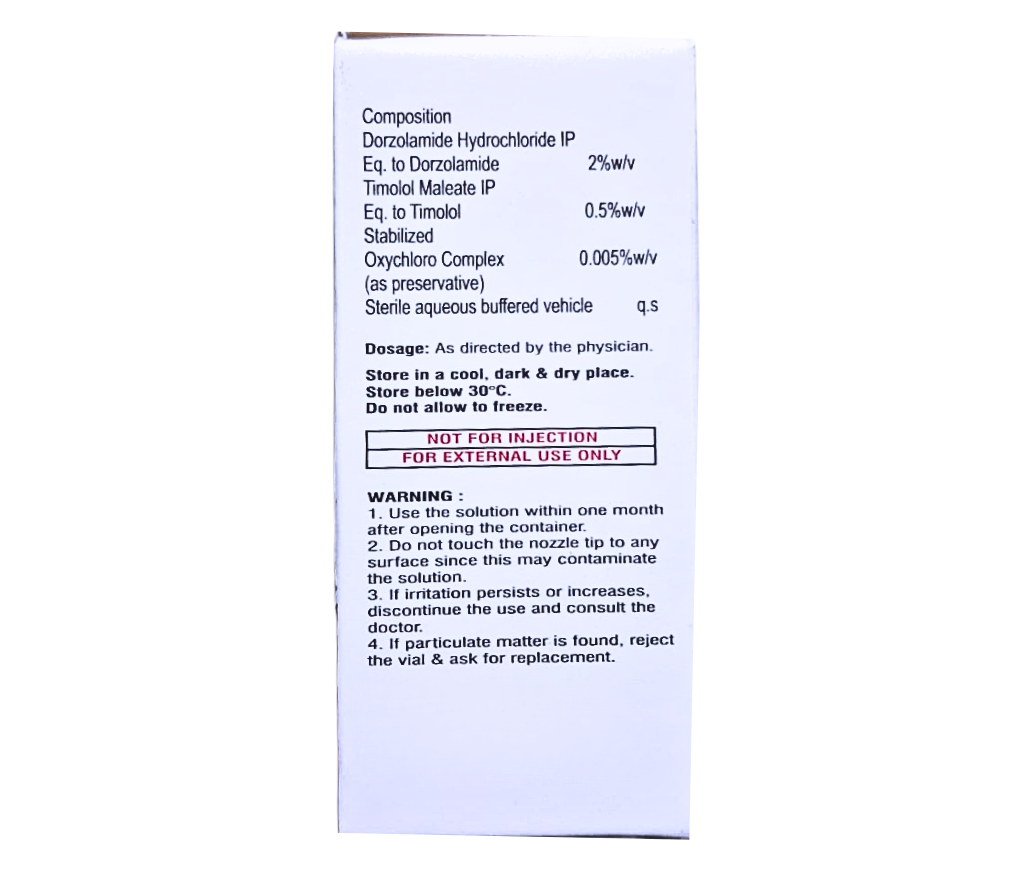
Composition Dorzolamide And Timolol Eye Drops IP
Rs 266.00
MRP Rs 380.00
(30% OFF)
Includes all taxes
Package SIZE
( For 5 ml )

100% Authentic
Products

Free
Shipping*

Products
Return Policy
Description:
Dorzolamide and Timolol Eye Drops IP are prescription ophthalmic medicines used to lower elevated intraocular pressure (IOP) in people with conditions such as open-angle glaucoma and ocular hypertension. The combination contains two medicines that reduce eye pressure through different mechanisms: dorzolamide, a carbonic anhydrase inhibitor, and timolol, a beta-adrenergic receptor-blocking medicine. Current prescribing information continues to identify the combination for reducing elevated IOP in appropriately diagnosed patients.
For people searching online to buy dorzolamide and timolol eye drops IP, understanding the composition, intended use, potential benefits, side effects, precautions, and correct administration is essential. Because glaucoma can progress without obvious symptoms, these eye drops should be used as part of a treatment plan established by an ophthalmologist rather than selected solely on the basis of price or online reviews.
In India, “IP” refers to the Indian Pharmacopoeia, the official book of drug standards for medicines manufactured or marketed in India. The Indian Pharmacopoeia Commission states that these standards cover characteristics including drug identity, purity, and strength.
What Are Dorzolamide and Timolol Eye Drops IP?
Dorzolamide and timolol eye drops combine two active ingredients to provide greater intraocular-pressure control than either mechanism alone in patients for whom combination therapy is appropriate.
Dorzolamide hydrochloride is a carbonic anhydrase inhibitor. By inhibiting carbonic anhydrase in the eye, it reduces the formation of aqueous humor, the fluid inside the front portion of the eye. Lower aqueous-humor production helps reduce IOP.
Timolol maleate is a beta-adrenergic receptor blocker. Applied topically to the eye, it also reduces aqueous-humor production and therefore contributes to lowering IOP.
A commonly labeled formulation contains dorzolamide 2% and timolol 0.5%. Current U.S. labeling describes the combination as an ophthalmic solution containing 20 mg/mL dorzolamide and 5 mg/mL timolol.
The exact composition, preservatives, packaging, and approved indications can vary between manufacturers and markets, so buyers should verify the product label before purchase.
Uses of Dorzolamide and Timolol Eye Drops IP
The principal use of dorzolamide and timolol eye drops IP is to reduce elevated IOP in patients with open-angle glaucoma or ocular hypertension who require additional pressure control. Current prescribing information specifies use in patients who have not achieved their target IOP adequately with beta-blocker therapy alone.
An ophthalmologist may prescribe the combination when controlling eye pressure is necessary to reduce the risk of glaucoma-related optic-nerve damage.
Common treatment objectives include:
- Lowering elevated intraocular pressure.
- Maintaining IOP within an individualized target range.
- Supporting long-term glaucoma management.
- Providing two pressure-lowering mechanisms in one ophthalmic product.
- Simplifying treatment for patients who would otherwise require separate dorzolamide and timolol drops.
These eye drops do not restore optic-nerve damage that has already occurred and are not a cure for glaucoma. Their purpose is pressure management and reducing the risk associated with uncontrolled IOP.
Key Benefits of Dorzolamide and Timolol Eye Drops
The major advantage of this combination is that it targets elevated eye pressure through two complementary pharmacological mechanisms.
Dual-action pressure control
Dorzolamide reduces aqueous-humor production through carbonic anhydrase inhibition, while timolol decreases aqueous-humor production through beta-blockade. This combined approach can provide clinically useful IOP reduction for appropriate patients.
Convenient combination treatment
Instead of using separate bottles for dorzolamide and timolol, a combination formulation can simplify the medication schedule when both active ingredients are prescribed.
Useful for ongoing glaucoma management
Glaucoma frequently requires long-term pressure management. Consistent use of prescribed eye drops and regular IOP monitoring are important components of ongoing care.
Established ophthalmic combination
Dorzolamide/timolol combination therapy has been approved for clinical use for many years, with the initial U.S. approval dating to 1998. Current product labeling continues to specify its role in reducing elevated IOP.
Importantly, the appropriate target IOP differs from person to person. A pressure value that is acceptable for one patient may not be sufficient for another, depending on optic-nerve appearance, visual-field findings, disease progression, age, and other clinical factors.
Dosage and How to Use Dorzolamide and Timolol Eye Drops
For a commonly labeled 2% dorzolamide/0.5% timolol ophthalmic solution, the recommended dose is one drop in the affected eye or eyes twice daily. If more than one topical ophthalmic medicine is being used, current labeling recommends administering the medicines at least five minutes apart.
However, patients should not automatically apply this schedule to every product. Follow the dosage prescribed by your ophthalmologist and the instructions supplied with your particular formulation.
For proper administration:
- Wash your hands before handling the bottle.
- Check the label and solution before use.
- Avoid touching the dropper tip to the eye, eyelid, eyelashes, or fingers.
- Gently pull down the lower eyelid and instill the prescribed drop.
- Close the eye gently after application.
- Replace the cap without touching the applicator tip.
After instillation, gently closing the eyes and applying light pressure near the inner corner of the eye may reduce systemic absorption. Ask your healthcare professional to demonstrate the technique if you are unsure.
If a dose is missed, follow the instructions supplied with the product or ask your pharmacist. Do not routinely double the next dose.
Side Effects of Dorzolamide and Timolol Eye Drops
Like all medicines, dorzolamide/timolol ophthalmic products can cause adverse effects.
Possible ocular reactions include:
- Burning or stinging after application.
- Eye irritation or discomfort.
- Blurred vision.
- Eye redness.
- Watery eyes.
- Altered taste.
- Dry eyes.
- Eyelid or conjunctival reactions.
Because timolol is a beta-blocker, some of the medicine can be systemically absorbed. Consequently, adverse effects are not necessarily limited to the eye.
Potential systemic effects may include slow heart rate, low blood pressure, breathing difficulties, fatigue, dizziness, or other cardiovascular or respiratory symptoms. The prescribing information specifically highlights the potential for cardiovascular and respiratory effects.
Seek urgent medical attention if you experience severe breathing difficulty, fainting, significant chest symptoms, a very slow heartbeat, severe allergic symptoms, or sudden major changes in vision.
Precautions and Warnings
Dorzolamide and timolol eye drops require particular caution because timolol is a beta-blocker and dorzolamide is a carbonic anhydrase inhibitor.
Current prescribing information lists important contraindications, including bronchial asthma or a history of bronchial asthma, severe chronic obstructive pulmonary disease, sinus bradycardia, second- or third-degree atrioventricular block, overt cardiac failure, cardiogenic shock, and hypersensitivity to the product's components.
Tell your doctor if you have:
- Asthma or chronic breathing problems.
- A slow heartbeat or heart-rhythm disorder.
- Heart failure or other cardiovascular disease.
- Kidney problems.
- A history of severe reactions to sulfonamide medicines.
- Diabetes or conditions that may make symptoms of low blood sugar harder to recognize.
- Other glaucoma or eye medicines.
- A planned eye operation or recent ocular procedure.
Dorzolamide is a sulfonamide-related medicine, and the prescribing information warns about hypersensitivity reactions. A previous serious allergic reaction should always be discussed with your healthcare professional.
Patients using several ophthalmic medicines should follow appropriate spacing instructions. Current labeling recommends at least five minutes between different topical ophthalmic products.
Contact-lens users should check their exact product label because preservatives in some formulations may require lenses to be removed before administration and replaced after an appropriate interval.
Buying Dorzolamide and Timolol Eye Drops IP Online
If your intent is to buy dorzolamide and timolol eye drops IP, focus on authenticity, correct formulation, and pharmacy reliability rather than simply searching for the cheapest product.
Before ordering, verify:
- Active ingredients: dorzolamide and timolol.
- Strength: commonly 2% dorzolamide and 0.5% timolol, but verify the exact label.
- Manufacturer and regulatory details.
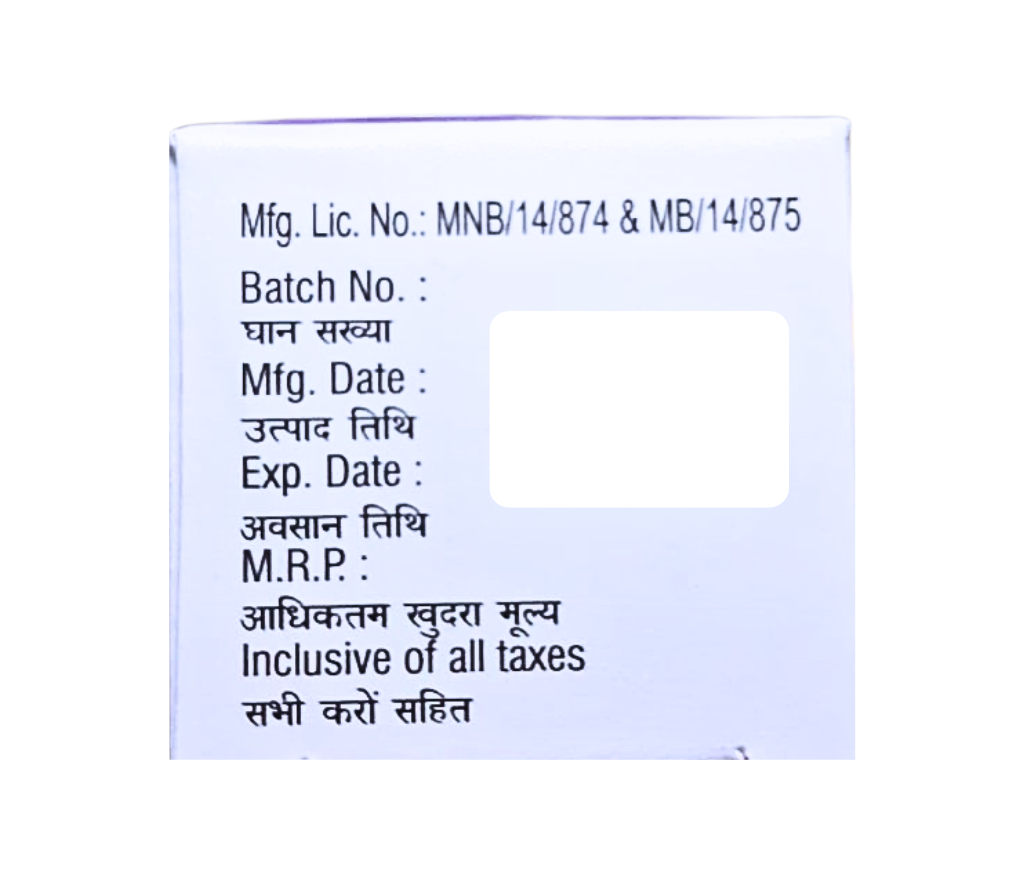
- Batch or lot number.
- Manufacturing and expiry dates.
- Bottle size.
- Packaging and seal integrity.
- Storage requirements.
- Prescription requirements in your country.
The “IP” designation relates to Indian Pharmacopoeia standards; it should not be interpreted as meaning that every product bearing similar wording is identical. The Indian Pharmacopoeia Commission describes IP as India's official book of drug standards. I
When buying online, use a legitimate pharmacy or authorized pharmaceutical supplier. Avoid products with missing batch information, unclear labeling, damaged packaging, unusually suspicious pricing, or uncertain storage conditions.
Conclusion
Dorzolamide and Timolol Eye Drops IP are combination ophthalmic medicines designed to lower elevated intraocular pressure in appropriately diagnosed patients with conditions such as open-angle glaucoma and ocular hypertension. Dorzolamide and timolol work through complementary mechanisms to reduce aqueous-humor production and control IOP.
For a commonly labeled 2%/0.5% formulation, the usual labeled dose is one drop in the affected eye or eyes twice daily, although the correct schedule should always be determined by the specific product and prescribing ophthalmologist.
Because timolol can have cardiovascular and respiratory effects, this medicine is not appropriate for everyone. Patients with asthma, severe COPD, certain heart conditions, or known hypersensitivity require particular attention before treatment.
For buyers, the safest approach is to confirm the exact strength, active ingredients, manufacturer, expiry date, packaging, storage conditions, and prescription requirements before purchasing. Long-term glaucoma treatment also requires regular eye examinations and IOP monitoring; purchasing the medicine is only one part of effective disease management.
Frequently Asked Questions
1. What is dorzolamide and timolol eye drops IP used for?
Dorzolamide and timolol eye drops are used to reduce elevated intraocular pressure in conditions including open-angle glaucoma and ocular hypertension when additional pressure control is required.
2. How do dorzolamide and timolol eye drops work?
Dorzolamide is a carbonic anhydrase inhibitor, while timolol is a beta-adrenergic receptor blocker. Both reduce aqueous-humor production, helping lower pressure inside the eye.
3. What is the usual strength of dorzolamide and timolol eye drops?
A commonly labeled formulation contains 2% dorzolamide and 0.5% timolol. Always check your product label because formulations can vary between manufacturers and markets.
4. How often should dorzolamide and timolol eye drops be used?
For the commonly labeled 2%/0.5% ophthalmic solution, the recommended dose is one drop twice daily in the affected eye or eyes. Your ophthalmologist's instructions should take priority.
5. What are the common side effects of dorzolamide and timolol eye drops?
Possible effects include temporary burning or stinging, irritation, blurred vision, redness, watery eyes, dry eyes, and altered taste. Because timolol can be systemically absorbed, cardiovascular and respiratory effects are also possible.
6. Can dorzolamide and timolol eye drops cause breathing problems?
They can potentially cause or worsen respiratory problems because timolol is a beta-blocker. The medicine is contraindicated in patients with bronchial asthma or a history of bronchial asthma and severe COPD according to current labeling.
7. Can people with heart problems use dorzolamide and timolol eye drops?
Not everyone with cardiovascular disease can safely use them. Current labeling lists several cardiac contraindications, including sinus bradycardia, certain degrees of heart block, overt cardiac failure, and cardiogenic shock. Discuss your complete medical history with your doctor before treatment.
8. Can I use other eye drops with dorzolamide and timolol?
Sometimes, yes, when prescribed. If multiple topical ophthalmic medicines are used, current labeling recommends administering them at least five minutes apart.
9. Can I buy dorzolamide and timolol eye drops IP online?
Where legally permitted, these prescription eye drops should be purchased from a legitimate pharmacy or authorized supplier. Check the active ingredients, strength, manufacturer, batch number, expiry date, packaging, and storage information before purchase.
10. Does dorzolamide and timolol cure glaucoma?
No. The combination helps control elevated eye pressure, but it does not cure glaucoma or reverse established optic-nerve damage. Regular ophthalmic monitoring and long-term treatment are important.
11. What does “IP” mean in dorzolamide and timolol eye drops IP?
“IP” refers to the Indian Pharmacopoeia, India's official collection of standards for drugs manufactured or marketed in India. The standards address aspects such as identity, purity, and strength.
12. What should I do if I experience severe symptoms after using these eye drops?
Severe breathing difficulty, fainting, significant cardiovascular symptoms, severe allergic reactions, or sudden vision changes require prompt medical attention. Do not continue self-treatment without professional advice.