


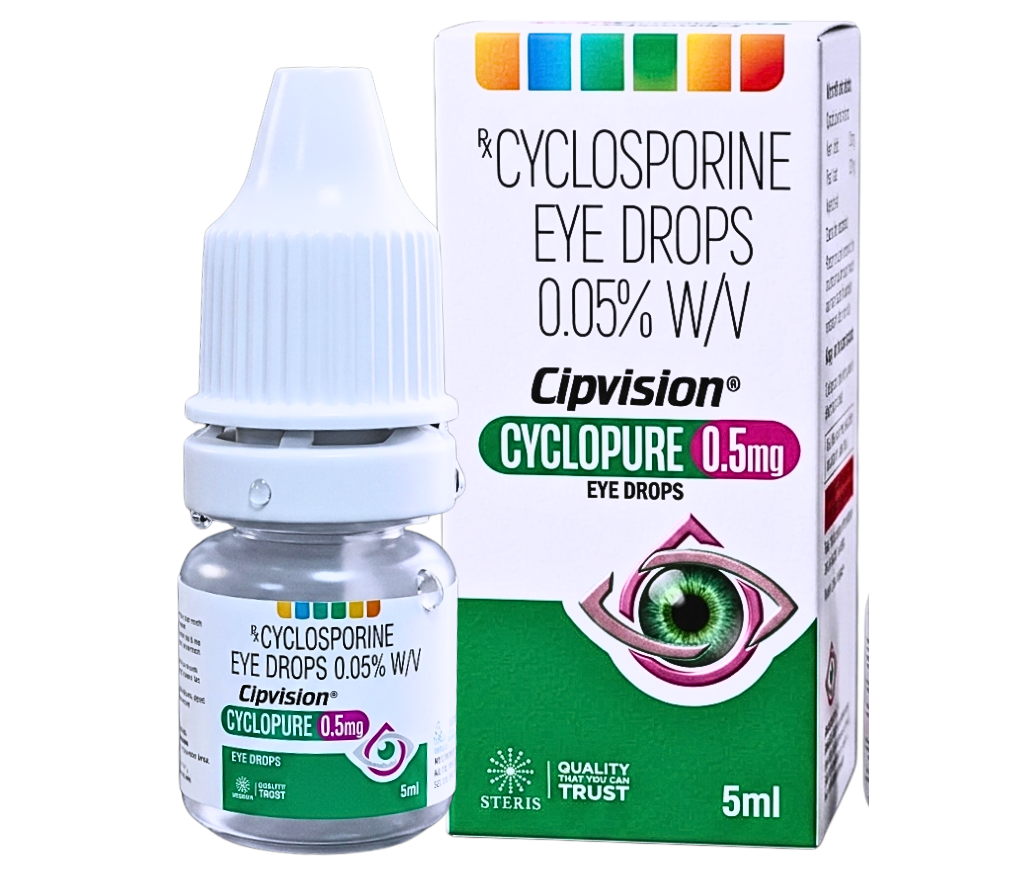
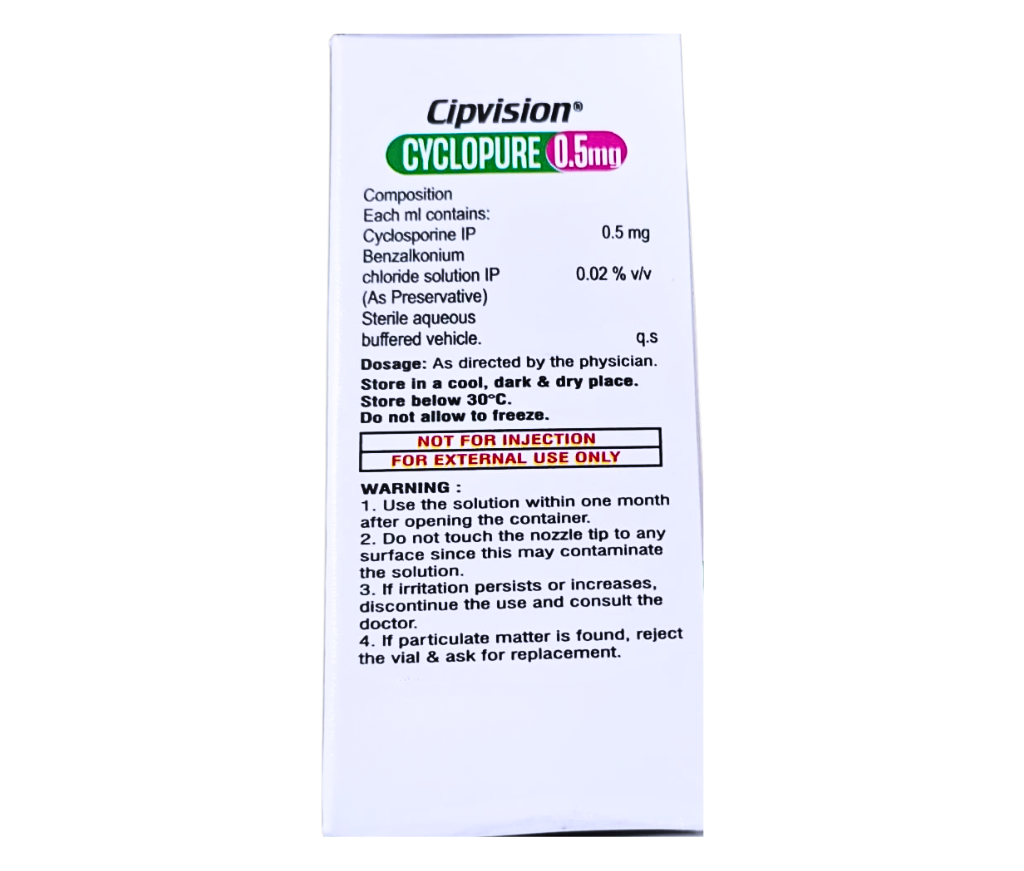
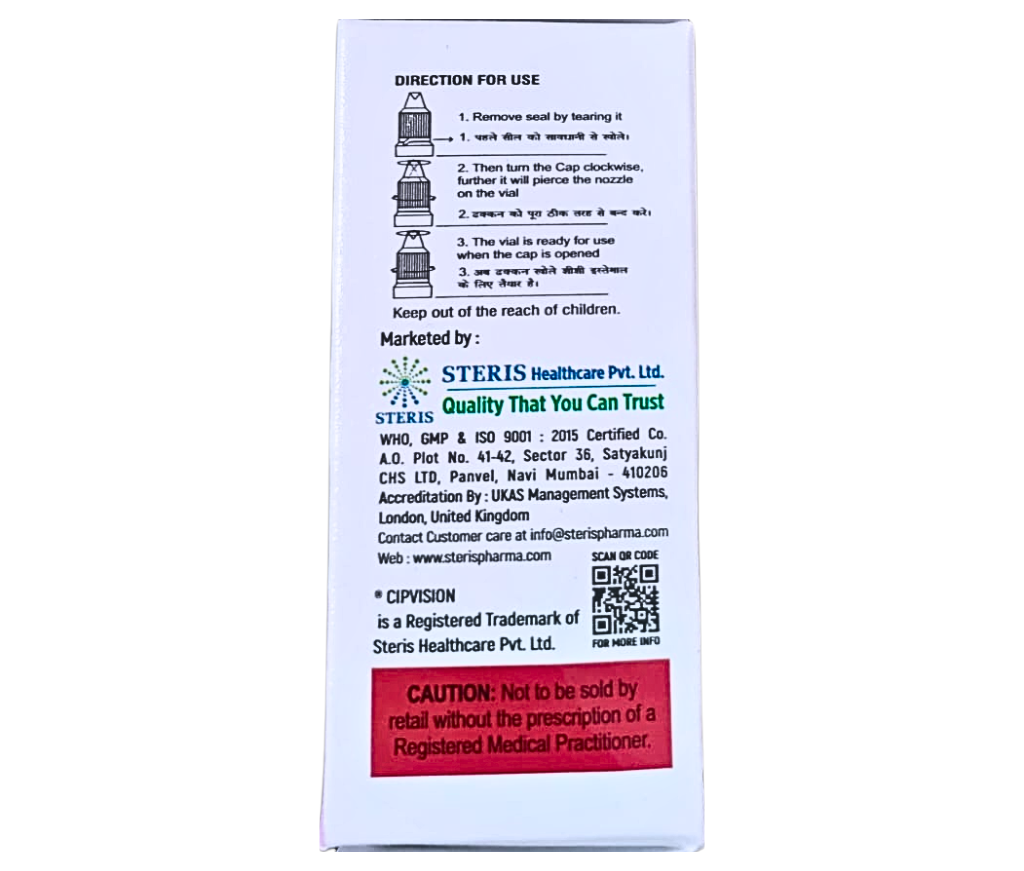
CIPVISION CYCLOPURE 0.5 mg
 Item requires a valid prescription
Manufactured By Steris Healthcare Pvt Ltd
Composition Cyclosporine Eye Drops 0.05% w/v
Rs 346.50
MRP Rs 495.00
(30% OFF)
Includes all taxes
Package SIZE
( For 5 ml )

100% Authentic
Products

Free
Shipping*

Products
Return Policy
Description:
Cyclosporine eye drops are prescription ophthalmic medicines primarily used to manage certain forms of chronic dry eye disease, particularly when reduced tear production is associated with inflammation of the ocular surface. Cyclosporine works by reducing inflammatory activity in the eye and can help the eyes produce more natural tears over time. The 0.05% ophthalmic formulation is specifically indicated to increase tear production in patients whose tear production is presumed to be suppressed by ocular inflammation associated with keratoconjunctivitis sicca.
Unlike ordinary artificial tears, cyclosporine is not simply a lubricant that provides temporary moisture. It is an immunomodulatory treatment intended to address an inflammatory component of dry eye. Because the underlying inflammation may take time to improve, patients should not expect the same immediate relief that they may experience from lubricating eye drops.
What Are Cyclosporine Eye Drops?
Cyclosporine eye drops contain cyclosporine, a calcineurin inhibitor with immunomodulatory properties. In ophthalmology, topical cyclosporine is used to control inflammation associated with certain forms of dry eye and ocular-surface disease.
The commonly recognized cyclosporine 0.05% ophthalmic emulsion contains 0.5 mg/mL of cyclosporine. The U.S. prescribing information states that it is indicated to increase tear production in patients with keratoconjunctivitis sicca where tear production is presumed to be suppressed because of ocular inflammation.
In India, multiple cyclosporine ophthalmic products are marketed in different strengths and formulations. Current Indian pharmacy listings include 0.05% products as well as higher-strength formulations such as 0.1%, so buyers should always check the exact concentration and formulation prescribed by their ophthalmologist.
Cyclosporine Eye Drops Uses
The primary cyclosporine eye drops use is the management of chronic dry eye associated with ocular-surface inflammation.
1. Chronic dry eye disease
Cyclosporine may be prescribed when dry eye is persistent and inflammation is believed to contribute to reduced tear production. The medicine works differently from artificial tears because its purpose is to modify the inflammatory process rather than simply add moisture to the eye.
The American Academy of Ophthalmology's EyeWiki describes topical cyclosporine among prescription options for dry eye and notes its role in increasing tear production.
2. Inflammatory ocular-surface disease
Some patients have dry-eye symptoms partly driven by inflammation. In such cases, an ophthalmologist may consider topical cyclosporine as part of longer-term management.
3. Selected postoperative dry eye
Topical cyclosporine has also been studied and used in selected patients with dry-eye symptoms after refractive procedures such as LASIK. Recent AAO EyeWiki material identifies cyclosporine 0.05% as a widely studied anti-inflammatory treatment for post-LASIK dry eye.
However, this does not mean everyone undergoing LASIK or another eye procedure needs cyclosporine. Postoperative treatment should be individualized by the ophthalmologist.
How Do Cyclosporine Eye Drops Work?
Dry eye is not always caused simply by a lack of water on the surface of the eye. In many patients, inflammation can contribute to tear-film instability and reduced tear production.
Cyclosporine suppresses certain immune-mediated inflammatory pathways by inhibiting calcineurin activity. This can reduce inflammatory activity on the ocular surface and help restore tear production in appropriate patients.
The important point for patients is that cyclosporine eye drops are intended to address an underlying inflammatory component rather than provide only short-term lubrication.
Key Benefits of Cyclosporine Eye Drops
The potential benefits depend on the patient's underlying eye condition and response to treatment.
Helps increase natural tear production
The primary labeled benefit of cyclosporine ophthalmic emulsion 0.05% is increasing tear production in appropriate patients with inflammation-associated keratoconjunctivitis sicca.
Addresses ocular inflammation
Because cyclosporine is an immunomodulator, it can target inflammatory mechanisms involved in certain forms of dry eye.
May improve dry-eye symptoms over time
Patients may experience improvement in dryness, irritation and ocular discomfort as treatment takes effect. Improvement is generally not instantaneous.
Useful for longer-term management
For appropriate patients, topical cyclosporine can form part of a longer-term dry-eye management strategy. Other measures, such as lubricating drops, warm compresses, eyelid hygiene or treatment of associated eyelid disease, may also be recommended depending on the cause of dry eye.
Cyclosporine Eye Drops 0.05% Dosage
For the specific 0.05% ophthalmic emulsion described in the prescribing information, the labeled regimen is one drop in each affected eye twice daily, approximately 12 hours apart. The product should be mixed according to its instructions before administration when supplied as a unit-dose emulsion.
However, do not automatically apply this dosing schedule to every cyclosporine product. Indian products can differ in concentration, formulation and packaging.
If your ophthalmologist has prescribed a particular brand or strength, follow that product's label and prescription.
How to Use Cyclosporine Eye Drops Correctly
For safe administration:
- Wash your hands before handling the medicine.
- Follow the product's instructions for mixing or preparing the emulsion.
- Avoid touching the dropper or vial tip to the eye, eyelids or other surfaces.
- Place the prescribed number of drops into the affected eye.
- Close your eyes gently after administration rather than squeezing them tightly.
- If using artificial tears at the same time, follow the recommended spacing between products.
- Do not share your eye drops with another person.
For the 0.05% unit-dose formulation, the official instructions allow concurrent use with lubricant eye drops when there is approximately a 15-minute interval between products.
Cyclosporine Eye Drops Side Effects
Like other ophthalmic medicines, cyclosporine eye drops can cause side effects.
The most commonly reported effect with the 0.05% formulation is temporary burning or stinging after application.
Other possible ocular effects may include:
- Eye irritation
- Redness
- Temporary blurred vision
- Watery eyes
- Foreign-body sensation
- Eye discomfort
The intensity and duration of symptoms can vary between patients and formulations.
If severe eye pain, significant vision loss, pronounced swelling, severe redness or symptoms suggesting an allergic reaction occur, contact an eye-care professional promptly.
When Should You Not Self-Use Cyclosporine Eye Drops?
Cyclosporine should not be treated as a general-purpose eye drop for every case of redness, itching or irritation.
Dry eye can have several causes, including:
- Meibomian gland dysfunction
- Allergic eye disease
- Medication-related dryness
- Contact-lens-related problems
- Environmental exposure
- Eyelid disease
- Ocular-surface inflammation
- Postoperative changes
An ophthalmologist can determine whether cyclosporine is appropriate or whether another treatment would be more suitable.
For example, AAO EyeWiki describes multiple treatment approaches for dry eye, including artificial tears, eyelid care, tear-conserving measures and prescription anti-inflammatory therapies.
Cyclosporine Eye Drops vs Artificial Tears
These products serve different purposes.
Artificial tears primarily lubricate the ocular surface and can provide relatively quick symptomatic relief.
Cyclosporine eye drops are prescription anti-inflammatory treatment intended to address an inflammatory component of dry eye and support natural tear production over time.
In some patients, an ophthalmologist may recommend both. The medicines are therefore not necessarily competing products.
Cyclosporine Eye Drops Price in India
The price of cyclosporine eye drops in India varies significantly according to concentration, brand, formulation, pack size and pharmacy.
Current Indian online listings illustrate this variation. For example, a current listing for Cyclomune 0.05% shows several same-composition alternatives at different prices, including products listed from approximately ₹232 to substantially higher prices depending on the brand and formulation.
Another current listing for Cyclodrop 0.05% shows a 5 mL product with a listed price of ₹364, although availability and discounts can change.
Therefore, consumers should check the current selling price rather than relying on an old price displayed elsewhere online.
What should you check before buying?
If you are purchasing cyclosporine eye drops, verify:
- Cyclosporine concentration
- Exact formulation
- Brand/manufacturer
- Bottle or vial volume
- Prescription requirements
- Batch number
- Manufacturing date
- Expiry date
- Storage requirements
- Whether the product is preservative-free
- Current MRP and selling price
Most importantly, do not substitute 0.05%, 0.09% and 0.1% products solely because they contain the same active ingredient. Different formulations can have different delivery systems, dosing instructions and clinical characteristics.
Are Cyclosporine 0.05% and 0.1% Eye Drops the Same?
No.
Both contain cyclosporine, but the concentration and formulation can differ. Current Indian pharmacy listings, for example, include both 0.05% and 0.1% products.
The correct product is the one prescribed for your condition. Do not change strength without discussing it with your ophthalmologist.
Buyer Guide: How to Choose Cyclosporine Eye Drops
If your intent is to buy cyclosporine eye drops, focus on the prescription rather than choosing the cheapest available product.
Check the exact:
- Cyclosporine strength
- Dosage form
- Bottle/vial size
- Preservative status
- Manufacturer
- Expiry date
- Storage requirements
- Current price
- Pharmacy authenticity
- Prescription instructions
For pharmacies, hospitals and distributors, additional purchasing considerations can include batch traceability, manufacturer documentation, regulatory compliance, minimum order quantity and cold-chain/storage requirements where applicable.
Conclusion
Cyclosporine eye drops are prescription ophthalmic medicines primarily used for certain forms of chronic dry eye in which ocular inflammation is believed to suppress natural tear production. The 0.05% ophthalmic emulsion is specifically indicated to increase tear production in appropriate patients with keratoconjunctivitis sicca.
Unlike artificial tears, cyclosporine is an anti-inflammatory immunomodulatory treatment and is intended to address an underlying inflammatory component rather than simply provide temporary lubrication. Its major potential benefits include supporting natural tear production and improving the ocular-surface environment over time.
For buyers in India, product selection requires particular attention because 0.05%, 0.09% and 0.1% cyclosporine products are available in different formulations and brands, with prices varying considerably. Current online listings demonstrate substantial price differences between products, so buyers should compare the exact strength, formulation, pack size and manufacturer before purchasing.
Frequently Asked Questions
1. What are cyclosporine eye drops used for?
Cyclosporine eye drops are primarily used to treat certain forms of chronic dry eye associated with ocular-surface inflammation. The 0.05% ophthalmic formulation is indicated to increase tear production when inflammation is believed to suppress tear production.
2. Do cyclosporine eye drops cure dry eyes permanently?
They are not generally described as a permanent cure. They are used to manage the inflammatory component of appropriate dry-eye conditions and support tear production. The underlying cause of dry eye can vary, so long-term management should be determined by an ophthalmologist.
3. How long do cyclosporine eye drops take to work?
Cyclosporine does not usually provide the same immediate lubrication as artificial tears. Improvement can take several weeks or longer, and patients should continue treatment according to their doctor's instructions rather than stopping early because the initial response is limited. Current Indian product information also notes that improvement can take several weeks.
4. What are the common side effects of cyclosporine eye drops?
Temporary burning or stinging is one of the most common side effects. Some people can also experience eye irritation, redness, discomfort or temporary visual disturbance. Persistent or severe symptoms should be assessed by an eye-care professional.
5. Can I use artificial tears with cyclosporine eye drops?
Yes, they can be used together in appropriate patients. For the 0.05% ophthalmic emulsion, the prescribing information recommends allowing approximately 15 minutes between cyclosporine and lubricant eye drops.
6. Is cyclosporine 0.05% good for dry eyes?
It can be an effective prescription option for appropriate patients whose dry eye involves ocular-surface inflammation and reduced tear production. It is not necessarily appropriate for every type of dry eye, so an ophthalmologist should determine whether it fits the patient's condition.
7. Can I use cyclosporine eye drops every day?
Cyclosporine is commonly prescribed as a regular long-term treatment rather than an occasional eye lubricant. The exact schedule depends on the product and the doctor's instructions. For the labeled 0.05% formulation, the standard regimen is twice daily approximately 12 hours apart.
8. What is the price of cyclosporine eye drops in India?
The price varies by brand, strength, formulation and pack size. Current Indian listings show substantial variation among 0.05% products, with some listed around ₹232 and others considerably higher. Prices, discounts and availability can change, so check the current pharmacy listing before purchasing.
9. Are cyclosporine 0.05% and cyclosporine 0.1% eye drops interchangeable?
No. They have different concentrations and may use different formulations. Do not change from 0.05% to 0.1%, or vice versa, without advice from your ophthalmologist.
10. Are cyclosporine eye drops the same as artificial tears?
No. Artificial tears primarily lubricate the eye surface, while cyclosporine is an immunomodulatory medicine intended to reduce inflammation and improve tear production in appropriate dry-eye patients.

