


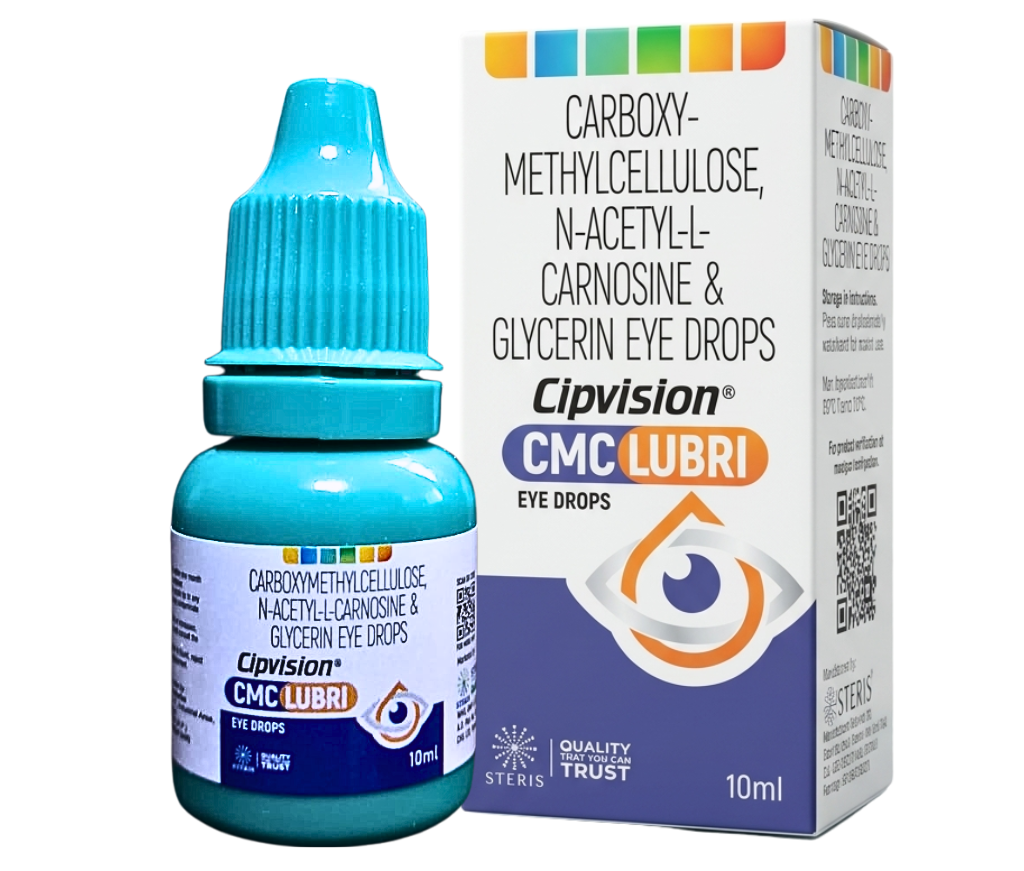
CIPVISION CMC LUBRI
 Item requires a valid prescription
Manufactured By Steris Healthcare Pvt Ltd
Composition Carboxy-Methylcellulose,N-Acetyl-L-Carnosine & Glycerin Eye Drops
Rs 122.50
MRP Rs 175.00
(30% OFF)
Includes all taxes
Package SIZE
( For 10 ml )

100% Authentic
Products

Free
Shipping*

Products
Return Policy
Description:
Carboxy-Methylcellulose, N-Acetyl-L-Carnosine & Glycerin Eye Drops are formulated to provide ocular-surface lubrication, moisture retention, and supportive antioxidant activity. The combination brings together three ingredients with different roles: carboxymethylcellulose (CMC) acts as a lubricating tear substitute, glycerin helps retain moisture, and N-acetyl-L-carnosine (NAC) is included for its antioxidant properties.
Product information
| Field | Details |
|---|---|
| Brand Name | CIPVISION CMC LUBRI |
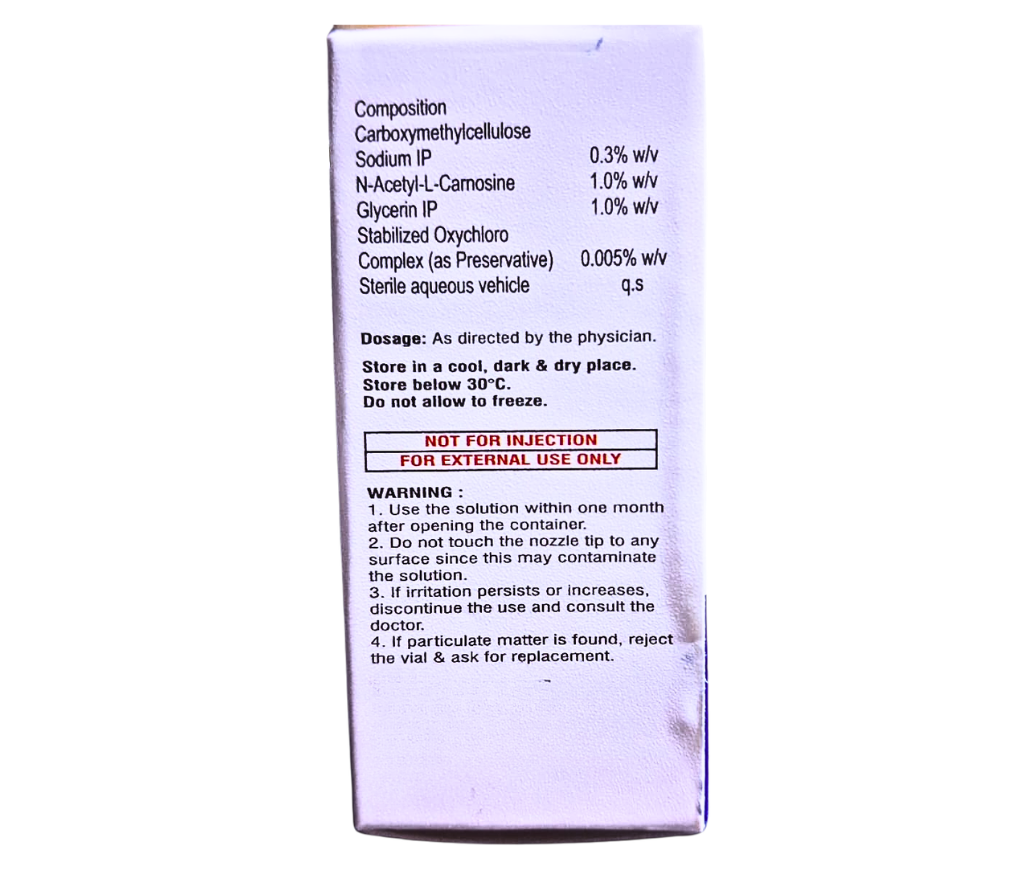
| Composition | Carboxy-Methylcellulose, N-Acetyl-L-Carnosine & Glycerin Eye Drops |
| Manufacturer/Marketer | Steris Healthcare Pvt. Ltd. |
| Target Location | India |
| Target Keyword | Carboxy-Methylcellulose, N-Acetyl-L-Carnosine & Glycerin Eye Drops |
| Product Form | Eye Drops (Ophthalmic Solution) |
| Pack Size | 10 ml |
| Category | Ophthalmic / Lubricating Eye Drops |
| Primary Use | Lubrication and relief from dry eyes; antioxidant support for eye health |
What Are Carboxy-Methylcellulose, N-Acetyl-L-Carnosine & Glycerin Eye Drops?
This formulation combines three ingredients designed to provide complementary ocular-surface support.
Carboxymethylcellulose (CMC) is widely used in artificial-tear preparations. As a lubricant, it helps form a moisture-retaining layer over the ocular surface and can reduce friction associated with blinking. This makes CMC particularly relevant to temporary relief from symptoms associated with dry eyes.
Glycerin functions as a humectant and helps attract and retain moisture. In a lubricating ophthalmic formulation, it can complement the action of CMC by supporting hydration of the eye surface.
N-acetyl-L-carnosine (NAC) is a derivative of the naturally occurring dipeptide carnosine and has antioxidant properties. Research has investigated topical NAC, particularly in relation to age-related cataracts. However, the evidence requires careful interpretation: a Cochrane review concluded that there is insufficient convincing evidence that NAC eye drops prevent or reverse cataract progression.
Consequently, NAC should not be promoted as a proven cataract cure or replacement for an ophthalmologist's assessment.
Uses of Carboxy-Methylcellulose, N-Acetyl-L-Carnosine & Glycerin Eye Drops
The formulation is primarily positioned as a lubricating and moisturizing eye drop. Manufacturer information describes uses including dry-eye symptoms, burning, irritation, environmental exposure, digital eye strain, and age-related ocular dryness.
Potential uses include:
- Dry eye symptoms: Lubricating ingredients can help relieve temporary dryness and discomfort.
- Burning and irritation: Moisturization may provide soothing relief when the ocular surface feels dry or irritated.
- Digital eye strain: Prolonged computer, smartphone, or tablet use can contribute to ocular discomfort and reduced blinking; lubricating drops may improve comfort.
- Environmental dryness: Wind, dust, air conditioning, pollution, and dry indoor environments can contribute to tear-film instability.
- Age-related dryness: Changes in tear production and ocular-surface health can make dryness more common with increasing age.
- Support after certain eye procedures: Lubricating drops may sometimes be recommended after ophthalmic procedures, but postoperative use should be determined by the treating eye specialist.
These drops are not intended to replace treatment for bacterial, viral, fungal, inflammatory, or other eye diseases. Persistent pain, discharge, significant redness, light sensitivity, or changes in vision should be evaluated professionally.
Key Benefits
The primary benefit of Carboxy-Methylcellulose, N-Acetyl-L-Carnosine & Glycerin Eye Drops is their multi-ingredient approach to ocular comfort.
Long-lasting lubrication: CMC can act as an artificial-tear ingredient, helping coat the ocular surface and reduce dryness-related friction.
Moisture support: Glycerin helps attract and retain moisture, complementing the lubricating properties of CMC.
Antioxidant component: N-acetyl-L-carnosine has antioxidant properties and has been investigated for potential effects on oxidative stress within ocular tissues. However, evidence supporting NAC eye drops for preventing or reversing human age-related cataracts remains limited.
Convenient combination: A formulation combining lubrication, hydration, and antioxidant support may be convenient for consumers looking for an all-in-one ocular-surface product.
Side Effects
Lubricating eye drops are generally intended to be well tolerated, but some people may experience temporary stinging, burning, irritation, redness, itching, watering, or blurred vision immediately after application.
A brief period of blurred vision can occur with some lubricating preparations and should generally resolve quickly. If irritation is persistent or becomes severe, discontinue use and seek professional advice.
An allergic reaction is possible with any ophthalmic product. Stop using the product and seek medical attention if you develop significant swelling, severe redness, breathing difficulty, or other symptoms of a serious allergic reaction.
If eye pain, worsening redness, marked light sensitivity, discharge, or vision loss occurs, do not assume that the symptoms are simply dry eye. These symptoms can indicate a condition requiring prompt ophthalmic evaluation.
Precautions and Warnings
Before purchasing or using Carboxy-Methylcellulose, N-Acetyl-L-Carnosine & Glycerin Eye Drops, check the complete ingredient list and product instructions.
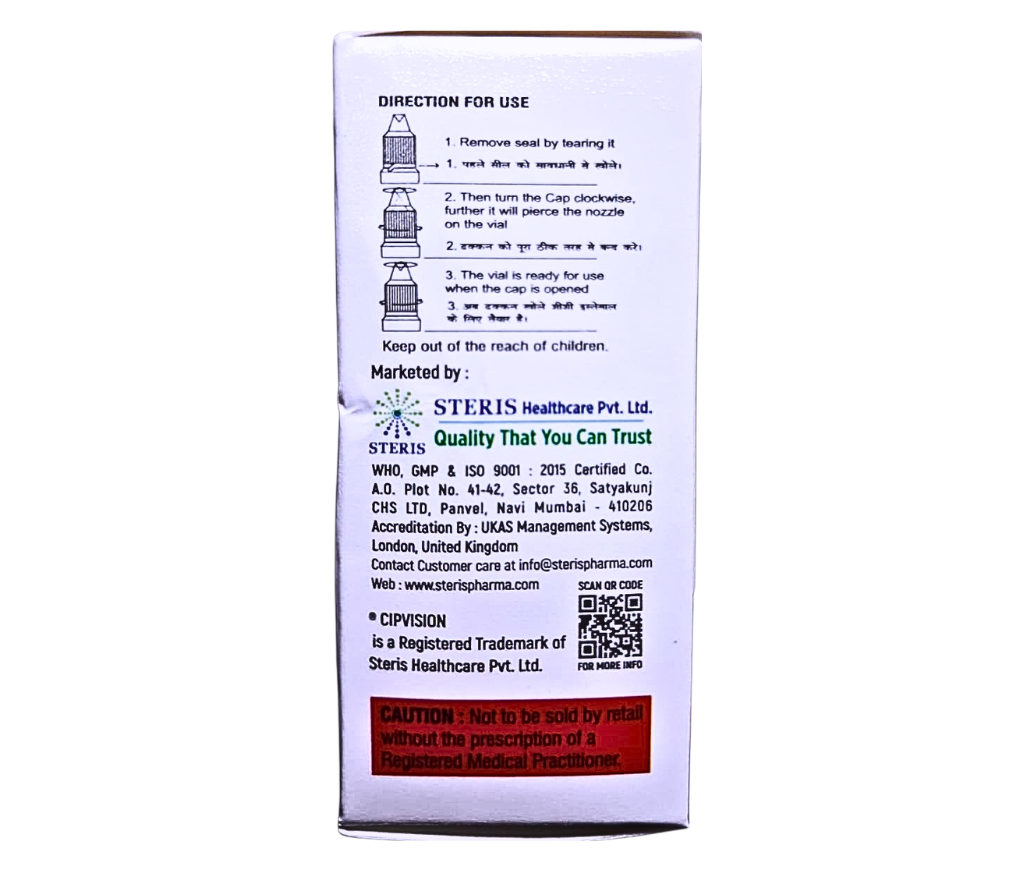
Avoid touching the dropper tip to your eye, eyelashes, fingers, or other surfaces. Contamination can introduce microorganisms into the bottle and potentially cause an eye infection.
Contact-lens users should check the specific product label for instructions regarding lens removal and reinsertion, particularly if preservatives are present.
People with persistent dry-eye symptoms should consider an eye examination rather than relying indefinitely on over-the-counter or lubricating drops. Dryness can sometimes be associated with eyelid disease, medication effects, autoimmune disorders, ocular-surface disease, or other underlying conditions.
Most importantly, do not use this formulation as a substitute for clinically indicated cataract treatment. While NAC has been investigated for cataract management, independent evidence remains insufficient to establish that NAC eye drops prevent or reverse age-related cataracts.
Frequently Asked Questions
1. What are carboxy-methylcellulose, N-acetyl-L-carnosine & glycerin eye drops used for?
They are primarily used for ocular lubrication and moisture support, particularly for symptoms associated with dry eyes, irritation, burning, and environmental or screen-related eye discomfort.
2. What are the benefits of CMC, NAC, and glycerin eye drops?
CMC provides lubrication, glycerin helps retain moisture, and NAC provides antioxidant activity. Together, these ingredients are intended to support ocular comfort and surface hydration.
3. Can these eye drops cure cataracts?
They should not be marketed or relied upon as a proven cataract cure. Although NAC has been studied for cataracts, a Cochrane systematic review found insufficient convincing evidence that NAC eye drops prevent or reverse age-related cataract progression.
4. Are Carboxy-Methylcellulose, N-Acetyl-L-Carnosine & Glycerin Eye Drops suitable for dry eyes?
The formulation is marketed for dry-eye symptoms and ocular-surface discomfort. CMC is a commonly used lubricating ingredient in artificial-tear products, while glycerin provides additional moisture support.
5. What are the side effects of these eye drops?
Possible effects include temporary burning, stinging, irritation, redness, itching, watering, or blurred vision. Persistent or severe symptoms should be assessed by an eye-care professional.
6. How often can I use these eye drops?
The manufacturer's product information describes typical use as 1–2 drops several times daily or as needed, but the appropriate frequency depends on the exact formulation. Always follow the product label or your healthcare professional's instructions.
7. Can I use these eye drops while wearing contact lenses?
Check the product label before use. If the formulation contains a preservative or has specific contact-lens restrictions, lenses may need to be removed before application and reinserted after the recommended interval.
8. Can I buy Carboxy-Methylcellulose, N-Acetyl-L-Carnosine & Glycerin Eye Drops online?
Availability depends on the country and product. If purchasing online, use a reputable pharmacy or authorized seller and verify the formulation, manufacturer, batch details, expiry date, packaging, and storage information before use.
9. Are these eye drops an antibiotic?
No. This formulation is primarily a lubricating and supportive ophthalmic preparation. It should not be substituted for an antibiotic when a doctor has diagnosed a bacterial eye infection.
10. When should I see an eye doctor instead of using lubricating eye drops?
Seek professional evaluation for persistent or severe eye pain, significant redness, discharge, light sensitivity, sudden or worsening vision changes, eye injury, or symptoms that do not improve with appropriate lubrication.