


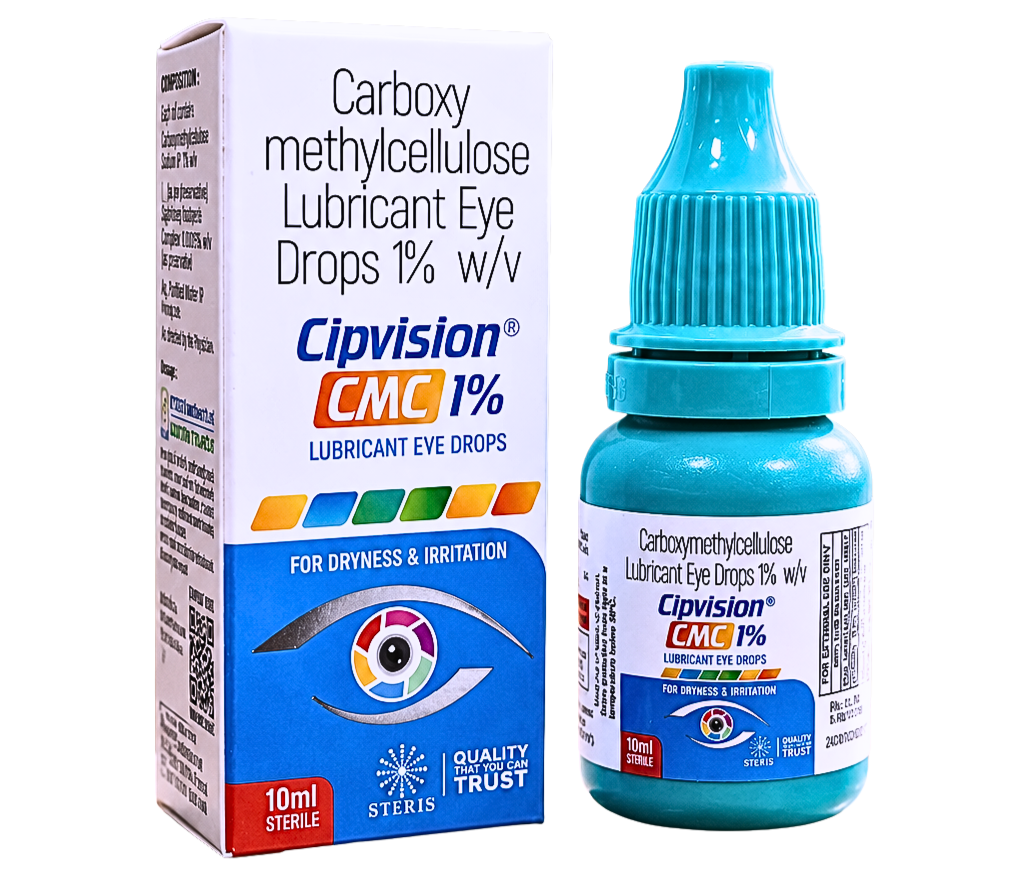
CIPVISION CMC 1%
 Item requires a valid prescription
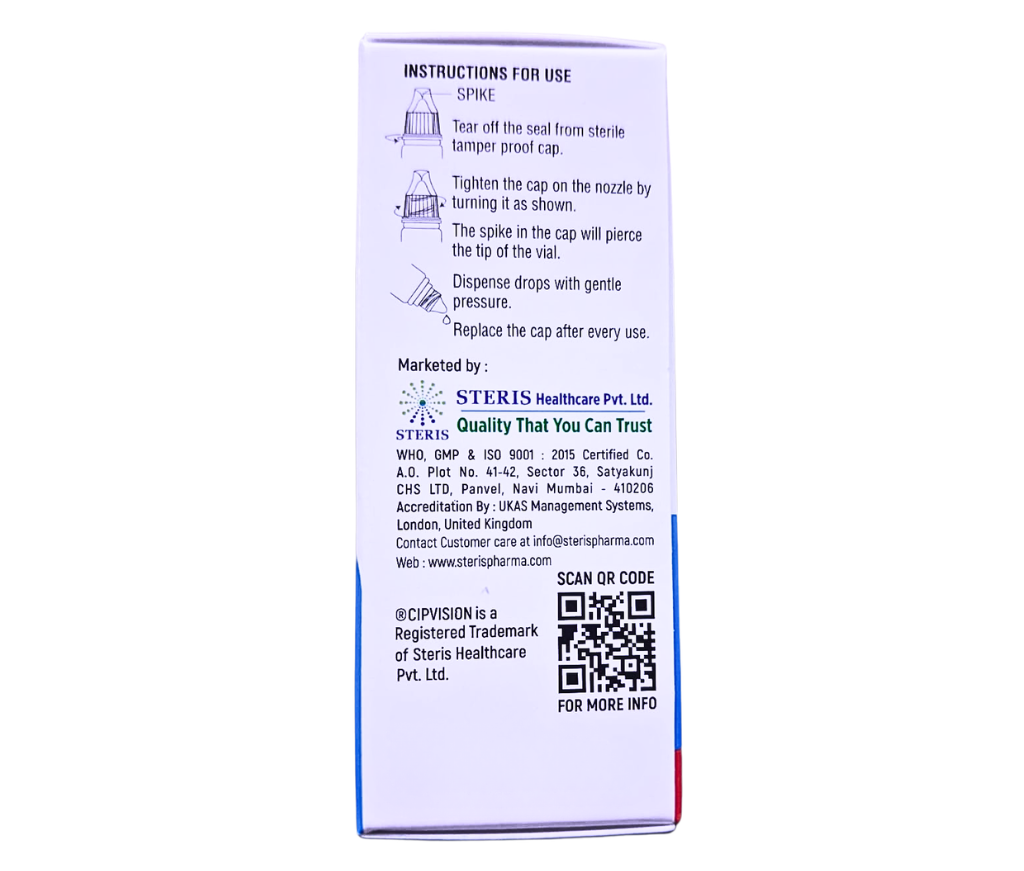
Manufactured By Steris Healthcare Pvt Ltd
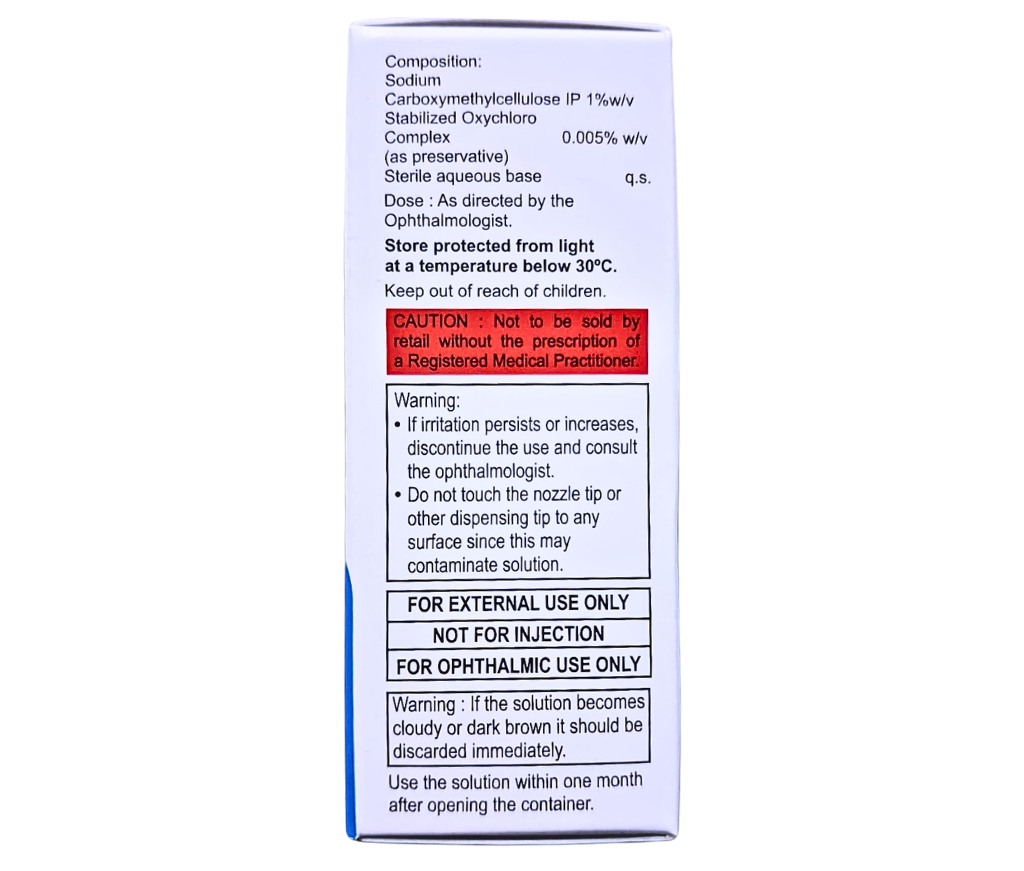
Composition Carboxymethylcellulose Lubricant Eye Drops IP 1% w/v
Rs 123.98
MRP Rs 177.11
(30% OFF)
Includes all taxes
Package SIZE
( For 10 ml )

100% Authentic
Products

Free
Shipping*

Products
Return Policy
Description:
Carboxymethylcellulose lubricant eye drops are artificial-tear products designed to temporarily relieve dryness, burning, irritation, and discomfort associated with dry eyes or environmental exposure such as wind and sun. Carboxymethylcellulose sodium (CMC) is used as an ophthalmic lubricant, with products available in different concentrations and formulations. Current U.S. labeling includes carboxymethylcellulose sodium 0.5% products marketed specifically as lubricant eye drops.
For consumers comparing artificial tears, the key purchasing factors are the carboxymethylcellulose concentration, formulation, bottle or single-use packaging, preservative status, intended use, and product quality. Because different CMC eye drops are formulated differently, buyers should always check the product label rather than assuming that every carboxymethylcellulose lubricant eye drop is identical.
What Are Carboxymethylcellulose Lubricant Eye Drops?
Carboxymethylcellulose lubricant eye drops are ophthalmic lubricants used to provide temporary relief when the eyes feel dry, irritated, burning, or uncomfortable. CMC helps lubricate the ocular surface and can reduce the uncomfortable sensation associated with insufficient or unstable tear lubrication.
The FDA's OTC ophthalmic drug monograph lists carboxymethylcellulose sodium at concentrations from 0.2% to 2.5% among permitted active ingredients for products intended to relieve dry-eye symptoms and irritation. The monograph also provides dosing language for these ophthalmic lubricants. FDA Access Data +1
Individual commercial products can contain different concentrations. For example, current DailyMed labeling identifies products containing carboxymethylcellulose sodium 0.5% as eye lubricants.
What Are Carboxymethylcellulose Lubricant Eye Drops Used For?
The primary purpose of carboxymethylcellulose lubricant eye drops is temporary relief of dry-eye symptoms.
Depending on the specific product label, uses may include:
- Temporary relief of burning caused by dry eyes
- Relief of eye irritation associated with dryness
- Reduction of discomfort from dry eyes
- Lubrication of the ocular surface
- Temporary relief associated with exposure to wind or sun
- Protection against further irritation
These uses are consistent with current DailyMed labeling for CMC lubricant eye-drop products.
Importantly, artificial tears are designed primarily to relieve symptoms. They should not automatically be considered a treatment for an underlying eye infection, significant inflammation, glaucoma, corneal injury, or another eye disease.
Key Benefits of Carboxymethylcellulose Lubricant Eye Drops
1. Helps relieve dry-eye discomfort
Dry eyes can produce burning, irritation, grittiness, watering, and general discomfort. Carboxymethylcellulose lubricant eye drops can provide temporary symptomatic relief by lubricating the eye's surface.
2. Provides ocular lubrication
CMC is used as an ophthalmic lubricant. This makes it a practical active ingredient for artificial-tear formulations intended to supplement the eye's natural lubrication.
3. Helps with environmentally triggered irritation
Current product labeling specifically identifies temporary relief associated with exposure to wind or sun. This can make lubricating eye drops useful for people whose eyes become uncomfortable in dry, windy, or sunny environments.
4. Multiple concentrations and formulations are available.
CMC lubricant products are not limited to one strength. FDA's OTC monograph permits several concentrations, while individual products may combine CMC with other lubricating ingredients. For example, one current DailyMed product contains carboxymethylcellulose sodium 0.5% plus glycerin 0.9%.
This gives consumers and healthcare professionals different formulation options depending on the desired product characteristics.
5. Suitable for temporary, symptom-focused relief
For occasional dry-eye discomfort, an ophthalmic lubricant can be a convenient option for temporary relief. However, people who require frequent or continuous eye lubrication should discuss persistent symptoms with an eye-care professional.
How Do Carboxymethylcellulose Lubricant Eye Drops Work?
Carboxymethylcellulose functions as a lubricating agent on the ocular surface. Rather than acting as an antibiotic, antihistamine, or anti-inflammatory drug, CMC lubricant drops are designed primarily to supplement lubrication and reduce symptoms associated with dryness.
This distinction matters when choosing an eye drop.
If the problem is ordinary dryness, lubrication may be appropriate. If symptoms are caused by infection, allergy, significant inflammation, injury, or another medical condition, a lubricant alone may not address the underlying cause.
How to Use Carboxymethylcellulose Lubricant Eye Drops
Follow the directions on the specific product label or the instructions provided by your healthcare professional.
A typical application involves placing the recommended number of drops into the affected eye or eyes without allowing the bottle tip to touch the eye, eyelid, fingers, or another surface.
For some OTC ophthalmic products containing CMC, FDA labeling permits 1–2 drops in the affected eye(s) up to four times daily, although individual products can have different directions. Always follow the instructions on the product you actually purchased. F FDA Access Data +1
For hygienic application:
- Wash your hands.
- Check the product and packaging before use.
- Avoid touching the dropper tip to the eye or another surface.
- Apply the labeled dose.
- Replace the cap promptly after use.
- Store the product according to the manufacturer's instructions.
Do not use a product if its solution has changed color or become cloudy when the label says not to use it under those circumstances.
Carboxymethylcellulose Lubricant Eye Drops Side Effects
Most people use artificial tears without serious problems, but temporary local effects can occur.
Possible side effects or discomfort may include:
- Temporary blurred vision immediately after application
- Mild eye irritation
- Stinging or burning
- Redness or discomfort
- Sensitivity to an ingredient
- Allergic reactions in susceptible individuals
The exact adverse-effect profile depends on the formulation, including preservatives and additional active or inactive ingredients.
Patients should stop using the product and seek medical advice when directed by the label if they experience eye pain, changes in vision, persistent or worsening redness/irritation, or symptoms that do not improve within the specified timeframe. Several current CMC lubricant labels use 72 hours as a point at which continued symptoms warrant medical evaluation.
Severe symptoms such as significant eye pain, marked vision changes, or signs of a serious allergic reaction require prompt medical attention.
Can You Use Carboxymethylcellulose Eye Drops With Contact Lenses?
Contact-lens instructions depend on the particular product. Some lubricant eye drops require lenses to be removed before use, while products specifically designed for contact-lens lubrication may have different directions.
Therefore, contact-lens wearers should check the product label before using CMC eye drops while wearing lenses. For example, a current CMC lubricant product specifically instructs users to remove contact lenses before application.
Never assume that one artificial-tear formulation can be substituted for another when wearing contact lenses.
How to Choose Carboxymethylcellulose Lubricant Eye Drops
If you are shopping for carboxymethylcellulose lubricant eye drops, consider the following:
Check the active ingredient.
Look for carboxymethylcellulose sodium and verify the concentration listed on the package. Current products can vary in strength.
Check whether the product contains preservatives.
Some artificial tears are preserved, while others are supplied in preservative-free single-use containers. People who need frequent lubrication may want to discuss the most appropriate formulation with an eye-care professional.
Check the intended use.
Confirm that the product is labeled for dry-eye lubrication or temporary relief of irritation. Do not purchase an artificial tear expecting it to function as an antibiotic or prescription treatment for an eye disease.
Check packaging and product quality.
When buying eye drops, choose products from reputable manufacturers and legitimate pharmacies or retailers. Verify the product name, active ingredient, concentration, expiration date, packaging integrity, and storage instructions.
Eye-drop sterility is particularly important because contaminated ophthalmic products can present serious risks. The FDA has previously issued safety communications and recalls involving contaminated eye-drop products, emphasizing the importance of obtaining ophthalmic products from reliable sources
Carboxymethylcellulose vs. Other Artificial Tears
Carboxymethylcellulose is only one type of lubricant used in artificial tears. Other formulations may contain ingredients such as glycerin, hypromellose, polyethylene glycol, propylene glycol, or other lubricating agents.
There is no single artificial tear that is automatically the best choice for everyone. The right product can depend on the severity and frequency of symptoms, formulation characteristics, contact-lens use, preservative tolerance, and individual medical needs.
For occasional dryness, an OTC lubricant may provide adequate temporary relief. Persistent or frequent symptoms deserve professional evaluation because chronic dry eye can have multiple causes.
When Should You See an Eye-Care Professional?
Artificial tears are intended for symptomatic relief, but persistent symptoms should not simply be masked indefinitely.
Seek professional evaluation if:
- Eye pain develops.
- Vision changes occur.
- Redness or irritation becomes persistent or worse.
- Symptoms do not improve within the timeframe specified on the product label.
- You experience recurrent or severe dry-eye symptoms.
- You have an eye injury.
- You suspect an eye infection.
- You develop significant light sensitivity or other concerning visual symptoms.
Current CMC lubricant labels specifically advise medical evaluation for eye pain, vision changes, continued redness or irritation, or worsening/persistent symptoms.
Buyer Guide: What to Look for Before Purchasing
If your search intent is “buy carboxymethylcellulose lubricant eye drops,” compare products based on more than price alone.
A practical checklist includes:
- Active ingredient: Carboxymethylcellulose sodium
- Strength: Verify the percentage on the package
- Formulation: CMC alone or CMC combined with another lubricant
- Preservative status: Check whether the product is preserved or preservative-free
- Packaging: Multi-dose bottle or single-use vials
- Contact-lens compatibility: Confirm on the product label
- Manufacturer: Choose a reputable, traceable manufacturer
- Expiration date: Never use expired ophthalmic products
- Packaging integrity: Avoid products with damaged or compromised packaging
- Storage: Follow the manufacturer's storage requirements
Current DailyMed records show that CMC lubricant products remain commercially available in multiple formulations, including 0.5% CMC products and combination lubricant products.
Conclusion
Carboxymethylcellulose lubricant eye drops are widely used ophthalmic lubricants for the temporary relief of dry-eye-related burning, irritation, and discomfort. Their primary role is to lubricate the ocular surface and provide symptomatic relief rather than treat an underlying infection or other serious eye condition. Current U.S. labeling and FDA OTC guidance recognize carboxymethylcellulose sodium as an ophthalmic lubricant ingredient, with multiple concentrations and formulations available.
For buyers, the best purchasing decision depends on the CMC concentration, preservative status, formulation, packaging, contact-lens compatibility, manufacturer reliability, and product labeling. If symptoms include eye pain, vision changes, persistent redness, or worsening irritation, an eye-care professional should evaluate the condition instead of relying solely on artificial tears.
Frequently Asked Questions
1. What are carboxymethylcellulose lubricant eye drops used for?
Carboxymethylcellulose lubricant eye drops are used for the temporary relief of burning, irritation, and discomfort associated with dry eyes. Product labeling may also identify relief associated with exposure to wind or sun and protection against further irritation.
2. Are carboxymethylcellulose eye drops good for dry eyes?
Yes. Carboxymethylcellulose sodium is an ophthalmic lubricant used in artificial tears to relieve symptoms associated with dry eyes. The appropriate formulation depends on individual symptoms and product characteristics.
3. What are the side effects of carboxymethylcellulose lubricant eye drops?
Possible effects include temporary irritation, stinging or burning, redness, discomfort, and temporary blurred vision after application. Allergic reactions are possible with sensitivity to an ingredient. Seek medical advice for significant eye pain, vision changes, or persistent/worsening irritation.
4. How often can I use carboxymethylcellulose eye drops?
The frequency depends on the specific product and its label. FDA OTC monograph information permits certain CMC ophthalmic products to be used as 1–2 drops in affected eyes up to four times daily, but individual products can have different instructions. Always follow the label for your specific product.
5. Can I use carboxymethylcellulose eye drops every day?
Some people use lubricating eye drops regularly for dry-eye symptoms, but frequent or long-term reliance should be discussed with an eye-care professional, particularly if symptoms are persistent. Continued redness, irritation, pain, or vision changes should not be ignored.
6. Can I use carboxymethylcellulose eye drops with contact lenses?
It depends on the formulation. Some CMC lubricant products instruct users to remove contact lenses before application, while specialized lens-lubricating products may have different instructions. Always check the specific product label.
7. Are carboxymethylcellulose eye drops the same as artificial tears?
Carboxymethylcellulose eye drops are a type of artificial tear or ophthalmic lubricant product. “Artificial tears” is a broader category that includes several different lubricating ingredients and formulations.
8. Can carboxymethylcellulose eye drops treat an eye infection?
No. CMC lubricant eye drops are intended to lubricate the eye and relieve dryness-related symptoms. They are not antibiotics and should not be relied upon to treat a bacterial, viral, or fungal eye infection.
9. What strength of carboxymethylcellulose eye drops should I buy?
There is no single strength that is right for everyone. The FDA's OTC ophthalmic monograph includes carboxymethylcellulose sodium at concentrations ranging from 0.2% to 2.5%, while individual marketed products may use specific concentrations such as 0.5%. Choose according to the product label and, when necessary, advice from an eye-care professional.
10. When should I stop using carboxymethylcellulose lubricant eye drops?
Stop use and seek medical advice when the product label directs you to do so—for example, if you develop eye pain, changes in vision, continued or worsening redness/irritation, or symptoms that persist beyond the stated timeframe.