


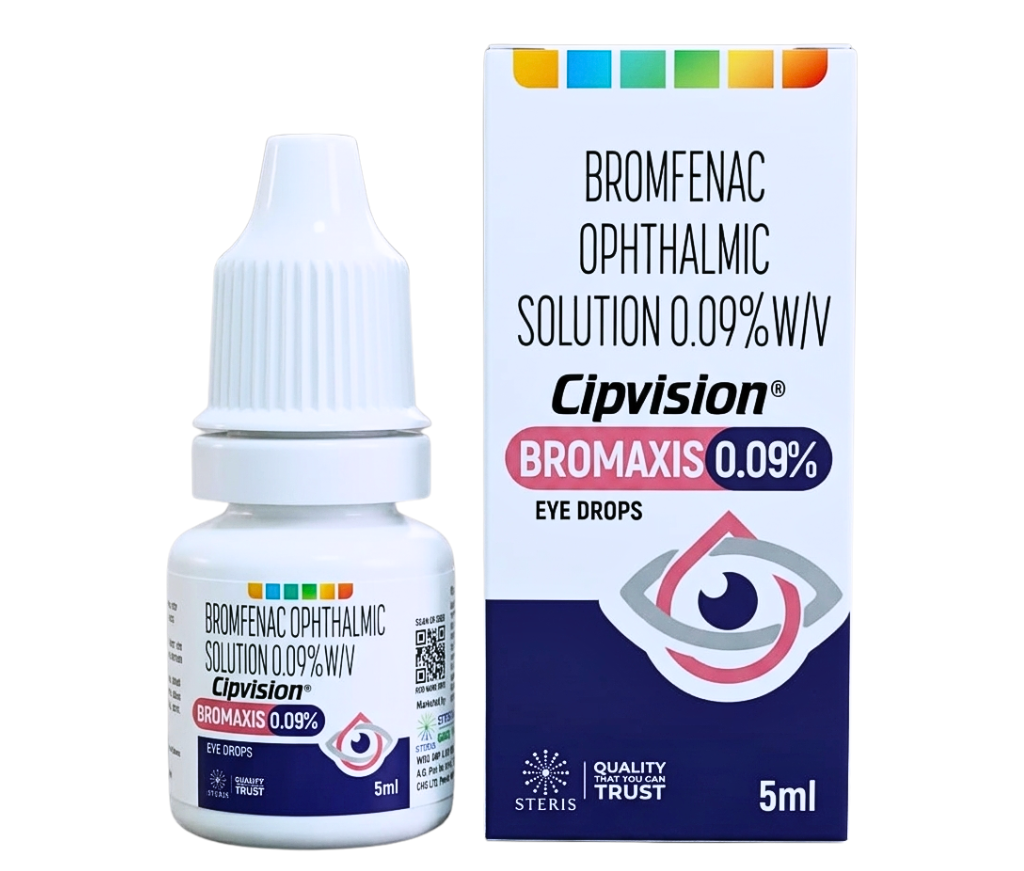
CIPVISION BROMAXIS 0.09%
 Item requires a valid prescription
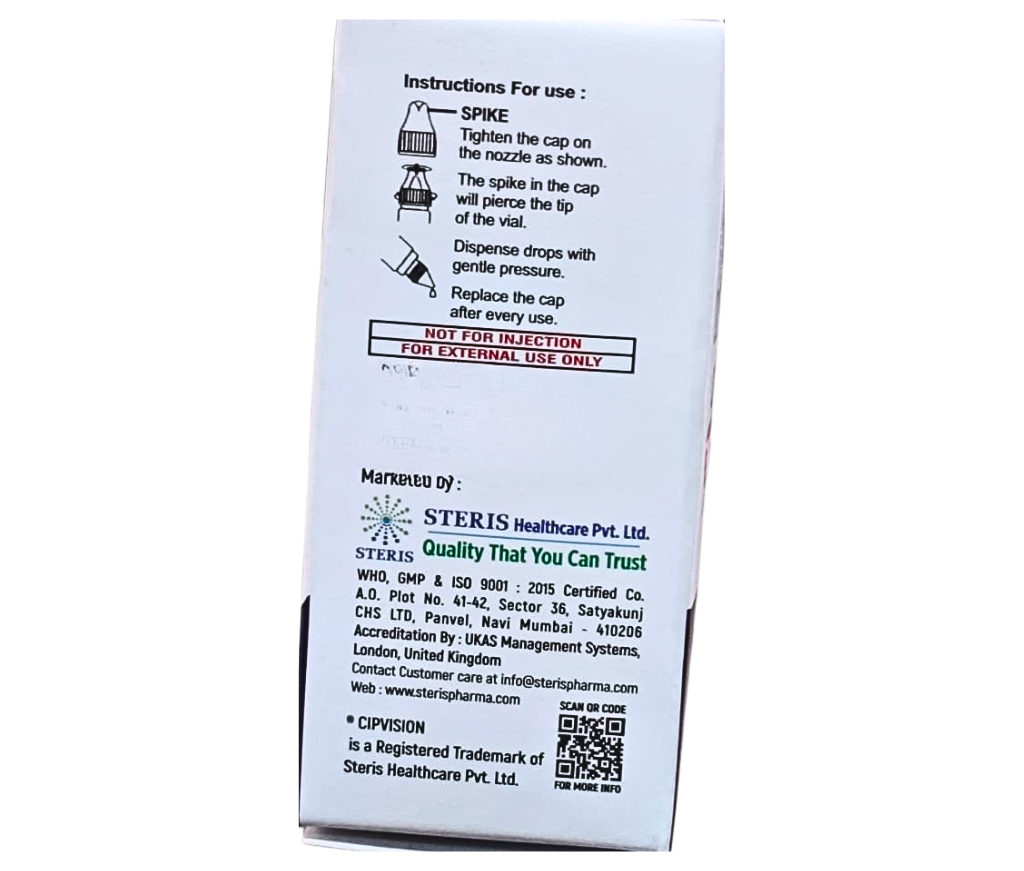
Manufactured By Steris Healthcare Pvt Ltd
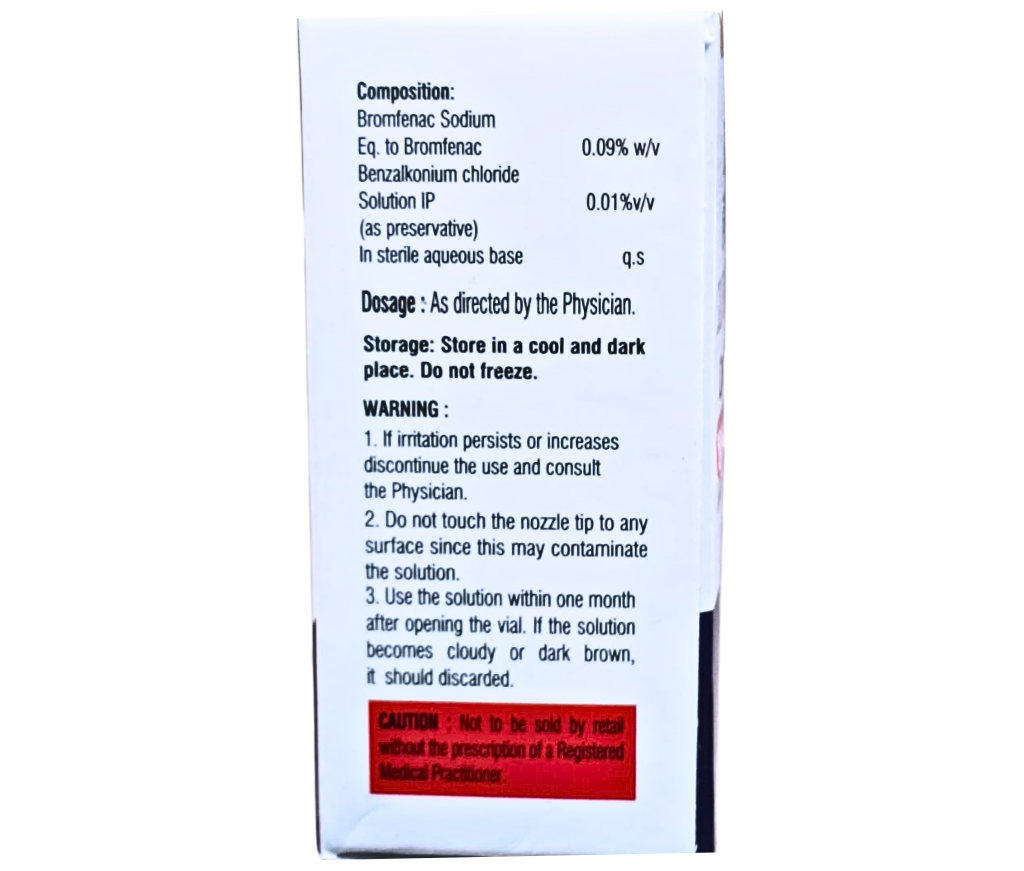
Composition Bromfenac Ophthalmic Solution 0.09% w/v
Rs 136.50
MRP Rs 195.00
(30% OFF)
Includes all taxes
Package SIZE
( For 5 ml )

100% Authentic
Products

Free
Shipping*

Products
Return Policy
Description:
Bromfenac ophthalmic solution 0.09% is a prescription non-steroidal anti-inflammatory drug (NSAID) eye drop used primarily to reduce eye pain and inflammation after cataract surgery. Unlike steroid eye drops, bromfenac works by inhibiting cyclooxygenase (COX) enzymes and reducing the production of prostaglandins involved in inflammation and pain. The current U.S. prescribing information identifies bromfenac ophthalmic solution 0.09% for postoperative inflammation and reduction of ocular pain following cataract extraction.
For patients searching for bromfenac ophthalmic solution 0.09% in India, several brands are currently available, generally in 5 mL ophthalmic-solution packs. Current online pharmacy listings show significant variation in price depending on the brand, manufacturer, seller, and available discounts. For example, recent listings include 5 mL products priced from approximately ₹91 to ₹197, while other branded products can cost more.
Because bromfenac is a prescription ophthalmic NSAID, it should be used according to the ophthalmologist's instructions rather than purchased simply because it is marketed as a pain-relieving eye drop.
What Is Bromfenac Ophthalmic Solution 0.09%?
Bromfenac ophthalmic solution 0.09% is a topical NSAID formulated specifically for use in the eye. The labeled formulation contains bromfenac sodium equivalent to 0.9 mg bromfenac per mL, corresponding to a 0.09% bromfenac solution.
It is designed to reduce inflammation and pain associated with certain postoperative eye conditions, particularly following cataract extraction.
Bromfenac is not an antibiotic, so it does not directly kill bacteria. It is also not a corticosteroid, meaning its anti-inflammatory action comes from a different mechanism.
This distinction matters when comparing bromfenac with commonly prescribed postoperative eye medicines such as antibiotics, corticosteroids, or combination products.
Bromfenac Ophthalmic Solution 0.09% Uses
1. Postoperative eye pain after cataract surgery
The primary labeled use of bromfenac ophthalmic solution 0.09% is to reduce ocular pain following cataract surgery. The medicine can help control the inflammatory component that contributes to postoperative discomfort.
2. Postoperative eye inflammation
Bromfenac is also indicated for the treatment of postoperative ocular inflammation after cataract extraction. Inflammation can contribute to redness, discomfort, and other postoperative symptoms, so controlling it is an important part of recovery.
3. Inflammation associated with prostaglandin activity
Bromfenac inhibits COX-1 and COX-2, reducing prostaglandin synthesis. Prostaglandins participate in several inflammatory processes in the eye, making COX inhibition an effective way to reduce inflammation and pain in appropriate postoperative patients.
Important: A doctor may prescribe bromfenac for specific ophthalmic situations based on clinical judgment, but consumers should not assume that every red, painful, or irritated eye requires bromfenac.
How Does Bromfenac Eye Drop Work?
Bromfenac belongs to the NSAID class.
After cataract surgery, inflammatory processes can cause the release of prostaglandins and other mediators. These substances contribute to pain, redness, and inflammation.
Bromfenac inhibits cyclooxygenase-1 and cyclooxygenase-2 (COX-1 and COX-2), enzymes involved in prostaglandin production. By reducing prostaglandin synthesis, bromfenac helps reduce ocular inflammation and pain.
In simple terms:
Cataract surgery → inflammatory response → prostaglandin production → pain/inflammation
Bromfenac → COX inhibition → reduced prostaglandin production → less postoperative pain and inflammation
Key Benefits of Bromfenac Ophthalmic Solution 0.09%
Helps control postoperative eye pain
Bromfenac is specifically indicated for reducing ocular pain after cataract extraction.
Reduces postoperative inflammation
The medicine helps control inflammatory activity following cataract surgery.
Non-steroidal anti-inflammatory action
Bromfenac provides anti-inflammatory treatment without being a corticosteroid.
Convenient once-daily regimen for the labeled 0.09% product
The current U.S. prescribing information recommends one drop once daily, beginning one day before cataract surgery, continuing on the day of surgery and through the first 14 postoperative days.
However, patients should follow the dosing instructions on their own prescription and product label because formulations and prescribing practices can vary by market.
Can be used alongside other ophthalmic medicines
The product labeling states that bromfenac can be administered with other topical ophthalmic medications, with the different eye drops given at least five minutes apart.
How to Use Bromfenac Ophthalmic Solution 0.09%
Use bromfenac exactly as directed by your ophthalmologist.
General application steps include:
Bromfenac Ophthalmic Solution 0.09%: Uses, Benefits, Side Effects, Price & FAQs
Bromfenac Ophthalmic Solution 0.09%: Uses
If you accidentally touch the dropper tip to your eye or another surface, contact your pharmacist or doctor for advice because contamination can compromise sterility.
The product labeling specifically advises patients not to touch the dropper tip to any surface.
Bromfenac Ophthalmic Solution 0.09% Dosage
For the U.S.-labeled 0.09% formulation, the recommended regimen is
One drop in the affected eye once daily, beginning one day before cataract surgery, continuing on the surgery day and through the first 14 days after surgery.
This information should not be used to self-prescribe treatment. Your ophthalmologist may provide different instructions depending on the product available in your country and your individual clinical situation.
Do not use additional drops to make up for a missed dose unless your doctor specifically instructs you to do so.
Bromfenac Ophthalmic Solution 0.09% Side Effects
Like all medicines, bromfenac can cause adverse effects.
Commonly reported reactions include:
- Abnormal eye sensation
- Eye irritation
- Burning or stinging
- Eye redness
- Conjunctival hyperemia
- Eye pain
- Eye itching
- Headache
- Iritis
The current prescribing information reports these adverse reactions in approximately 2–7% of patients in clinical trials.
Some patients may experience temporary discomfort after instillation. Current Indian pharmacy information also warns that blurred vision and eye pain may occur and should be reported if persistent or worsening.
Bromfenac may have cross-sensitivity with aspirin and other NSAIDs, so previous reactions to these medicines should be discussed with the ophthalmologist.
Can You Wear Contact Lenses With Bromfenac?
The prescribing information warns that topical NSAIDs may cause keratitis, corneal epithelial breakdown, corneal thinning, corneal erosion, corneal ulceration or, rarely, corneal perforation. These complications can be sight-threatening.
The current 0.09% product labeling states that contact lenses should not be worn while using bromfenac.
What should you check before buying?
Before purchasing bromfenac ophthalmic solution, verify:
- Active ingredient: bromfenac
- Strength: 0.09%
- Dosage form: ophthalmic solution
- Bottle/pack size
- Manufacturer
- Batch number
- Expiry date
- Storage requirements
- Prescription status
- Current MRP
- Seller authenticity
Do not select a product solely because it has the lowest price.
Buyer-Intent Guide: Which Bromfenac Eye Drop Should You Buy?
If your ophthalmologist has prescribed bromfenac ophthalmic solution 0.09%, match the exact strength before ordering.
If the prescription specifies a particular brand, preservative-free formulation, or pack size, confirm those details.
If the prescription says bromfenac + moxifloxacin, do not substitute bromfenac alone.
If your doctor prescribed bromfenac 0.07%, do not automatically replace it with 0.09%.
For pharmacies, hospitals, and distributors, procurement should additionally consider manufacturer credentials, product documentation, batch traceability, sterility, regulatory compliance, storage requirements, and current wholesale pricing.
Conclusion
Bromfenac ophthalmic solution 0.09% is a non-steroidal anti-inflammatory eye drop primarily used to reduce postoperative inflammation and ocular pain following cataract surgery. It works by inhibiting COX-1 and COX-2 and reducing prostaglandin production.
Its key benefits include postoperative pain relief, reduction of ocular inflammation, and the convenience of a once-daily regimen for the labeled 0.09% formulation. Clinical trials supporting the current label found greater rates of inflammation clearance and pain-free status after cataract surgery compared with placebo in several studies.
However, bromfenac should not be treated as an ordinary eye drop for every painful or red eye. Topical NSAIDs can delay healing and, in susceptible patients, cause serious corneal complications. People with corneal disease, diabetes, dry eye, complicated surgery, bleeding risks, or previous NSAID sensitivity should discuss these factors with their ophthalmologist.
For Indian buyers, recent online listings show that bromfenac 0.09% 5 mL products can range from roughly ₹91 to ₹197 or more, depending on the brand and seller.
The safest purchasing decision is therefore to buy the exact bromfenac strength and formulation prescribed by your ophthalmologist, verify the product's manufacturer and expiry date, and purchase from a legitimate pharmacy.
Frequently Asked Questions
1. What is bromfenac ophthalmic solution 0.09% used for?
Bromfenac ophthalmic solution 0.09% is primarily used to reduce eye pain and postoperative inflammation after cataract surgery. It is a non-steroidal anti-inflammatory eye medicine.
2. Is bromfenac 0.09% an antibiotic or a steroid?
No. Bromfenac is an NSAID, not an antibiotic and not a corticosteroid. It reduces inflammation by inhibiting COX enzymes and decreasing prostaglandin production.
3. What are the side effects of bromfenac eye drops?
Common side effects include eye irritation, burning or stinging, abnormal eye sensation, redness, itching, and eye pain. More serious corneal complications can occur in susceptible patients.
4. How often should bromfenac ophthalmic solution 0.09% be used?
For the current labeled 0.09% product, the recommended dose is one drop once daily, beginning one day before cataract surgery and continuing through the first 14 days after surgery. Follow your own ophthalmologist's prescription rather than changing the dose yourself.
5. Can bromfenac eye drops be used after cataract surgery?
Yes. Bromfenac 0.09% is specifically indicated for postoperative pain and inflammation following cataract extraction.
6. Can bromfenac be used for a red or painful eye?
Not without determining the cause. Redness and pain can have many causes, and bromfenac is primarily indicated for postoperative inflammation and pain after cataract surgery. Self-treatment of unexplained eye symptoms is not recommended.
7. Can I use bromfenac with other eye drops?
It may be used with other topical ophthalmic medicines when prescribed. The current labeling recommends administering different topical eye medicines at least five minutes apart.
8. Can I wear contact lenses while using bromfenac 0.09%?
The current product labeling says contact lenses should not be worn during treatment. Follow the instructions supplied with your specific product.
9. What is the price of bromfenac ophthalmic solution 0.09% in India?
Recent Indian online listings show 5 mL products ranging from approximately ₹91 to ₹197, although prices vary by brand, pharmacy, location, and discounts.
10. Is bromfenac 0.09% better than bromfenac 0.07%?
Neither strength is universally "better." They are different concentrations with different labeled dosing instructions. Use the strength specifically prescribed by your ophthalmologist rather than substituting one for the other.
11. Can bromfenac eye drops delay healing?
Yes. Topical ophthalmic NSAIDs can slow or delay healing. The risk of healing problems may be greater when topical NSAIDs are used together with topical corticosteroids.
12. When should I contact my doctor while using bromfenac?
Contact your ophthalmologist promptly if you develop persistent or worsening eye pain, significant vision changes, increasing redness, unusual discharge, or symptoms suggesting a corneal problem. Serious corneal reactions, although uncommon, require medical attention.

