


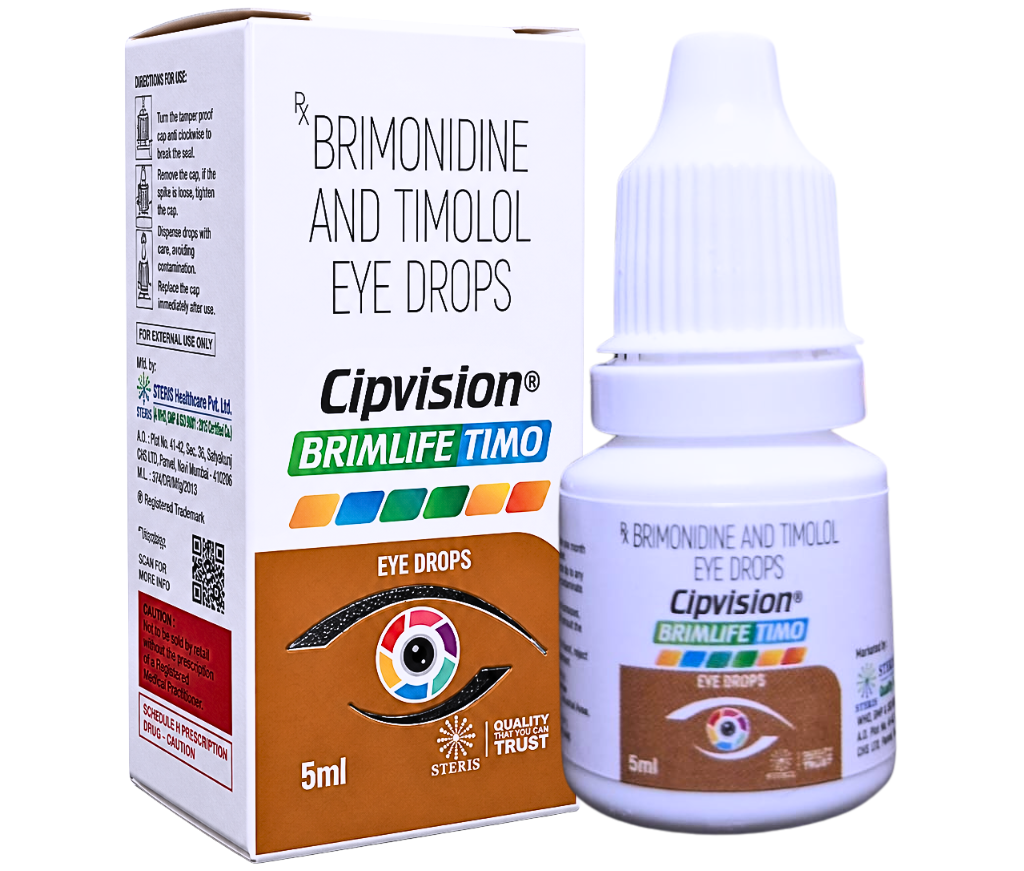
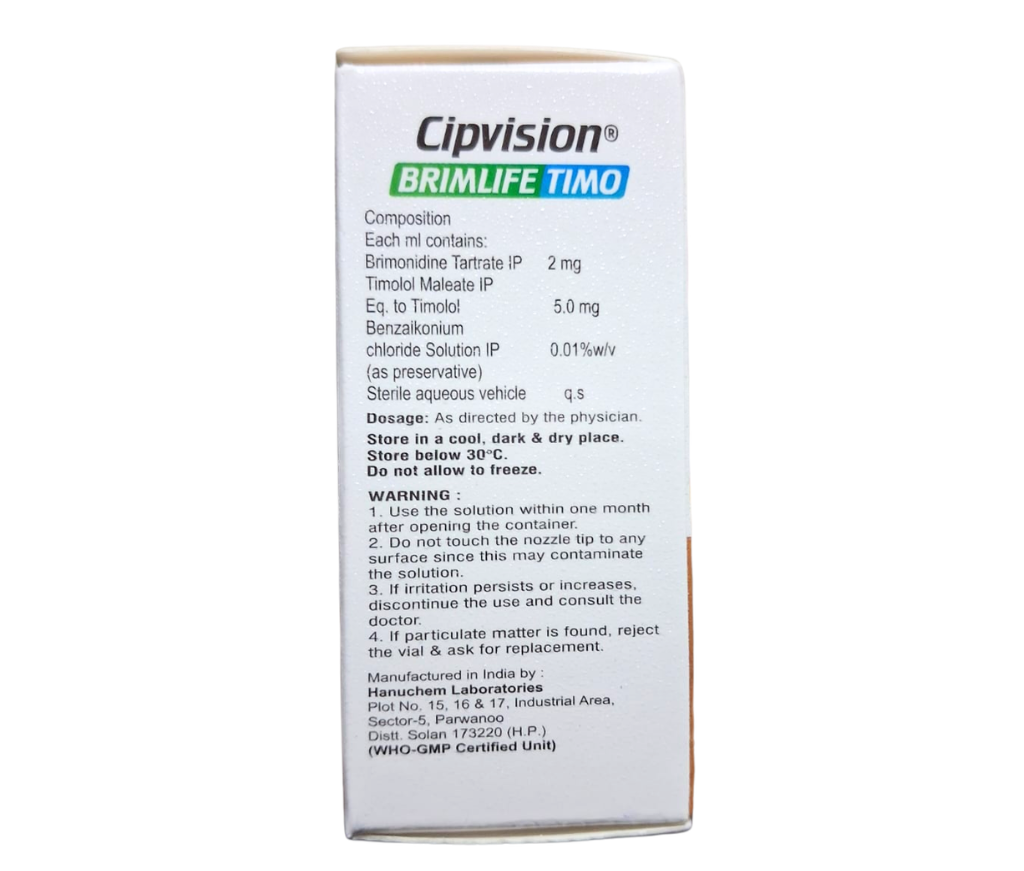
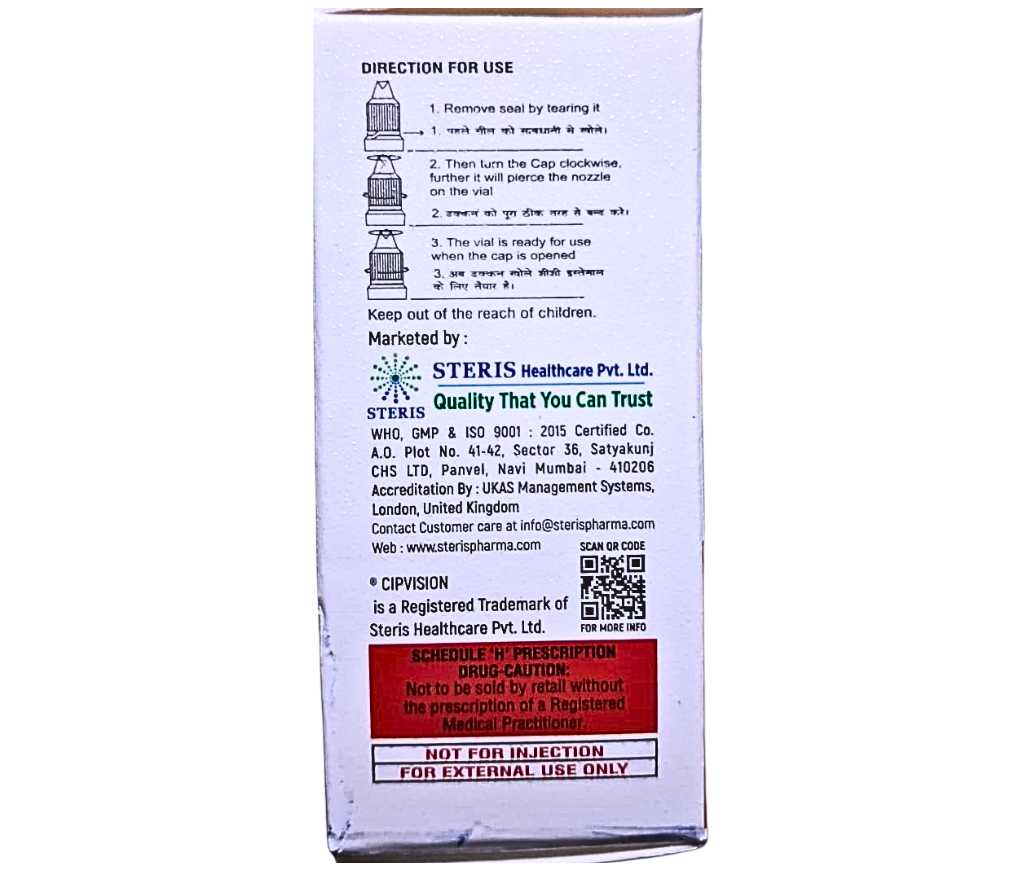
CIPVISION BRIMLIFE TIMO
 Item requires a valid prescription
Manufactured By Steris Healthcare Pvt Ltd
Composition Brimonidine And Timolol Eye Drops
Rs 199.50
MRP Rs 285.00
(30% OFF)
Includes all taxes
Package SIZE
( For 5 ml )

100% Authentic
Products

Free
Shipping*

Products
Return Policy
Description:
Brimonidine and timolol eye drops are prescription ophthalmic medicines used to lower elevated intraocular pressure (IOP) in people with open-angle glaucoma or ocular hypertension. The combination brings together two medicines that lower eye pressure through different mechanisms: brimonidine, an alpha-adrenergic agonist, and timolol, a beta-adrenergic blocker.
A currently approved combination formulation, marketed in the United States as COMBIGAN, contains 0.2% brimonidine tartrate and 0.5% timolol, and is indicated for reducing elevated IOP when additional or replacement therapy is needed because pressure is not adequately controlled. The current FDA-approved label recommends one drop in the affected eye(s) twice daily, approximately 12 hours apart.
What Are Brimonidine and Timolol Eye Drops?
Brimonidine and timolol eye drops combine two IOP-lowering medicines in one ophthalmic formulation.
Brimonidine tartrate is an alpha-adrenergic agonist that reduces the production of aqueous humor and increases uveoscleral outflow, thereby lowering pressure inside the eye. Brimonidine 0.2% alone is labeled for reducing elevated IOP in patients with open-angle glaucoma or ocular hypertension.
Timolol maleate is a beta-adrenergic receptor blocker. It reduces aqueous humor production and therefore lowers IOP. Because timolol can be absorbed systemically even when applied as an eye drop, it can produce effects similar to systemic beta-blockers in susceptible patients. The FDA label specifically warns about potentially serious respiratory and cardiovascular reactions.
By combining these two mechanisms, brimonidine and timolol can provide a greater pressure-lowering effect than either medicine alone in appropriately selected patients.
Uses of Brimonidine and Timolol Eye Drops
The principal use of brimonidine and timolol eye drops is the management of elevated IOP associated with:
- Open-angle glaucoma
- Ocular hypertension
The current FDA label for the combination states that it is indicated for reducing elevated IOP in patients who require adjunctive or replacement therapy because their pressure is inadequately controlled.
Open-angle glaucoma
Glaucoma is a group of eye diseases that can damage the optic nerve, often in association with elevated IOP. Lowering IOP is a major part of glaucoma management because pressure reduction can help reduce the risk of further optic-nerve damage.
Brimonidine and timolol do not reverse existing optic-nerve damage. Instead, their role is to help achieve and maintain the target IOP determined by the treating eye specialist.
Ocular hypertension
Some people have IOP above the normal range without established glaucoma-related optic-nerve damage. Depending on the patient's risk profile, an ophthalmologist may prescribe pressure-lowering treatment to reduce the likelihood of developing glaucoma.
Key Benefits of Brimonidine and Timolol Eye Drops
Dual-action pressure control
The major benefit of this combination is that two different IOP-lowering mechanisms are delivered in one ophthalmic product. This can be useful when one medicine alone does not adequately control pressure.
Reduced treatment complexity
For appropriately selected patients, a combination drop can reduce the number of separate bottles needed compared with using brimonidine and timolol individually.
The FDA label describes the combination as an option for patients requiring adjunctive or replacement therapy because IOP is inadequately controlled.
Convenient twice-daily administration
The current labeled dosage for the 0.2%/0.5% combination is one drop in the affected eye(s) twice daily approximately 12 hours apart.
This schedule can make it easier for some patients to maintain regular treatment.
Established ophthalmic ingredients
Both brimonidine and timolol have established roles in reducing elevated IOP. Brimonidine 0.2% alone is labeled for open-angle glaucoma and ocular hypertension, while timolol is an established topical beta-blocker used in glaucoma treatment.
Helps maintain prescribed target pressure
Consistent use can help maintain IOP at the level targeted by the ophthalmologist. Patients should continue regular eye examinations because glaucoma can progress even when symptoms are not noticeable.
Dosage and How to Use Brimonidine and Timolol Eye Drops
For the currently FDA-approved 0.2% brimonidine tartrate/0.5% timolol combination, the labeled dosage is:
One drop in the affected eye(s) twice daily, approximately 12 hours apart.
If more than one topical ophthalmic medicine is prescribed, the current label recommends administering the different products at least 5 minutes apart.
Always follow your own prescription because dosage can vary according to the product, diagnosis, age, response to treatment, and other medicines being used.
Correct administration
To administer the drops properly:
- Wash your hands before use.
- Check the bottle and expiry date.
- Do not touch the dropper tip to your eye, eyelashes, eyelids, fingers, or other surfaces.
- Tilt your head back and gently pull down the lower eyelid.
- Instill one prescribed drop.
- Close your eye gently without squeezing tightly.
- Replace the bottle cap immediately.
- Wash your hands after administration if necessary.
Because timolol can be systemically absorbed, some ophthalmic labels recommend nasolacrimal occlusion or gently closing the eyes after administration to reduce systemic exposure. Ask your ophthalmologist or pharmacist to demonstrate the appropriate technique.
Do not increase the frequency or number of drops without professional advice.
Side Effects of Brimonidine and Timolol Eye Drops
Like all medicines, this combination can cause adverse effects.
Possible eye-related effects include:
- Eye redness.
- Burning or stinging.
- Itching.
- Blurred vision.
- Foreign-body sensation.
- Ocular irritation.
- Dry eyes.
- Allergic conjunctival reactions.
- Eyelid or conjunctival changes.
Brimonidine products commonly report reactions such as oral dryness, ocular hyperemia, burning or stinging, headache, blurred vision, foreign-body sensation, fatigue or drowsiness, conjunctival follicles, ocular allergy, and itching.
Because timolol is a beta-blocker, systemic effects are particularly important. Possible reactions can include:
- Slow heart rate.
- Low blood pressure.
- Breathing difficulties or bronchospasm.
- Fatigue.
- Dizziness.
- Shortness of breath.
The current FDA label warns that ophthalmic timolol can be absorbed systemically and may cause serious respiratory or cardiovascular reactions in susceptible patients.
Seek urgent medical attention for severe breathing difficulty, fainting, marked weakness, significant swelling, or symptoms suggesting a serious allergic reaction.
Precautions and Warnings
Brimonidine and timolol eye drops are not suitable for everyone. The combination requires particular caution because of timolol's beta-blocking effects.
The current FDA label lists the combination as contraindicated in patients with bronchial asthma, a history of bronchial asthma, severe chronic obstructive pulmonary disease, sinus bradycardia, second- or third-degree atrioventricular block, overt cardiac failure, or cardiogenic shock. It is also contraindicated in neonates and infants younger than 2 years and in patients with a previous hypersensitivity reaction to a component.
Before treatment, tell your doctor if you have:
- Asthma or COPD.
- A slow heartbeat.
- Heart failure or other heart disease.
- Low blood pressure.
- Circulation problems.
- Depression or other conditions affected by centrally acting medicines.
- Eye allergies or previous reactions to glaucoma drops.
- A history of severe drug allergies.
Brimonidine labeling also notes potential interactions with antihypertensive medicines, cardiac glycosides, CNS depressants, tricyclic antidepressants, and monoamine oxidase inhibitors.
Pregnancy and breastfeeding
Patients who are pregnant, planning pregnancy, or breastfeeding should discuss treatment with their healthcare professional. The benefits and potential risks of therapy should be assessed individually.
Children
The combination is contraindicated in children younger than 2 years. Pediatric use requires professional supervision because systemic reactions can be more concerning in young children.
Buying Brimonidine and Timolol Eye Drops Online
If your search intent is to buy brimonidine and timolol eye drops, product verification is more important than simply choosing the lowest advertised price.
Before purchasing, check:
- Active ingredients: brimonidine tartrate and timolol maleate.
- Exact concentration.
- Manufacturer.
- Regulatory approval or registration applicable to your country.
- Batch or lot number.
- Manufacturing and expiry dates.
- Tamper-evident packaging.
- Bottle size.
- Storage instructions.
- Prescription requirements.
DailyMed currently lists multiple manufacturers and presentations for brimonidine/timolol ophthalmic products, illustrating why buyers should verify the exact manufacturer and formulation rather than relying only on a generic product name.
Purchase prescription eye medicines through a legitimate pharmacy or authorized pharmaceutical supplier where legally permitted. Avoid products with damaged packaging, missing expiry information, unclear labeling, or uncertain storage history.
A genuine ophthalmic product should clearly identify the route of administration and active ingredients. Do not substitute another glaucoma medicine merely because its name appears similar.
Conclusion
Brimonidine and timolol eye drops are an established combination treatment for reducing elevated IOP in patients with open-angle glaucoma or ocular hypertension when additional or replacement therapy is needed. The combination works through two complementary mechanisms: brimonidine lowers aqueous humor production and increases outflow, while timolol primarily reduces aqueous humor production.
The current FDA-approved 0.2%/0.5% combination is labeled at one drop twice daily, approximately 12 hours apart, with at least five minutes between different topical ophthalmic medicines.
From a buyer-intent perspective, people searching for brimonidine and timolol eye drops should focus on the correct strength, legitimate sourcing, manufacturer, expiry date, packaging integrity, and professional prescription rather than price alone.
The most important safety point is that timolol can be absorbed systemically. Patients with asthma, severe COPD, certain heart-rhythm problems, heart failure, or other cardiovascular conditions may face significant risks, and the combination is specifically contraindicated in several of these conditions.
Frequently Asked Questions
1. What are brimonidine and timolol eye drops used for?
They are used to lower elevated intraocular pressure in people with open-angle glaucoma or ocular hypertension. The combination may be prescribed when IOP is not adequately controlled with another treatment.
2. How do brimonidine and timolol eye drops work?
Brimonidine is an alpha-adrenergic agonist that reduces aqueous humor production and promotes outflow. Timolol is a beta-blocker that reduces aqueous humor production. Together, they lower pressure inside the eye.
3. How often should brimonidine and timolol eye drops be used?
For the FDA-approved 0.2% brimonidine/0.5% timolol combination, the labeled dose is one drop twice daily approximately 12 hours apart. Follow the instructions for your specific product and prescription.
4. What are the common side effects of brimonidine and timolol eye drops?
Possible side effects include eye irritation, burning or stinging, redness, itching, blurred vision, dry eyes, and allergic eye reactions. Because timolol can enter the bloodstream, cardiovascular and respiratory effects are also possible.
5. Can people with asthma use brimonidine and timolol eye drops?
Patients with bronchial asthma or a history of bronchial asthma should not use the FDA-approved combination because timolol can cause serious bronchospasm. Severe COPD is also listed as a contraindication.
6. Can brimonidine and timolol eye drops be used with other glaucoma drops?
They may sometimes be used as part of a broader glaucoma treatment plan. If multiple topical eye medicines are prescribed, the current label recommends administering them at least 5 minutes apart.
7. Can brimonidine and timolol eye drops cure glaucoma?
They do not cure or reverse glaucoma. Their purpose is to lower IOP and help manage the disease. Regular ophthalmic examinations remain important even when pressure is controlled.
8. Can I buy brimonidine and timolol eye drops online?
Where legally permitted, purchase them from a legitimate pharmacy or authorized supplier. Verify the exact strength, active ingredients, manufacturer, expiry date, packaging, and prescription requirements before use.
9. Who should not use brimonidine and timolol eye drops?
The FDA-approved combination is contraindicated in people with certain respiratory and cardiovascular conditions, including asthma, severe COPD, sinus bradycardia, certain heart blocks, overt heart failure, and cardiogenic shock. It is also contraindicated in children younger than 2 years and people with previous hypersensitivity to the ingredients.
10. What should I do if I miss a dose?
Follow the instructions provided by your ophthalmologist or product label. Do not routinely double the next dose unless specifically instructed by a healthcare professional.
11. Can these eye drops cause blurred vision?
Yes. Blurred vision and other ocular effects can occur. If vision becomes significantly or suddenly worse, seek prompt professional evaluation rather than assuming it is a normal side effect.
12. When should I seek medical help after using these eye drops?
Seek urgent medical attention for severe breathing difficulty, fainting, severe dizziness, significant swelling, severe allergic symptoms, chest-related symptoms, or sudden changes in vision. These may indicate a serious reaction requiring immediate assessment.