


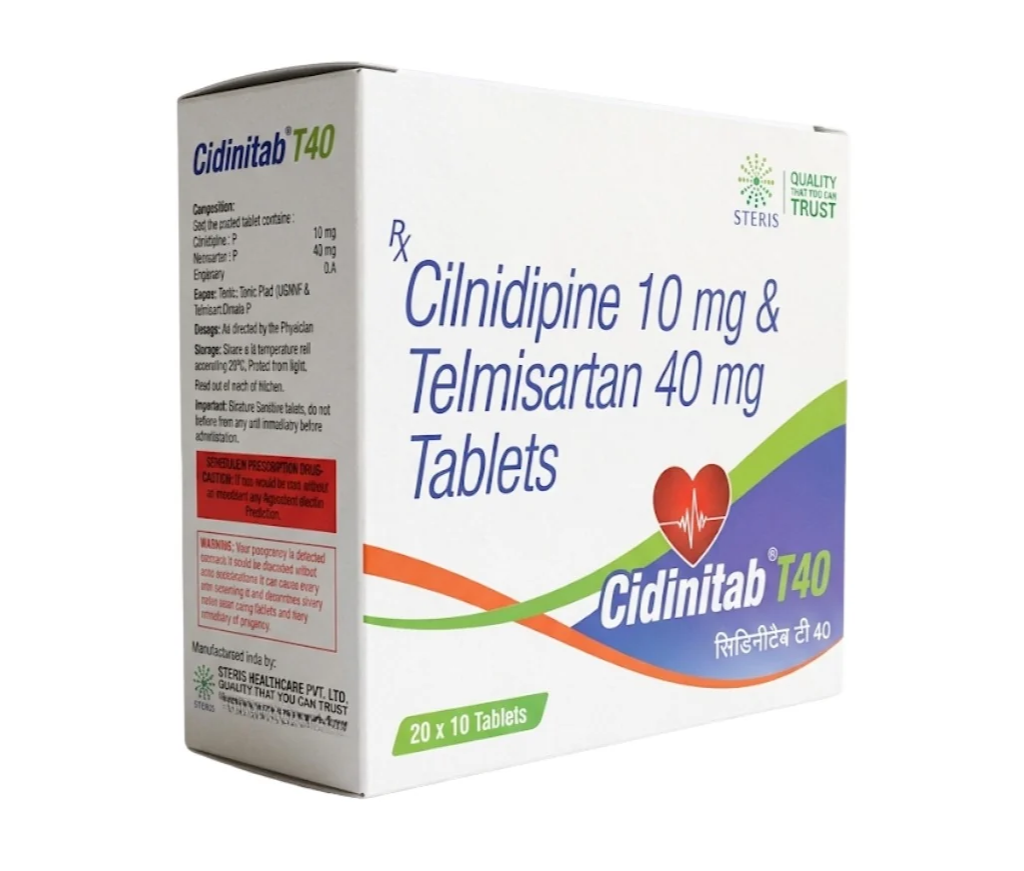
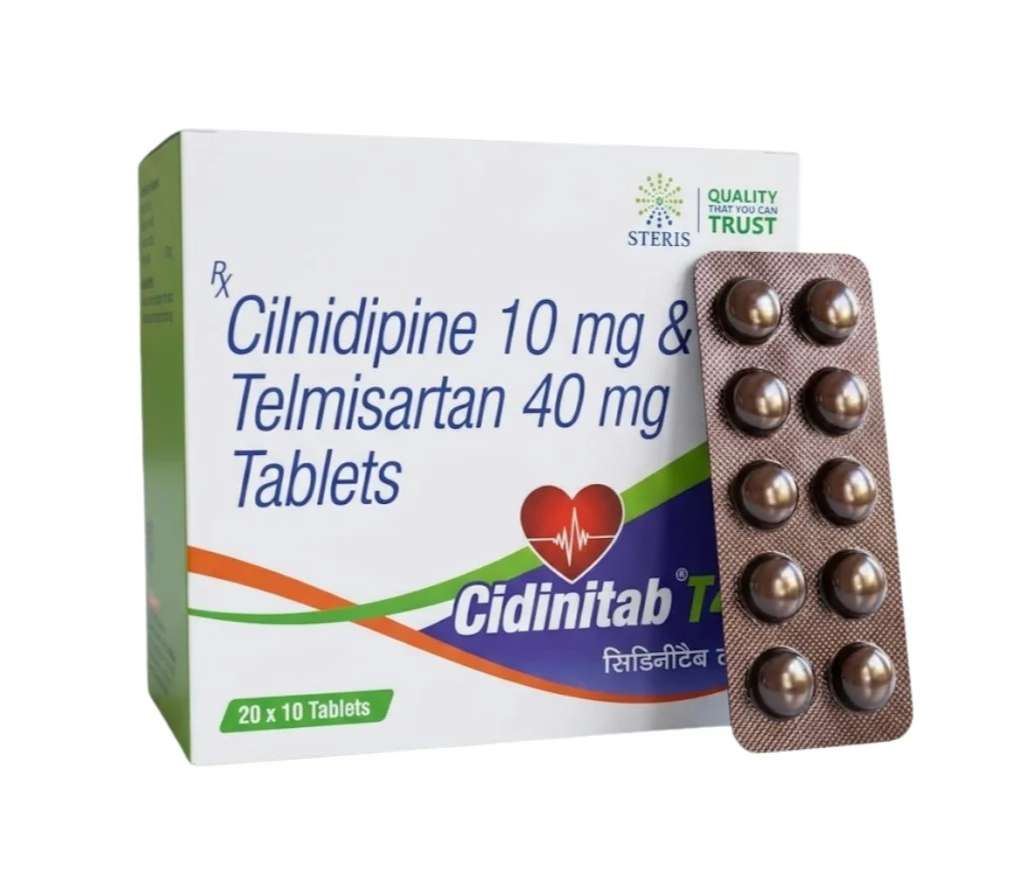
CIDINITAB T40
 Item requires a valid prescription
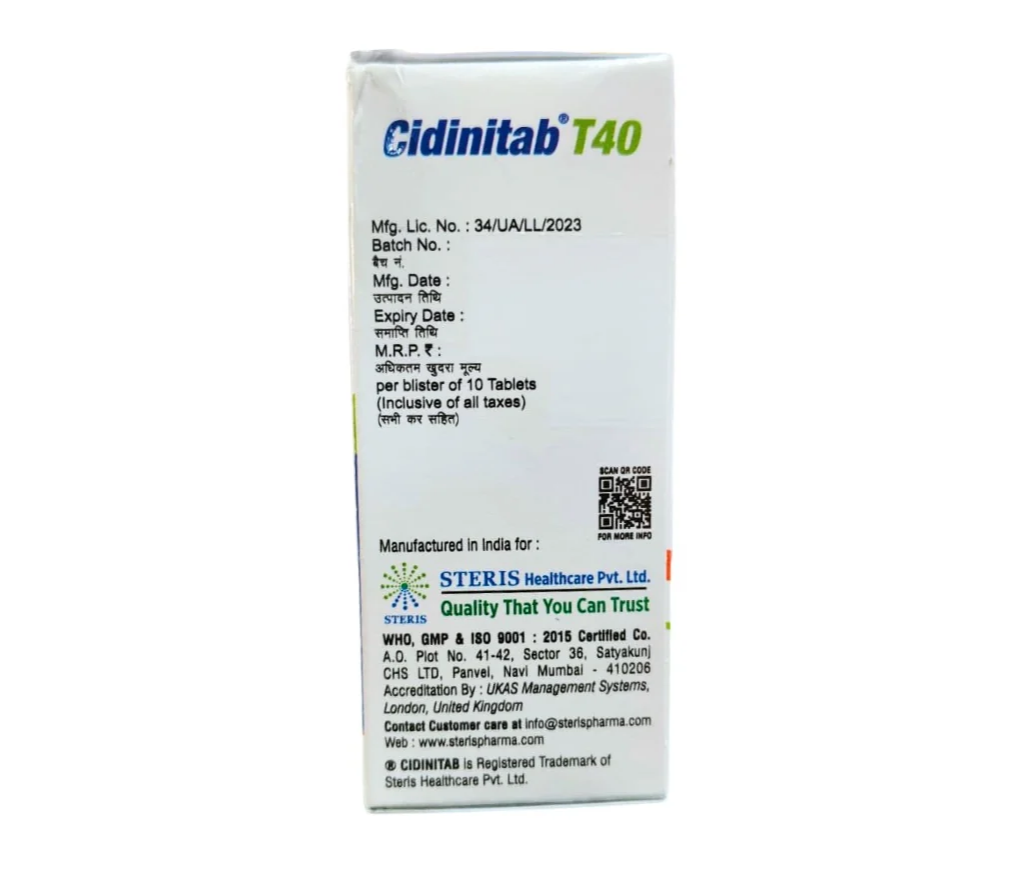
Manufactured By Steris Healthcare Pvt Ltd
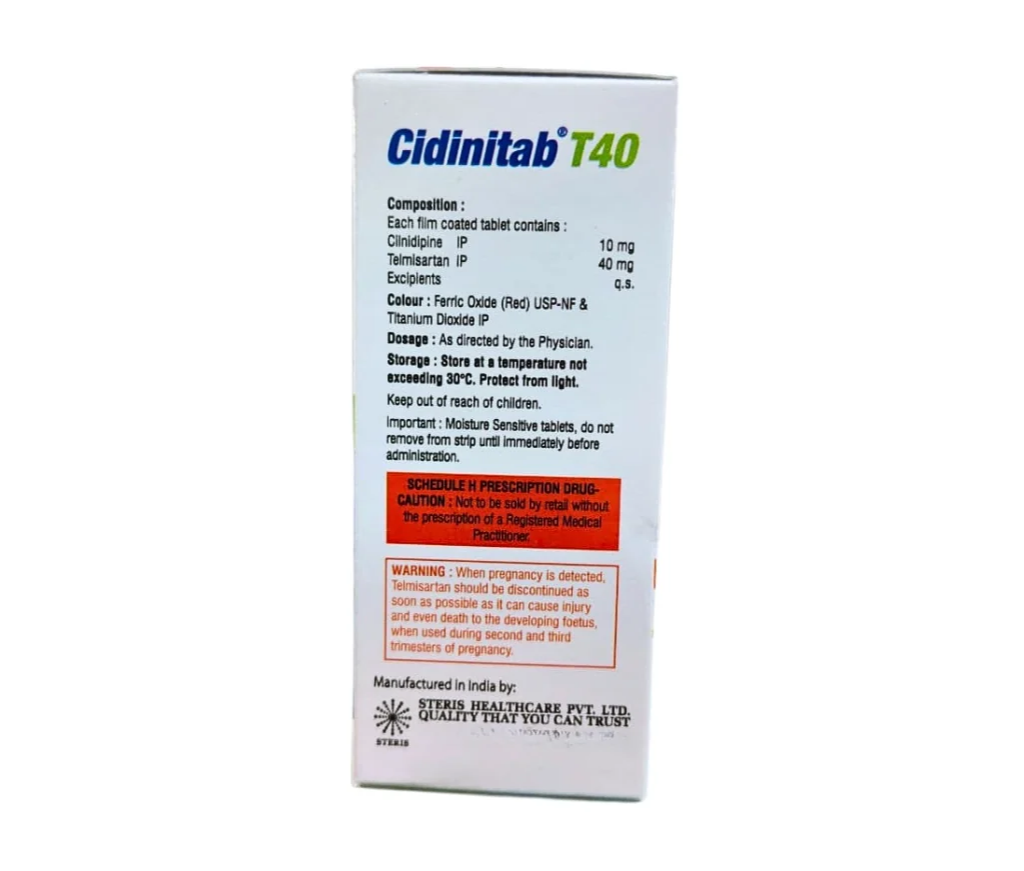
Composition Cilnidipine (10mg) and Telmisartan (40mg) tablet
Rs 66.89
MRP Rs 95.56
(30% OFF)
Includes all taxes
Package SIZE
( For 10 Tablets )

100% Authentic
Products

Free
Shipping*

Products
Return Policy
Description:
The primary use of CIDINITAB T40 is the treatment of essential hypertension in adults. Hypertension rarely announces itself. Many people feel perfectly well while their arteries, heart, kidneys and brain are under steady pressure. By the time headaches, breathlessness or vision changes appear, the damage may already be advanced. This is why doctors treat the number on the BP monitor and not only the symptoms.
This tablet pairs two medicines that approach the problem from different directions:
- Cilnidipine (10 mg) is a calcium channel blocker of the dihydropyridine class. It blocks calcium entry through L-type channels in the walls of blood vessels, which lets the arteries relax and lowers resistance to blood flow. It also blocks N-type channels on sympathetic nerve endings, which reduces the release of norepinephrine, a stress-related chemical that tightens blood vessels and speeds the heart.
- Telmisartan (40 mg) is an angiotensin II receptor blocker. Angiotensin II is a powerful hormone that narrows blood vessels and makes the body retain salt and water. Telmisartan blocks its AT1 receptor, so vessels stay relaxed and fluid balance improves. It has a long duration of action, which supports once-daily dosing.
Because the two drugs lower pressure by different mechanisms, together they usually achieve better control than either does alone. Your doctor may choose this combination if:
- your BP remains above target on a single antihypertensive;
- you need a calcium channel blocker and an ARB together from the start;
- you are likely to benefit from the kidney-friendly profile of an ARB alongside a vasodilator; or
- you would find it easier to take one tablet daily in place of two.
Only a doctor can decide whether this combination suits you. The choice depends on your readings, kidney function, potassium level, other conditions, current medicines and pregnancy status.
Product Details
|
Product |
Details |
|---|---|
|
Brand Name |
CIDINITAB T40 |
|
Active Ingredients |
Cilnidipine and Telmisartan |
|
Strength |
10 mg + 40 mg |
|
Therapeutic Category |
Antihypertensive medicine |
|
Primary Use |
Management of high blood pressure |
|
Dosage Form |
Oral tablet |
|
Pack Size |
10 tablets |
|
Manufacturer/Marketer |
Steris Healthcare Pvt. Ltd. |
|
Market |
India |
|
Route of Administration |
Oral, as directed by a doctor |
Why Is CIDINITAB T40 Important?
Long-term, uncontrolled high blood pressure is one of the most important preventable causes of stroke, heart attack, heart failure, chronic kidney disease and vision loss. Treatment is a lifelong commitment, and three practical problems often get in the way:
- One drug often falls short. A good number of patients need two or more medicines to reach target BP. Combining drugs with complementary actions is a well-established, guideline-supported strategy.
- Side effects can limit single-drug therapy. Raising the dose of one calcium channel blocker can increase ankle swelling. Adding an ARB instead is a recognised way to achieve more BP lowering, and ARBs are known to reduce calcium channel blocker–related ankle swelling in many patients.
- Missed doses undermine control. Fewer tablets mean better adherence, and better adherence means steadier BP.
CIDINITAB T40 is important because it brings these advantages into one daily tablet. Telmisartan stays active for roughly a full day, so BP control continues through the early-morning hours, when the risk of cardiovascular events is highest. Cilnidipine’s sympathetic-modulating action may also help limit the reflex rise in heart rate that vasodilators sometimes cause.
Medication works best alongside lifestyle measures. Cutting down salt, eating more fruits and vegetables, staying active, maintaining a healthy weight, limiting alcohol, avoiding tobacco and managing stress all help. Measuring your BP at home and keeping a log gives your doctor reliable information for adjusting treatment.
Key Benefits
- Complementary dual action: vessel relaxation from cilnidipine and hormone-pathway blockade from telmisartan work together for stronger BP reduction.
- Once-daily convenience: one tablet with long-acting components makes adherence simpler.
- Smooth, sustained control: telmisartan’s long half-life and cilnidipine’s steady effect support 24-hour coverage between doses.
- Reduced reflex heart-rate rise: cilnidipine’s N-type channel blockade may blunt sympathetic activation that can accompany vasodilation.
- Helps offset ankle swelling: the ARB component can reduce the pedal edema that calcium channel blockers sometimes cause.
- Supports kidney and heart protection: by lowering BP and blocking the angiotensin pathway, the combination helps ease the long-term burden on the heart and kidneys. Telmisartan is also used by doctors for cardiovascular risk reduction in selected high-risk patients, as decided by the treating physician.
- Useful for patients with diabetes and hypertension: ARBs are commonly preferred in people with diabetes, particularly where protein in the urine is a concern. Your doctor will decide whether this applies to you.
- Lower pill burden: a fixed-dose combination can be more economical and convenient than buying two separate brands.
- Trusted manufacturer: made by Steris Healthcare Pvt. Ltd., a WHO-GMP and ISO-certified pharmaceutical company based in Jaipur, Rajasthan.
Precautions Before and While Taking
- Prescription only. Do not start, stop or adjust the dose yourself. Stopping suddenly can cause BP to rise again.
- Pregnancy: important. Telmisartan and other ARBs can harm the unborn baby, especially in the second and third trimesters. Do not take this medicine if you are pregnant. If you are planning pregnancy or find out you are pregnant, tell your doctor right away.
- Breastfeeding: inform your doctor, as safer alternatives are usually preferred.
- Do not use if allergic to cilnidipine, telmisartan or any ingredient in the tablet.
- Kidney conditions: tell your doctor if you have kidney disease, a narrowing of the arteries supplying the kidneys (renal artery stenosis), or are on dialysis. Kidney function and potassium levels may need regular monitoring.
- Liver and bile-duct disease: telmisartan is cleared mainly through bile. It is generally avoided in biliary obstruction and used cautiously in liver impairment.
- High potassium (hyperkalaemia): ARBs can raise blood potassium. Avoid potassium supplements, salt substitutes containing potassium, or potassium-sparing diuretics unless your doctor advises.
- Low blood pressure and dehydration: vomiting, diarrhoea, heavy sweating or poor fluid intake can cause a sharp drop in BP or kidney strain. Contact your doctor if this happens.
- Heart conditions: report severe aortic stenosis, heart failure, recent heart attack or very low BP to your doctor.
- Diabetes: if you take diabetes medicines or insulin, monitor blood sugar, as BP medicines can alter how the body responds.
- Drug interactions. Tell your doctor about all medicines and supplements, in particular:
- other BP medicines, including ACE inhibitors and aliskiren (combining these with an ARB needs specialist supervision)
- diuretics, which can add to the BP-lowering effect
- NSAIDs such as diclofenac or ibuprofen (can reduce effect and strain the kidneys)
- lithium (levels may rise)
- digoxin (levels may increase)
- potassium supplements and potassium-sparing diuretics
- CYP3A4 inhibitors or inducers such as ketoconazole, erythromycin, rifampicin, carbamazepine or cimetidine
- Grapefruit juice: avoid large amounts, as it can raise cilnidipine levels.
- Alcohol: may increase dizziness and BP lowering. Limit or avoid it.
- Driving and machinery: dizziness is possible, especially early in treatment. Avoid hazardous tasks until you know how you respond.
- Rise slowly from lying or sitting positions.
- Surgery: tell your surgeon or anaesthetist you are taking this medicine.
- Missed dose: take it when you remember, unless the next dose is close. Do not double up.
- Older adults and children: older patients may be more sensitive to BP lowering. Safety and effectiveness in children have not been established.
- Storage: keep below 25 °C, in a dry place, away from light, and out of the reach of children. [PLACEHOLDER: confirm storage statement from approved label.]
Possible Side Effects
Many people tolerate this combination well, and mild effects often ease as the body adjusts. Inform your doctor if any effect persists or troubles you.
Common side effects
- Headache
- Dizziness or lightheadedness
- Flushing or a sensation of warmth
- Palpitations
- Tiredness or weakness
- Back pain
- Mild ankle or foot swelling
- Stomach upset, nausea or diarrhoea
- Sinus congestion or upper respiratory symptoms
Less common side effects
- Low blood pressure, particularly on standing
- Raised potassium level
- Rise in creatinine (a kidney function marker)
- Dry cough (rare with ARBs)
- Skin rash or itching
- Muscle pain or cramps
- Gum swelling, reported with calcium channel blockers
- Insomnia or mood changes
Frequently Asked Questions
1. What are cilnidipine and telmisartan tablets used for?
Cilnidipine and telmisartan tablets are used to manage high blood pressure (hypertension). Cilnidipine relaxes blood vessels by blocking calcium channels, while telmisartan blocks angiotensin II receptors to help lower blood pressure.
2. How does cilnidipine with telmisartan help control blood pressure?
Cilnidipine helps widen blood vessels by relaxing their walls, while telmisartan blocks the action of angiotensin II, a substance that narrows blood vessels. Together, these medicines can help reduce blood pressure when prescribed by a healthcare professional.
3. Can cilnidipine and telmisartan be taken together?
Yes, cilnidipine and telmisartan can be prescribed together to control high blood pressure when a doctor considers the combination appropriate. Take them only as directed and do not combine separate tablets without medical advice.
4. What are the benefits of cilnidipine and telmisartan tablets?
The main benefit is improved blood pressure control through two different mechanisms. Maintaining blood pressure within the recommended range may help reduce the long-term risk of complications affecting the heart, brain, and kidneys.
5. What is the usual dosage of cilnidipine and telmisartan?
The dosage depends on the tablet strength, blood pressure readings, medical history, and response to treatment. Follow your doctor's instructions and the product label. Do not adjust the dose yourself.
6. What are the side effects of cilnidipine and telmisartan tablets?
Possible side effects include dizziness, headache, low blood pressure, and swelling of the ankles. Telmisartan may also affect potassium levels and kidney function in some people. Seek medical advice if symptoms persist or worsen.
7. Is cilnidipine with telmisartan used for high blood pressure?
Yes, this combination is prescribed to treat hypertension when one medicine alone may not provide adequate control or when combination treatment is otherwise appropriate. Regular blood pressure monitoring helps assess treatment effectiveness.
8. What is the difference between cilnidipine and telmisartan?
Cilnidipine is a calcium channel blocker that relaxes blood vessels, whereas telmisartan is an angiotensin II receptor blocker that prevents a hormone from narrowing blood vessels. They lower blood pressure through different mechanisms.
9. Can cilnidipine and telmisartan tablets be taken daily?
Yes, they are commonly prescribed for regular daily use to manage high blood pressure. Take the medicine at the prescribed time and do not stop treatment without consulting your doctor, even if you feel well.
10. Do cilnidipine and telmisartan tablets require a prescription?
These medicines should be taken under medical supervision and are generally supplied as prescription medicines in India. Consult a qualified doctor before starting treatment, particularly if you have kidney problems, high potassium levels, or are pregnant or planning pregnancy.

