


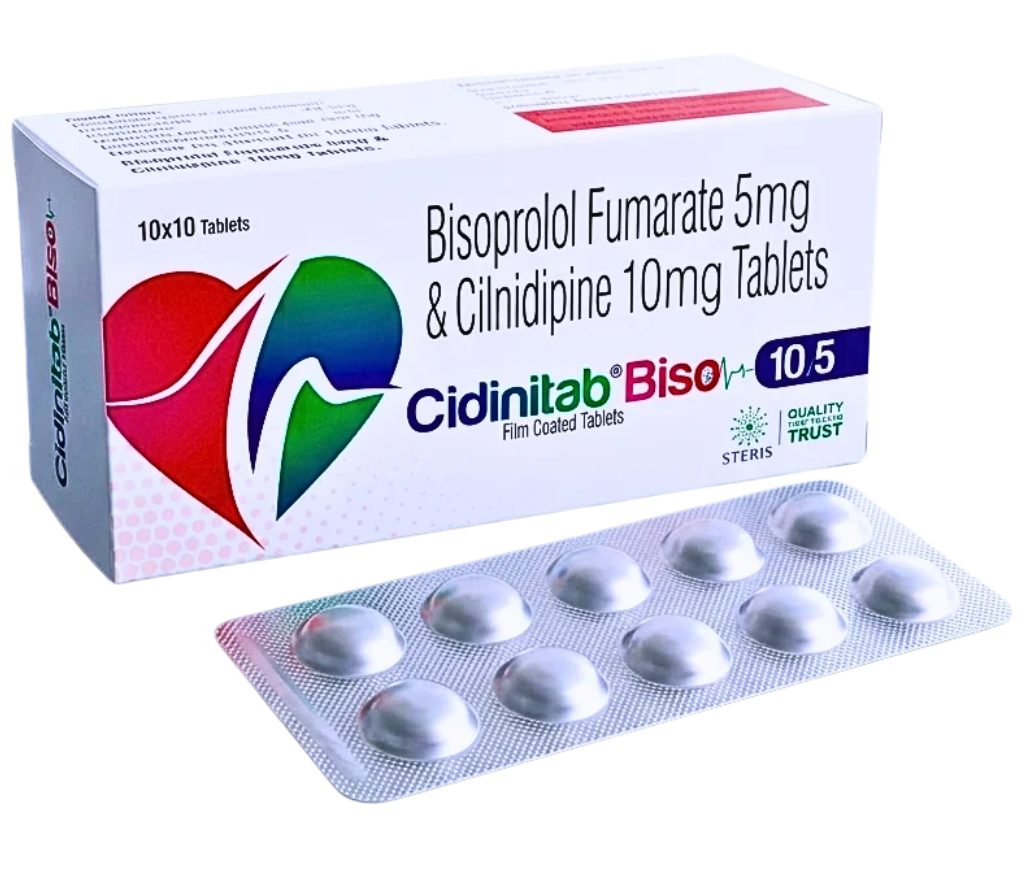
CIDINITAB BISO 10/5
 Item requires a valid prescription
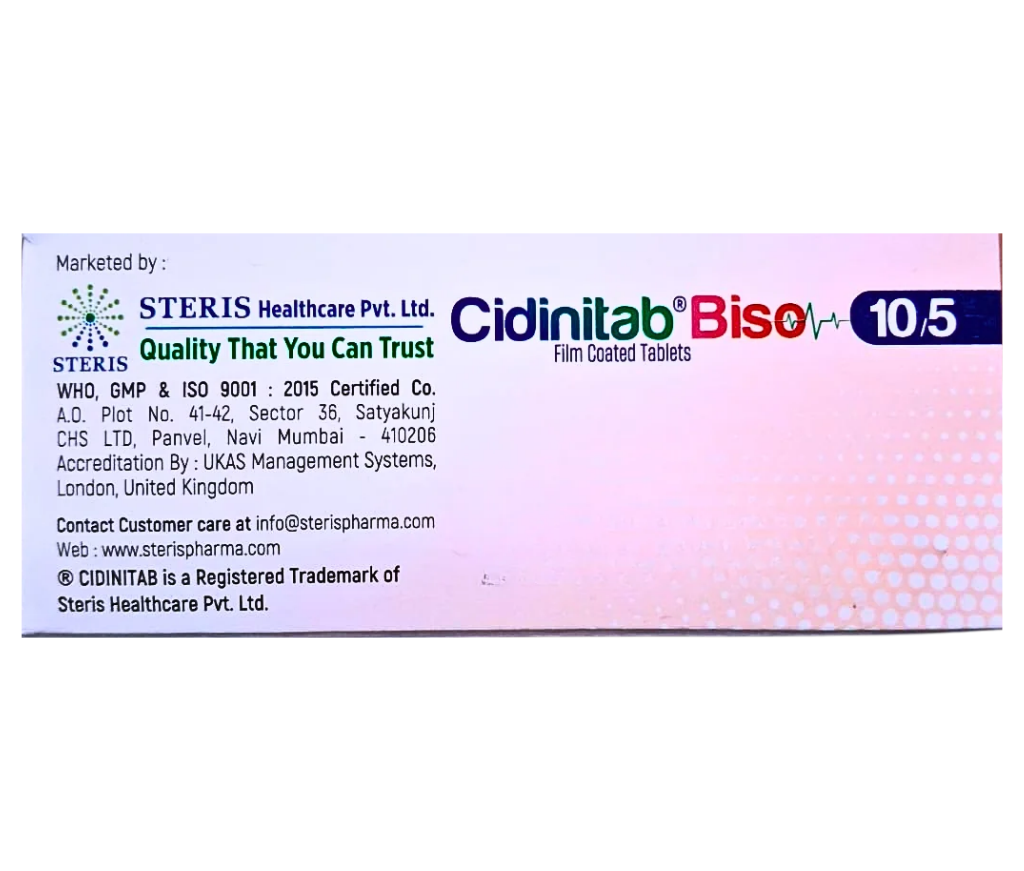
Manufactured By Steris Healthcare Pvt Ltd
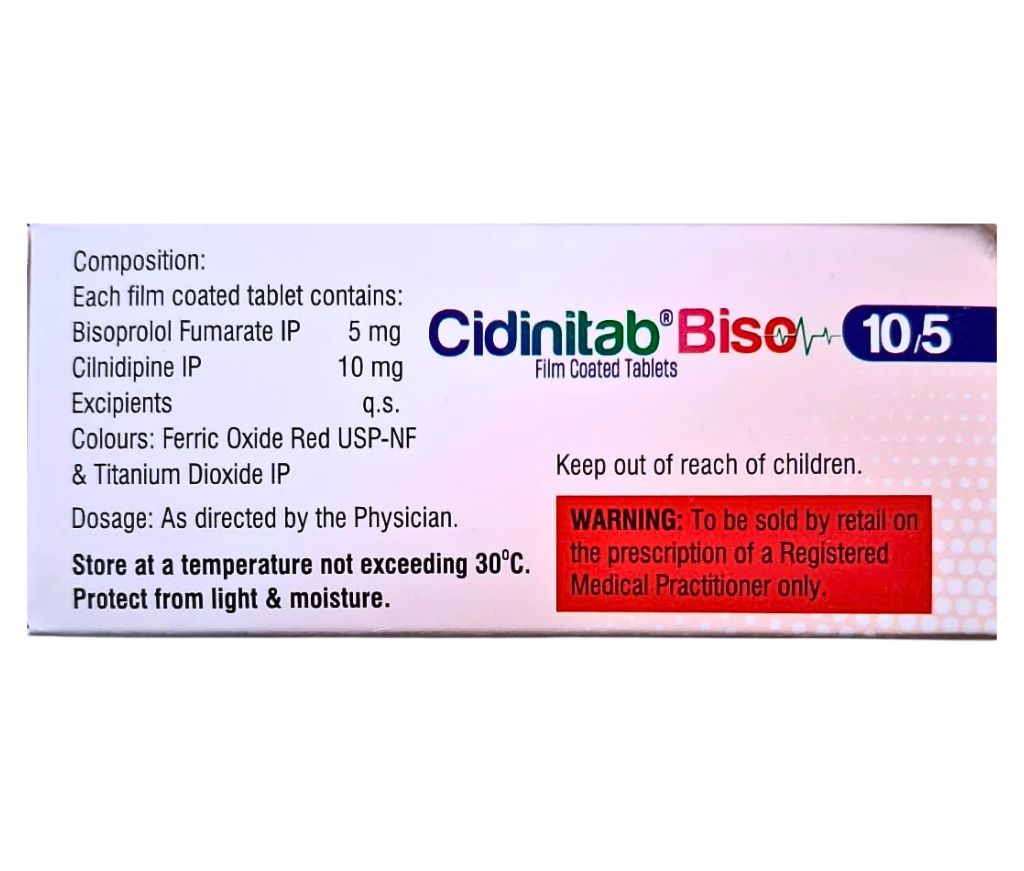
Composition Bisoprolol Fumarate 5mg And Cilnidipine 10mg Tablets
Rs 129.50
MRP Rs 185.00
(30% OFF)
Includes all taxes
Package SIZE
( For 10 Tablets )

100% Authentic
Products

Free
Shipping*

Products
Return Policy
Description:
What Is CIDINITAB BISO 10/5?
High blood pressure rarely stays controlled on a single medicine for long. Clinical trial documents for this exact combination note that monotherapy reaches guideline targets in only a minority of patients, and that most people with hypertension need two or more BP-lowering drugs. CIDINITAB BISO 10/5 responds to that reality by putting two complementary antihypertensives into one tablet, which also means fewer pills to remember each day.
The tablet contains:
- Bisoprolol Fumarate 5 mg – a cardioselective beta-1 adrenergic blocker. It reduces heart rate and the force of each heartbeat, which lowers the workload of the heart and brings blood pressure down.
- Cilnidipine 10 mg – a dihydropyridine calcium channel blocker. Unlike older drugs in its class, it blocks both L-type calcium channels in blood vessel walls and N-type channels at sympathetic nerve endings, so it relaxes arteries while also dampening sympathetic "fight-or-flight" activity.
Both molecules are well established and already marketed in India. The bisoprolol 5 mg plus cilnidipine 10 mg combination has also been studied in Indian phase III trials registered with the Clinical Trials Registry of India, including comparisons against metoprolol succinate plus cilnidipine in people with essential hypertension and in those with hypertension and stable coronary artery disease.
Clinical Indications
| Condition | Role of CIDINITAB BISO 10/5 |
|---|---|
| Essential (primary) hypertension | Lowers systolic and diastolic BP in adults whose BP is not adequately controlled on a single agent or who benefit from combination therapy |
| Hypertension with coronary artery disease (CAD) or angina | Heart-rate reduction from bisoprolol may add cardiac protection alongside BP control (label wording to be confirmed by reviewer) |
Your doctor decides whether this combination suits you after checking blood pressure, pulse, ECG where needed, kidney and liver function, and other medicines you take.
How CIDINITAB BISO 10/5 Works
Blood pressure depends on how hard the heart pumps and how narrow the blood vessels are. The two ingredients attack both sides of that equation.
- Bisoprolol binds selectively to beta-1 receptors in the heart. This slows the heart rate, reduces contractility and lowers cardiac output. At usual doses it has far less effect on beta-2 receptors in the lungs than non-selective beta-blockers, which is why it is generally preferred when airway sensitivity is a concern, although caution is still needed.
- Cilnidipine relaxes smooth muscle in artery walls by blocking L-type calcium channels, widening the vessels and lowering resistance. Its additional N-type channel action reduces release of noradrenaline from sympathetic nerves, which may blunt the reflex rise in heart rate that some calcium channel blockers cause.
Key Benefits of CIDINITAB BISO 10/5
- Dual-pathway BP control. Heart-rate reduction plus blood vessel relaxation in a single tablet.
- Once-daily convenience. One tablet replaces two separate prescriptions, which supports adherence, a major factor in long-term BP control.
- Lower pill burden. Especially helpful for people already taking medicines for diabetes, cholesterol or heart conditions.
- Heart-rate control. Bisoprolol's beta-1 selectivity helps manage resting pulse, relevant in hypertension with angina or coronary disease.
- Better tolerability profile on ankle swelling. Published commentary on cilnidipine describes a lower incidence of pedal edema than conventional calcium channel blockers (exact comparative figures: [PLACEHOLDER – reviewer to supply with citation]).
- Quality-assured manufacturing. Produced by Steris Healthcare Pvt. Ltd., a WHO-GMP and ISO-certified pharmaceutical manufacturer in India.
How Much Does It Lower Blood Pressure?
The size of the drop depends on your starting BP, age, salt intake, other medicines and how consistently you take the tablet. Typical expected reductions for each ingredient and for the combination: Your doctor will usually recheck your BP after a few weeks before deciding whether the dose is adequate. Home BP monitoring, with a log of morning readings, makes that review far more useful.
Dosage and How to Take It
- The usual approach is one tablet once daily, at about the same time each day, with or without food, swallowed whole with water. Many prescribers advise morning dosing.
- A dose increase, if any, must come from your doctor. Maximum daily dose: [PLACEHOLDER – confirm against Steris label].
- If you miss a dose, take it when you remember unless it is nearly time for the next one. Never double up.
- Do not stop suddenly. Abruptly stopping a beta-blocker can cause a rebound rise in heart rate and BP and, in people with coronary disease, can worsen angina or trigger a heart event. Doctors taper the dose gradually when stopping is needed.
- Regular monitoring of pulse and BP is advised, particularly in the first weeks.
Side Effects of CIDINITAB BISO 10/5
Common
- Tiredness or low energy
- Dizziness or light-headedness, especially on standing
- Headache
- Slow pulse
- Cold hands and feet
- Flushing or a feeling of warmth
- Mild stomach upset, nausea or diarrhoea
- Mild ankle or foot swelling (less frequent with cilnidipine than with older calcium channel blockers)
Serious – seek medical help promptly
- Very slow heartbeat (for example under about 50 beats per minute with symptoms), fainting or near-fainting
- Worsening breathlessness, new swelling of legs, or rapid weight gain (possible heart failure)
- Wheezing or tightness in the chest
- Severe drop in BP causing collapse
- Chest pain that is new or worse
- Allergic reaction: rash, itching, swelling of face, lips or throat
- Signs of liver problems such as yellowing of eyes or skin
Precautions and Who Should Be Careful
- A slow heartbeat, heart block, sick sinus syndrome, or decompensated heart failure
- Asthma, COPD or other airway disease (beta-blockers must be used cautiously)
- Diabetes, especially if you use insulin. Beta-blockers can mask warning signs of low blood sugar such as a racing heart.
- Kidney or liver disease. Bisoprolol is cleared by both organs, and for severe kidney or liver impairment a daily bisoprolol dose above 10 mg is not recommended in standard prescribing information; your doctor will judge suitability of a fixed combination.
- Thyroid disease, psoriasis or circulation problems in the limbs
- A planned operation or anaesthesia
- Pregnancy, planning pregnancy or breastfeeding
Why Choose CIDINITAB BISO 10/5?
If your doctor has prescribed the bisoprolol 5 mg and cilnidipine 10 mg combination, here is what to weigh before you buy:
- Check the exact strength on the pack: 5 mg bisoprolol + 10 mg cilnidipine ("10/5" in the brand name refers to cilnidipine 10 / bisoprolol 5).
- Buy from a licensed pharmacy against a valid prescription. This is a Schedule H medicine.
- Confirm batch number and expiry date, and check the seal is intact.
- Compare pack size and cost per tablet rather than price alone. Pack size: [PLACEHOLDER].
- Ask about availability for long-term supply, since BP medicines are taken for months or years.
- Keep your prescription and BP log handy for follow-up visits.
Storage
Store below 30°C in a cool, dry place away from direct sunlight, in the original pack. Keep out of reach of children. Do not use after the expiry date. [Reviewer: confirm against label.]
Conclusion
CIDINITAB BISO 10/5 brings together bisoprolol fumarate 5 mg and cilnidipine 10 mg to tackle high blood pressure from two directions: bisoprolol eases the workload of the heart, while cilnidipine relaxes blood vessels and moderates sympathetic activity. For people who need more than one medicine, a single once-daily tablet can simplify treatment and make it easier to stay consistent, which is what protects the heart, brain and kidneys over the long term. Like all antihypertensives it needs a prescription, regular BP and pulse monitoring and honest conversations with your doctor about side effects, kidney or liver health, diabetes, and other medicines. Never stop it suddenly. If you have been prescribed this combination,
Frequently Asked Questions
1. Can I take cilnidipine and bisoprolol together?
Yes. Cilnidipine and bisoprolol are commonly prescribed together because they lower blood pressure through different mechanisms, and fixed-dose combinations of the two are marketed in India and have been studied in Indian phase III trials. They should be taken only on a doctor's prescription, because the combination can slow the heart rate and lower BP, and dosing depends on your pulse, BP and other conditions.
2. Is bisoprolol safe for kidneys?
Bisoprolol is generally considered kidney-friendly among beta-blockers because it is cleared by both the kidneys and the liver, so it does not build up easily. Pharmacokinetic studies found that accumulation did not exceed about two-fold even in severe kidney impairment, and standard prescribing information says no dose adjustment is usually needed in mild to moderate kidney disease. In severe impairment (creatinine clearance below about 20 mL/min) the bisoprolol dose should not exceed 10 mg daily. Always have kidney function checked and follow your doctor's advice.
3. How much BP is reduced by cilnidipine 10 mg?
The reduction varies from person to person. It depends on baseline BP, age, salt intake and other medicines. Typical systolic/diastolic reduction Your doctor will recheck your BP after a few weeks to see whether the dose or combination needs adjusting.
4. What are the bad side effects of bisoprolol fumarate?
Serious side effects include a very slow heartbeat, fainting, worsening breathlessness or swelling from heart failure, wheezing or chest tightness (especially with asthma or COPD), a sharp fall in BP, and allergic reactions such as facial swelling or rash. Bisoprolol can also mask the warning signs of low blood sugar in people with diabetes. Seek urgent medical help if any of these occur.
5. What is CIDINITAB BISO 10/5 used for?
CIDINITAB BISO 10/5 is used to treat high blood pressure (hypertension) in adults. The combination of a beta-blocker and a calcium channel blocker may also suit people whose hypertension occurs alongside coronary artery disease or angina .
6. What is the composition of CIDINITAB BISO 10/5?
Each tablet contains Bisoprolol Fumarate 5 mg and Cilnidipine 10 mg. Full excipient details are on the pack insert.
7. What is the best time to take this tablet?
Take it once a day at the same time, commonly in the morning, with or without food. Consistent timing helps keep BP steady and builds a habit.
8. How long does it take to start working?
Some BP lowering is seen within hours to days, but the full effect usually takes a few weeks. Your doctor will review your BP and heart rate during that period before changing the dose.
9. Can I stop CIDINITAB BISO 10/5 suddenly if my BP is normal?
No. A normal reading means the medicine is working, not that hypertension is cured. Stopping a beta-blocker suddenly can cause rebound high BP, fast heartbeat or worsening angina. Your doctor should reduce the dose gradually if stopping is advised.
10. Does cilnidipine cause ankle swelling?
Ankle swelling can occur with any calcium channel blocker, but cilnidipine is reported to cause it less often than conventional agents such as amlodipine. Tell your doctor if swelling becomes bothersome or comes with breathlessness.
11. Can I drink alcohol while taking it?
Limit alcohol. It can lower BP further and increase dizziness or light-headedness, particularly when you stand up quickly.
12. Is it safe for people with diabetes?
It can be used in many people with diabetes, but bisoprolol may hide symptoms of hypoglycaemia such as palpitations and tremor. Monitor blood sugar as advised and tell your doctor about every diabetes medicine you take.
13. Who should not take CIDINITAB BISO 10/5?
Generally avoid it if you have a very slow heart rate, significant heart block, sick sinus syndrome, cardiogenic shock, acutely decompensated heart failure, severe low blood pressure, or known allergy to bisoprolol, cilnidipine or any ingredient. Use caution with asthma, COPD, liver disease and severe kidney disease. Your doctor will decide.
14. Can I take it with other BP medicines?
Sometimes, but only under medical supervision. Combining with verapamil, diltiazem, certain anti-arrhythmics or clonidine-type drugs is generally not recommended, and adding other BP-lowering drugs can drop BP too far.
15. Is it safe to take long term?
Antihypertensives are usually long-term treatments. With regular follow-up of BP, pulse, kidney and liver function, many people take such combinations for years. Never adjust the duration on your own.
16. Is a prescription required to buy CIDINITAB BISO 10/5?
Yes. It is a Schedule H medicine and must be dispensed against a valid prescription from a registered doctor.
17. What is the price of CIDINITAB BISO 10/5, and how do I order it?
Pricing depends on pack size ([PLACEHOLDER]) and supply channel. Use the Check Price option or contact Steris Healthcare using the details below to confirm current price and availability. Prescription only – consult your doctor.
18. What should I know before buying this tablet?
Confirm the strength (Bisoprolol 5 mg + Cilnidipine 10 mg), check batch and expiry on the pack, buy only from a licensed pharmacy, keep your prescription, and tell your doctor about all other medicines and health conditions.

