


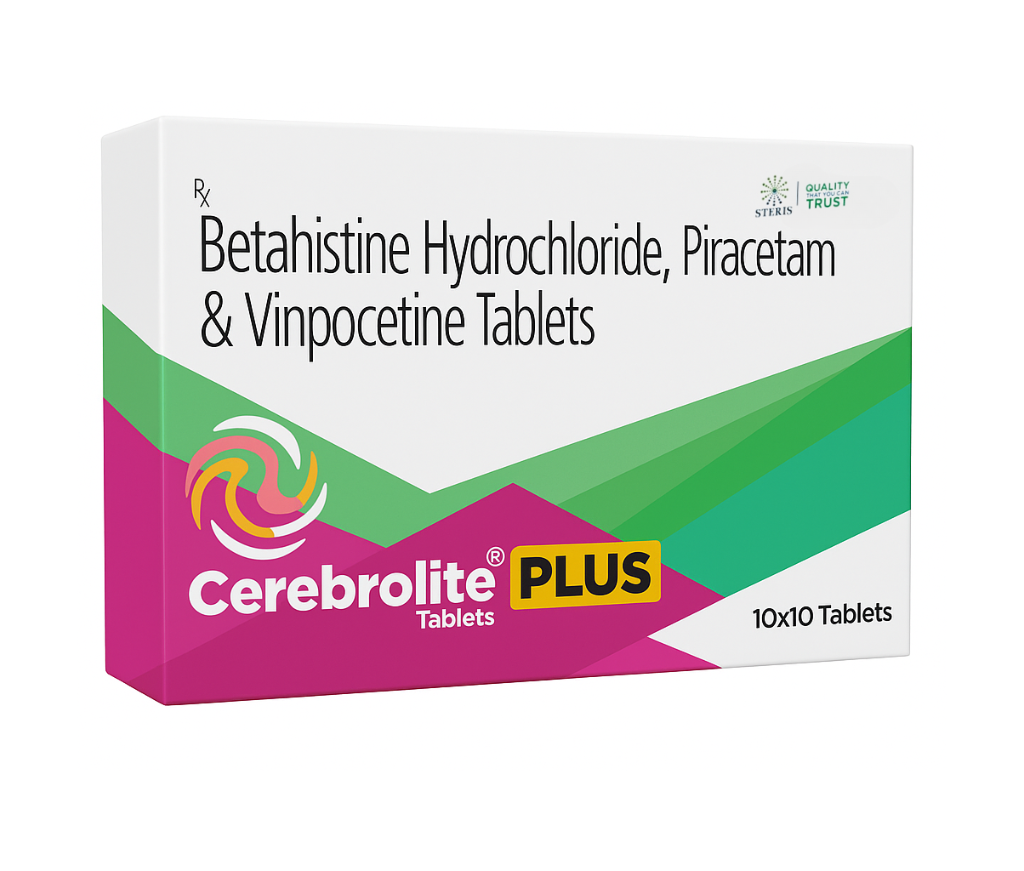
CEREBROLITE PLUS
 Item requires a valid prescription
Manufactured By Steris Healthcare Pvt Ltd
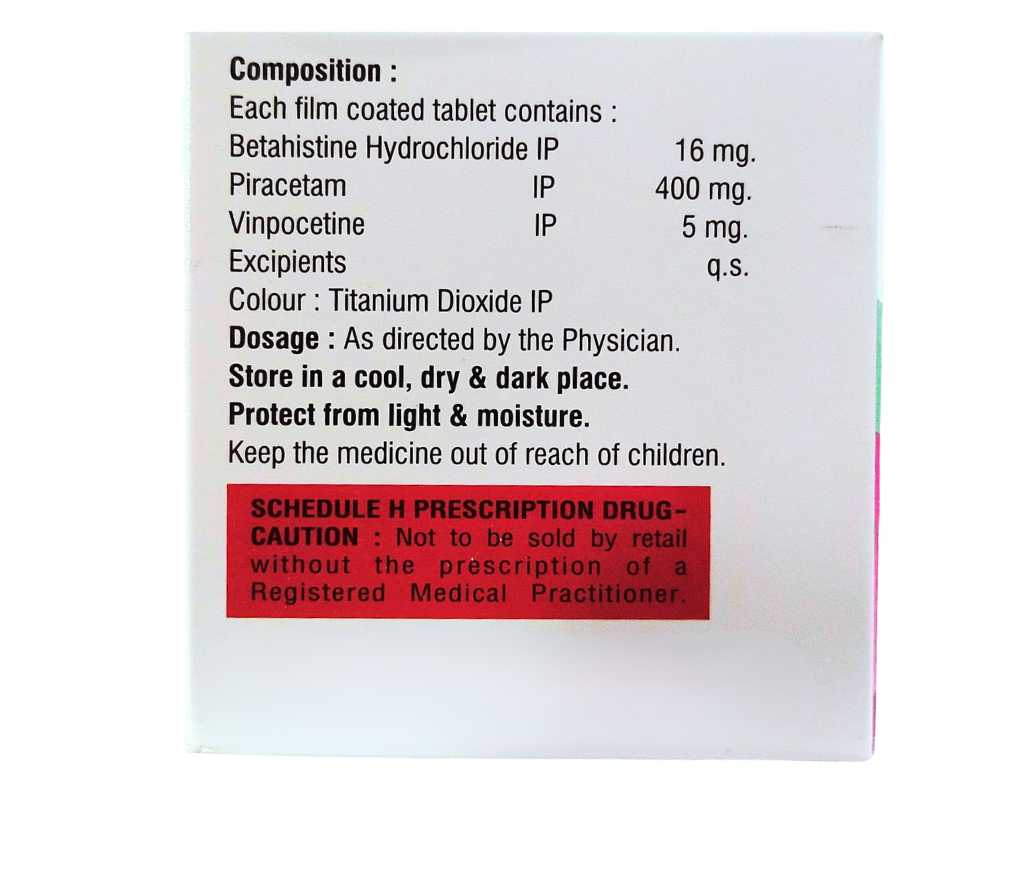
Composition Betahistine Hydrochloride, Piracetam and Vinpocetine Tablets
Rs 226.41
MRP Rs 323.44
(30% OFF)
Includes all taxes
Package SIZE
( For 10 Tablets )

100% Authentic
Products

Free
Shipping*

Products
Return Policy
Description:
CEREBROLITE PLUS is manufactured and marketed by Steris Healthcare Pvt. Ltd. It's a triple fixed-dose combination tablet bringing together betahistine hydrochloride, a medicine used for managing vertigo, piracetam, a nootropic agent that supports cognitive function, and vinpocetine, a cerebral vasodilator that improves blood flow to the brain. Below you'll find complete product information, a full breakdown of this combination's uses, why it's important, its key benefits, how it works, correct dosing, side effects, precautions, and a clear path to ordering it.
Product Information
| Field | Details |
|---|---|
| Brand name | CEREBROLITE PLUS |
| Composition | Betahistine Hydrochloride Tablets + Piracetam Tablets + Vinpocetine Tablets |
| Product form | Tablet (oral) |
| Pack size | 10 tablets (strip pack) |
| Manufacturer/Marketer | Steris Healthcare Pvt. Ltd. |
| Country of origin | India |
| Therapeutic category | Neurology — Vertigo Management / Cerebral Circulation Support |
| Primary use | Management of vertigo, dizziness, and associated symptoms linked to inner ear disorders and reduced cerebral blood flow, alongside cognitive function support, as directed by your doctor |
| Route of administration | Oral |
| Typical dosing | One tablet two to three times daily, or as directed by your physician |
| Prescription status | Schedule H — prescription required |
| Storage | Store below 30°C in a dry place, protected from light and moisture |
| Keep away from | Children and direct sunlight |
| Shelf life | As printed on the pack — do not use beyond the expiry date |
Why It's Important
Dizziness, vertigo, and mild cognitive symptoms are extremely common, particularly in older adults, and can significantly affect daily safety, independence, and quality of life if left unmanaged. This combination's importance lies in a few key points:
- Vertigo can be genuinely disabling — affecting balance, increasing fall risk, and disrupting basic daily activities like walking, driving, or even standing up
- Many patients with dizziness also experience some degree of associated cognitive fog or reduced mental clarity, particularly when reduced cerebral blood flow is a contributing factor
- Addressing vertigo, cognitive support, and cerebral circulation together, rather than treating each in isolation, reflects how closely interconnected these symptoms often are in real clinical presentations
- For older patients specifically, where fall risk and cognitive changes carry serious safety implications, a combined approach can offer more comprehensive, practical symptom relief
For patients experiencing recurrent dizziness, balance problems, or mild memory and concentration difficulties, this combination offers a genuinely multi-pronged approach worth discussing with a neurologist or ENT specialist.
Key Benefits
What Are the Benefits of Betahistine, Piracetam and Vinpocetine Tablets?
- Targeted vertigo relief – Betahistine specifically addresses the spinning, disorienting sensation associated with inner ear disorders like Meniere's disease.
- Cognitive function support – Piracetam supports memory, concentration, and mental clarity, particularly relevant for patients experiencing age-related cognitive changes.
- Improved cerebral blood flow – Vinpocetine enhances circulation to the brain, supporting better oxygen and glucose delivery to brain tissue.
- A genuinely complementary, three-pronged approach – Addresses vertigo, cognition, and circulation together rather than requiring three separate prescriptions.
- Convenient combined dosing – Simplifies the daily treatment routine for patients, particularly older adults managing multiple symptoms at once.
- Manufactured under WHO-GMP standards – Produced by Steris Healthcare, a WHO-GMP and ISO 9001:2018 certified pharmaceutical manufacturer, supporting consistent quality and safety compliance.
Mechanism of Action:
Betahistine hydrochloride works as a histamine analogue, acting on H1 and H3 receptors. It's believed to improve blood flow within the inner ear (specifically the stria vascularis) and reduce pressure within the endolymphatic system, which helps ease the vertigo associated with conditions like Meniere's disease.
Piracetam works by modulating neuronal membrane function and enhancing communication between brain cells, particularly affecting neurotransmitter systems involved in learning and memory. It's believed to improve the brain's metabolic efficiency and support neuroplasticity, contributing to its cognitive-supportive effects.
Vinpocetine acts as a vasodilator specifically within cerebral blood vessels, increasing blood flow to brain tissue. It also has effects on cellular energy metabolism within brain cells, supporting more efficient use of oxygen and glucose — the brain's primary energy sources — which is believed to contribute to both its circulatory and cognitive-supportive properties.
Together, these three mechanisms address vertigo at the level of the inner ear, cognitive function at the level of neuronal communication, and blood flow at the level of cerebral circulation — three distinct but interconnected pathways relevant to dizziness and cognitive symptoms.
Side Effects
Common, generally mild side effects can include:
- Nausea or mild stomach upset
- Headache
- Dizziness (paradoxically, in some patients, particularly early in treatment)
- Drowsiness or mild fatigue
- Mild skin rash or itching
Precautions & Warnings
- Use with caution in patients with a history of bronchial asthma or peptic ulcer disease, given betahistine's histamine-related mechanism.
- Inform your doctor if you have epilepsy or a seizure disorder before starting, given piracetam's effects on neuronal activity.
- Use with caution in patients with significant kidney or liver impairment, since dose adjustment may be needed.
- Not recommended during pregnancy or breastfeeding unless specifically directed by a doctor.
- Persistent or worsening dizziness despite treatment should be reassessed by your doctor rather than continuing indefinitely without follow-up.
- Inform your doctor of all other medications being taken, to check for potential interactions.
- Store in a cool, dry place, protected from light and moisture, and keep out of reach of children.
Frequently Asked Questions
1. Where can I buy Betahistine Hydrochloride Piracetam Tablet and Vinpocetine online?
You can buy Betahistine Hydrochloride, Piracetam and Vinpocetine tablets through licensed online pharmacies or authorized pharmaceutical suppliers in India. Always verify the manufacturer, formulation, batch number and expiry date before purchasing.
2. What is the price of Betahistine Hydrochloride Piracetam Tablet and Vinpocetine?
The price may vary depending on the brand, strength, pack size, manufacturer and seller. Check the current price with a licensed pharmacy or authorized supplier before placing an order.
3. Can I order Betahistine Hydrochloride Piracetam Tablet and Vinpocetine online?
Yes, the medicine may be ordered online through licensed pharmacies or authorized suppliers where legally available. A valid prescription may be required depending on the formulation and applicable regulations.
4. Is Betahistine Hydrochloride Piracetam Tablet and Vinpocetine available from Steris Healthcare?
Availability depends on Steris Healthcare's current product range and stock status. Contact Steris Healthcare or an authorized distributor to confirm product availability, strength, pack size and ordering details.
5. What is Betahistine Hydrochloride Piracetam Tablet and Vinpocetine used for?
This combination may be prescribed for certain conditions involving dizziness, vertigo and balance-related symptoms. Its specific use depends on the patient's condition and the prescribing healthcare professional's assessment.
6. What is the composition of Betahistine Hydrochloride Piracetam Tablet and Vinpocetine?
The composition contains Betahistine Hydrochloride, Piracetam and Vinpocetine. The exact strength of each active ingredient depends on the specific product formulation and should be checked on the product packaging or prescription.
7. Is a prescription required for Betahistine Hydrochloride Piracetam Tablet and Vinpocetine?
Prescription requirements can vary according to the product formulation and applicable local regulations. Use this combination only under the guidance of a qualified healthcare professional.
8. How should Betahistine Hydrochloride Piracetam Tablet and Vinpocetine be taken?
Take the tablet exactly as prescribed by your doctor. Do not change the dose or frequency without medical advice. Follow the instructions regarding food, timing and duration provided with your prescription.
9. What should I know before buying Betahistine Hydrochloride Piracetam Tablet and Vinpocetine?
Before buying, verify the exact composition, strength, manufacturer, batch number, expiry date, storage instructions and packaging. Inform your healthcare professional about existing medical conditions, allergies and other medicines you are taking.
10. How can I order Betahistine Hydrochloride Piracetam Tablet and Vinpocetine online?
To order online, choose a licensed pharmacy or authorized pharmaceutical supplier, confirm the required strength and pack size, provide a prescription if requested, and verify the product details before completing your purchase.