


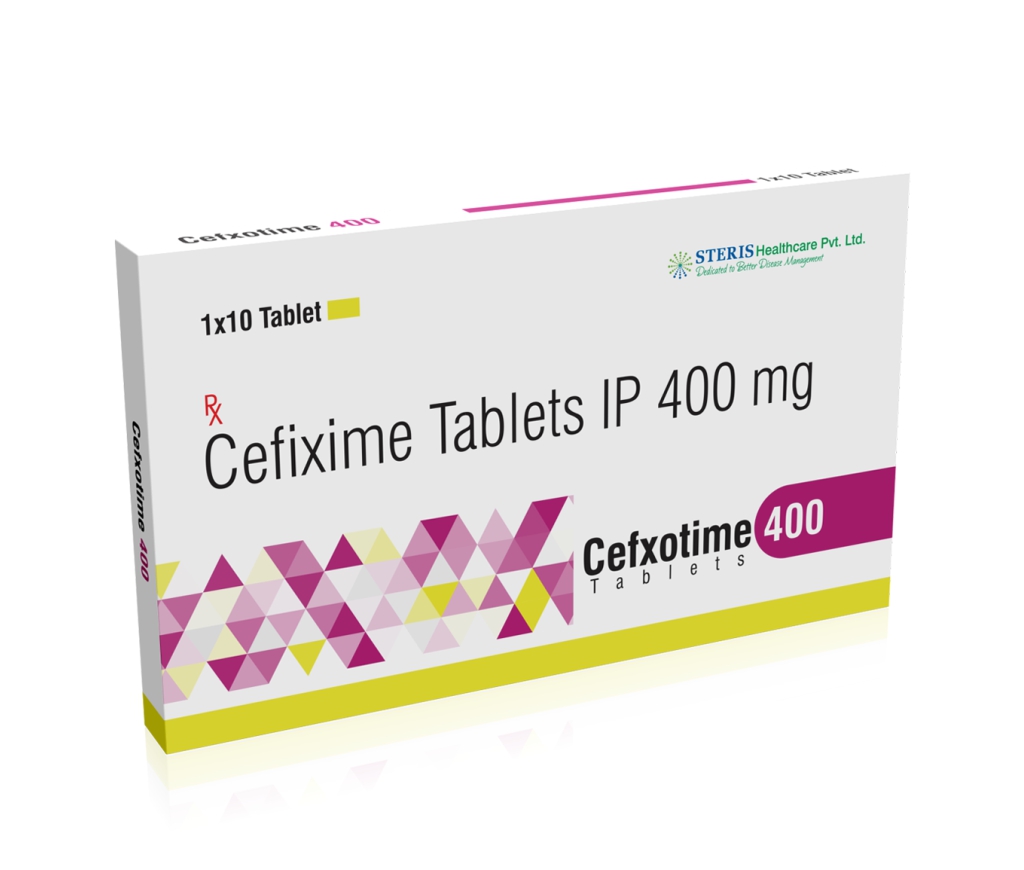


CEFEXOTIME 400
 Item requires a valid prescription
Manufactured By Steris Healthcare Pvt Ltd
Composition Cefexime 400mg Mono Cartoon
Rs 180.08
MRP Rs 257.26
(30% OFF)
Includes all taxes
Package SIZE
( For 10 Tablet )

100% Authentic
Products

Free
Shipping*

Products
Return Policy
Description:
Cefixime 400 mg is an oral cephalosporin antibiotic used to treat certain bacterial infections. It is available as tablets and capsules and is prescribed when the suspected or confirmed bacteria are susceptible to cefixime. It is not effective against viral infections such as the common cold or influenza.
If you are searching for the uses, benefits, dosage, side effects, price, or how to take Cefixime 400 mg, it is important to understand that this is a prescription antibiotic and should be used according to a healthcare professional's advice.
Current prescribing information lists cefixime for certain uncomplicated urinary tract infections, pharyngitis and tonsillitis, acute exacerbations of chronic bronchitis, and uncomplicated cervical or urethral gonorrhea, depending on the formulation and applicable labeling.
What Is Cefixime 400 mg?
Cefixime is a third-generation cephalosporin antibacterial medicine. It works against susceptible bacteria by interfering with bacterial cell-wall formation, ultimately preventing the bacteria from growing and surviving.
The 400 mg strength provides 400 mg of cefixime per tablet or capsule. Different manufacturers may sell cefixime under different brand names and packaging formats, including single-carton or “mono carton” presentations.
The packaging itself does not change the medicine's active ingredient or therapeutic effect. When buying Cefixime 400 mg, check the active ingredient, strength, manufacturer, batch number, expiry date, and pharmacy authenticity rather than relying only on the appearance of the carton.
Cefixime 400 mg Uses
Cefixime 400 mg is used to treat certain bacterial infections, provided the causative bacteria are susceptible to it.
Depending on the formulation and local prescribing information, cefixime may be prescribed for:
- Uncomplicated urinary tract infections (UTIs)
- Certain throat infections, including pharyngitis and tonsillitis
- Certain acute exacerbations of chronic bronchitis
- Certain uncomplicated gonococcal infections
- Some other susceptible bacterial infections when specifically prescribed by a healthcare professional
Current U.S. labeling states that cefixime should be used only for infections that are proven or strongly suspected to be caused by susceptible bacteria. This is important because unnecessary antibiotic use contributes to antimicrobial resistance.
Key Benefits of Cefixime 400 mg
The primary benefit of cefixime 400 mg is its antibacterial activity against susceptible organisms.
Potential practical benefits include:
- Oral administration: Cefixime can be taken by mouth, making it convenient compared with injectable antibiotics when an oral antibiotic is appropriate.
- Once-daily adult dosing in many indications: Current prescribing information lists 400 mg daily as the recommended adult dose for the covered indications
- Broad clinical use: It can be prescribed for several susceptible bacterial infections.
- Flexible administration: The tablet or capsule may generally be taken without regard to food.
- Useful when clinically appropriate: A healthcare professional can select cefixime based on the suspected infection, patient factors, local resistance patterns, and available culture and susceptibility information.
A key point for consumers is that stronger does not always mean better. A 400 mg antibiotic should not be selected simply because it has a higher number on the package. The appropriate antibiotic depends on the infection and the individual patient.
Cefixime 400 mg Dosage
For adults, current U.S. prescribing information recommends 400 mg per day for the listed indications. Depending on the formulation, this can be administered as 400 mg once daily; some tablet labeling also allows the 400 mg tablet to be divided into two 200 mg doses taken 12 hours apart.
For Streptococcus pyogenes infections, the prescribing information states that treatment should continue for at least 10 days.
The correct duration depends on the infection. Therefore, do not use the dosage information on this page as a personal prescription.
Children generally require weight-based dosing, rather than automatically receiving the adult 400 mg dose. Current labeling provides pediatric dosing based on body weight for appropriate formulations.
People with impaired kidney function may also require dosage adjustment.
How to Take Cefixime 400 mg
Take Cefixime 400 mg exactly as prescribed.
For a tablet or capsule:
- Take it at the prescribed time each day.
- Swallow the medicine with water unless your healthcare professional gives different instructions.
- It can generally be taken with or without food.
- Do not take more than the prescribed amount.
- Do not share your antibiotic with another person.
- Complete the prescribed treatment unless your healthcare professional tells you to stop.
If you miss a dose, follow the instructions provided by your doctor or pharmacist. Avoid taking an extra dose simply to compensate for a missed tablet.
Cefixime 400 mg Side Effects
Like other antibiotics, cefixime can cause side effects.
The most frequently reported adverse effects are gastrointestinal. Current prescribing information reports diarrhea, nausea, loose stools, abdominal pain, indigestion, and vomiting among the most common reactions.
Some people may experience relatively mild digestive symptoms during treatment. However, persistent, severe, or worsening symptoms should be discussed with a healthcare professional.
Serious Side Effects and Warnings
Although uncommon, cefixime can cause serious reactions.
One important concern is hypersensitivity or allergic reactions, particularly in people with previous allergies to cefixime or other cephalosporins. Severe reactions, including anaphylaxis, have been reported.
Seek urgent medical attention if you develop symptoms such as:
- Difficulty breathing
- Swelling of the lips, tongue, face, or throat
- Severe or rapidly spreading rash
- Fainting or severe weakness
Cefixime can also be associated with Clostridioides difficile-associated diarrhea. Severe or persistent diarrhea, particularly during or after antibiotic treatment, should be medically evaluated.
Who Should Avoid Cefixime 400 mg?
Cefixime is contraindicated in people with a known allergy to cefixime or other cephalosporin antibiotics.
Before starting treatment, tell your doctor if you have:
- A history of antibiotic allergies
- Kidney disease
- Liver problems
- Previous severe diarrhea associated with antibiotics
- A history of significant bleeding or clotting problems
- Other medical conditions
- Pregnancy or breastfeeding
Your doctor can determine whether cefixime is suitable and whether another antibiotic would be a better option.
Cefixime 400 mg Drug Interactions
Cefixime may interact with certain medicines. Its labeling notes potential coagulation-related effects with cephalosporins, particularly in people with risk factors such as renal or hepatic impairment, poor nutritional status, prolonged antibiotic therapy, or treatment with anticoagulants.
Tell your doctor or pharmacist about all prescription medicines, over-the-counter medicines, vitamins, and supplements you use before starting Cefixime 400 mg.
Do not assume that an antibiotic is safe to combine with another medicine simply because both are commonly used.
Can Cefixime 400 mg Treat a Cold or Flu?
No. Cefixime does not treat viral infections such as colds or influenza.
Antibiotics work against bacteria, not viruses. Using cefixime when it is not medically necessary provides no benefit against a viral infection and can contribute to antibiotic resistance and medication-related side effects.
Current cefixime labeling specifically recommends restricting its use to infections that are proven or strongly suspected to be caused by susceptible bacteria.
Cefixime 400 mg Mono Carton: What Should You Check Before Buying?
If you are purchasing Cefixime 400 mg in mono-carton packaging, verify the product carefully.
Before purchasing, check:
- Generic name: Cefixime
- Strength: 400 mg
- Dosage form: tablet or capsule
- Manufacturer details
- Batch or lot number
- Manufacturing and expiry dates
- Proper packaging and labeling
- Pharmacy or seller legitimacy
- Prescription requirements in your country
Do not purchase an antibiotic solely because it is advertised as inexpensive or because someone recommends it for similar symptoms.
For an online purchase, use a legitimate, appropriately licensed pharmacy and follow local prescription requirements.
Cefixime 400 mg: Important Buyer-Intent Information
If your search intent is “buy Cefixime 400 mg,” “Cefixime 400 mg price,” or “Cefixime 400 mg online,” the safest purchasing decision begins with confirming that cefixime is actually appropriate for the diagnosed infection.
The lowest advertised price is not necessarily the best value if the product is from an unreliable source, incorrectly stored, expired, counterfeit, or unsuitable for your infection.
A responsible purchase should prioritize:
Authenticity → correct strength → valid prescription → appropriate indication → reputable pharmacy → proper storage → expiry date.
Prices and brand availability vary substantially by country, manufacturer, pharmacy, pack size, and local regulations, so a specific current price should be verified with the actual pharmacy rather than estimated.
Frequently Asked Questions
1. What is Cefixime 400 mg used for?
Cefixime 400 mg is an oral cephalosporin antibiotic used for certain bacterial infections, including susceptible uncomplicated UTIs, some throat infections, certain acute exacerbations of chronic bronchitis, and certain uncomplicated gonococcal infections, depending on the formulation and applicable labeling.
2. Can I take Cefixime 400 mg once a day?
For adults, current prescribing information lists 400 mg daily for the specified indications. The exact schedule and treatment duration should come from your healthcare professional.
3. What are the common side effects of Cefixime 400 mg?
Common side effects include diarrhea, nausea, loose stools, abdominal pain, indigestion, and vomiting.
4. Can Cefixime 400 mg be taken with food?
Yes. Current prescribing information states that cefixime tablets and capsules may generally be administered without regard to food.
5. Is Cefixime 400 mg safe for children?
Cefixime can be prescribed to children for appropriate bacterial infections, but pediatric dosing is generally based on age, body weight, formulation, and the infection being treated. A child should not automatically be given the adult 400 mg dose.
6. Can cefixime 400 mg treat a viral fever?
No. Cefixime treats susceptible bacterial infections and does not treat viral illnesses such as influenza or most common colds. Unnecessary antibiotic use increases the risk of antibiotic resistance.
7. What happens if I take Cefixime 400 mg without needing an antibiotic?
You may experience side effects without receiving a benefit, and unnecessary antibiotic exposure can contribute to antimicrobial resistance. Cefixime should therefore be used only when a bacterial infection is proven or strongly suspected to be susceptible to the medicine.
8. Can I buy Cefixime 400 mg online?
Availability and prescription requirements depend on your country. If buying online, use a legitimate pharmacy and verify the product's manufacturer, strength, expiry date, packaging, and authenticity. Because cefixime 400 mg is an antibiotic, self-treatment without an appropriate diagnosis is not recommended.
Conclusion
Cefixime 400 mg is a prescription oral cephalosporin antibiotic used to treat specific bacterial infections when the bacteria are susceptible to cefixime. Its once-daily adult dosing for several labeled indications can make it convenient, but the medicine should not be used for viral infections or taken simply because symptoms resemble an infection previously treated with antibiotics.
For buyers searching for Cefixime 400 mg mono carton, the most important factors are not just price or packaging. Confirm the correct medicine, strength, authenticity, prescription status, expiry date, and suitability for the diagnosed infection. Always follow the prescribed dose and duration, and seek medical help for severe diarrhea, allergic symptoms, breathing difficulty, or other serious reactions.