


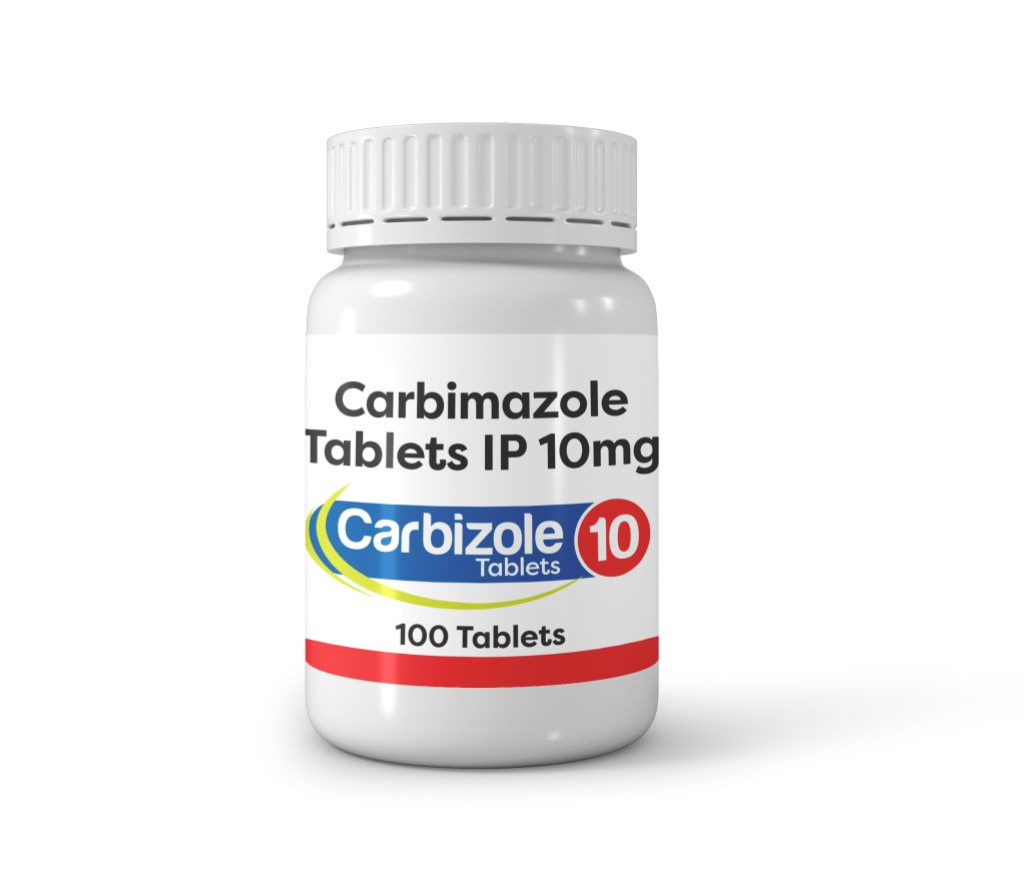
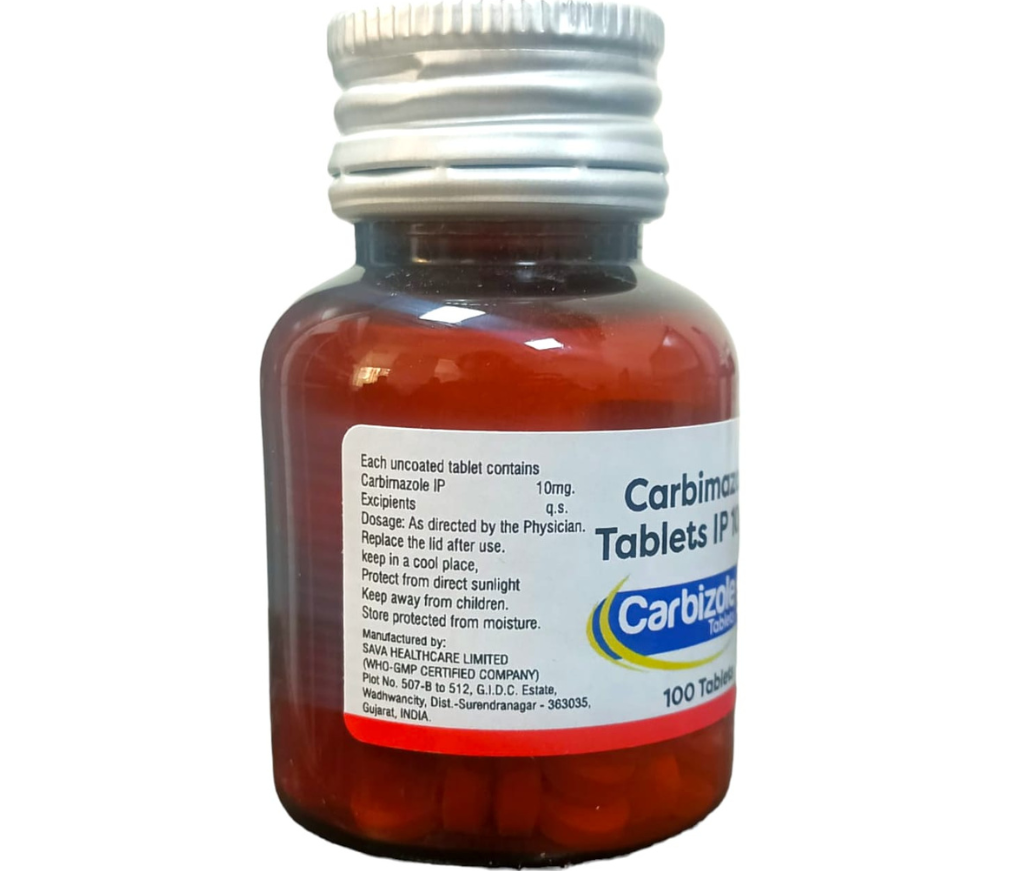
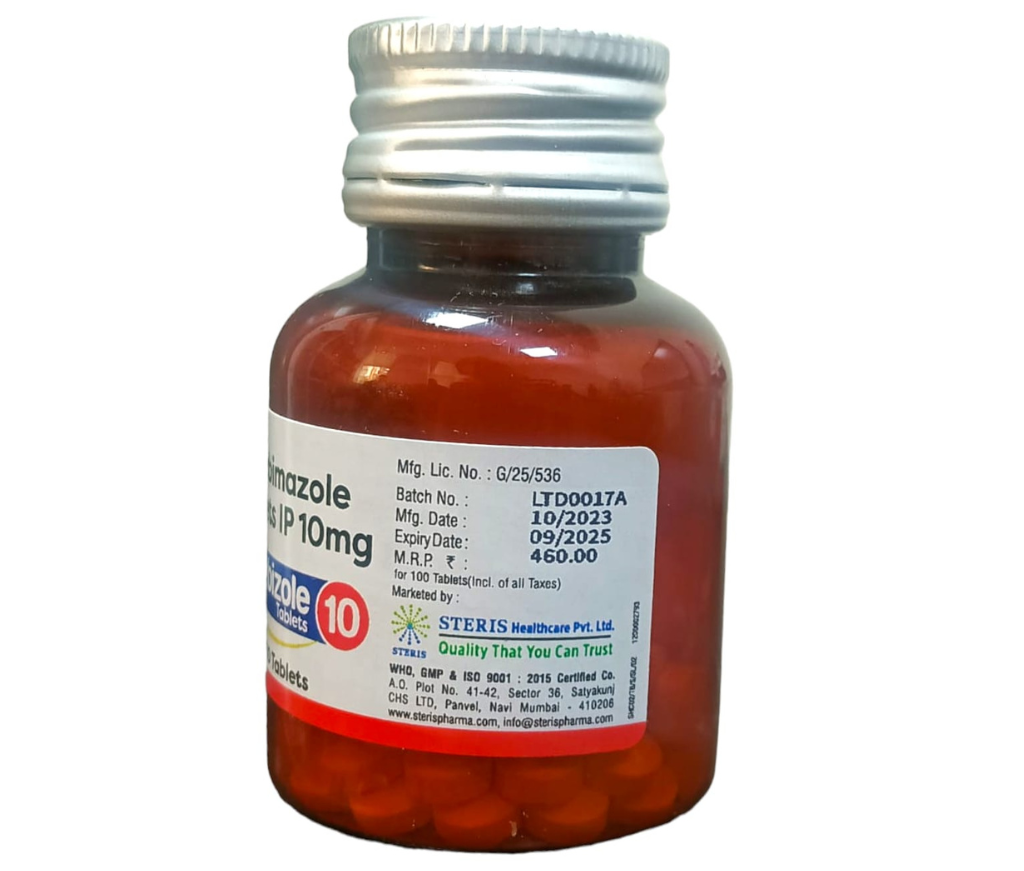
CARBIZOLE 10
 Item requires a valid prescription
Manufactured By Steris Healthcare Pvt Ltd
Composition Carbimazole 10 mg
Rs 301.88
MRP Rs 431.25
(30% OFF)
Includes all taxes
Package SIZE
( For 100 tablet )

100% Authentic
Products

Free
Shipping*

Products
Return Policy
Description:
CARBIZOLE 10 (Carbimazole 10mg) is a prescription anti-thyroid medicine used to treat hyperthyroidism (overactive thyroid) and Graves' disease. It works by reducing the amount of thyroid hormone your body produces, helping control symptoms like rapid heartbeat, weight loss, tremors, and anxiety. It is manufactured by Steris Healthcare Pvt. Ltd., a WHO-GMP and ISO-certified pharmaceutical company in India, and is sold in packs of 100 tablets. Carbimazole is a Schedule H drug — it can only be taken on a registered medical practitioner's prescription.
What Is CARBIZOLE 10 (Carbimazole 10mg)?
CARBIZOLE 10 is a thionamide-class anti-thyroid tablet containing Carbimazole 10mg as its active ingredient a prescription anti-thyroid tablet used to treat hyperthyroidism by reducing excess thyroid hormone production in the body.
Carbimazole itself is a prodrug — once swallowed, it is converted in the body into its active form, methimazole, which is the molecule that actually blocks the thyroid gland from making new hormone. Doctors across India commonly prescribe carbimazole as a first-line treatment for Graves' disease, toxic multinodular goitre, and to stabilize thyroid levels before thyroid surgery or radioactive iodine therapy.
Because thyroid disorders require precise, individualized dosing and regular blood monitoring, CARBIZOLE 10 is available strictly on prescription and should only be used under the supervision of an endocrinologist or physician.
Clinical Indications
| Condition | How Carbimazole Helps |
|---|---|
| Hyperthyroidism | Reduces excess production of thyroid hormones (T3/T4), easing symptoms of an overactive thyroid |
| Graves' Disease | First-line medical therapy to bring autoimmune-driven hormone overproduction under control |
| Toxic Multinodular Goitre / Toxic Adenoma | Controls hormone output from overactive thyroid nodules |
| Pre-surgical / Pre-Radioiodine Preparation | Used to normalize (make "euthyroid") thyroid levels before thyroidectomy or radioactive iodine treatment |
| Thyrotoxic Crisis Management | Used as part of a broader treatment plan under hospital supervision |
How Does Carbimazole Work? (Mechanism of Action)
The thyroid gland uses an enzyme called thyroid peroxidase (TPO) to combine iodine with a protein called thyroglobulin, a key step in manufacturing thyroid hormone. Carbimazole is converted in the liver and bloodstream into methimazole, which blocks this TPO enzyme.
By inhibiting thyroid peroxidase, methimazole:
- Prevents iodine from being incorporated into thyroglobulin
- Stops the coupling reaction needed to form T3 and T4
- Gradually reduces the amount of new thyroid hormone the gland can produce
Because the drug blocks new hormone synthesis rather than removing hormone already stored in the gland, it typically takes a few weeks of regular use before thyroid hormone levels and symptoms noticeably improve. This is why doctors ask patients to continue the medicine consistently even if they don't feel an immediate difference.
Key Benefits of CARBIZOLE 10
- Effective symptom control — helps normalize heart rate, reduce tremors, improve sleep, and stabilize weight and mood affected by excess thyroid hormone
- Non-surgical, non-radioactive option — a preferred first step for many patients before considering surgery or radioactive iodine
- Flexible dosing — can be titrated up or down by your doctor based on periodic thyroid function tests
- Widely studied molecule — carbimazole/methimazole has decades of clinical use in thyroid disease management worldwide
- Manufactured under WHO-GMP & ISO-certified standards by Steris Healthcare Pvt. Ltd., ensuring consistent quality and potency in every batch
Dosage & Administration
- Carbimazole is usually started at a higher "induction" dose to bring hormone levels down, then reduced to a lower "maintenance" dose once thyroid levels stabilize
- It is typically taken once daily or in divided doses, as directed by your physician
- Tablets can generally be taken with or without food, though your doctor may advise a fixed time of day for consistency
- Do not stop, skip, or change your dose without consulting your doctor — thyroid levels can swing quickly if the medicine is stopped abruptly
- Regular blood tests (TSH, free T3, free T4, and periodically complete blood count/liver function) are essential throughout treatment to monitor safety and effectiveness
Side Effects of Carbimazole
Common side effects (reviewer note: exact incidence percentages pending medical sign-off before publication):
- Nausea or mild stomach upset
- Headache
- Joint pain
- Mild skin rash or itching
- Hair thinning
- Altered sense of taste
Serious side effects — seek medical attention immediately if you notice:
- Sore throat, mouth ulcers, unexplained fever, or signs of infection (may indicate a rare but serious drop in white blood cells called agranulocytosis)
- Yellowing of skin or eyes, dark urine, or persistent nausea/vomiting (possible liver involvement)
- Severe skin reactions, swelling of the face/lips/tongue, or difficulty breathing (possible allergic reaction)
- Unusual bruising or bleeding
Precautions & Safety Information
- Pregnancy & breastfeeding: Thyroid control during pregnancy is critical for both mother and baby; carbimazole should only be used under specialist supervision, with dose and drug choice carefully reviewed by your doctor
- Blood monitoring: Routine blood counts are recommended, especially in the first few months, to catch rare blood-related side effects early
- Liver conditions: Inform your doctor of any history of liver disease before starting treatment
- Drug interactions: Tell your doctor about all other medicines you take, including blood thinners, other thyroid medicines, or over-the-counter supplements
- Not for self-medication: This is a Schedule H prescription drug — never start, adjust, or share this medicine without a doctor's prescription
- Consistent follow-up: Missing scheduled thyroid function tests can delay recognizing whether your dose needs adjustment
Substitutes & Comparable Anti-Thyroid Options
| Medicine | Active Ingredient | Typical Use Case |
|---|---|---|
| CARBIZOLE 10 | Carbimazole 10mg | Standard first-line anti-thyroid therapy |
| Methimazole tablets | Methimazole | Active metabolite of carbimazole; used directly in some countries |
| Propylthiouracil (PTU) | Propylthiouracil | Often preferred in first-trimester pregnancy or thyroid storm |
| Beta-blockers (adjunct only) | e.g., Propranolol | Used alongside anti-thyroid drugs to control heart rate/tremor symptoms, not a thyroid-hormone-lowering treatment |
Why Choose CARBIZOLE 10 from Steris Healthcare?
Steris Healthcare Pvt. Ltd. is a WHO-GMP and ISO-certified pharmaceutical manufacturer based in India, producing prescription and OTC medicines that meet strict quality benchmarks at every stage — from raw material sourcing to final packaging. CARBIZOLE 10 is manufactured in a controlled environment with batch-wise quality checks, giving healthcare providers and patients confidence in the consistency and reliability of every strip.
For pharmacies, hospitals, and PCD franchise partners looking to stock or distribute CARBIZOLE 10 (Carbimazole 10mg) in bulk across India, Steris Healthcare offers competitive pricing, dependable supply, and full regulatory documentation support.
Frequently Asked Questions
1. What is CARBIZOLE 10 (Carbimazole 10mg) used for?
It is used to treat hyperthyroidism (overactive thyroid), including Graves' disease and toxic nodular goitre, by reducing the amount of thyroid hormone the body produces.
2. What is carbimazole used to treat?
Carbimazole is primarily used to treat hyperthyroidism and Graves' disease, and to prepare patients for thyroid surgery or radioactive iodine treatment by normalizing thyroid hormone levels beforehand.
3. What is the best time to take carbimazole?
There's no single "best" time for everyone — your doctor will usually recommend taking it at the same time each day (commonly with breakfast or as a single daily dose) for consistency. Always follow your prescribed schedule.
4. What is the most common side effect of carbimazole?
Mild side effects such as nausea, headache, joint pain, skin rash, or altered taste are among the more commonly reported effects. (Exact frequency data pending clinical reviewer verification.)
5. Is carbimazole bad for the liver?
Liver problems are a recognized but uncommon risk with carbimazole. Doctors monitor liver function periodically, and any yellowing of skin/eyes, dark urine, or persistent nausea should be reported immediately.
6. Is carbimazole a high-risk medication?
Carbimazole requires careful monitoring because of rare but serious risks like agranulocytosis (a drop in infection-fighting white blood cells) and liver effects. It is not inherently "unsafe" when used correctly, but it does require regular blood testing and strict doctor supervision.
7. Can hyperthyroidism be cured permanently?
Some patients achieve long-term remission after a course of anti-thyroid medicine, especially with Graves' disease. Others may need a longer course, radioactive iodine, or surgery. This differs case to case and should be discussed with your endocrinologist.
8. Can hyperthyroidism go back to normal?
Yes, thyroid hormone levels can return to a normal range with appropriate treatment, though regular monitoring is important to catch any relapse early after stopping medication.
9. What foods should be avoided with hyperthyroidism?
Doctors often advise limiting iodine-rich foods (like iodized salt, seaweed, and certain seafood) and caffeine, as they may affect thyroid activity or worsen symptoms like a fast heartbeat. Always confirm dietary changes with your doctor or dietitian.
10. Can I stop taking carbimazole once I feel better?
No — stopping abruptly without medical advice can cause thyroid hormone levels to rise again. Your doctor will guide you on tapering the dose safely based on blood test results.
11. How long does it take for carbimazole to work?
Most patients start noticing symptom improvement within a few weeks, though full normalization of thyroid hormone levels can take longer and is confirmed through blood tests.
12. Can carbimazole be taken during pregnancy?
Thyroid management during pregnancy needs specialist input, as both untreated hyperthyroidism and certain anti-thyroid drugs carry risks. Your doctor will choose the safest option and dose for each trimester.
13. What should I avoid while taking carbimazole?
Avoid self-adjusting your dose, skipping blood tests, and taking other medicines or supplements without informing your doctor, as interactions can affect thyroid control or increase side-effect risk.
14. Is CARBIZOLE 10 available without a prescription?
No. Carbimazole is a Schedule H drug in India and can only be purchased and used with a valid prescription from a registered medical practitioner.
15. What is the price of CARBIZOLE 10 (Carbimazole 10mg)?
Pricing for CARBIZOLE 10 (100 tablets per pack) can be checked directly with Steris Healthcare. Use the "Check Price" option on this page or contact us for current pricing and bulk/franchise inquiries.
16. How do I order CARBIZOLE 10 from Steris Healthcare?
You can enquire about availability and pricing through the contact details listed below, or reach out via sterisonline.com for retail and franchise/bulk order support.
17. What should I tell my doctor before starting carbimazole?
Inform your doctor about any history of liver disease, blood disorders, pregnancy/breastfeeding status, allergies, and all other medicines or supplements you currently take.
If You Need More Information About CARBIZOLE 10 Click here

