


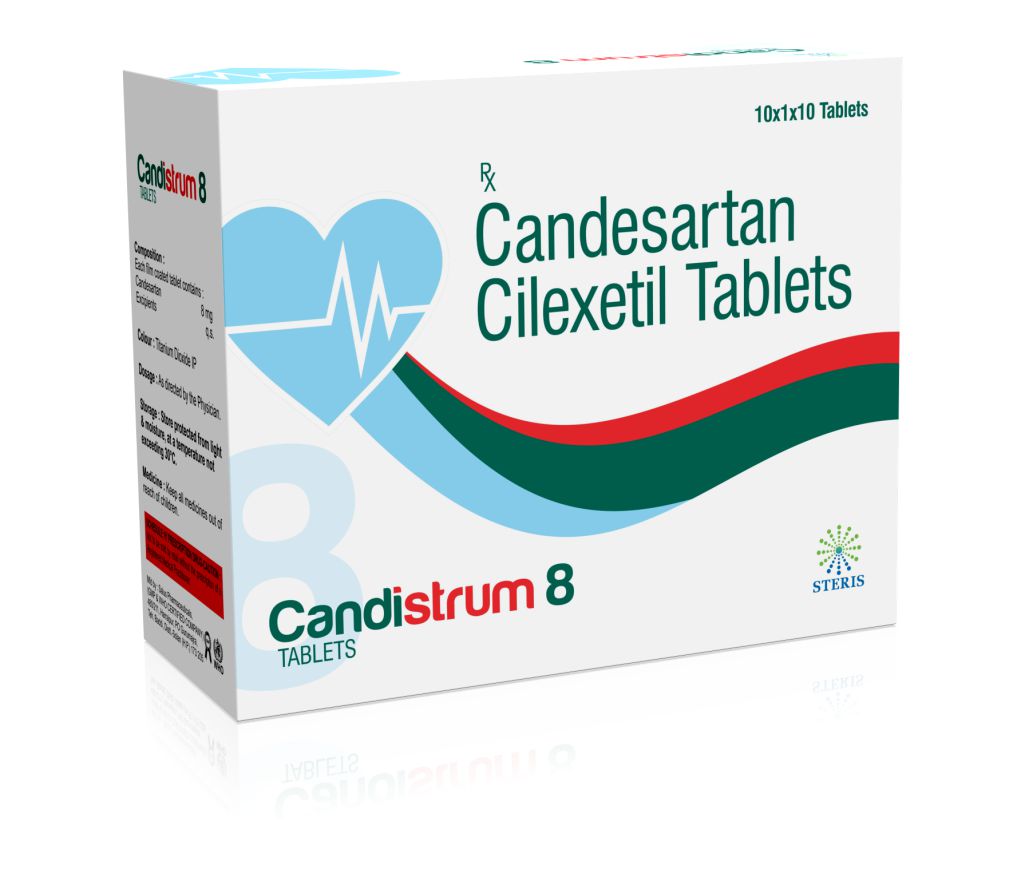
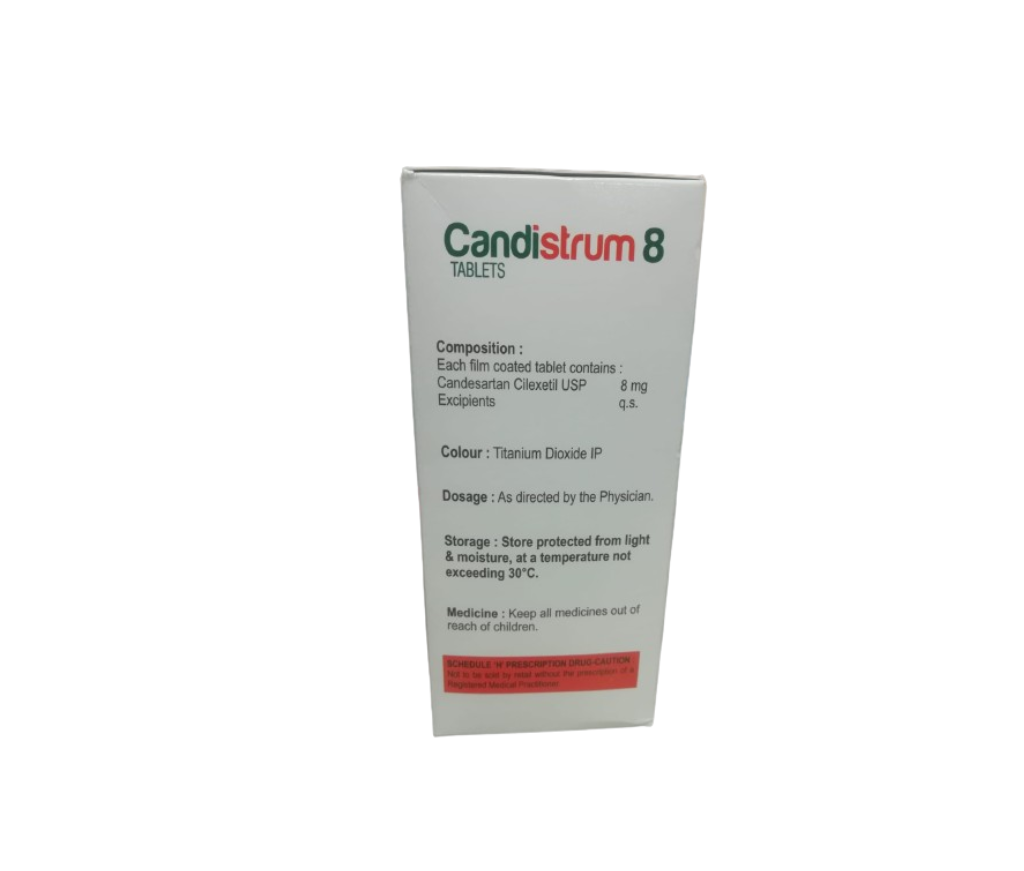
CANDISTRUM 8
 Item requires a valid prescription
Manufactured By Steris Healthcare Pvt Ltd
Composition Candesartan (8mg)
Rs 98.21
MRP Rs 101.25
(3% OFF)
Includes all taxes
Package SIZE
( For 10 Tablet )

100% Authentic
Products

Free
Shipping*

Products
Return Policy
Description:
CANDISTRUM 8 is an oral tablet containing Candesartan 8 mg, a medicine belonging to the Angiotensin Receptor Blocker (ARB) class, widely used in the management of hypertension (high blood pressure) and heart failure. It's one of the most commonly prescribed medicines in India for long-term blood pressure control, valued for its effectiveness, generally good tolerability, and once-daily dosing convenience.
Candesartan works by relaxing and widening blood vessels, which helps blood flow more easily and reduces the pressure the heart needs to work against — a mechanism that benefits both blood pressure management and, in appropriate patients, heart function support.
| Product Detail | Information |
|---|---|
| Brand Name | CANDISTRUM 8 |
| Salt Composition | Candesartan 8 mg |
| Drug Class | Angiotensin Receptor Blocker (ARB) |
| Form | Oral Tablet |
| Pack Size | 10 Tablets |
| Manufacturer/Marketer | Steris Healthcare Pvt. Ltd. |
| Primary Use | Hypertension, heart failure |
| Prescription Status | Prescription Required (Rx) |
| Storage | Store below 30°C, in a dry place, away from direct sunlight and moisture |
Why It's Important
High blood pressure is often called a "silent" condition because it typically causes no noticeable symptoms, even as it quietly damages blood vessels, the heart, kidneys, and eyes over time. In India, hypertension affects a significant portion of the adult population and remains one of the leading contributors to heart attacks, strokes, and kidney disease — many cases going undiagnosed or inadequately controlled for years.
Candesartan matters because it offers a well-tolerated, effective, once-daily option for bringing blood pressure into a healthier range and keeping it there consistently. Unlike short-term symptom relief, blood pressure management is a long-term commitment, and having a medicine that's easy to take consistently, has a manageable side-effect profile, and works reliably is genuinely important for reducing long-term cardiovascular risk. For patients with heart failure, Candesartan's role extends further — helping to reduce strain on the heart and supporting better overall cardiac function as part of a comprehensive treatment plan.
How Does Candesartan Work?
To understand Candesartan's action, it helps to know about a hormone system in the body called the Renin-Angiotensin-Aldosterone System (RAAS), which plays a central role in regulating blood pressure and fluid balance.
When blood pressure drops or the kidneys sense reduced blood flow, the body produces a hormone called Angiotensin II, which is a powerful blood vessel constrictor. Angiotensin II binds to specific receptors (AT1 receptors) on blood vessel walls, causing them to narrow (constrict), which raises blood pressure. It also stimulates the release of aldosterone, a hormone that causes the body to retain more sodium and water, further increasing blood volume and pressure.
Candesartan works by selectively blocking the AT1 receptors, preventing Angiotensin II from exerting its blood-vessel-narrowing effect. This results in:
- Relaxation and widening (dilation) of blood vessels
- Reduced blood pressure
- Decreased workload on the heart, which is particularly beneficial in heart failure
Key Benefits
What are the benefits?
- Reliable blood pressure reduction: Helps bring blood pressure into a healthier target range, reducing strain on blood vessels and the heart over time.
- Reduced cardiovascular risk: Consistent blood pressure control is directly linked to lower long-term risk of heart attack, stroke, and other cardiovascular complications.
- Supports heart failure management: Helps reduce the heart's workload, contributing to improved symptom control and functional capacity in appropriate patients.
- Simple once-daily dosing: Supports long-term adherence, which is essential for a chronic condition like hypertension.
- Lower incidence of dry cough: A meaningful advantage for patients who couldn't tolerate ACE inhibitors due to this specific side effect.
- Suitable for combination therapy: Can be used alongside other blood pressure medicines (such as diuretics) when single-agent therapy isn't sufficient.
Who Is CANDISTRUM 8 For?
CANDISTRUM 8 is typically prescribed for adults with:
- Essential hypertension (high blood pressure without an identifiable secondary cause)
- Heart failure, as part of a broader, doctor-guided treatment regimen
- Patients who have not tolerated ACE inhibitors well, particularly due to persistent dry cough
- Patients requiring combination therapy for blood pressure that isn't adequately controlled on a single medicine
A thorough medical evaluation, including kidney function and electrolyte assessment, is typically recommended before starting this medicine, especially in older adults or those with existing kidney concerns.
Dosage Guidelines
Your doctor will determine the appropriate dose based on your blood pressure readings, overall health, and response to treatment. General guidance includes:
- Typically taken as one tablet, once daily, at the same time each day to build a consistent routine.
- Can be taken with or without food — consistency in how you take it (always with or always without) helps maintain steady absorption.
- Swallow the tablet with a glass of water.
- Your doctor may start at a lower dose and adjust upward based on your blood pressure response, particularly in the first few weeks of treatment.
- Regular blood pressure monitoring, along with periodic kidney function and electrolyte (particularly potassium) checks, is an important part of safe, ongoing therapy.
Do not stop this medicine on your own, even if your blood pressure readings look normal — this typically means the medicine is working effectively, not that treatment is no longer needed. Stopping abruptly can cause blood pressure to rise again.
Possible Side Effects
Candesartan is generally well-tolerated, but some patients may experience:
- Dizziness, particularly when standing up quickly
- Headache
- Fatigue
- Back pain
- Upper respiratory tract symptoms (cold-like symptoms)
- Mild gastrointestinal upset
Available Substitute
Depending on your doctor's assessment, other medicines within the ARB class or related categories may be considered, including:
- Losartan
- Telmisartan
- Olmesartan
- Valsartan
As always, switching between blood pressure medicines should only be done under your doctor's guidance, as abrupt changes can lead to unstable blood pressure control.
Precautions & Warnings
Do not take CANDISTRUM 8 if you:
- Have a known hypersensitivity to Candesartan or any component of the formulation
- Are pregnant — ARBs like Candesartan can cause serious harm to a developing fetus, particularly in the second and third trimesters, and should be discontinued immediately if pregnancy is confirmed or suspected
- Have severe liver impairment, unless specifically assessed and directed by your doctor
Ready to Buy CANDISTRUM 8?
If your doctor has prescribed Candesartan 8 mg for hypertension or heart failure management, CANDISTRUM 8 by Steris Healthcare Pvt. Ltd. offers a dependable, once-daily option in a practical 10-tablet pack.
Before you order:
- Upload or share your valid prescription (required for purchase).
- Confirm the dosage strength (8 mg) matches exactly what your doctor prescribed.
- Purchase only from a licensed, verified pharmacy to ensure product authenticity and safe handling during delivery.
- Ask your pharmacist about interactions with any other medications, especially potassium supplements or NSAIDs.
- Keep scheduled follow-ups and blood test appointments to monitor your blood pressure and kidney function over time.
Frequently Asked Questions
1. Where can I buy Candesartan 8 mg online?
You can buy Candesartan 8 mg through a licensed pharmacy or authorized pharmaceutical supplier, subject to applicable prescription requirements. Verify the strength, manufacturer, batch number, and expiry date before purchasing.
2. What is the price of Candesartan 8 mg?
The price may vary depending on the brand, manufacturer, pack size, and pharmacy. Check the current price with a licensed pharmacy or authorized supplier before ordering.
3. Can I order Candesartan 8 mg online?
Yes, Candesartan 8 mg may be ordered online through a licensed pharmacy where legally available. A valid prescription may be required, and the medicine should be used according to medical advice.
4. Is Candesartan 8 mg available from Steris Healthcare?
Availability depends on Steris Healthcare's current product range and stock status. Contact Steris Healthcare or an authorized distributor to confirm the specific strength, formulation, and availability.
5. What is Candesartan 8 mg used for?
Candesartan 8 mg is an angiotensin II receptor blocker (ARB) used to treat high blood pressure (hypertension). It may also be prescribed for certain patients with heart failure, as determined by a healthcare professional.
6. What is the composition of Candesartan 8 mg?
The active ingredient is candesartan cilexetil equivalent to 8 mg of candesartan. It belongs to the angiotensin II receptor blocker class of medicines.
7. Is a prescription required?
Candesartan is generally a prescription medicine and should be used under the supervision of a qualified healthcare professional. Do not start, stop, or change the dose without medical advice.
8. How should Candesartan 8 mg be taken?
Take Candesartan 8 mg exactly as prescribed. It can generally be taken with or without food, preferably at the same time each day. Do not change the dose or stop treatment without consulting your healthcare professional.
9. What should I know before buying Candesartan 8 mg?
Before buying, verify the prescribed strength, formulation, manufacturer, batch number, and expiry date. Inform your healthcare professional about kidney or liver problems, high potassium levels, pregnancy, and all medicines you take, particularly other medicines that affect blood pressure or potassium levels.
10. How can I order Candesartan 8 mg online?
Choose a licensed pharmacy or authorized pharmaceutical supplier, select the exact prescribed strength and formulation, provide a valid prescription if required, and verify the product and delivery details before completing your order.