


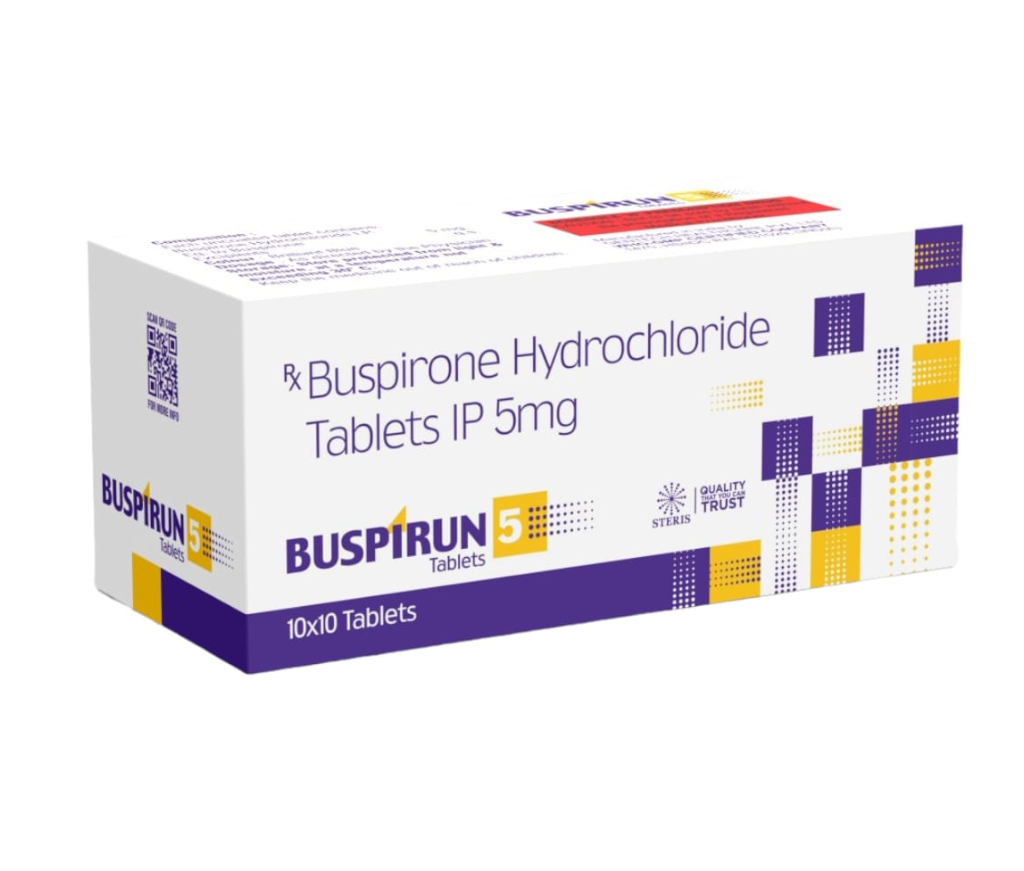
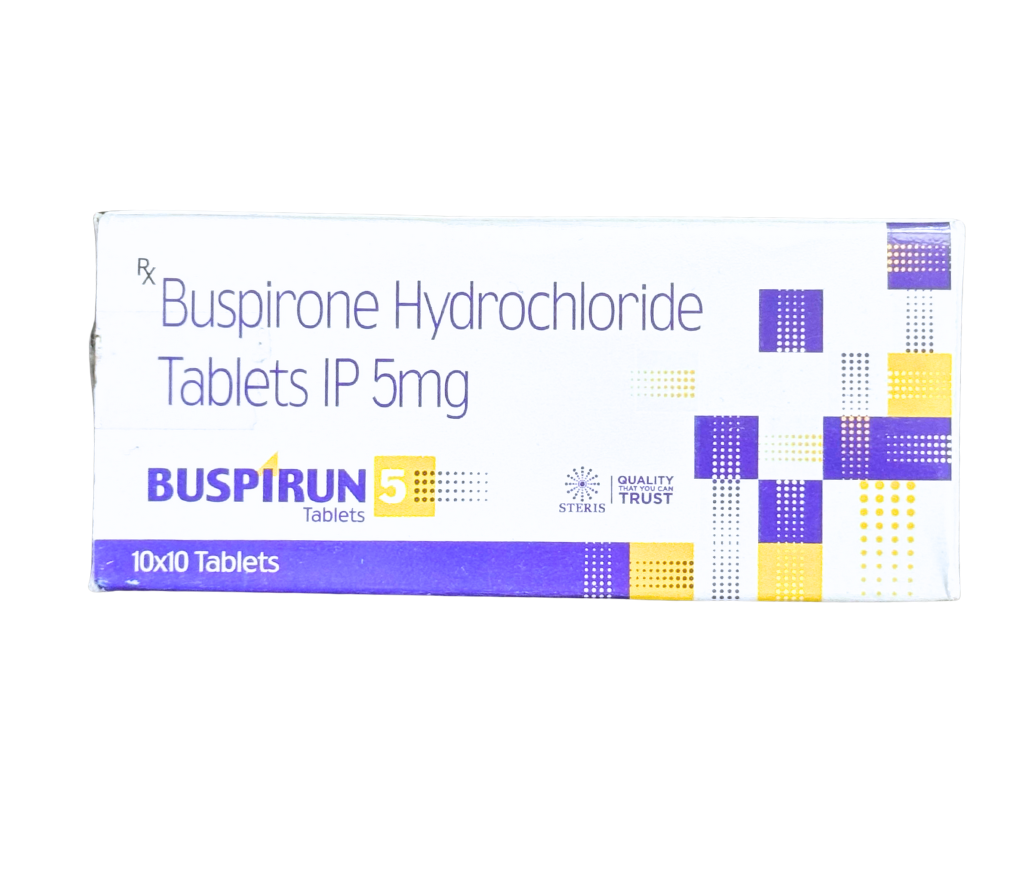
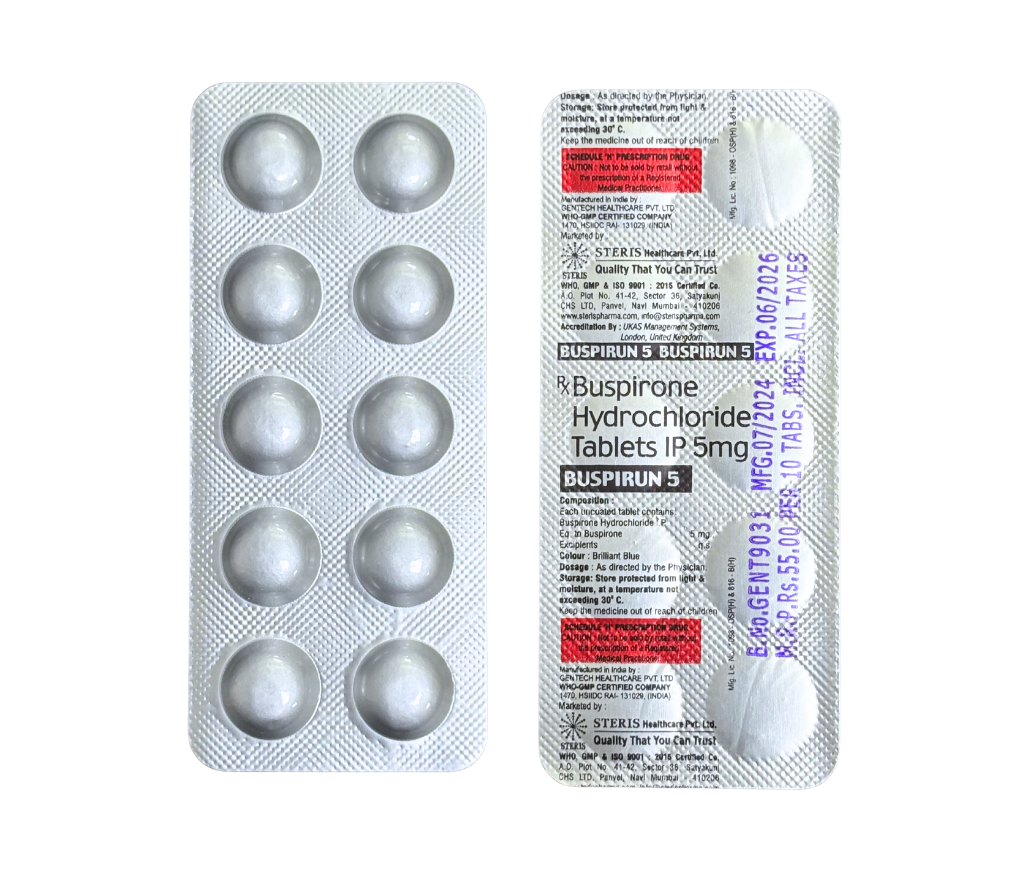
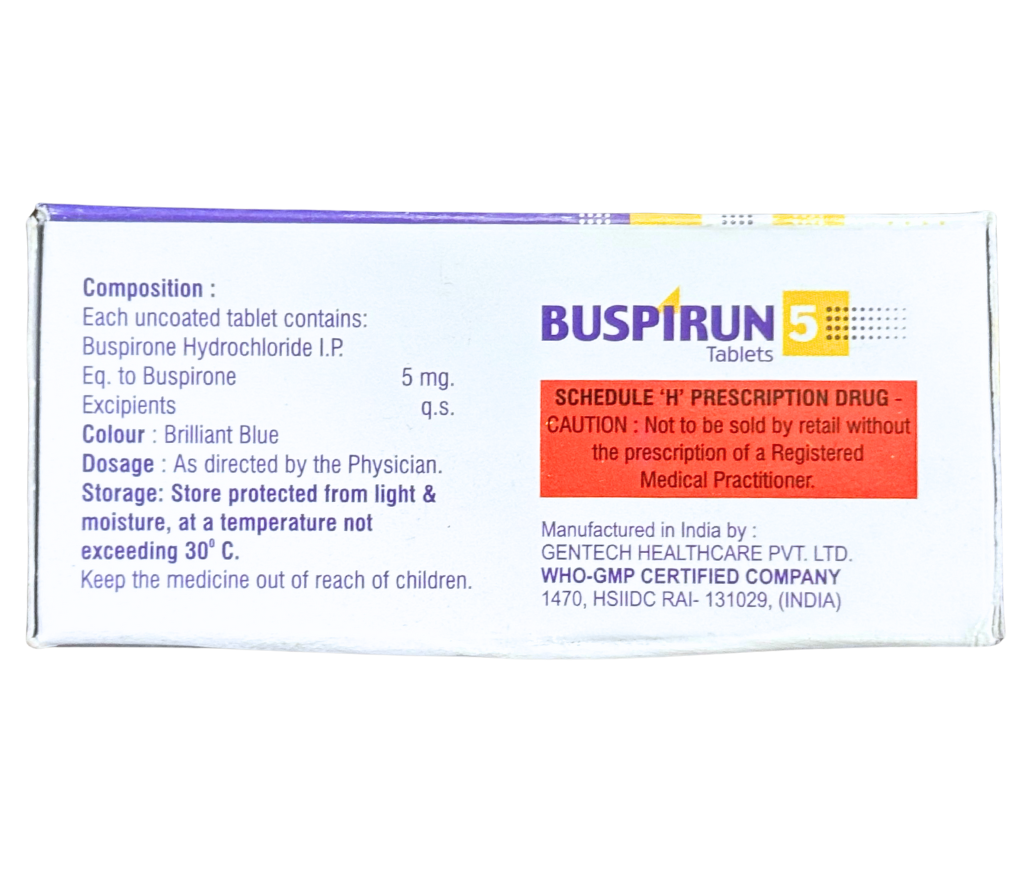
BUSPIRUN 5
 Item requires a valid prescription
Manufactured By Steris Healthcare Pvt Ltd
Composition Buspirone Hydrochloride 5 mg
Rs 50.01
MRP Rs 51.56
(3% OFF)
Includes all taxes
Package SIZE
( For 10 Tablet )

100% Authentic
Products

Free
Shipping*

Products
Return Policy
Description:
BUSPIRUN 5 is an oral tablet containing Buspirone Hydrochloride 5 mg, an anti-anxiety medication used primarily for the management of Generalized Anxiety Disorder (GAD). Unlike some older anti-anxiety medicines, Buspirone belongs to a distinct chemical class and works through a different mechanism — one that's associated with a lower risk of dependence and sedation, making it a preferred option for many patients requiring longer-term anxiety management.
Buspirone is often described by doctors as a non-benzodiazepine anxiolytic, meaning it treats anxiety without belonging to the benzodiazepine class of medicines (such as diazepam or alprazolam), which carry a higher risk of tolerance and dependence with prolonged use.
| Product Detail | Information |
|---|---|
| Brand Name | BUSPIRUN 5 |
| Salt Composition | Buspirone Hydrochloride 5 mg |
| Drug Class | Anxiolytic (Non-Benzodiazepine) |
| Form | Oral Tablet |
| Pack Size | 10 Tablets |
| Manufacturer/Marketer | Steris Healthcare Pvt. Ltd. |
| Primary Use | Generalized Anxiety Disorder (GAD) |
| Prescription Status | Prescription Required (Rx) |
| Storage | Store below 30°C, in a dry place, away from direct sunlight |
How Does Buspirone Hydrochloride Work?
Anxiety disorders are closely linked to imbalances in certain brain chemicals (neurotransmitters), particularly serotonin and dopamine, which play key roles in regulating mood, stress response, and emotional stability.
Buspirone works primarily as a partial agonist at serotonin 5-HT1A receptors, meaning it partially stimulates these receptors in a way that helps stabilize serotonin activity in areas of the brain associated with mood and anxiety regulation. It also has some activity at dopamine receptors, contributing further to its overall calming effect.
Because Buspirone doesn't act on the GABA receptor system the way benzodiazepines do, it doesn't produce the same rapid sedative or muscle-relaxant effects — which is both a benefit (lower dependence risk, less drowsiness) and an important consideration (it takes longer to build up its full effect, unlike benzodiazepines which work almost immediately).
Why Doctors Prescribe Buspirone
- Lower risk of dependence: Unlike benzodiazepines, Buspirone is not associated with significant physical dependence or withdrawal syndromes with typical use.
- Minimal sedation: Many patients find it doesn't cause the drowsiness or "foggy" feeling associated with other anti-anxiety medicines.
- No significant abuse potential: This makes it a suitable option for longer-term anxiety management, including in patients with a history of substance use concerns.
- Doesn't impair motor coordination to the same degree as benzodiazepines, an important consideration for patients who need to drive or operate machinery.
- Useful add-on option: Sometimes used alongside antidepressants for a more comprehensive anxiety treatment approach.
Who Is BUSPIRUN 5 For?
BUSPIRUN 5 is typically prescribed for adults diagnosed with:
- Generalized Anxiety Disorder (GAD) — persistent, excessive worry about everyday situations lasting six months or more
- Patients who have not tolerated benzodiazepines well, or for whom long-term benzodiazepine use isn't appropriate due to dependence concerns
- As an adjunct treatment alongside antidepressants in certain anxiety or mood disorder presentations, based on psychiatric assessment
This medicine is generally not used for immediate, acute anxiety relief (such as panic attacks), since its calming effects build gradually over days to weeks rather than providing instant relief like some other anti-anxiety medicines.
Key Benefits
- Low dependence risk: Unlike benzodiazepines, Buspirone is not associated with significant physical dependence, tolerance, or abuse potential, making it suitable for long-term anxiety management.
- Minimal sedation: Doesn't typically cause the drowsiness or "foggy" feeling common with other anti-anxiety medicines, supporting normal daily functioning.
- No significant withdrawal concerns: Discontinuation generally doesn't trigger the withdrawal syndromes seen with benzodiazepines.
- Preserves motor coordination: Less likely to impair alertness or coordination, an important factor for patients who need to drive or work.
- Effective for chronic anxiety: Well-suited for Generalized Anxiety Disorder (GAD) requiring ongoing, long-term management rather than short-term relief.
- Safe combination potential: Can often be used as an adjunct alongside antidepressants under psychiatric guidance for more comprehensive treatment.
- Non-habit-forming daily option: A dependable choice for patients with a history of substance use concerns who need anxiety treatment without addiction risk.
Possible Side Effects
Buspirone is generally well-tolerated, with a milder side-effect profile compared to many other anti-anxiety medicines, but some patients may experience:
- Dizziness
- Headache
- Nausea
- Nervousness or restlessness
- Fatigue
- Sleep disturbances
- Dry mouth
Seek medical attention if you experience:
- Signs of serotonin syndrome — agitation, rapid heartbeat, high fever, muscle rigidity, or confusion (particularly important if combined with other serotonin-affecting medicines)
- Chest pain or significant palpitations
- Signs of an allergic reaction — rash, swelling, difficulty breathing
- Unusual mood changes, including new or worsening depression or any thoughts of self-harm
Pecaution :
- Have a history of liver or kidney disease
- Are taking other medications that affect serotonin levels, such as certain antidepressants (SSRIs, SNRIs), due to increased risk of serotonin syndrome
- Are pregnant, planning pregnancy, or breastfeeding — this should be discussed carefully with your doctor
- Have a history of substance use, even though Buspirone itself carries low dependence risk, your overall treatment plan should still be carefully managed
Ready to Buy BUSPIRUN 5?
If your doctor has prescribed Buspirone Hydrochloride for Generalized Anxiety Disorder, BUSPIRUN 5 by Steris Healthcare Pvt. Ltd. offers a reliable, low-dependence-risk option in a practical 10-tablet pack — well-suited for the initial titration phase of treatment.
Before you order:
- Upload or share your valid prescription (required for purchase).
- Confirm the dosage strength (5 mg) and frequency match exactly what your doctor prescribed.
- Purchase only from a licensed, verified pharmacy to ensure product authenticity and safe handling during delivery.
- Ask your pharmacist about interactions with any other medications you're taking, especially antidepressants.
- Be patient with the treatment timeline — consistent use over several weeks is key to experiencing the full benefit.
Frequently Asked Questions
1. Where can I buy Buspirone Hydrochloride online?
You can buy Buspirone Hydrochloride through a licensed pharmacy or authorized pharmaceutical supplier, subject to applicable prescription requirements. Verify the product strength, manufacturer, batch number, and expiry date before purchasing.
2. What is the price of Buspirone Hydrochloride?
The price may vary depending on the brand, strength, pack size, manufacturer, and pharmacy. Check the current price with a licensed pharmacy or authorized supplier.
3. Can I order Buspirone Hydrochloride online?
Yes, Buspirone Hydrochloride may be ordered online through a licensed pharmacy where legally available. A prescription may be required, and the medicine should be used under medical supervision.
4. Is Buspirone Hydrochloride available from Steris Healthcare?
Availability depends on Steris Healthcare's current product range and stock status. Contact Steris Healthcare or an authorized distributor to confirm the specific strength, formulation, and availability.
5. What is Buspirone Hydrochloride used for?
Buspirone Hydrochloride is an anxiolytic medicine used to manage anxiety disorders, particularly symptoms associated with generalized anxiety. It works primarily by affecting serotonin receptors in the brain.
6. What is the composition of Buspirone Hydrochloride?
The active ingredient is buspirone hydrochloride. The exact strength and formulation can vary by product, so check the product packaging or prescription for the specific composition.
7. Is a prescription required?
Buspirone Hydrochloride is generally a prescription medicine and should be used under the guidance of a qualified healthcare professional. Do not start or change treatment without medical advice.
8. How should Buspirone Hydrochloride be taken?
Take Buspirone Hydrochloride exactly as prescribed. It is usually taken consistently with regard to food, either always with food or always without food, as instructed by your healthcare professional. Do not change the dose on your own.
9. What should I know before buying Buspirone Hydrochloride?
Before buying, verify the prescribed strength, formulation, manufacturer, batch number, and expiry date. Inform your healthcare professional about other medicines you take, particularly medicines that affect serotonin or monoamine oxidase activity, as interactions may occur.
10. How can I order Buspirone Hydrochloride online?
Choose a licensed pharmacy or authorized pharmaceutical supplier, select the exact prescribed strength and formulation, provide a prescription if required, and verify the product and delivery details before completing your order.