


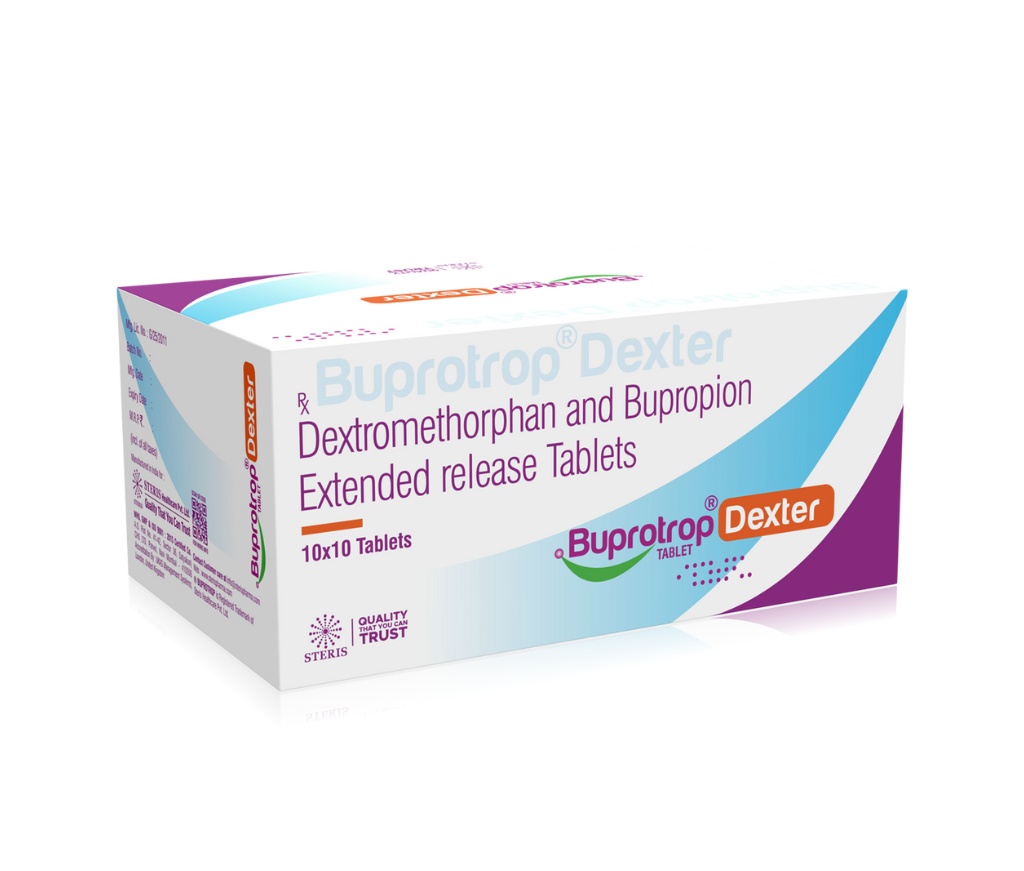
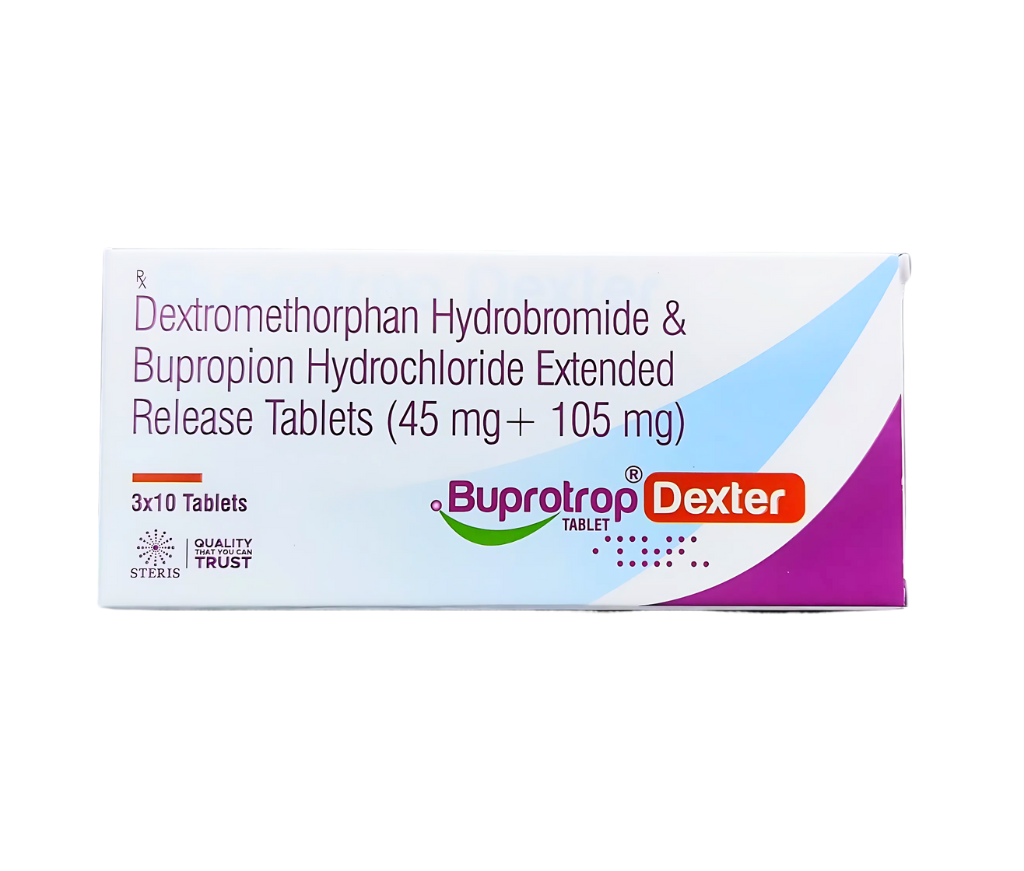
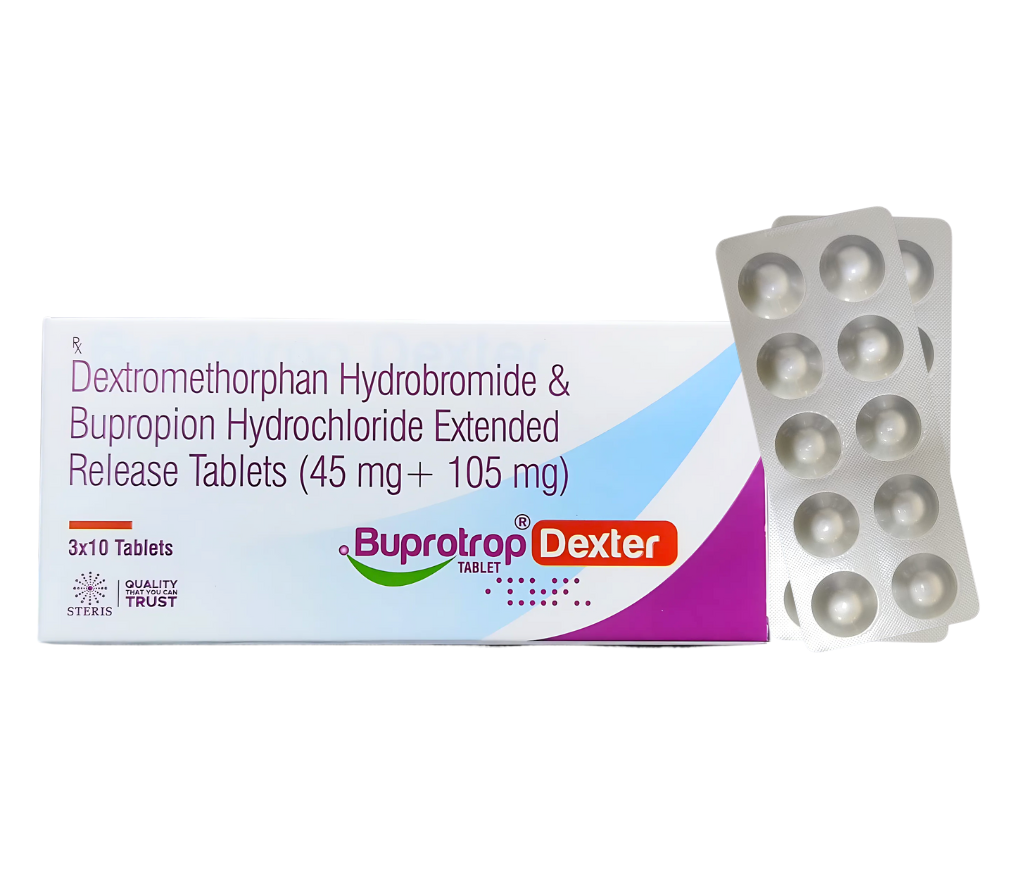
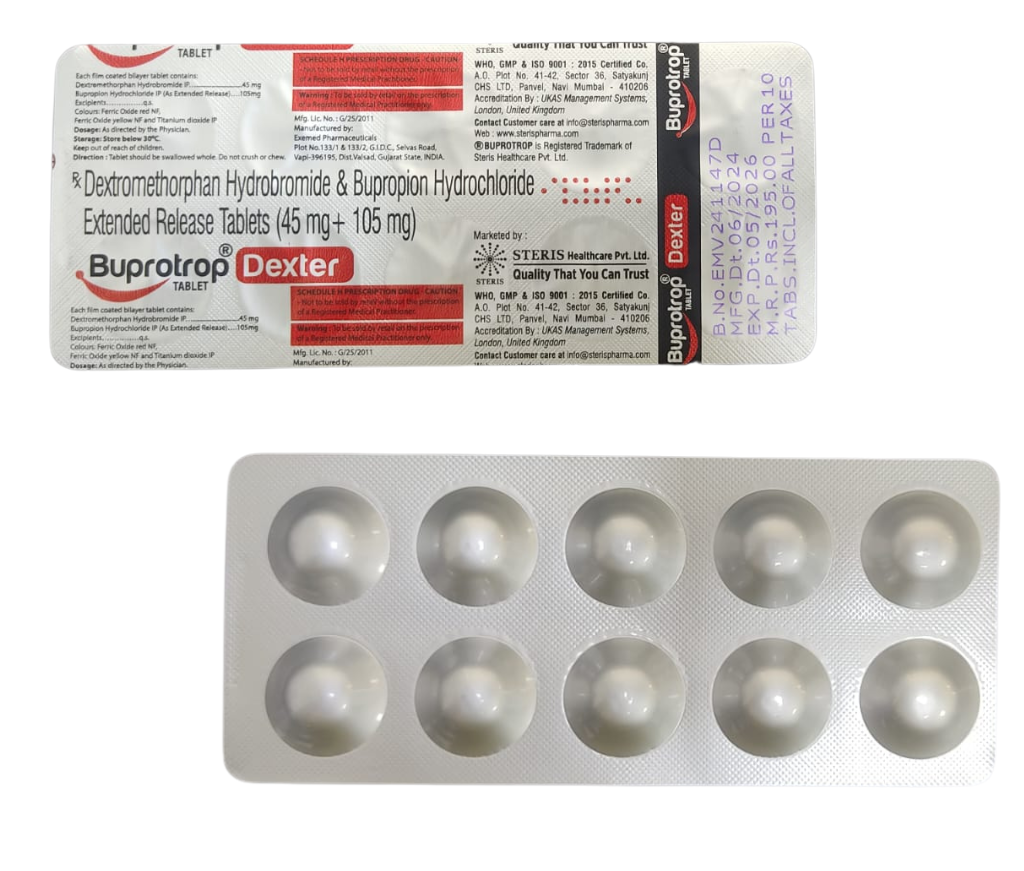
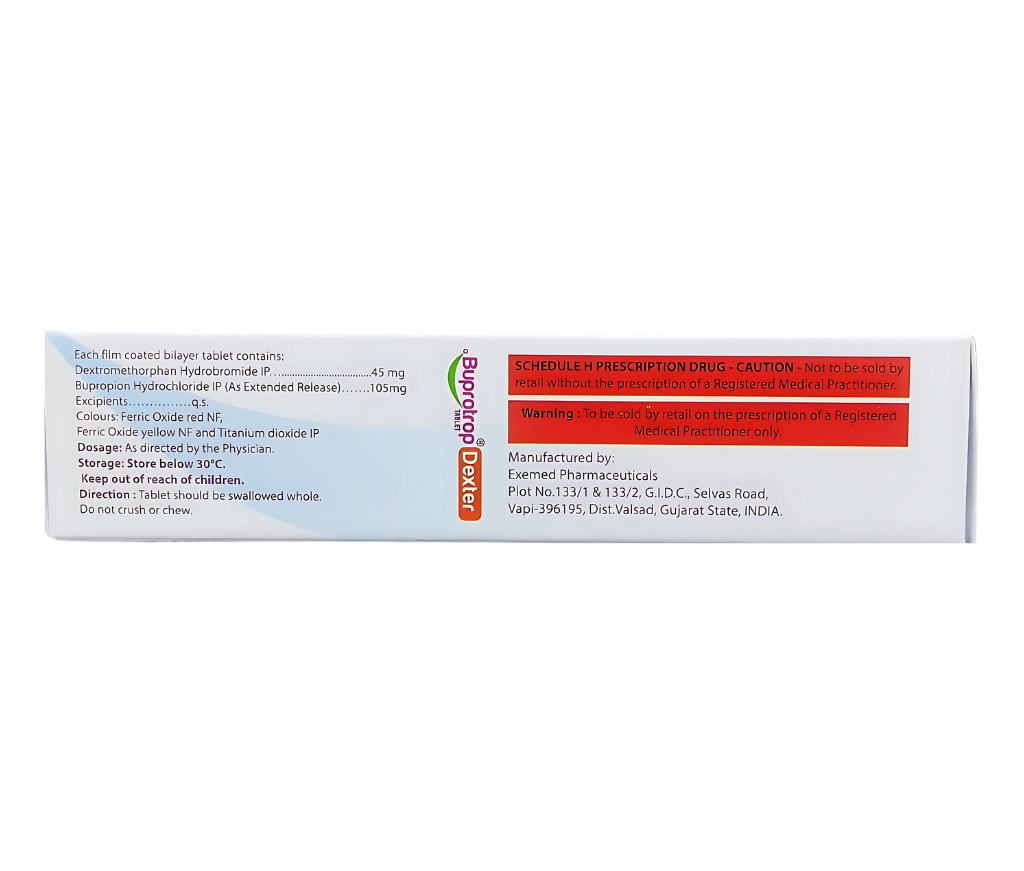
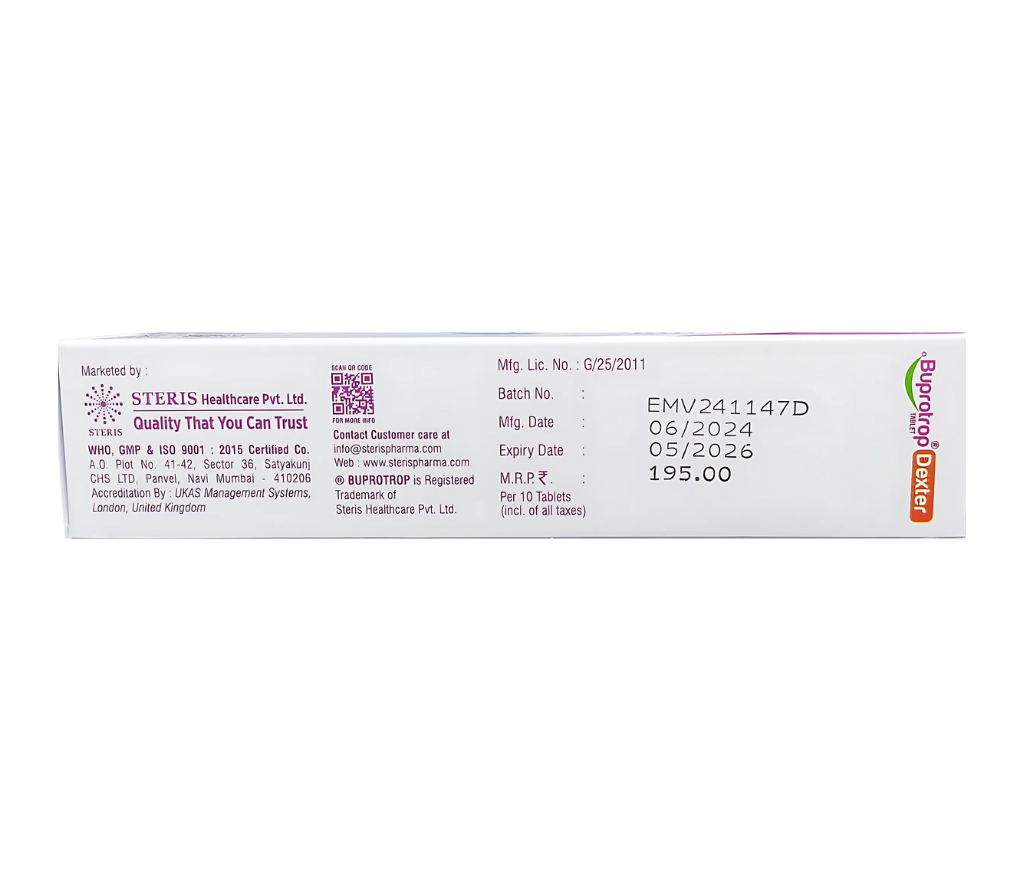
BUPROTROP DEXTER
 Item requires a valid prescription
Manufactured By Steris Healthcare Pvt Ltd
Composition dextromethorphan hydrobromide and bupropion hydrochloride extended release tablets
Rs 136.50
MRP Rs 195.00
(30% OFF)
Includes all taxes
Package SIZE
( For 10 Tablet )

100% Authentic
Products

Free
Shipping*

Products
Return Policy
Description:
Dextromethorphan Hydrobromide is a common over-the-counter cough suppressant included in many cold and flu formulations. It works on the brain's cough center to reduce the urge to cough, making it especially effective for dry, irritating, non-productive coughs. Unlike expectorants, it doesn't help clear mucus — it simply calms the cough reflex. Dextromethorphan is usually taken every 4–8 hours as directed on the label or by a doctor. Common side effects include mild drowsiness, dizziness, and nausea. At recommended doses it is not intended as a sleep aid, though drowsiness can occur in some individuals.
Product Details
|
Product Information |
Details |
|---|---|
|
Brand Name |
BUPROTROP DEXTER |
|
Generic Name |
Dextromethorphan Hydrobromide and Bupropion Hydrochloride Extended-Release Tablets |
|
Composition |
Dextromethorphan Hydrobromide + Bupropion Hydrochloride ER |
|
Formulation |
Extended-Release Tablets |
|
Pack Size |
Strip of 10 Tablets |
|
Marketed By |
Steris Healthcare Pvt Ltd |
|
Regulatory Standard |
WHO-GMP Certified |
|
Schedule |
Prescription Only Medicine |
What Is Dextromethorphan Hydrobromide?
Dextromethorphan Hydrobromide (often abbreviated as DXM) is one of the most commonly used cough-suppressant (antitussive) ingredients in over-the-counter cold and cough medicines worldwide. Chemically related to codeine but without its opioid or analgesic properties at standard doses, dextromethorphan acts centrally in the brain to reduce the cough reflex rather than acting on the airways or lungs directly.
It is manufactured to WHO-GMP and ISO-certified standards and is found in a wide range of cough syrups, lozenges, and combination cold-and-flu products available across pharmacies in India.
What Is Dextromethorphan Hydrobromide Used For?
Dextromethorphan hydrobromide is primarily used for the temporary relief of:
- Dry, non-productive cough caused by minor throat and bronchial irritation, such as with the common cold or flu
- Cough associated with upper respiratory tract infections
- Nighttime cough disturbance, where reducing the cough reflex can support more restful sleep
It is a symptomatic treatment — meaning it manages the cough itself rather than treating the underlying cause (such as a viral infection). It is often combined with other ingredients like antihistamines, decongestants, or expectorants in combination cold-and-cough formulations, depending on the specific symptom profile being targeted.
How Does Dextromethorphan Work?
Dextromethorphan acts primarily on the cough center in the medulla of the brainstem. It is believed to work by:
- Acting as a low-affinity NMDA receptor antagonist, which modulates the neural pathways involved in triggering the cough reflex
- Elevating the threshold for the cough reflex, meaning it takes a stronger stimulus to trigger a cough
- Having no significant effect on the respiratory center at standard antitussive doses, distinguishing it from opioid-based cough suppressants like codeine, which carry higher sedation and dependency risk.
Key Benefits
- Effective dry cough relief – Directly targets the brain's cough reflex for fast symptom control.
- Non-opioid antitussive – Provides cough suppression without the dependency risk associated with opioid-based alternatives like codeine.
- Widely available OTC – Accessible without a prescription for adults with typical cold-related dry cough.
- Combination-friendly – Works well alongside decongestants, antihistamines, or expectorants in multi-symptom cold formulations.
- Rapid onset – Many formulations begin providing relief within 15–30 minutes.
- Established safety profile – Long history of OTC use with well-documented side effect data.
Side Effects
Common side effects:
- Mild drowsiness
- Dizziness
- Nausea
- Stomach upset
- Mild constipation
Less common side effects:
- Restlessness or mild excitability (particularly in some children)
- Dry mouth
- Mild headache
Precautions Before Taking Dextromethorphan Hydrobromide
- Do not exceed the labeled or prescribed dose — higher doses do not provide better cough relief and increase side effect risk
- Avoid combining with MAOI antidepressants or within 14 days of stopping one, due to serotonin syndrome risk
- Use caution if you have a chronic cough associated with smoking, asthma, emphysema, or if the cough is accompanied by excessive mucus, high fever, or rash, as these may indicate a condition needing medical evaluation
- Consult a doctor before use in children under the age-specific label threshold
- Consult a doctor if pregnant or breastfeeding
- Avoid alcohol, as it may increase drowsiness
- Seek medical attention if cough persists beyond 7 days, recurs, or is accompanied by fever, rash, or persistent headache
Frequently Asked Questions
1. Where can I buy Dextromethorphan Hydrobromide and Bupropion Hydrochloride online?
You can purchase this medicine through a licensed pharmacy or authorized pharmaceutical supplier. Because it is a prescription medicine, follow applicable prescription requirements and verify the manufacturer, strength, batch number, and expiry date before purchasing.
2. What is the price of Dextromethorphan Hydrobromide and Bupropion Hydrochloride?
The price can vary depending on the brand, strength, pack size, manufacturer, and pharmacy. Check the current price with a licensed pharmacy or authorized supplier.
3. Can I order Dextromethorphan Hydrobromide and Bupropion Hydrochloride online?
Yes, it may be ordered online through a licensed pharmacy where legally available. A valid prescription may be required, and the medicine should be used only under appropriate medical supervision.
4. Is Dextromethorphan Hydrobromide and Bupropion Hydrochloride available from Steris Healthcare?
Availability depends on Steris Healthcare's current product range and stock status. Contact Steris Healthcare or an authorized distributor to confirm the specific formulation, strength, and availability.
5. What is Dextromethorphan Hydrobromide and Bupropion Hydrochloride used for?
This combination is used in the treatment of major depressive disorder (MDD) in adults. Dextromethorphan affects certain neurotransmitter pathways, while bupropion helps enhance the availability of norepinephrine and dopamine in the brain.
6. What is the composition of Dextromethorphan Hydrobromide and Bupropion Hydrochloride?
The medicine contains two active ingredients: dextromethorphan hydrobromide and bupropion hydrochloride. The exact strengths depend on the specific product and formulation, so check the product packaging or prescription for details.
7. Is a prescription required?
Yes, this medicine is generally used under medical supervision and may require a prescription. Do not start, stop, or change the dose without consulting a qualified healthcare professional.
8. How should Dextromethorphan Hydrobromide and Bupropion Hydrochloride be taken?
Take this medicine exactly as prescribed by your healthcare professional. Follow the prescribed dose and schedule, and do not crush, split, or alter an extended-release formulation unless specifically instructed.
9. What should I know before buying Dextromethorphan Hydrobromide and Bupropion Hydrochloride?
Before purchasing, verify the prescribed strength, formulation, manufacturer, batch number, and expiry date. Inform your healthcare professional about other medicines and medical conditions, particularly seizure disorders, eating disorders, bipolar disorder, or medicines that affect serotonin or monoamine oxidase activity.
10. How can I order Dextromethorphan Hydrobromide and Bupropion Hydrochloride online?
Choose a licensed pharmacy or authorized pharmaceutical supplier, select the exact prescribed formulation and strength, provide a valid prescription when required, and verify the product and delivery details before completing your order.