


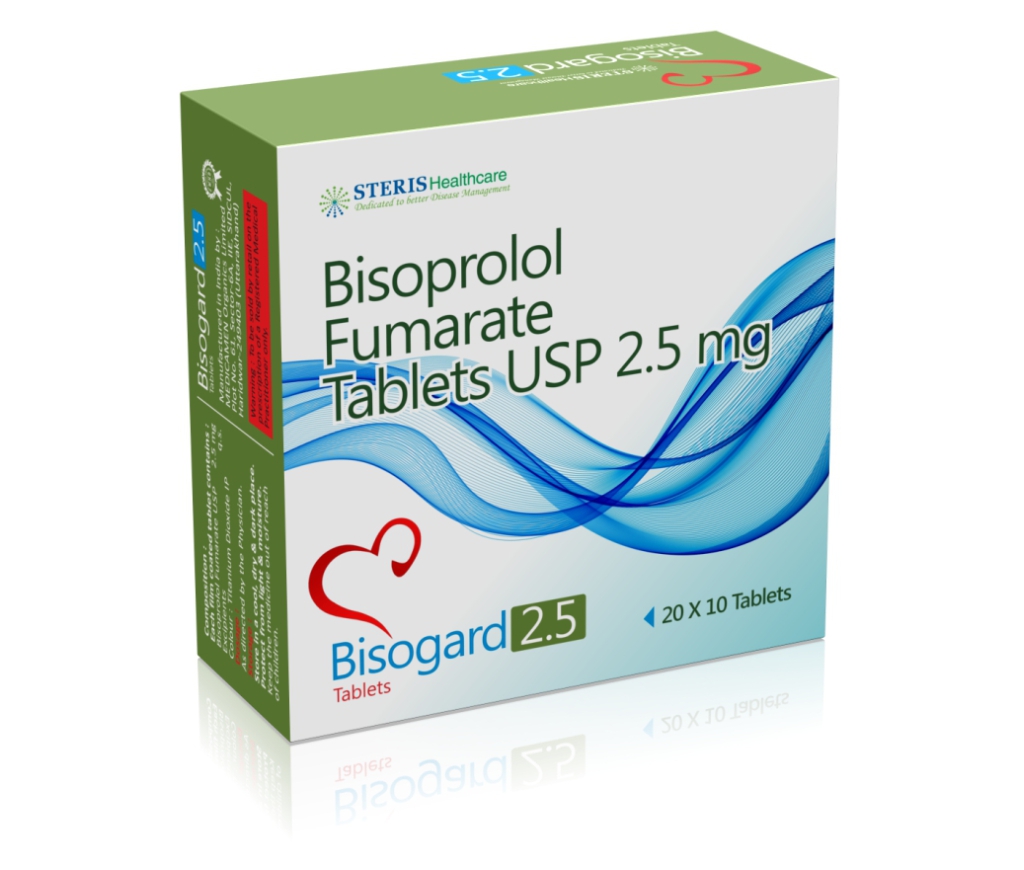
Bisoprolol 2.5mg |BISOGARD 2.5
 Item requires a valid prescription
Manufactured By Steris Healthcare Pvt Ltd
Composition Bisoprolol 2.5mg
Rs 32.16
MRP Rs 45.94
(30% OFF)
Includes all taxes
Package SIZE
( For 10 Tablet )

100% Authentic
Products

Free
Shipping*

Products
Return Policy
Description:
Bisoprolol 2.5 mg Used by the medical community to help control blood pressure, treat chronic heart failure and relieve chest pain. It works by decreasing the heart rate and decreasing the workload of the heart which reduces blood pressure and decreases the workload on the cardiovascular system. Common side effects include tiredness, dizziness and cold hands/feet. Serious effects such as a very slow heart rate, fainting or worsening breathlessness need prompt medical attention.
Product Information
| Product Details | Information |
|---|---|
| Brand Name | BISOGARD 2.5 |
| Generic Name | Bisoprolol |
| Strength | 2.5 mg |
| Composition | Bisoprolol (2.5 mg) |
| Dosage Form | Enteric-Coated Delayed-Release Tablet |
| Pack Size | Strip of 10 Tablets |
| Marketed By | Steris Healthcare Pvt Ltd |
| Regulatory Standard | WHO-GMP Certified |
| Prescription Status | Valid Prescription Required |
| Drug Category | Beta-Blocker |
| Storage | Store in a cool, dry place below 25°C |
What Is Bisoprolol 2.5 mg?
Bisoprolol is a selective beta-1 adrenergic receptor blocker (a "cardioselective beta-blocker") widely used in the management of cardiovascular conditions. The 2.5 mg strength is commonly used as a starting dose, particularly in patients with heart failure or those who are elderly, frail, or sensitive to blood-pressure-lowering medicines, before the dose is gradually increased under medical supervision.
Bisoprolol tablets, including formulations marketed under brand names such as Bislol, are manufactured and distributed by WHO-GMP-certified pharmaceutical companies across India, including through Steris Healthcare's prescription cardiology portfolio, for dispensing strictly against a valid prescription.
Clinical Indications
| Indication | Typical Use Case | Prescriber |
|---|---|---|
| Hypertension (High Blood Pressure) | First-line or add-on therapy to lower and control BP | Cardiologist / General Physician |
| Chronic Stable Heart Failure | Low-dose initiation (often starting at 2.5 mg) with gradual up-titration | Cardiologist |
| Angina Pectoris | Reduces frequency of chest pain episodes by lowering cardiac workload | Cardiologist |
| Arrhythmia (select cases) | Helps control certain irregular heart rhythms | Cardiologist |
How Bisoprolol 2.5 mg Works
Bisoprolol selectively blocks beta-1 adrenergic receptors, which are concentrated in heart tissue. By blocking these receptors, bisoprolol:
- Slows heart rate – reduces the frequency of heartbeats, lowering the heart's oxygen demand.
- Reduces cardiac contractility – decreases the force of each heartbeat, easing strain on the heart muscle.
- Lowers renin release from the kidneys—indirectly reduces blood pressure by dampening the renin-angiotensin system.
- Cardioselectivity – at low-to-moderate doses like 2.5 mg, bisoprolol preferentially targets heart (beta-1) receptors over lung (beta-2) receptors, making it generally better tolerated in patients with mild respiratory conditions compared to non-selective beta-blockers (used cautiously and only under medical advice).
Key Benefits of Bisoprolol 2.5 mg
- Effectively lowers and controls blood pressure with once-daily dosing
- Reduces cardiac workload, helpful in chronic stable heart failure management
- A low starting dose (2.5 mg) allows safe, gradual titration—especially important in heart failure patients
- Cardioselective profile generally better tolerated than non-selective beta-blockers
- Reduces frequency of angina episodes by lowering oxygen demand on the heart
- Convenient once-daily dosing supports better long-term treatment adherence
Dosage Guidelines
Dosing must always be individualized by the prescribing doctor based on the condition being treated, response, and tolerability. As a general reference:
- Hypertension (adults): Often started at 2.5–5 mg once daily, adjusted based on blood pressure response, up to a typical maintenance range of 5–20 mg/day.
- Chronic Heart Failure: Very cautious up-titration is standard—bisoprolol 2.5 mg is a common starting dose, increased gradually over several weeks under close medical monitoring.
- Missed dose: Take as soon as remembered unless close to the next dose; never double the dose.
- Discontinuation: Must always be tapered gradually — sudden stopping can cause rebound high blood pressure, chest pain, or heart rhythm disturbances.
Side Effects of Bisoprolol 2.5 mg
Common Side Effects
- Tiredness or fatigue
- Dizziness or lightheadedness
- Cold hands and feet
- Slow heart rate (mild bradycardia)
- Headache
- Nausea or mild stomach upset
Substitutes & Comparable Beta-Blockers
| Medicine | Class | Common Use | Key Difference from Bisoprolol |
|---|---|---|---|
| Metoprolol | Beta-1 selective blocker | Hypertension, angina, heart failure | Shorter half-life; may require twice-daily dosing |
| Atenolol | Beta-1 selective blocker | Hypertension, angina | Renally cleared; caution needed in kidney impairment |
| Carvedilol | Non-selective alpha/beta blocker | Heart failure, hypertension | Also blocks alpha receptors; different side-effect profile |
| Nebivolol | Highly selective beta-1 blocker | Hypertension | Additional vasodilatory (nitric-oxide mediated) effect |
Precautions
- Should not be stopped suddenly — always taper under medical supervision.
- Use with caution in patients with asthma or COPD; discuss respiratory history with your doctor.
- Monitor heart rate and blood pressure regularly during treatment, especially during dose changes.
- Inform your doctor about diabetes, as beta-blockers can mask some symptoms of low blood sugar.
- Avoid alcohol, which can intensify dizziness and low blood pressure effects.
- Not recommended during pregnancy or breastfeeding unless specifically advised by a doctor.
Conclusion
Bisoprolol 2.5 mg is a widely trusted, cardioselective beta-blocker used to manage high blood pressure, chronic stable heart failure, and angina. Its low starting dose makes it particularly suitable for gradual, well-monitored initiation in sensitive patients, including those with heart failure. While generally well-tolerated, bisoprolol carries important considerations — from common effects like fatigue and dizziness to serious risks like significant bradycardia or worsening heart failure symptoms — that require ongoing medical supervision. Anyone taking bisoprolol should follow their doctor's dosing schedule closely and never stop the medicine abruptly.
Frequently Asked Questions
1. Where can I buy Bisoprolol 2.5 mg online?
Bisoprolol 2.5 mg can be purchased online through authorized pharmacies and legitimate pharmaceutical suppliers. Check the product listing for availability, pricing, and applicable prescription requirements before placing an order.
2. What is the price of Bisoprolol 2.5 mg?
The price of Bisoprolol 2.5 mg depends on the brand, pack size, seller, and applicable charges. For the latest price, check the current product listing or contact the authorized supplier directly.
3. Can I order Bisoprolol 2.5 mg online?
Yes, Bisoprolol 2.5 mg may be ordered online through an authorized pharmacy or pharmaceutical supplier, subject to availability and applicable prescription requirements.
4. Is Bisoprolol 2.5 mg available from Steris Healthcare?
Availability depends on current stock and distribution. Customers can contact Steris Healthcare Pvt. Ltd. or its authorized sales channel to confirm availability, pack size, pricing, and ordering details.
5. What is Bisoprolol 2.5 mg used for?
Bisoprolol 2.5 mg is a beta-blocker used under medical supervision for conditions such as high blood pressure and certain heart-related conditions. It works primarily by slowing the heart rate and reducing the workload on the heart.
6. What is the composition of Bisoprolol 2.5 mg?
The active pharmaceutical ingredient is Bisoprolol 2.5 mg. The complete list of inactive ingredients should be checked on the product packaging or official product information.
7. Is a prescription required for Bisoprolol 2.5 mg?
Yes. Bisoprolol 2.5 mg should be used under the direction of a qualified healthcare professional. Do not start, stop, or change the dosage without medical advice.
8. How should Bisoprolol 2.5 mg be taken?
Take Bisoprolol 2.5 mg exactly as prescribed by your doctor. It is generally taken orally with water and should be taken at the recommended time each day. Do not stop treatment suddenly unless your doctor advises you to do so.
9. What should I know before buying Bisoprolol 2.5 mg?
Before buying, verify the brand, strength, pack size, manufacturer/marketer, expiry date, and authenticity of the medicine. Inform your doctor about your existing medical conditions and other medicines you take before starting bisoprolol.
10. How can I order Bisoprolol 2.5 mg online?
To order Bisoprolol 2.5 mg online, select the product from an authorized pharmacy or supplier, verify the strength and pack details, provide a prescription if required, and complete the available payment and delivery process. Always purchase prescription medicines from a legitimate source.