


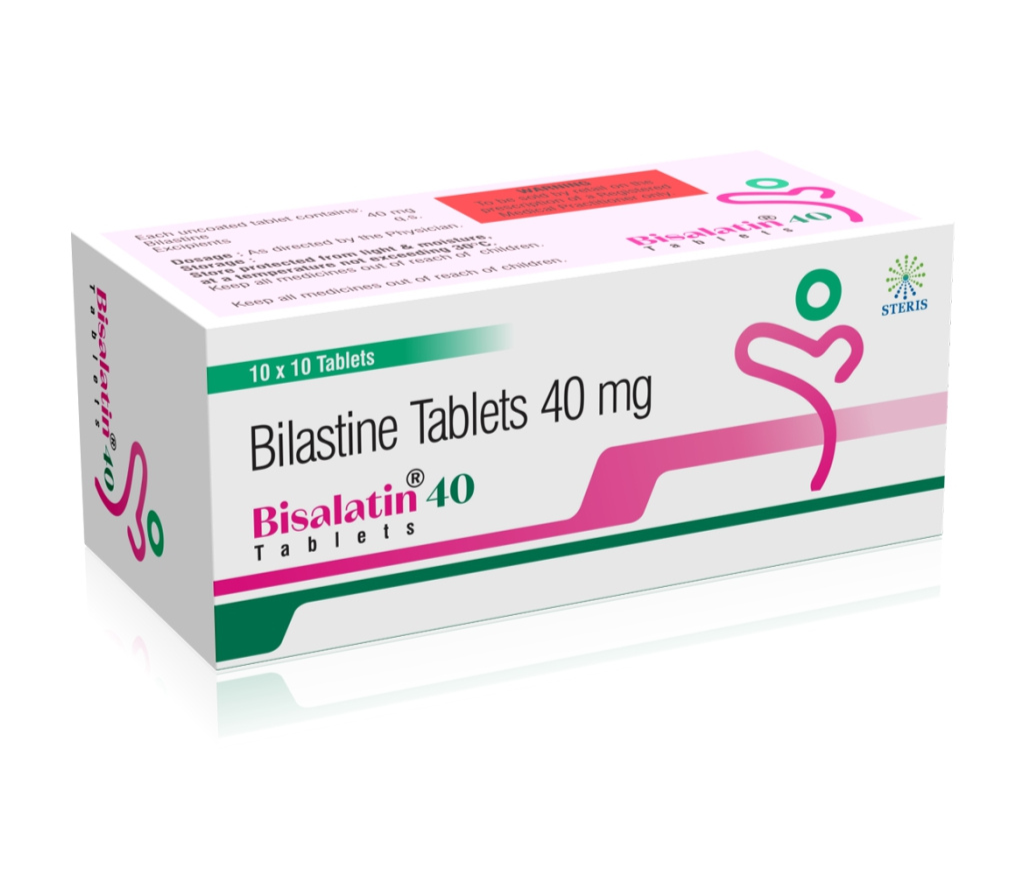

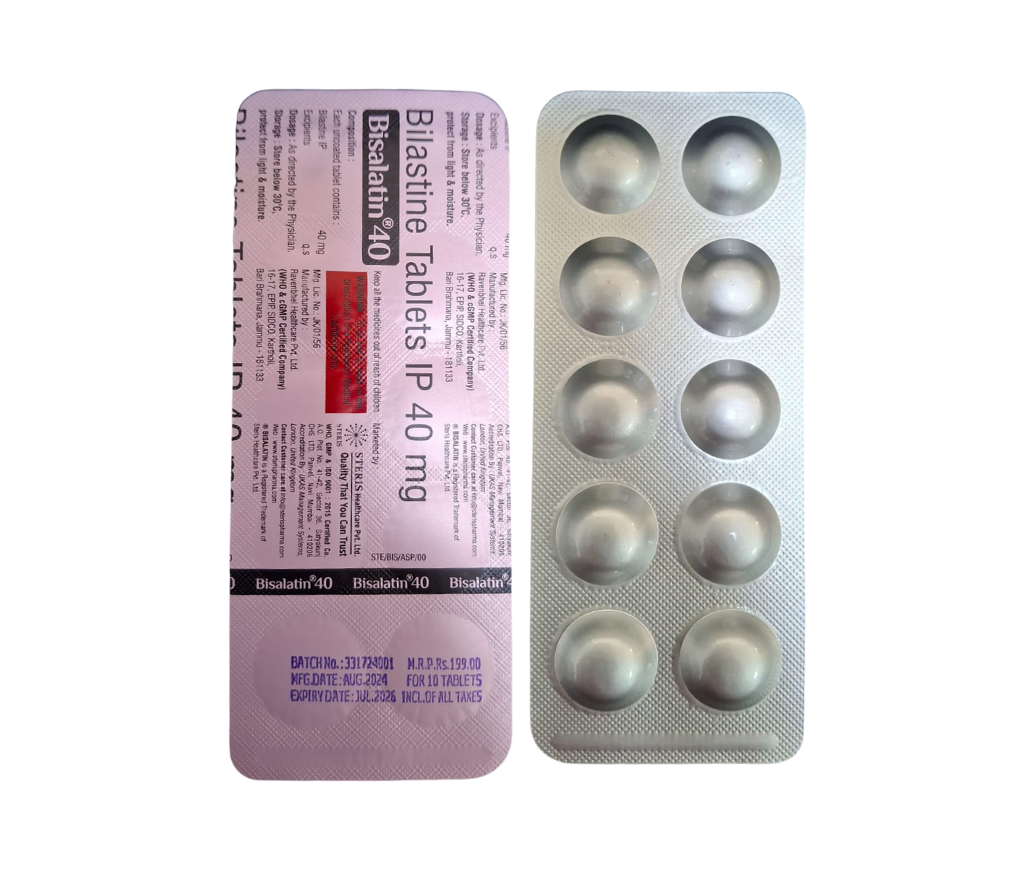
Bilastine 40 mg | BISALATIN 40
 Item requires a valid prescription
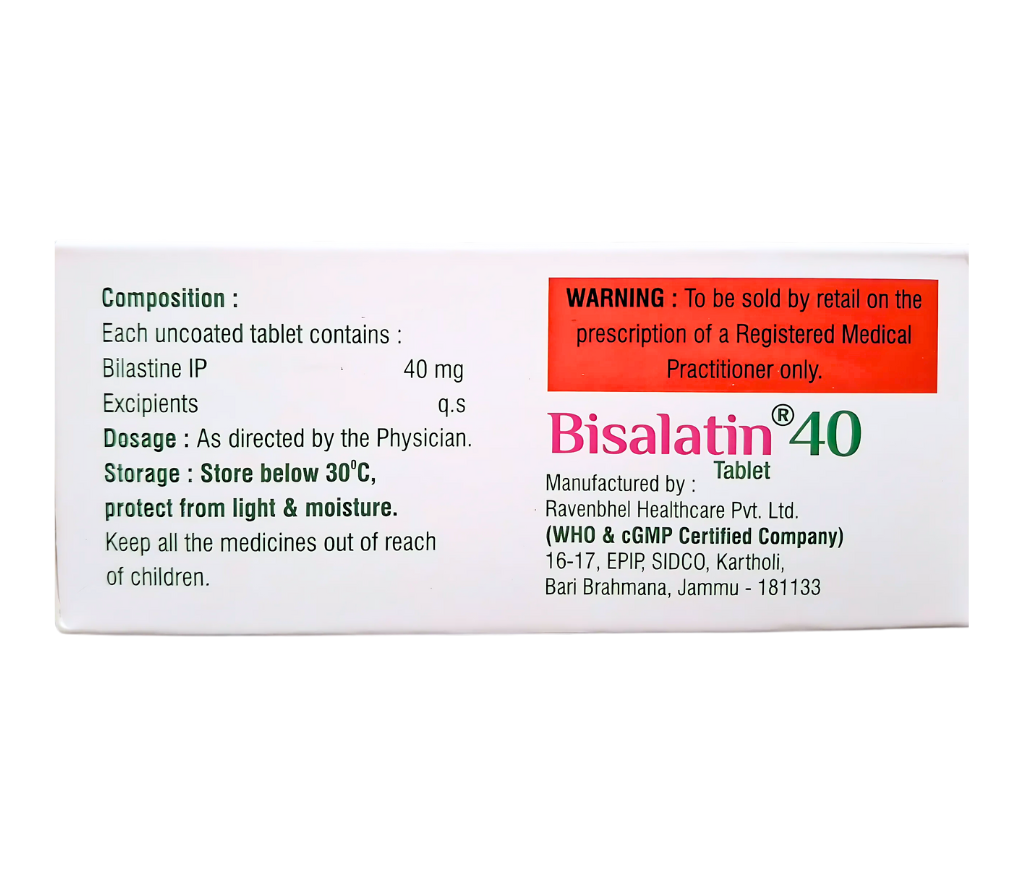
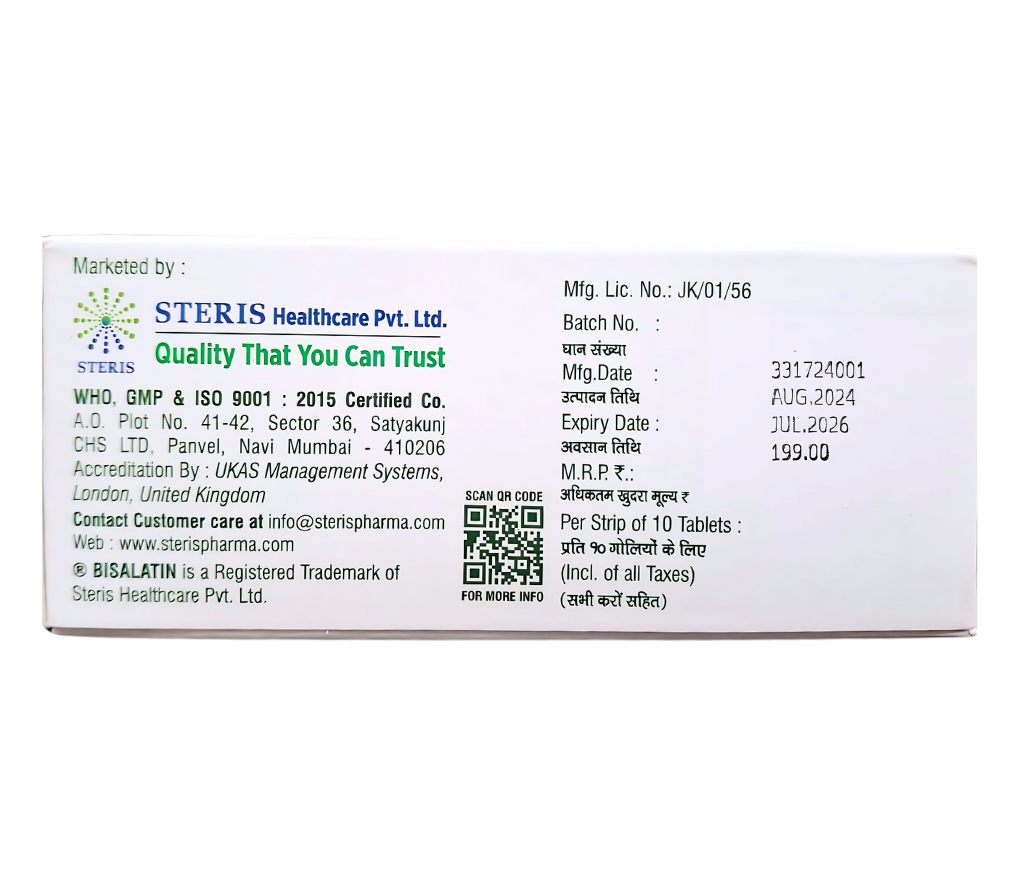
Manufactured By Steris Healthcare Pvt Ltd
Composition bilastine 40 mg
Rs 130.59
MRP Rs 186.56
(30% OFF)
Includes all taxes
Package SIZE
( For 10 Tablets )

100% Authentic
Products

Free
Shipping*

Products
Return Policy
Description:
Bilastine 40 mg is prescribed for allergic rhinitis (hay fever) that hasn't responded adequately to standard treatment, and for chronic spontaneous urticaria (hives) that persists despite standard-dose therapy.Bilastine works by blocking H1 histamine receptors, preventing histamine from triggering sneezing, itching, runny nose, and skin welts. The standard adult dose is typically 20 mg once daily, and 40 mg is a higher-strength option generally reserved for cases where a doctor determines additional symptom control is needed — it should not be self-escalated to without medical advice. Bilastine is best taken on an empty stomach, ideally 1 hour before or 2 hours after food, since food and fruit juices can reduce its absorption. It is not a steroid — it belongs to the antihistamine class.
Product Information
- Brand name: BISALATIN 40
- Composition: Bilastine Tablets 40 mg
- Pack size: 10 x 10 tablets
- Marketed by: Steris Healthcare Pvt Ltd
- Storage: Protected from light & moisture, not exceeding 30°C
- Dosage: As directed by the physician
- Prescription status: appears to require physician guidance.
What Is Bilastine 40 mg?
Bilastine is a second-generation H1-antihistamine, developed to relieve allergic symptoms while minimizing the drowsiness commonly associated with older, first-generation antihistamines. It is widely prescribed for:
- Allergic rhinitis — including both seasonal allergic rhinitis (hay fever) and perennial (year-round) allergic rhinitis, with symptoms like sneezing, nasal itching, runny nose, and watery eyes
- Urticaria (hives) — including chronic spontaneous urticaria, where raised, itchy skin welts occur without an identifiable trigger
The 40 mg strength represents a higher dose than the standard 20 mg tablet. It is typically considered by a physician in specific situations — for example, in some cases of urticaria that don't respond adequately to the standard dose — rather than being the default starting dose for most patients. Because bilastine has a well-established safety profile with minimal sedation and low potential for drug interactions compared to older antihistamines, doctors sometimes have more flexibility to adjust dosing when clinically appropriate.
How Does Bilastine Work?
- Allergic response trigger – When the body encounters an allergen (pollen, dust, certain foods, etc.), immune cells release histamine, a chemical messenger.
- Histamine and H1 receptors – Histamine binds to H1 receptors on cells in the nose, skin, and eyes, triggering the classic allergy symptoms: itching, sneezing, redness, and swelling.
- Selective H1 receptor blockade – Bilastine selectively binds to and blocks these H1 receptors, preventing histamine from attaching and triggering its downstream effects.
- Reduced allergic symptoms – With the H1 receptor blocked, the cascade of itching, sneezing, nasal congestion, and hive formation is significantly reduced.
- Minimal central nervous system penetration – Bilastine is designed to have very limited ability to cross into the brain, which is why it causes markedly less drowsiness than older, first-generation antihistamines.
Key Benefits
- Provides effective relief from sneezing, nasal itching, runny nose, and hives
- Non-sedating at standard doses — significantly less likely to cause drowsiness than first-generation antihistamines
- Once-daily dosing for convenient, consistent symptom control
- Fast-acting, with many patients noticing symptom relief within an hour of dosing
- Comparatively low potential for drug interactions relative to some other antihistamines
- The 40 mg strength offers flexibility for doctors managing harder-to-control allergic symptoms, within an established safety profile
Precautions
- Take on an empty stomach for optimal absorption — food can reduce its effectiveness
- Avoid grapefruit and other fruit juices around the time of dosing
- Patients with significant kidney impairment should use bilastine only under medical supervision, as clearance may be reduced
- Do not increase your dose (e.g., from 20 mg to 40 mg) without your doctor's guidance
- Inform your doctor of all other medications you are taking, particularly other drugs that rely on the same transport proteins for absorption
- Use during pregnancy or breastfeeding only under medical advice
- While generally non-sedating, individual responses vary — assess your own reaction before driving or operating machinery when starting the medication
Side Effects
Common (Usually Mild)
- Headache
- Occasional drowsiness (less common than with older antihistamines)
- Dizziness
- Fatigue
- Dry mouth
Frequently Asked Questions
1. Where can I buy Bilastine 40 mg online?
You can buy Bilastine 40 mg through a licensed pharmacy or authorized pharmaceutical supplier, subject to applicable prescription requirements. Verify the strength, manufacturer, batch number, and expiry date before purchasing.
2. What is the price of Bilastine 40 mg?
The price may vary depending on the brand, manufacturer, pack size, and pharmacy. Check the current price with a licensed pharmacy or authorized supplier before ordering.
3. Can I order Bilastine 40 mg online?
Yes, Bilastine 40 mg may be ordered online through a licensed pharmacy or authorized supplier where legally available. Follow the recommended medical advice and applicable prescription requirements.
4. Is Bilastine 40 mg available from Steris Healthcare?
Availability depends on Steris Healthcare's current product range and stock status. Contact Steris Healthcare or an authorized distributor to confirm the specific strength, formulation, and availability.
5. What is Bilastine 40 mg used for?
Bilastine is an antihistamine used to relieve symptoms of allergic conditions such as allergic rhinitis, including sneezing, runny nose, nasal or eye itching, and watery eyes. It may also be used for symptoms associated with urticaria (hives).
6. What is the composition of Bilastine 40 mg?
The active ingredient is bilastine 40 mg. Bilastine is a second-generation antihistamine that helps reduce the effects of histamine involved in allergic reactions.
7. Is a prescription required?
Prescription requirements can vary depending on the product, strength, and local regulations. Use Bilastine 40 mg according to the advice of a qualified healthcare professional.
8. How should Bilastine 40 mg be taken?
Take Bilastine 40 mg exactly as directed by your healthcare professional. Bilastine is generally taken on an empty stomach, such as one hour before or two hours after food or fruit juice, because food can reduce its absorption.
9. What should I know before buying Bilastine 40 mg?
Before buying, verify the prescribed strength, formulation, manufacturer, batch number, and expiry date. Inform your healthcare professional about other medicines you take, particularly medicines that may interact with bilastine.
10. How can I order Bilastine 40 mg online?
Choose a licensed pharmacy or authorized pharmaceutical supplier, select the correct strength and formulation, provide a prescription if required, and verify the product and delivery details before completing your order.

