


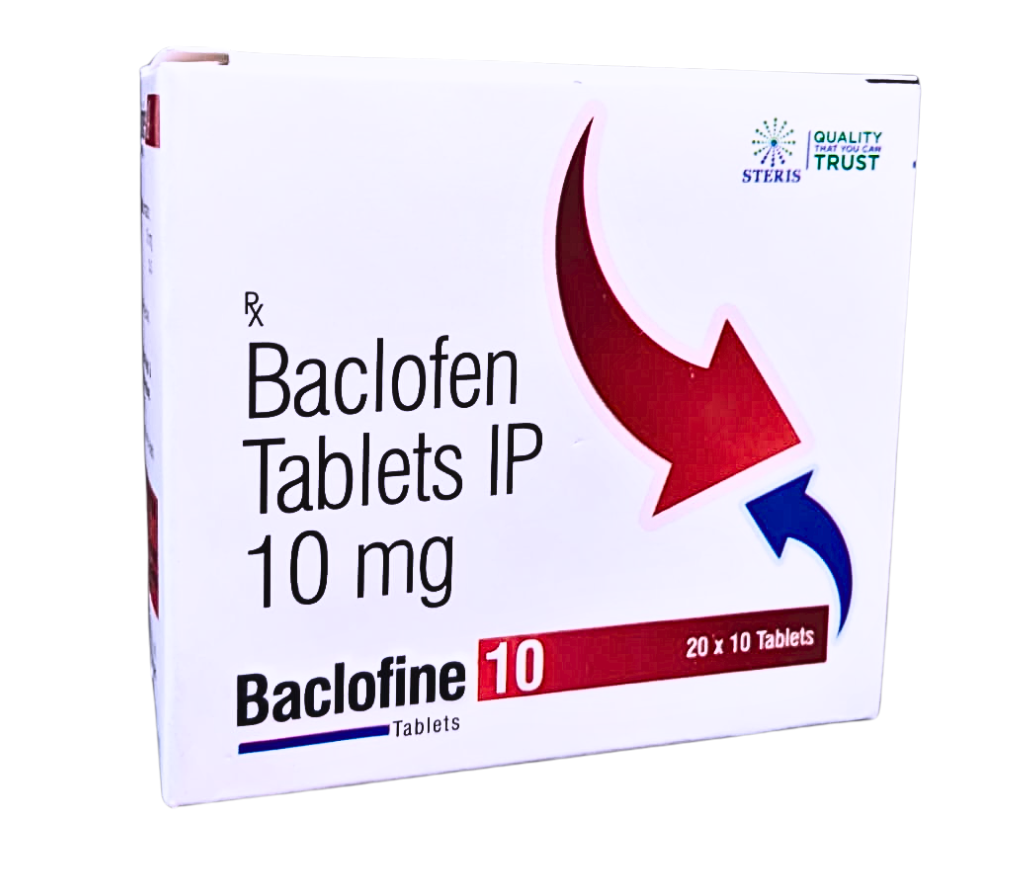
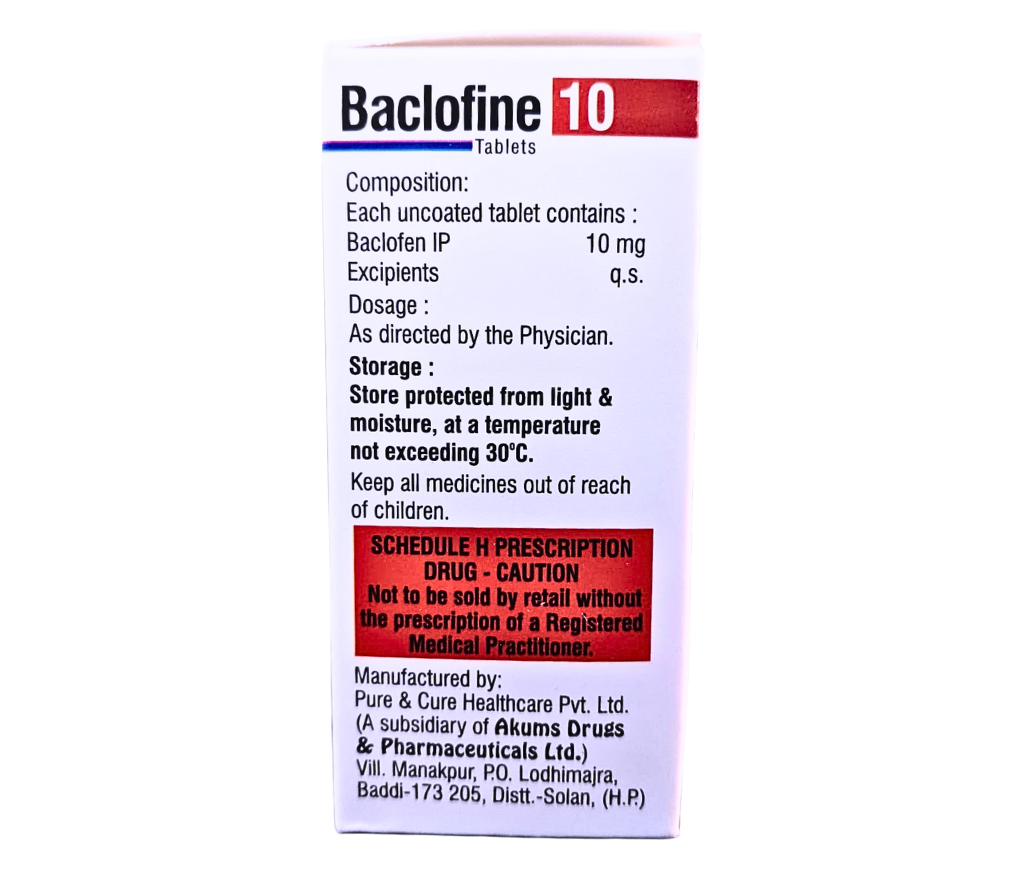
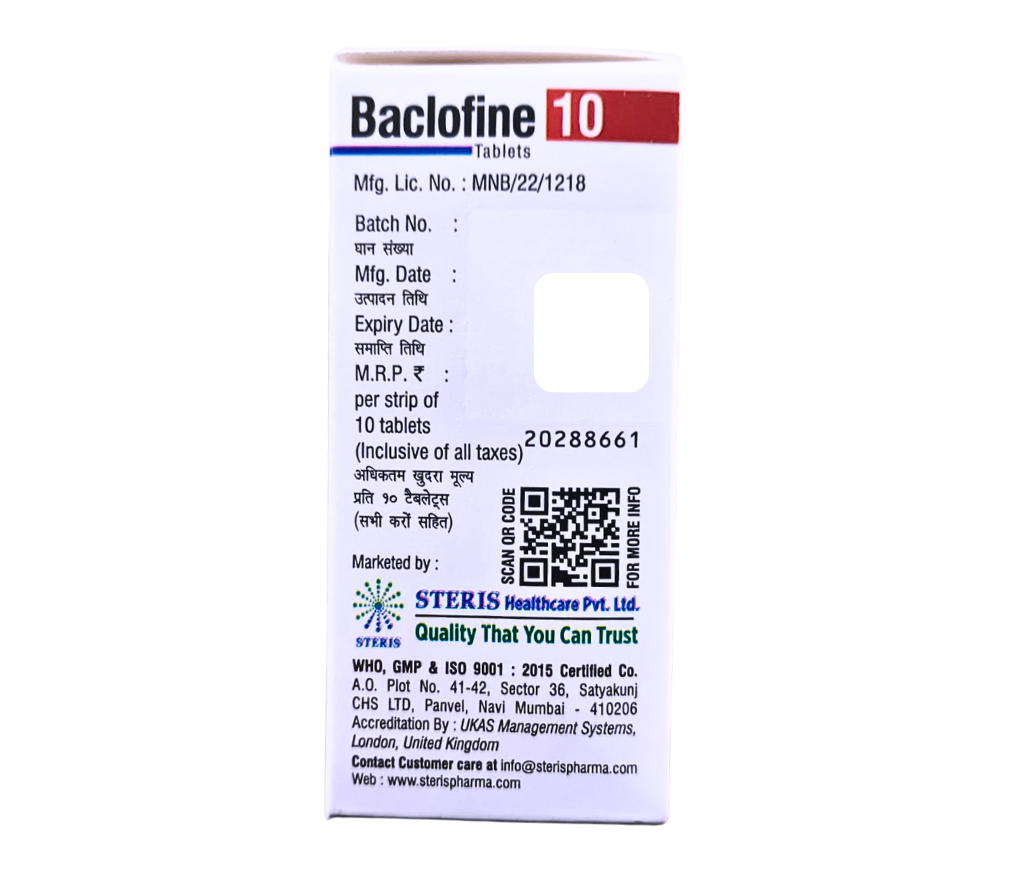
BACLOFINE 10
 Item requires a valid prescription
Manufactured By Steris Healthcare Pvt Ltd
Composition Baclofen (10mg)
Rs 71.65
MRP Rs 102.35
(30% OFF)
Includes all taxes
Package SIZE
( For 10 Tablet )

100% Authentic
Products

Free
Shipping*

Products
Return Policy
Description:
Baclofen 10 mg is a prescription muscle relaxant and antispastic medicine used primarily to reduce muscle spasticity, stiffness, cramping, and spasms associated with certain neurological conditions. Official prescribing information identifies baclofen as useful for spasticity associated particularly with multiple sclerosis and certain spinal cord disorders.
Baclofen works mainly at the level of the spinal cord to reduce excessive nerve signals that cause muscles to contract involuntarily. By reducing abnormal muscle activity, it can help decrease painful spasms and make movement and daily activities easier for some patients.
The 10 mg tablet is one of the commonly available oral strengths. However, a 10 mg tablet does not necessarily mean that 10 mg is the correct dose for every patient. Treatment is usually started at a lower dose and adjusted gradually according to symptoms, response, age, kidney function, and tolerability.
Baclofen 10 mg Uses
Baclofen is primarily used to manage spasticity, rather than ordinary muscle soreness or every type of muscle pain.
Common medical uses include:
- Muscle spasticity associated with multiple sclerosis
- Spasticity related to certain spinal cord injuries
- Certain neurological disorders causing muscle stiffness or spasms
- Painful muscle spasms and involuntary muscle contractions associated with neurological disease
The NHS also describes baclofen as a medicine used to relieve muscle spasms, cramping, or tightness associated with conditions such as cerebral palsy, meningitis, motor neurone disease, multiple sclerosis, and disorders affecting the brain, spinal cord, or nervous system.
However, approved indications can differ between countries and formulations. U.S. prescribing information specifically notes that oral baclofen is not indicated for skeletal muscle spasms resulting from rheumatic disorders.
Therefore, baclofen should not automatically be considered a treatment for routine back pain, sports injuries, or general muscle soreness.
How Does Baclofen 10 mg Work?
Baclofen acts as a GABA-B receptor agonist and reduces excessive excitatory nerve activity involved in muscle spasticity.
At the spinal level, baclofen can inhibit certain reflex pathways responsible for excessive muscle contraction. This decreases abnormal muscle tone and can make muscles less stiff and easier to move.
The exact mechanism is complex, but the practical result is straightforward:
Excessive nerve activity → muscle over-contraction → stiffness/spasm
Baclofen → reduced abnormal nerve activity → reduced spasticity and spasms
The medicine is rapidly absorbed after oral administration, and NHS guidance states that tablets or liquid can begin working after approximately one hour, although finding the appropriate dose may take several days.
Key Benefits of Baclofen 10 mg
When appropriately prescribed, baclofen may provide several benefits for people experiencing neurological spasticity.
1. Helps reduce muscle spasms
Baclofen can decrease involuntary muscle contractions, helping patients experience fewer or less severe spasms.
2. Helps relieve muscle stiffness
Reduced muscle tone may make affected muscles easier to move and can improve comfort.
3. May reduce discomfort associated with spasticity
Spasticity can cause pain, cramping, and discomfort. By reducing excessive muscle activity, baclofen may help relieve these symptoms.
4. May support mobility and daily activities
For some patients with neurological spasticity, reducing stiffness can make physical movement, stretching, physiotherapy, and everyday activities easier.
5. Can be adjusted to individual needs
Baclofen is generally introduced at a low dose and gradually increased when necessary. This allows clinicians to balance symptom control against side effects such as drowsiness or dizziness.
Important: Baclofen does not cure the underlying neurological disease causing spasticity. Its purpose is symptom management.
Baclofen 10 mg Dosage
The correct baclofen dosage depends on the patient's condition and response to treatment.
For adults, NHS guidance describes a typical starting regimen of 5 mg three times daily, with gradual increases when necessary. A doctor may increase the dose progressively, with a maximum schedule depending on the individual treatment plan.
This means a 10 mg tablet may be used as part of an individualized dosing schedule, but patients should not decide their own dose based solely on the tablet strength.
Important dosage instructions
- Take baclofen exactly as prescribed.
- Take doses at approximately the scheduled times.
- Taking tablets with or after food may help with tolerability.
- Never take extra tablets to compensate for a missed dose.
- Do not increase the dose without medical advice.
- Do not stop long-term treatment suddenly.
If you miss a dose, follow the instructions provided by your doctor or pharmacist. NHS guidance advises against taking two doses together to make up for a missed dose.
Baclofen 10 mg Side Effects
Like other prescription medicines, baclofen can cause side effects. Many are related to its effect on the central nervous system and may become less noticeable as the body adjusts to treatment.
Common side effects may include:
- Sleepiness or drowsiness
- Tiredness
- Dizziness
- Weakness
- Nausea
- Vomiting
- Headache
- Dry mouth
- Blurred vision
- Difficulty focusing
- Increased sweating
NHS guidance identifies sleepiness, tiredness, dizziness, weakness, nausea, and visual problems among common adverse effects.
These effects may be more noticeable when starting treatment or after a dose increase.
Does Baclofen 10 mg Make You Sleepy?
Yes, it can.
Drowsiness is one of the most commonly reported effects of baclofen. This is particularly important when beginning treatment or increasing the dose.
Until you know how baclofen affects you, be cautious with:
- Driving
- Motorcycles
- Heavy machinery
- Working at heights
- Activities requiring rapid reactions
NHS guidance recommends avoiding driving or cycling if baclofen causes dizziness, sleepiness, or vision problems.
Baclofen 10 mg and Alcohol
It is generally advisable to avoid alcohol while taking baclofen, particularly until you know how the medicine affects you.
Alcohol can increase the sedative effects of baclofen and make you significantly more sleepy, dizzy, or impaired.
Combining baclofen with other medicines that cause sedation can also increase central nervous system depression.
Tell your doctor or pharmacist about all medicines, supplements, and substances you use.
Serious Side Effects of Baclofen 10 mg
Serious adverse reactions are uncommon, but it is important to recognize warning signs.
Seek prompt medical attention if you develop:
- Severe confusion
- Extreme sleepiness
- Difficulty breathing
- Fainting
- Seizures
- Severe weakness
- Hallucinations
- Significant worsening of muscle spasms
- Symptoms of a serious allergic reaction
NHS guidance notes that severe allergic reactions can cause swelling of the lips, mouth, throat, or tongue, difficulty breathing, severe confusion, or loss of consciousness.
Can Baclofen 10 mg Be Stopped Suddenly?
No—baclofen should not generally be stopped suddenly after regular or prolonged use.
Abrupt withdrawal can cause potentially serious symptoms, including:
- Anxiety
- Confusion
- Hallucinations
- Seizures
- Changes in mood or behavior
- Rapid heartbeat
- Worsening muscle spasms
NHS guidance recommends gradual dose reduction when treatment is being discontinued.
If you want to stop baclofen because of side effects, contact your healthcare professional so the dose can be reduced safely when appropriate.
Baclofen 10 mg and Kidney Problems
Kidney function is particularly important with baclofen.
The medicine is eliminated primarily through the kidneys, and official prescribing information warns that dose reduction may be necessary in patients with impaired renal function.
If you have:
- Chronic kidney disease
- Reduced kidney function
- A history of kidney failure
- Dialysis treatment
tell your doctor before taking baclofen.
Do not assume that a standard 10 mg tablet is automatically safe for someone with kidney impairment.
Baclofen 10 mg Drug Interactions
Baclofen can interact with medicines and substances that affect the central nervous system.
Tell your healthcare professional if you take:
- Sleeping tablets
- Sedatives
- Opioid pain medicines
- Certain anxiety medicines
- Other muscle relaxants
- Antihistamines that cause drowsiness
- Medicines for neurological disorders
- Alcohol or recreational substances
Combining several sedating substances may increase drowsiness, dizziness, impaired coordination, and potentially more serious central nervous system effects.
Your pharmacist can review your complete medication list before treatment.
Who Should Be Careful With Baclofen 10 mg?
Tell your doctor if you have:
- Kidney disease
- A history of seizures
- Breathing problems
- Sleep apnea
- Mental health conditions
- Liver problems
- A history of sensitivity to baclofen
- Problems with balance or severe dizziness
The NHS advises patients to discuss conditions such as kidney problems and other relevant medical issues with their doctor before taking baclofen.
Older adults may also be more susceptible to dizziness, weakness, and falls, so individualized dosing and monitoring can be important.
Baclofen 10 mg During Pregnancy and Breastfeeding
If you are pregnant, planning pregnancy, or breastfeeding, speak with your doctor before using baclofen.
Do not start or stop the medicine on your own because the risks of untreated severe spasticity and the potential effects of treatment need to be considered individually.
A healthcare professional can determine whether baclofen is appropriate and whether another treatment option would be preferable.
Is Baclofen 10 mg Addictive?
Baclofen is not generally considered an addictive drug in the same way as opioids or certain recreational substances.
However, physical dependence and withdrawal can occur after regular use, particularly if treatment is stopped abruptly. This is why suddenly discontinuing baclofen is not recommended.
Dependence and addiction are different concepts, so patients should follow their prescribed dosing schedule and discuss any concerns with their doctor.
Baclofen 10 mg for Back Pain: Is It Appropriate?
This is a common search question, but the answer depends on the cause of the pain.
Baclofen is primarily an antispastic medicine, and official labeling focuses on spasticity associated with neurological conditions. It is not indicated in U.S. labeling for skeletal muscle spasms caused by rheumatic disorders.
Therefore, you should not use baclofen 10 mg simply because you have back pain or muscle tightness.
A clinician should determine whether your symptoms are caused by neurological spasticity, an acute musculoskeletal problem, or another condition.
Buying Baclofen 10 mg Online: What to Check
If your search is transactional—for example, “buy baclofen 10 mg,” “baclofen 10 mg price,” or “baclofen 10 mg online”—the priority should be getting the correct medicine from a legitimate pharmacy, not simply finding the lowest price.
Before purchasing, check:
- Active ingredient: baclofen
- Strength: 10 mg
- Manufacturer
- Batch or lot number
- Expiry date
- Packaging condition
- Prescription requirements
- Pharmacy credentials
- Storage information
Avoid sellers making claims such as “100% safe,” “instant cure,” or “no prescription needed.”
Prescription requirements and available brands vary between countries. Always verify that the product corresponds exactly to the prescription provided by your healthcare professional.
Baclofen 10 mg vs Other Muscle Relaxants
Baclofen is different from many medicines marketed for ordinary muscle pain because its principal clinical role is the management of spasticity, particularly spasticity related to neurological disease.
It should therefore not be compared with another muscle relaxant solely on the basis of which medicine is "stronger."
The best choice depends on:
- Cause of muscle stiffness
- Neurological diagnosis
- Severity of spasticity
- Kidney function
- Other medicines
- Age
- Side-effect profile
- Treatment goals
A doctor or pharmacist can determine which medicine is appropriate.
Frequently Asked Questions
1. What is baclofen 10 mg used for?
Baclofen 10 mg is a muscle relaxant and antispastic medicine primarily used to reduce spasticity, muscle stiffness, cramping, and involuntary spasms associated with certain neurological conditions.
2. Is baclofen 10 mg a muscle relaxer?
Yes. Baclofen is classified as a muscle relaxant and antispastic medicine. Its main clinical use is reducing excessive muscle tone and spasticity.
3. What does baclofen 10 mg do?
It reduces abnormal nerve activity involved in excessive muscle contraction, helping decrease muscle spasms and stiffness.
4. How long does baclofen 10 mg take to work?
Oral baclofen can begin working in approximately one hour, although finding the most effective dose may take several days.
5. Is baclofen 10 mg used for back pain?
It may be prescribed in selected situations, but baclofen is primarily intended for spasticity associated with neurological conditions. It should not be self-used for ordinary back pain.
6. Does baclofen 10 mg make you sleepy?
Yes. Sleepiness, tiredness, dizziness, and weakness are common side effects.
7. Can I take baclofen 10 mg with alcohol?
It is best to avoid alcohol because it can increase baclofen-related drowsiness and impairment.
8. Can baclofen 10 mg cause dizziness?
Yes. Dizziness is a common side effect. Avoid driving or operating machinery if you feel dizzy or impaired.
9. Can I stop baclofen 10 mg suddenly?
No. Stopping regular baclofen treatment abruptly can cause withdrawal symptoms, including confusion, hallucinations, seizures, rapid heartbeat, and worsening muscle spasms. A doctor should supervise dose reduction.
10. Is baclofen 10 mg safe for long-term use?
It can be used long term when medically appropriate, but treatment should be monitored. If long-term treatment needs to stop, the dose is generally reduced gradually.
11. What are the common side effects of baclofen 10 mg?
Common effects include drowsiness, tiredness, dizziness, weakness, nausea, vomiting, dry mouth, and visual problems.
12. Can baclofen 10 mg affect the kidneys?
Baclofen is primarily eliminated by the kidneys, so people with impaired kidney function may require a lower dose or closer medical monitoring.
13. Can baclofen 10 mg cause breathing problems?
Serious breathing problems can occur, particularly with overdose or significant central nervous system depression. Severe difficulty breathing requires urgent medical attention.
14. What happens if I take too much baclofen 10 mg?
An overdose can cause extreme drowsiness, weakness, dizziness, breathing difficulties, hallucinations, seizures, or abnormal heart rate. Taking more than prescribed requires urgent medical advice.
15. Can I take baclofen 10 mg with painkillers?
Some pain medicines can increase drowsiness or other adverse effects when combined with baclofen. Tell your doctor or pharmacist about all pain medicines you use before combining them.
16. Can I drive after taking baclofen 10 mg?
Baclofen can cause sleepiness, dizziness, weakness, and visual problems. Avoid driving until you know how it affects you and you are confident that you can drive safely.
17. Can baclofen 10 mg help with muscle spasms?
Yes. Reducing muscle spasms and spasticity is one of the primary reasons baclofen is prescribed.
18. Is baclofen 10 mg available without a prescription?
Baclofen is a prescription medicine in many markets. Availability and dispensing requirements vary by country, so use a legitimate pharmacy and follow local regulations.
19. Can I buy baclofen 10 mg online?
If permitted in your country, purchase it only through a legitimate pharmacy that follows prescription requirements. Verify the strength, manufacturer, expiry date, and packaging before use.
20. Is baclofen 10 mg addictive?
Baclofen is not generally regarded as an addictive medicine, but physical dependence and withdrawal can occur with regular use. Never stop it abruptly without medical guidance.
21. Can baclofen 10 mg be taken with food?
Yes. NHS guidance recommends taking baclofen tablets with or after food.
22. What should I do if I miss a baclofen dose?
Follow your prescription instructions. Generally, do not take two doses together to make up for a missed dose.
23. Is baclofen 10 mg suitable for everyone?
No. Kidney function, age, other medicines, medical conditions, and the cause of muscle spasticity all affect whether baclofen is appropriate.
24. Can baclofen 10 mg cure muscle stiffness permanently?
No. Baclofen generally manages symptoms rather than curing the underlying neurological condition responsible for spasticity.
25. What is the most important safety warning about baclofen 10 mg?
The most important practical warnings are drowsiness, impaired coordination, overdose risk, kidney-related accumulation, interactions with other sedating substances, and potentially serious withdrawal if treatment is stopped abruptly.

