


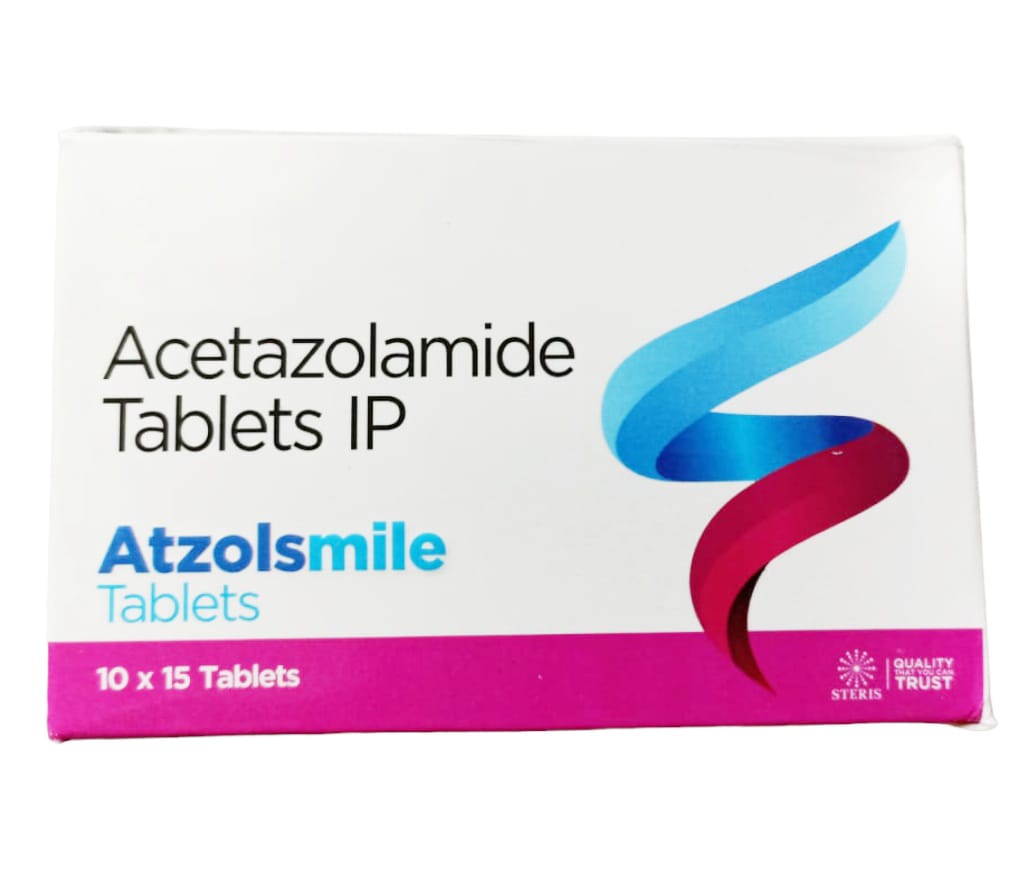
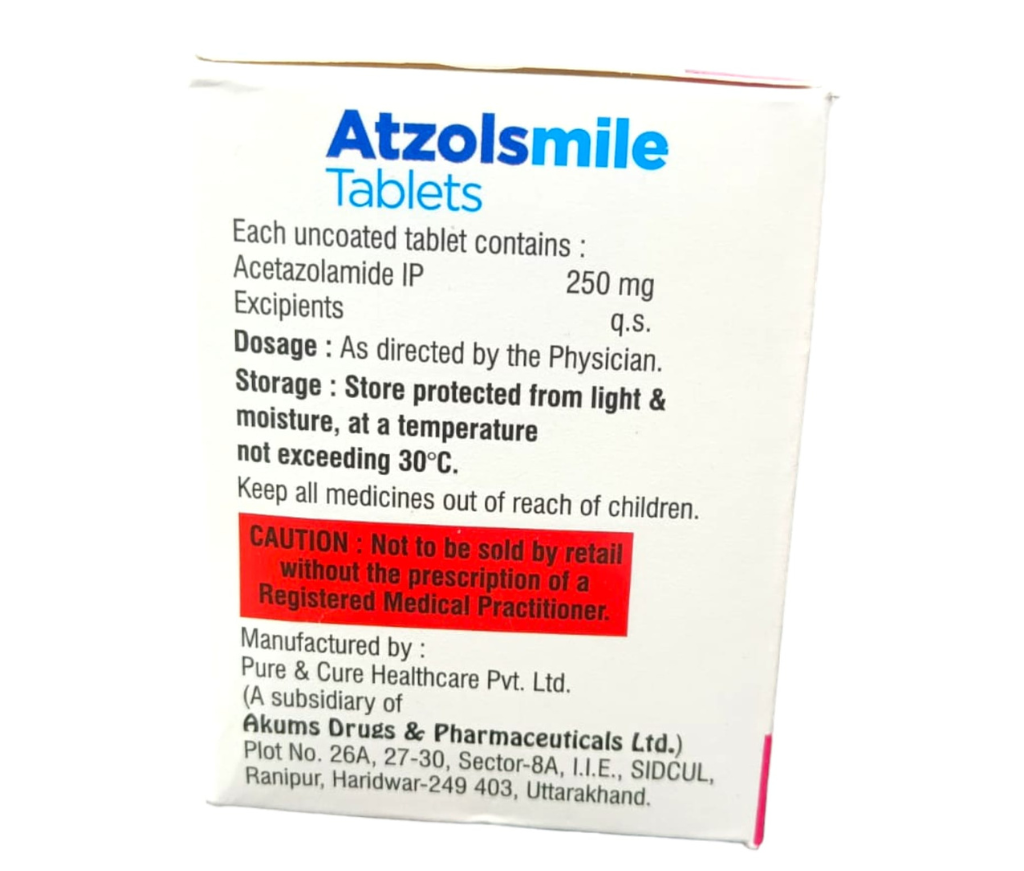
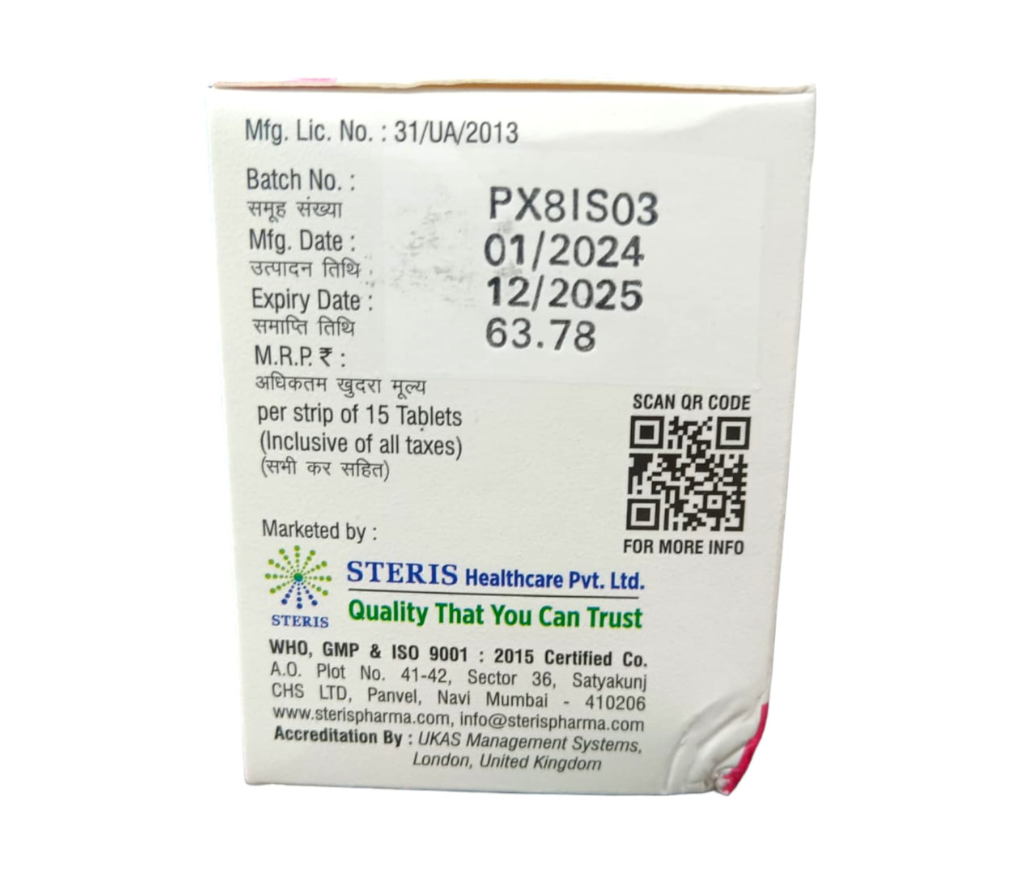
ATZOLSMILE 250
 Item requires a valid prescription
Manufactured By Steris Healthcare Pvt Ltd
Composition Acetazolamide (250mg)
Rs 28.12
MRP Rs 40.17
(30% OFF)
Includes all taxes
Package SIZE
( For 15 Tablet )

100% Authentic
Products

Free
Shipping*

Products
Return Policy
Description:
Atzolsmile Tablet, containing acetazolamide, is a medication primarily used to treat glaucoma, epilepsy, altitude sickness, periodic paralysis, and fluid retention, particularly in patients with congestive heart failure. Acetazolamide belongs to a class of drugs called carbonic anhydrase inhibitors. It works by inhibiting the enzyme carbonic anhydrase, reducing the production of aqueous humor in the eye and cerebrospinal fluid in the brain. This helps lower intraocular pressure in glaucoma and controls abnormal brain activity in epilepsy. Additionally, acetazolamide facilitates acclimatization to high altitudes, preventing or reducing the symptoms of altitude sickness. ATZOLSMILE 250 is a medication containing Acetazolamide (250mg), a potent diuretic and carbonic anhydrase inhibitor. This drug is primarily used to treat glaucoma, certain types of seizures, edema, and acute mountain sickness. By inhibiting the enzyme carbonic anhydrase, Acetazolamide reduces the formation of hydrogen and bicarbonate ions from carbon dioxide and water, leading to diuresis and decreased secretion of aqueous humor in the eye, thus reducing intraocular pressure.
While Atzolsmile Tablet is effective in treating these conditions, it may cause side effects such as tingling sensations in the hands and feet, drowsiness, confusion, and changes in taste. As a sulfonamide drug, it should be avoided by individuals allergic to sulfonamides unless specifically directed by a healthcare provider.
Uses of Atzolsmile Tablet
- Treatment of Glaucoma
- Management of Fluid Retention (Oedema)
- Control of Epilepsy and Seizures
- Prevention and Treatment of Altitude Sickness
Directions for Use
Take Atzolsmile Tablet as directed by your doctor. Swallow the tablet whole with a glass of water. Do not crush or chew the tablet.
Medicinal Benefits
Atzolsmile Tablet is a carbonic anhydrase inhibitor that is effective in treating multiple conditions such as glaucoma, fluid retention, epilepsy, and altitude sickness. By inhibiting the carbonic anhydrase enzyme, it reduces the production of aqueous humor, lowering intraocular pressure to manage glaucoma. It also helps control excessive neural activity in the brain, preventing seizures in epilepsy. Additionally, by lowering carbonic anhydrase activity, Atzolsmile reduces fluid retention and may help manage muscle weakness and high pressure around the spinal cord and brain.
How Atzolsmile Tablet Works
Acetazolamide, the active ingredient in Atzolsmile, works by inhibiting the enzyme carbonic anhydrase. This action reduces the secretion of aqueous humor in the eye, thereby lowering intraocular pressure to treat glaucoma. It also controls abnormal neural activity, providing relief from seizures associated with epilepsy. Furthermore, acetazolamide helps decrease fluid retention by reducing carbonic anhydrase activity in the body.
Storage
Store in a cool, dry place, away from direct sunlight.
Side Effects of Atzolsmile Tablet
- Headache
- Nausea
- Vomiting
- Diarrhoea
- Increased Urination
- Loss of Appetite
- Dizziness
What to Do in Case of Overdose
Do not exceed the prescribed dose of Atzolsmile Tablet. An overdose may result in serious side effects. If you suspect an overdose, seek immediate medical attention.
Drug Warnings
Atzolsmile Tablet should not be used if you are allergic to any of its components or if you have severe kidney or liver conditions, chronic non-congestive angle-closure glaucoma, Addison’s disease, or imbalances in sodium, potassium, or chloride levels. Inform your doctor if you have lung problems, kidney stones, electrolyte imbalances, adrenal disorders, diabetes, or heart disease before starting treatment.
Atzolsmile is not recommended during pregnancy or breastfeeding. Consult your healthcare provider if you are pregnant, planning a pregnancy, or breastfeeding. This medication is not suitable for children, as its safety and efficacy in pediatric patients have not been established. Atzolsmile may cause dizziness or drowsiness, so avoid activities requiring full alertness, such as driving or operating heavy machinery. Additionally, this medication can increase your skin’s sensitivity to sunlight, so protect your skin by wearing sunscreen and appropriate clothing when outdoors.
Key Benefits:
- Reduces Intraocular Pressure: Effective in lowering elevated intraocular pressure in conditions like glaucoma, helping to prevent optic nerve damage and loss of vision.
- Controls Seizures: Used as an adjunctive treatment for certain types of seizures, including absence seizures.
- Manages Edema: Helps in the treatment of fluid retention (edema) due to congestive heart failure or other medical conditions.
- Prevents Acute Mountain Sickness: Aids in preventing symptoms associated with acute mountain sickness, such as headache, nausea, and dizziness, by correcting acid-base imbalance.
How Does It Work?
Acetazolamide works by inhibiting the enzyme carbonic anhydrase, which is involved in the regulation of acid-base balance and fluid secretion in various tissues. By blocking this enzyme, Acetazolamide reduces the reabsorption of bicarbonate in the kidneys, leading to increased excretion of bicarbonate, sodium, and water. This results in diuresis and reduces fluid buildup. Additionally, the inhibition of carbonic anhydrase in the eye decreases the production of aqueous humor, lowering intraocular pressure and alleviating glaucoma symptoms.
Directions for Use:
- Dosage: Follow the dosage prescribed by your healthcare provider. The typical dosage for adults can vary based on the condition being treated.
- Administration: Take ATZOLSMILE 250 orally with or without food. Swallow the tablet whole with a glass of water.
- Frequency: Usually taken 1 to 4 times daily, depending on the medical condition and response to treatment.
- Missed Dose: If you miss a dose, take it as soon as you remember. If it’s near the time of the next dose, skip the missed dose. Do not double the dose to catch up.
Side Effects:
Like all medications, ATZOLSMILE 250 may cause side effects, although not everyone experiences them. Common side effects include:
- Dizziness: Feeling light-headed or dizzy, especially when getting up from a lying or sitting position.
- Fatigue: General feeling of tiredness and lack of energy.
- Nausea: Feeling sick or having an upset stomach.
- Diarrhea: Loose or watery stools.
- Taste Alteration: A change in taste perception, sometimes metallic.
- Frequent Urination: Increased frequency of urination due to its diuretic effect.
If You Need More Information About ATZOLSMILE 250 Click here