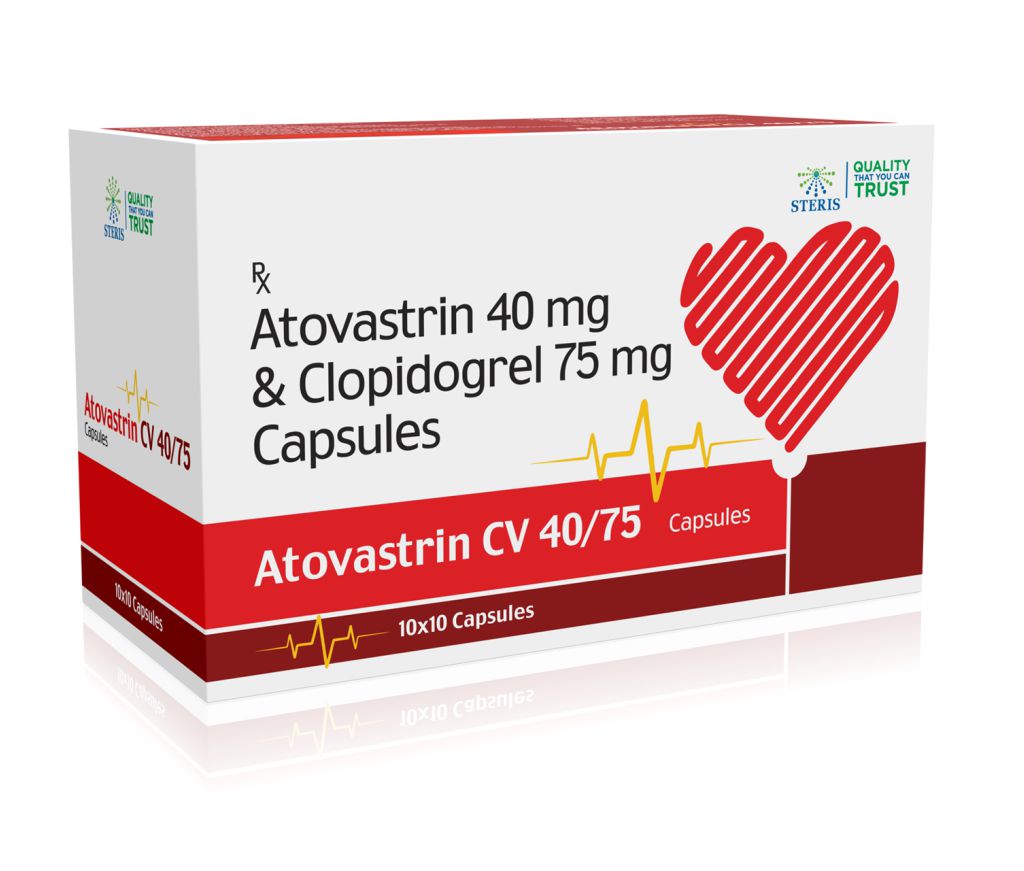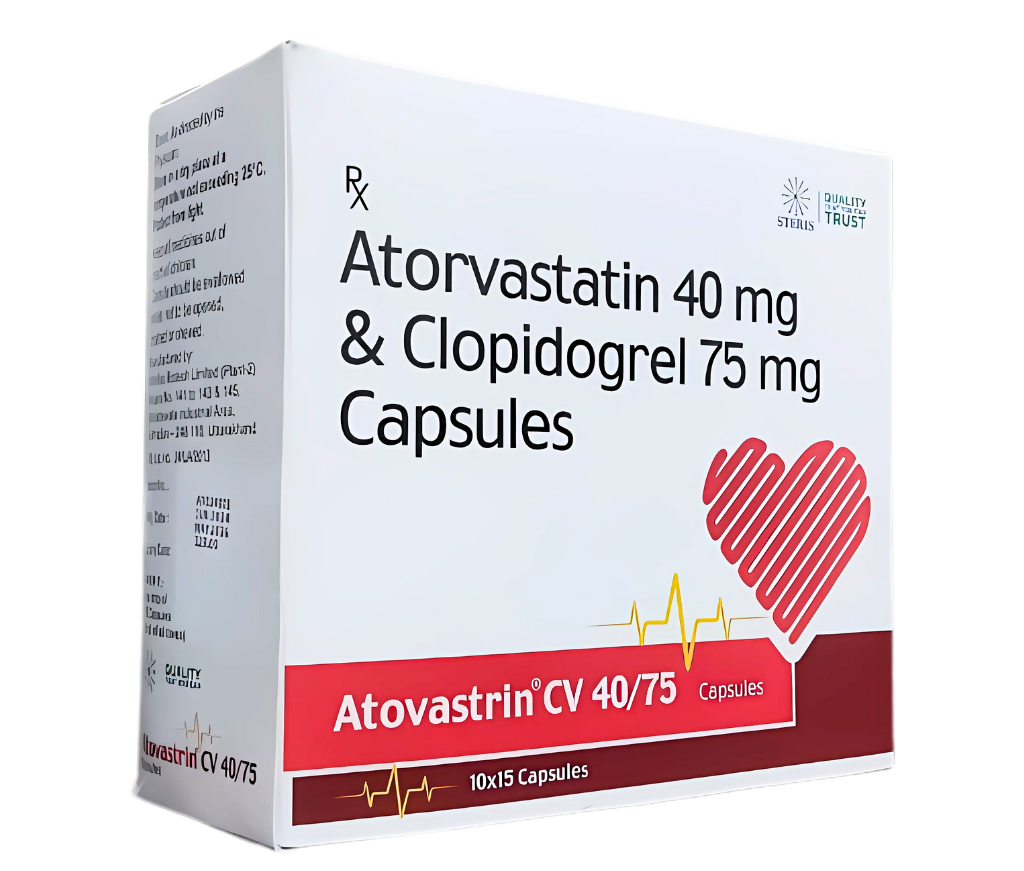
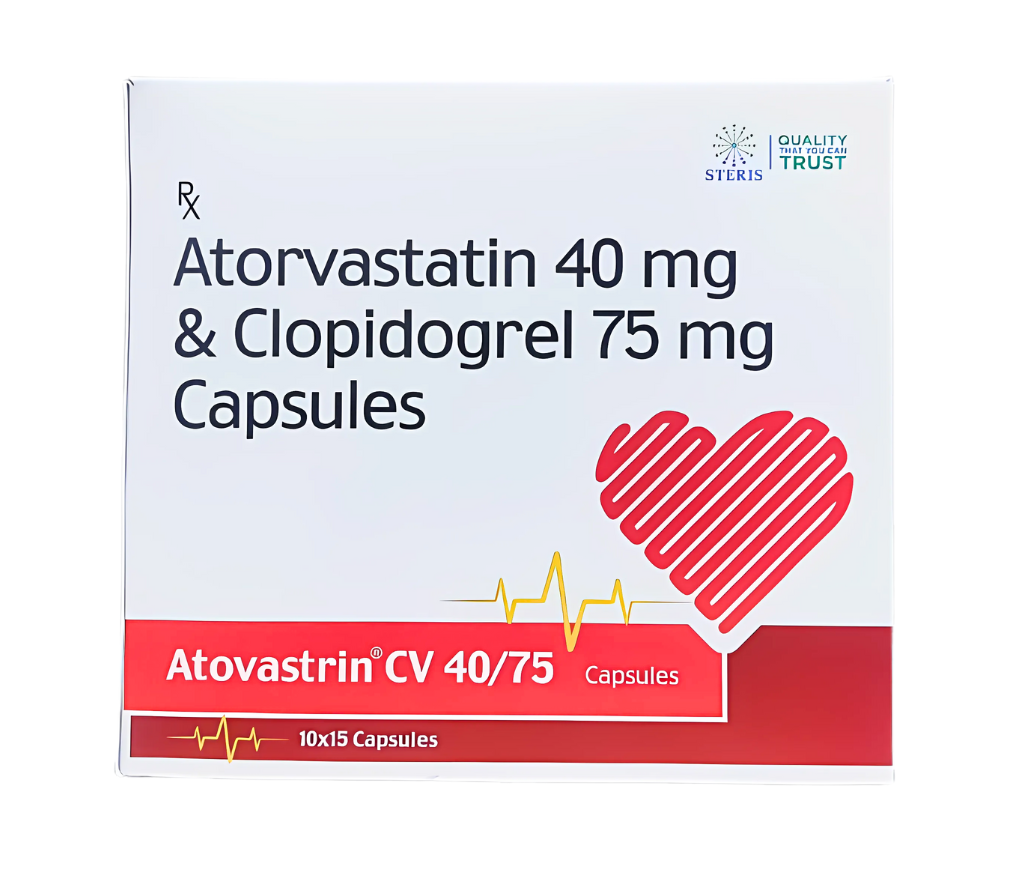
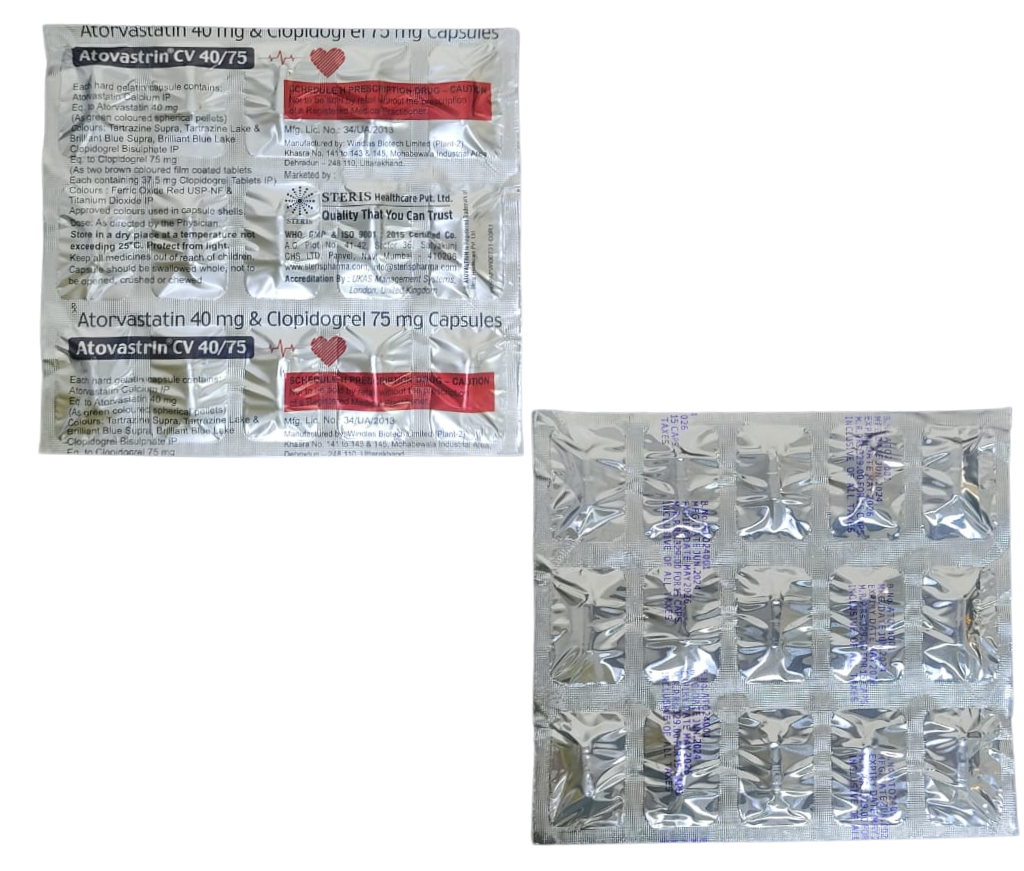
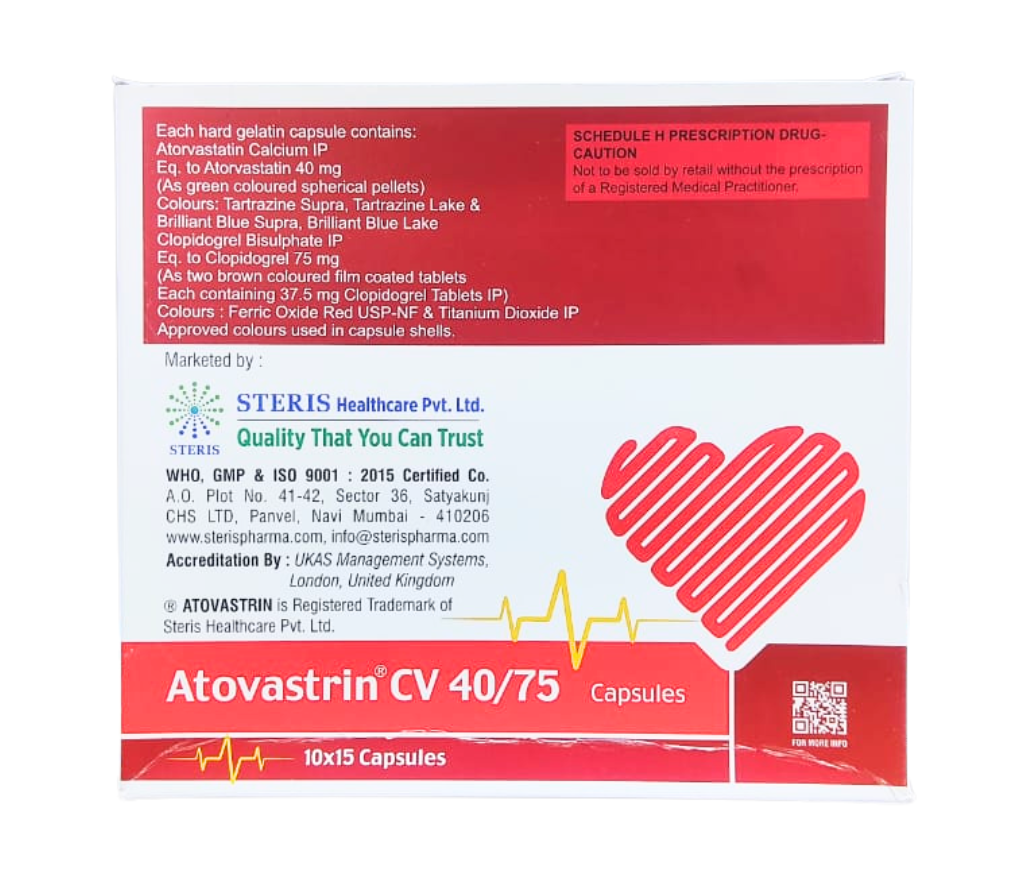
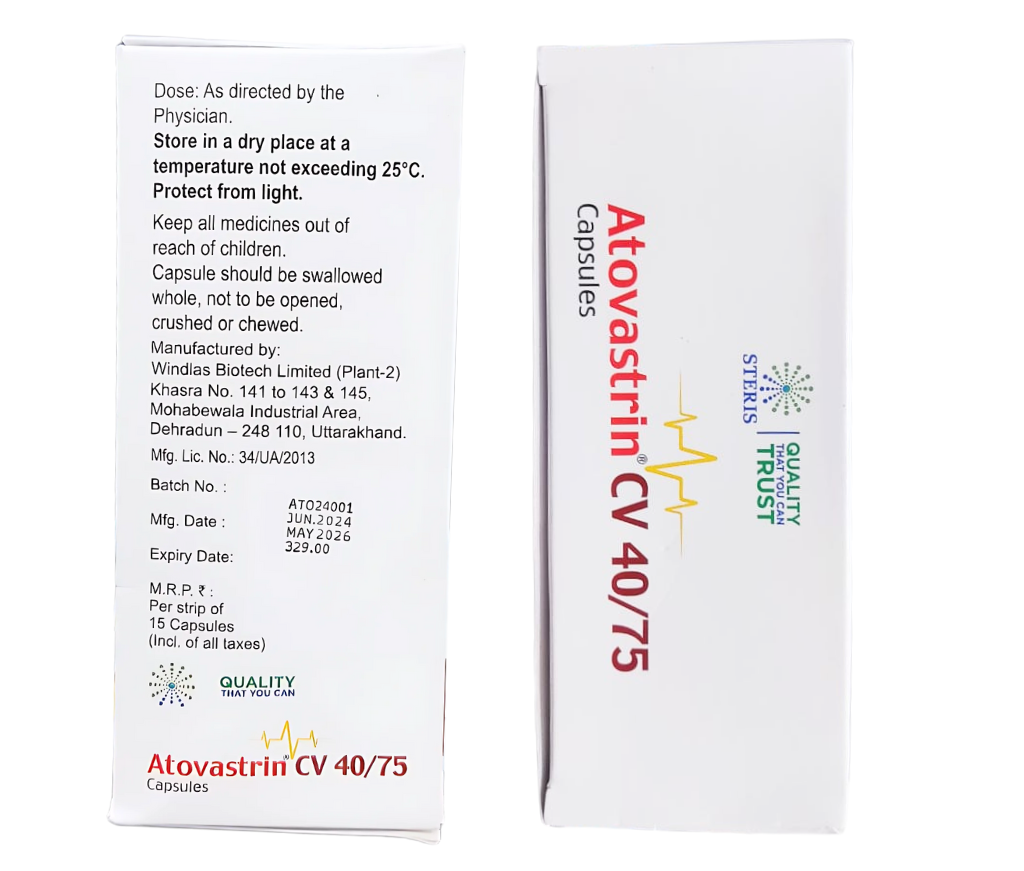
ATOVASTRIN CV 40/75
 Item requires a valid prescription
Manufactured By Steris Healthcare Pvt Ltd
Composition Atorvastatin (40mg), Clopidogrel (75mg)
Rs 230.30
MRP Rs 329.00
(30% OFF)
Includes all taxes
Package SIZE
( For 15 Capsule )

100% Authentic
Products

Free
Shipping*

Products
Return Policy
Description:
Atorvastatin 40 mg and clopidogrel 75 mg caps refer to a combination containing two cardiovascular medicines:
- Atorvastatin 40 mg — a statin that lowers LDL (“bad”) cholesterol and other blood lipids.
- Clopidogrel 75 mg—an antiplatelet medicine that reduces platelet aggregation and helps prevent harmful blood clots.
These medicines work in different ways. Atorvastatin primarily addresses cholesterol and cardiovascular risk, while clopidogrel helps reduce the formation of arterial blood clots. Clopidogrel is used for conditions including acute coronary syndrome, recent myocardial infarction, recent ischemic stroke, and established peripheral arterial disease, depending on the clinical situation.
A combination product may therefore be prescribed for certain patients with significant cardiovascular disease, particularly when both lipid-lowering and antiplatelet treatment are part of the physician's treatment strategy.
Important: The presence of 40 mg atorvastatin and 75 mg clopidogrel in a capsule does not mean this combination is appropriate for everyone with high cholesterol, chest pain, or a previous heart problem.
Atorvastatin 40 mg, Clopidogrel 75 mg: Uses
The combination has two major therapeutic components. Understanding each component makes it easier to understand the product's purpose.
1. Helps Lower LDL Cholesterol
Atorvastatin belongs to the statin class of medicines. It reduces cholesterol production in the liver and helps lower LDL cholesterol.
A 40 mg dose is a commonly used higher-intensity atorvastatin strength. Atorvastatin tablets are available in strengths including 10 mg, 20 mg, 40 mg, and 80 mg.
Lowering LDL cholesterol is an important part of cardiovascular risk management because elevated LDL contributes to atherosclerotic plaque formation.
2. Helps Prevent Blood Clots
Clopidogrel is a P2Y12 platelet inhibitor. It reduces platelet activation and aggregation, making it harder for platelets to form harmful clots.
It is indicated in appropriate patients with acute coronary syndrome and for secondary prevention after certain myocardial infarctions or ischemic strokes, as well as in established peripheral arterial disease.
3. Cardiovascular Risk Reduction
When prescribed appropriately, combining intensive lipid lowering with antiplatelet therapy can address two different cardiovascular risk pathways:
High LDL → atherosclerotic risk
Activated platelets → arterial clot risk
The two medicines should not be viewed as interchangeable. Atorvastatin does not replace clopidogrel, and clopidogrel does not lower cholesterol.
How Does Atorvastatin 40 mg Work?
Atorvastatin inhibits HMG-CoA reductase, an enzyme involved in cholesterol production in the liver.
This leads to increased removal of LDL cholesterol from the bloodstream and a reduction in circulating cholesterol.
The clinical objective is not simply to make a cholesterol number "normal." For patients with established cardiovascular disease, healthcare professionals generally consider the patient's overall cardiovascular risk and appropriate LDL-lowering strategy.
Atorvastatin 40 mg is a substantial statin dose, so treatment should be monitored according to the individual's medical circumstances.
How Does Clopidogrel 75 mg Work?
Clopidogrel is an antiplatelet prodrug. It must be metabolized into an active metabolite, partly through the CYP2C19 pathway, to produce its antiplatelet effect.
It inhibits the P2Y12 ADP receptor on platelets, reducing platelet activation and aggregation.
The FDA prescribing information warns that patients with certain CYP2C19 loss-of-function genetic variants may have a reduced response to clopidogrel.
This is one reason clopidogrel should not be treated as a simple "blood thinner" that can be started or stopped without medical supervision.
Key Benefits of Atorvastatin 40 mg and Clopidogrel 75mg Caps
When prescribed for an appropriate patient, the combination may provide complementary cardiovascular benefits.
1. LDL cholesterol reduction
Atorvastatin helps lower LDL cholesterol and other atherogenic lipids.
2. Antiplatelet protection
Clopidogrel reduces platelet aggregation and helps prevent certain arterial thrombotic events.
3. Secondary cardiovascular prevention
Clopidogrel is specifically used in appropriate patients after certain cardiovascular events, including recent MI and ischemic stroke.
4. Convenient combination therapy
For patients who have been prescribed both medicines, a combination product can potentially simplify the medication regimen.
However, convenience should never override dose accuracy. A patient prescribed a different atorvastatin or antiplatelet dose should not switch to a combination product without medical approval.
Atorvastatin 40 mg, Clopidogrel 75mg Dosage
There is no universal dose schedule for every patient.
Clopidogrel's labeled maintenance dose for several cardiovascular indications is 75 mg once daily, although patients with acute coronary syndrome may receive a loading dose before the maintenance dose.
Atorvastatin dosing is individualized according to cholesterol levels, cardiovascular risk, treatment response, drug interactions, and tolerability.
Therefore, if your prescription specifically says atorvastatin 40 mg + clopidogrel 75 mg, take it exactly as directed.
- Take an extra capsule because you missed a dose.
- Change from separate tablets to a combination capsule without medical advice.
- Stop clopidogrel after a stent or heart attack without discussing it with your cardiologist.
- Increase atorvastatin because your cholesterol remains high.
- Share this medicine with another person.
Premature discontinuation of clopidogrel can increase cardiovascular risk in appropriate patients who require ongoing antiplatelet treatment.
When Is This Combination Commonly Prescribed?
A doctor may consider both medicines when a patient has cardiovascular disease requiring lipid management and antiplatelet therapy.
Examples can include patients who have:
- Acute coronary syndrome
- A previous myocardial infarction
- Certain coronary interventions or stent procedures
- Established peripheral arterial disease
- Other cardiovascular conditions where both therapies are clinically indicated
The exact combination, duration, and need for additional medicines such as aspirin depend on the patient's diagnosis and treatment plan.
Do not assume that everyone with a heart stent needs clopidogrel for the same length of time.
The duration of antiplatelet treatment can vary substantially depending on the procedure, bleeding risk, cardiovascular risk, and clinician recommendations.
Atorvastatin 40 mg, Clopidogrel 75mg Side Effects
Because this product contains two active medicines, side effects can arise from either component.
Common Atorvastatin-Related Side Effects
Possible adverse effects include:
- Muscle aches
- Digestive discomfort
- Headache
- Changes in liver enzymes
- Occasionally weakness or other muscle symptoms
One of the most important atorvastatin warnings concerns myopathy and rhabdomyolysis, rare but potentially serious muscle conditions. The risk can increase with higher doses and certain drug interactions.
Common Clopidogrel-Related Side Effects
The major concern with clopidogrel is bleeding.
Possible symptoms include:
- Easy bruising
- Nosebleeds
- Bleeding gums
- Longer bleeding time from cuts
- Gastrointestinal bleeding
The FDA prescribing information identifies bleeding, including serious or life-threatening bleeding, as an important adverse effect of clopidogrel.
Serious Side Effects: When Should You Seek Medical Help?
Seek urgent medical attention for:
- Uncontrolled bleeding
- Vomiting blood
- Coughing up blood
- Black or tarry stools
- Blood in urine
- Severe unexplained weakness
- Sudden severe headache
- New neurological symptoms
- Severe allergic reaction
- Facial or throat swelling
- Severe or persistent muscle pain or weakness
Severe muscle symptoms are particularly important for patients taking atorvastatin because rare rhabdomyolysis can cause acute kidney injury.
Atorvastatin 40 mg and Liver Safety
Atorvastatin can cause increases in liver enzymes, and serious liver injury is rare.
People with active liver disease or significant liver problems should tell their healthcare professional before starting therapy. Current prescribing information lists active liver disease as a contraindication for certain atorvastatin formulations.
Your doctor may consider liver enzyme testing before treatment and subsequently when clinically appropriate.
Contact your doctor if you develop symptoms such as:
- Yellow skin or eyes
- Dark urine
- Unusual tiredness
- Persistent abdominal discomfort
Clopidogrel 75 mg and Bleeding Risk
Clopidogrel intentionally reduces platelet aggregation, which is why it can prevent certain cardiovascular clots.
The same mechanism means that bleeding can take longer to stop.
Tell your doctor before undergoing the following:
- Dental procedures
- Surgery
- Endoscopy
- Invasive procedures
Do not independently stop clopidogrel before a procedure.
The FDA label states that clopidogrel is generally discontinued 5 days before elective surgery with a major bleeding risk when discontinuation is medically appropriate.
The timing must be determined by the treating healthcare professional because stopping antiplatelet therapy can itself carry cardiovascular risk.
Important Drug Interactions
Clopidogrel and Omeprazole
One of the most important interactions involves omeprazole and esomeprazole.
These medicines can inhibit CYP2C19 and reduce the formation of clopidogrel's active metabolite. The FDA labeling advises avoiding concomitant use of clopidogrel with omeprazole or esomeprazole.
If you require treatment for acid reflux or stomach protection, ask your doctor or pharmacist which option is appropriate rather than choosing a PPI yourself.
Clopidogrel and NSAIDs
NSAIDs such as ibuprofen or naproxen can increase bleeding risk when combined with clopidogrel.
Do not routinely take NSAIDs without discussing them with a healthcare professional. The clopidogrel label specifically identifies NSAIDs as medicines that can increase bleeding risk.
Atorvastatin and Certain Medicines
Some medicines can increase atorvastatin exposure and consequently raise the risk of muscle toxicity.
Examples include the following:
- Macrolide antibiotics
- Azole antifungals
- HIV/HCV protease inhibitors
- Immunosuppressants
- Other lipid-lowering medicines
Atorvastatin is metabolized partly through CYP3A4 and interacts with several drugs that affect this pathway.
Always provide your complete medication list to your doctor or pharmacist.
Atorvastatin 40 mg, Clopidogrel 75 mg, and Alcohol
Alcohol does not automatically make the combination ineffective, but excessive alcohol consumption can increase health risks.
Heavy alcohol use may be particularly concerning for people taking atorvastatin because of its effects on the liver and for people taking clopidogrel because of bleeding risk.
If you drink alcohol regularly, discuss the amount and frequency with your healthcare professional.
Who Should Be Careful With This Medicine?
Tell your doctor if you have:
- Previous gastrointestinal bleeding
- A stomach ulcer
- Liver disease
- Kidney disease
- A history of muscle problems with statins
- Uncontrolled hypothyroidism
- A bleeding disorder
- Recent surgery
- A planned operation
- A history of stroke or intracranial bleeding
- Previous allergic reactions to clopidogrel or statins
People taking anticoagulants such as warfarin or other antithrombotic medicines require particularly careful medical supervision because the combined bleeding risk may be higher.
Atorvastatin 40 mg, Clopidogrel 75mg Caps: Buying Guide
If you are searching online for “buy atorvastatin 40mg clopidogrel 75mg caps,” “atorvastatin 40mg clopidogrel 75mg price,” or “atorvastatin 40mg clopidogrel 75mg online,” focus on authenticity and proper dispensing.
Before purchasing, check:
- Exact active ingredients
- Atorvastatin strength: 40 mg
- Clopidogrel strength: 75 mg
- Manufacturer
- Batch number
- Expiry date
- Packaging
- Prescription requirements
- Pharmacy legitimacy
- Storage conditions
Do not purchase a combination product solely because it is cheaper.
Also confirm that the product is actually a fixed-dose combination rather than a listing that simply groups two separate medicines.
Because formulations and brand availability vary by country, the packaging and approved product information in your country should be checked before purchase.
Frequently Asked Questions
1. What are atorvastatin 40 mg and clopidogrel 75 mg caps used for?
They combine a cholesterol-lowering statin with an antiplatelet medicine. They may be prescribed for appropriate patients who require both lipid management and prevention of certain cardiovascular blood clots.
2. What is atorvastatin 40 mg used for?
Atorvastatin 40 mg is used to lower LDL cholesterol and reduce cardiovascular risk as part of an appropriate treatment plan.
3. What is clopidogrel 75 mg used for?
Clopidogrel 75 mg is used to reduce platelet aggregation and help prevent cardiovascular events in appropriate patients with conditions such as acute coronary syndrome, recent MI, recent ischemic stroke, or established peripheral arterial disease.
4. Can atorvastatin and clopidogrel be taken together?
Yes, doctors may prescribe them together when both cholesterol reduction and antiplatelet therapy are clinically indicated. The combination should be taken only according to the prescribed regimen.
5. Is atorvastatin 40 mg a high dose?
It is a higher-strength atorvastatin dose and is commonly used when substantial LDL reduction is required. Whether it is appropriate depends on the patient's cardiovascular risk and treatment response.
6. Is clopidogrel 75 mg a blood thinner?
Clopidogrel is commonly called a "blood thinner," but technically it is an antiplatelet medicine, not an anticoagulant. It prevents platelets from sticking together and forming certain blood clots.
7. Can I stop clopidogrel 75 mg suddenly?
Do not stop clopidogrel without medical advice. Premature discontinuation can increase cardiovascular risk in patients who require antiplatelet treatment.
8. Can I take omeprazole with clopidogrel?
The FDA labeling advises avoiding concomitant use of clopidogrel with omeprazole or esomeprazole because they can reduce clopidogrel's antiplatelet activity.
9. Can atorvastatin 40 mg cause muscle pain?
Yes. Muscle pain, tenderness, or weakness can occur. Rarely, atorvastatin can cause severe muscle injury called rhabdomyolysis.
10. Does clopidogrel 75 mg cause bleeding?
Yes. Increased bleeding is the principal safety concern with clopidogrel and can occasionally be serious.
11. Can I take ibuprofen with clopidogrel?
Ibuprofen and other NSAIDs can increase bleeding risk when taken with clopidogrel. Ask a healthcare professional before using an NSAID.
12. Can I drink alcohol while taking atorvastatin and clopidogrel?
Discuss alcohol use with your healthcare professional. Heavy alcohol consumption may increase health risks, including liver concerns with atorvastatin and bleeding concerns with clopidogrel.
13. Can atorvastatin 40 mg damage the liver?
Significant liver injury is rare, but atorvastatin can cause liver enzyme elevations. People with active liver disease require particular caution.
14. Can I take this combination after a heart attack?
A doctor may prescribe both medicines after a heart attack when clinically indicated. Clopidogrel has established uses following certain myocardial infarctions, while atorvastatin is commonly used for intensive lipid management.
15. Is this combination used after a heart stent?
It may be. Antiplatelet treatment is commonly part of post-stent management, but the exact medicines and duration depend on the type of procedure, cardiovascular risk, bleeding risk, and cardiologist's instructions.
16. What happens if I miss a dose?
Follow the instructions on your prescription or ask your pharmacist. Do not automatically double the next dose, particularly because clopidogrel affects platelet function and atorvastatin has its own dosing considerations.
17. Can I take aspirin with clopidogrel?
Aspirin and clopidogrel are sometimes prescribed together as dual antiplatelet therapy for specific cardiovascular indications. However, taking them together increases bleeding risk and should be done only when specifically recommended.
18. Can atorvastatin 40 mg and clopidogrel 75 mg be taken at night?
Atorvastatin can be taken at different times of day, while clopidogrel is generally taken once daily. If they are supplied as a fixed-dose combination, follow the product's prescribing instructions rather than changing the timing yourself.
19. Are atorvastatin 40 mg and clopidogrel 75 mg safe for long-term use?
It can be appropriate for long-term cardiovascular prevention in selected patients, but ongoing treatment should be periodically reviewed for cardiovascular benefit, bleeding risk, liver concerns, muscle symptoms, and drug interactions.
20. Can I buy atorvastatin 40 mg and clopidogrel 75 mg caps online?
Online availability depends on the country and product. Use a legitimate, appropriately regulated pharmacy and verify the exact ingredients, strength, manufacturer, expiry date, and prescription requirements.
Available Substitutes