


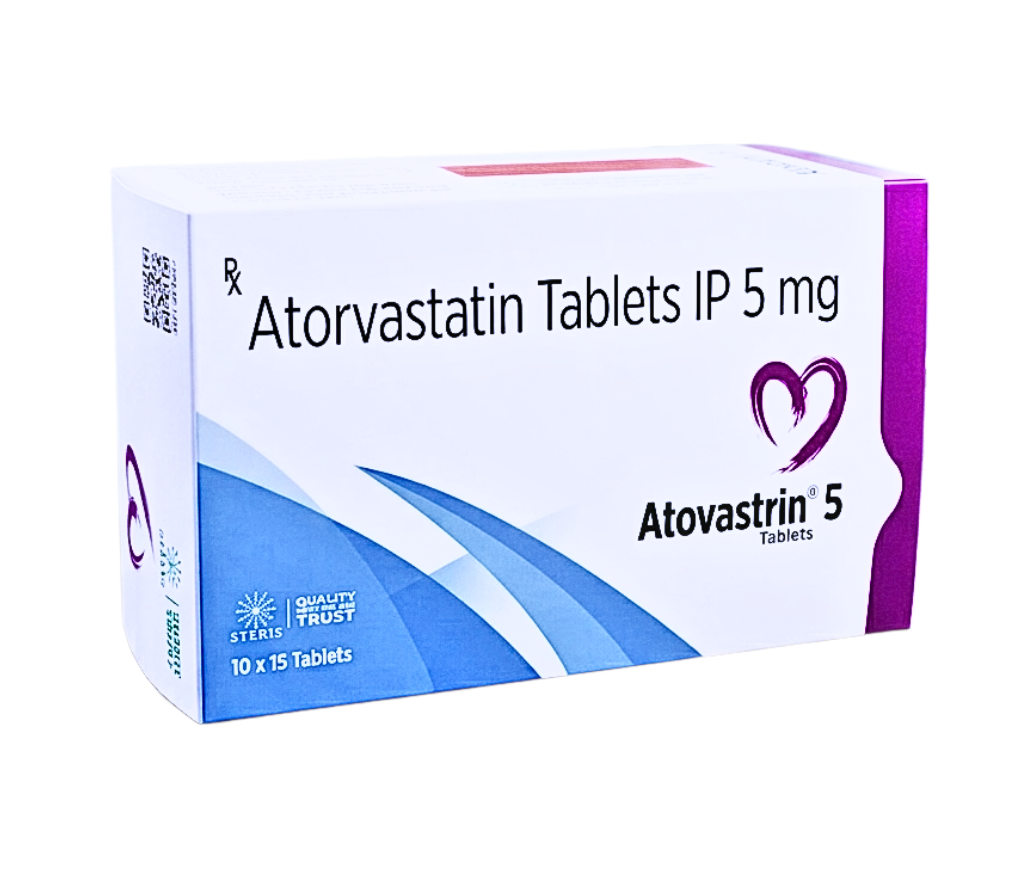
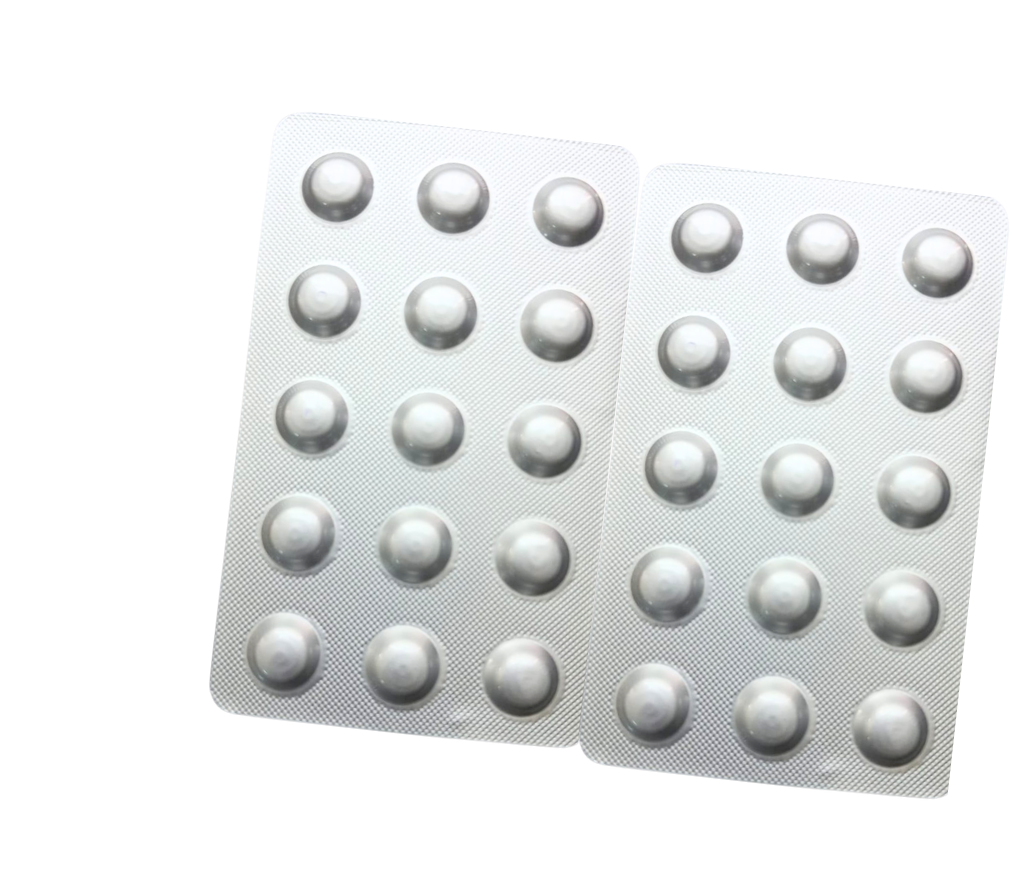
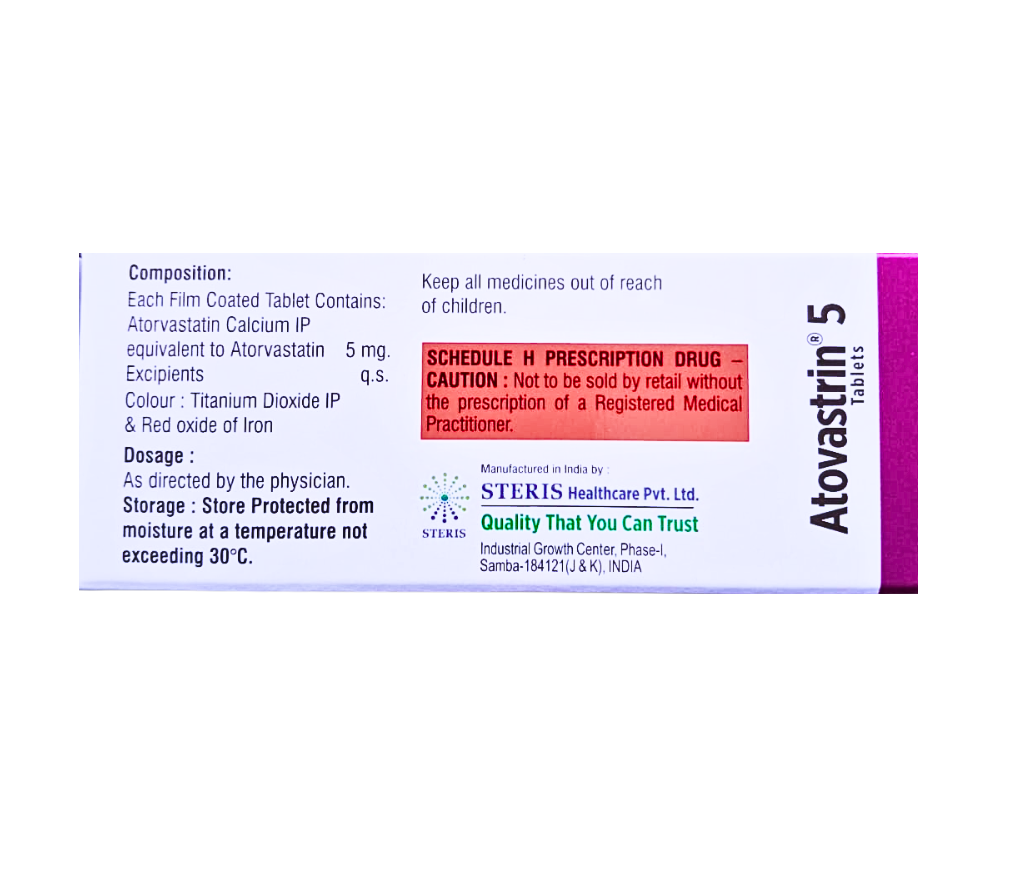
ATOVASTRIN 5
 Item requires a valid prescription
Manufactured By Steris Healthcare Pvt Ltd
Composition atorvastatin 5 mg
Rs 44.10
MRP Rs 63.00
(30% OFF)
Includes all taxes
Package SIZE
( For 15 Tablet )

100% Authentic
Products

Free
Shipping*

Products
Return Policy
Description:
What Is Atorvastatin 5 mg?
Atorvastatin 5 mg refers to a low-dose formulation of atorvastatin, a medicine belonging to the statin class of cholesterol-lowering drugs. Atorvastatin works primarily by inhibiting HMG-CoA reductase, an enzyme involved in cholesterol production in the liver.
By reducing cholesterol synthesis, atorvastatin increases the liver's ability to remove LDL cholesterol from the bloodstream. The result is a reduction in circulating LDL-C, commonly called “bad cholesterol.”
Atorvastatin is prescribed along with an appropriate diet and lifestyle measures to manage high cholesterol and reduce cardiovascular risk. It is also used in patients with established cardiovascular disease or other risk factors when lipid-lowering treatment is indicated.
Atorvastatin 5 mg Uses
The main reason atorvastatin is prescribed is to help control unhealthy cholesterol levels and lower the risk of cardiovascular complications.
Potential clinical uses include:
- Managing elevated LDL cholesterol
- Managing primary hyperlipidemia
- Supporting treatment of mixed dyslipidemia
- Reducing cardiovascular risk in appropriate patients
- Supporting secondary prevention after cardiovascular events
- Reducing cholesterol in selected patients with familial hypercholesterolemia
- Helping lower triglycerides as part of an overall lipid-management strategy
Atorvastatin is not simply a medicine for treating a laboratory cholesterol number. In appropriate patients, LDL lowering is intended to reduce the long-term risk of events such as heart attack and stroke.
Why LDL Cholesterol Matters
LDL cholesterol can contribute to plaque formation inside arteries. Over time, excess LDL exposure may contribute to atherosclerosis and cardiovascular disease.
The 2026 ACC/AHA dyslipidemia guideline places greater emphasis on earlier LDL lowering, individualized cardiovascular risk assessment, and lower LDL-C goals for people at higher risk.
How Does Atorvastatin 5 mg Work?
Atorvastatin blocks HMG-CoA reductase, an important enzyme in the liver's cholesterol-production pathway.
The process can be simplified as:
Atorvastatin → inhibits cholesterol synthesis → liver increases LDL receptors → more LDL removed from blood → LDL cholesterol decreases
Atorvastatin's lipid-lowering effects are dose-related across its commonly used dosage range, although the exact response varies among individuals.
This is why a doctor may review the lipid profile after treatment begins and decide whether the dose is sufficient.
Current prescribing information recommends assessing LDL-C when clinically appropriate, including as early as approximately four weeks after starting atorvastatin, and adjusting therapy when necessary.
Will 5 mg of Atorvastatin Lower Cholesterol?
Clinical research has specifically investigated atorvastatin 5 mg as a low-intensity treatment. A randomized study evaluating low-intensity atorvastatin 5 mg found that adding ezetimibe to atorvastatin 5 mg produced greater LDL-C reduction than moderate-intensity atorvastatin alone in the studied population.
However, this does not mean that 5 mg is enough for everyone.
Someone with:
- mildly elevated LDL-C,
- significant cardiovascular risk,
- diabetes,
- established cardiovascular disease,
- familial hypercholesterolemia, or
- very high LDL-C
may require a different treatment intensity.
Current U.S. prescribing information generally recommends atorvastatin starting at 10 or 20 mg daily for adults, with higher doses used when a greater LDL reduction is required.
Key Benefits of Atorvastatin 5 mg
When clinically appropriate, low-dose atorvastatin may offer several potential benefits.
1. Helps Reduce LDL Cholesterol
The primary benefit is lowering LDL-C. Statins are among the most established therapies for reducing atherogenic cholesterol.
2. Supports Cardiovascular Risk Reduction
Lowering LDL cholesterol is an important component of preventing cardiovascular events in appropriate patients.
Atorvastatin is indicated for reducing risks including myocardial infarction and stroke in specified patient populations.
3. May Help Lower Total Cholesterol
Atorvastatin can reduce total cholesterol as part of comprehensive lipid management.
4. Can Help Manage Mixed Dyslipidemia
Atorvastatin is also used in appropriate adults with mixed lipid abnormalities, including elevated triglycerides.
5. Convenient Once-Daily Administration
Atorvastatin can generally be taken once daily with or without food.
Atorvastatin 5 mg and Weight Gain
Does Atorvastatin 5 mg Cause Weight Gain?
Weight gain is not considered a primary therapeutic effect of atorvastatin.
Atorvastatin is a cholesterol-lowering medicine, not a weight-management drug. Changes in body weight during treatment can have many causes, including:
- dietary changes,
- reduced physical activity,
- fluid retention,
- metabolic conditions,
- aging,
- other medicines,
- changes in appetite or lifestyle.
Atorvastatin 5 mg Side Effects
Like other medicines, atorvastatin can cause side effects, although many people tolerate statins without serious problems.
Commonly Reported Side Effects
Possible side effects can include:
- Muscle aches
- Joint pain
- Digestive symptoms
- Diarrhea
- Nausea
- Headache
- Mild weakness or fatigue
What Is the Side Effect of Atorvastatin?
The side effect most commonly associated with statins that patients ask about is muscle-related symptoms, such as muscle pain or weakness.
Most muscle symptoms are not dangerous, but unexplained or severe muscle pain, tenderness or weakness, especially with fever, unusual tiredness or dark-colored urine, requires prompt medical attention because rare serious muscle injury can occur.
Serious Side Effects:
Seek medical advice promptly if you develop:
- Severe or unexplained muscle pain
- Significant muscle weakness
- Dark urine with muscle symptoms
- Yellowing of the skin or eyes
- Severe unusual tiredness
- Severe abdominal symptoms
- Signs of an allergic reaction
Atorvastatin 5 mg Precautions
Before using atorvastatin, tell your healthcare professional about:
- Liver disease
- Previous statin-related muscle problems
- Kidney problems
- Other prescription medicines
- Over-the-counter medicines
- Herbal supplements
- Alcohol consumption
- Pregnancy or plans for pregnancy
- Breastfeeding
Atorvastatin 5 mg Dosage and Administration
The correct dose depends on the individual's:
- LDL-C level
- Cardiovascular risk
- Treatment goal
- Age
- Other medical conditions
- Other medicines
- Response to therapy
- Tolerance
Atorvastatin vs Fenofibrate: Which Is Better for Cholesterol?
Which Is Better for Cholesterol, Fenofibrate or Atorvastatin?
There is no single answer for every patient because atorvastatin and fenofibrate target different lipid problems.
Atorvastatin is generally a statin primarily used for LDL-C reduction and cardiovascular-risk reduction.
Fenofibrate is particularly useful for managing elevated triglycerides and certain mixed lipid disorders. FDA labeling describes fenofibrate as an adjunct to diet for reducing LDL-C, total cholesterol and triglycerides in appropriate patients.
Simple comparison
| Feature | Atorvastatin | Fenofibrate |
|---|---|---|
| Main lipid target | LDL cholesterol | Triglycerides |
| Drug class | Statin | Fibrate |
| Cardiovascular prevention role | Strong evidence/base therapy in appropriate patients | More situation-dependent |
| LDL lowering | Strong | Variable |
| Triglyceride lowering | Moderate | Stronger |
| Typical treatment focus | LDL-C + ASCVD risk | High triglycerides/mixed dyslipidemia |
Atorvastatin 5 mg and 2026 Cholesterol Management
The 2026 ACC/AHA dyslipidemia guidance emphasizes earlier intervention and more individualized LDL-C goals. For primary prevention, the guideline incorporates cardiovascular-risk assessment and LDL-C goals; higher-risk individuals may have substantially lower targets.
This is important for buyer-intent searches such as:
- atorvastatin 5 mg for high cholesterol
- atorvastatin 5 mg for LDL
- low-dose atorvastatin for cholesterol
- atorvastatin 5 mg benefits
- atorvastatin 5 mg side effects
- atorvastatin 5 mg dosage
- atorvastatin 5 mg tablet uses
- atorvastatin for high LDL
- atorvastatin vs. fenofibrate
- atorvastatin cholesterol medicine
Atorvastatin 5 mg Buyer-Intent Information
People searching for “atorvastatin 5 mg” may have different intentions.
Informational Intent
They may want to know:
- What is atorvastatin 5 mg?
- What does atorvastatin do?
- Does atorvastatin lower LDL?
- What are the side effects?
Commercial Investigation
They may be comparing:
- Atorvastatin strengths
- Atorvastatin brands
- Atorvastatin versus fenofibrate
- Atorvastatin versus other statins
- Low-dose cholesterol medicines
Transactional Intent
Before purchasing a prescription medicine, users should verify:
- Exact strength
- Active ingredient
- Manufacturer
- Batch information
- Expiry date
- Prescription requirements
- Storage instructions
- Authenticity of the medicine
- Licensed pharmacy/distributor status
Conclusion
Atorvastatin 5 mg is a low-dose atorvastatin strength that may be used in selected treatment strategies under medical supervision. Atorvastatin belongs to the statin class and primarily works by lowering LDL cholesterol and helping reduce cardiovascular risk in appropriate patients.
A key point for anyone searching for “atorvastatin 5 mg” is that the appropriate dose is individualized. Current U.S. prescribing information generally starts adults at 10–20 mg once daily, with a dosage range of 10–80 mg, so 5 mg should not be treated as a standard adult starting dose or substituted without professional advice.
Atorvastatin may help lower LDL cholesterol, while fenofibrate is generally more focused on triglyceride reduction. Neither should automatically be considered “better” without reviewing the patient's lipid profile and cardiovascular risk.
Frequently Asked Questions
1. Will 5 mg of atorvastatin lower cholesterol?
Yes. Low-dose atorvastatin can lower LDL cholesterol, although the amount of reduction varies between individuals. Whether 5 mg is sufficient depends on the patient's LDL-C level and treatment target.
2. Does atorvastatin 5 mg cause weight gain?
Weight gain is not the primary effect of atorvastatin. If significant or unexplained weight gain occurs, discuss it with a healthcare professional because other causes may need to be evaluated.
3. Which is better for cholesterol, fenofibrate or atorvastatin?
Atorvastatin is generally more focused on LDL cholesterol and cardiovascular-risk reduction, while fenofibrate is particularly useful for elevated triglycerides. The better option depends on the patient's lipid profile and clinical risk.
4. What is the side effect of atorvastatin?
Commonly reported effects can include muscle aches, joint discomfort and digestive symptoms. Rarely, serious muscle injury or liver-related problems can occur and require medical attention.
5. What is atorvastatin 5 mg used for?
It is used to help lower cholesterol, particularly LDL cholesterol, and may be part of cardiovascular-risk reduction in selected patients.
6. Is atorvastatin 5 mg a low dose?
Yes. Compared with the commonly labeled adult atorvastatin range of 10–80 mg, 5 mg is considered a low dose. However, whether it is appropriate depends on the individual's treatment plan.
7. How long does atorvastatin take to lower cholesterol?
Cholesterol changes can begin relatively quickly, but treatment response is generally assessed after several weeks. Current labeling allows LDL-C assessment as early as about four weeks after starting therapy.
8. Can atorvastatin 5 mg lower LDL?
Yes. Atorvastatin reduces LDL-C by increasing hepatic LDL receptor activity after inhibiting cholesterol synthesis.
9. Can I take atorvastatin 5 mg every day?
Atorvastatin is generally administered once daily, but the exact strength and schedule should follow the prescription provided by your healthcare professional.
10. Should atorvastatin be taken with food?
Atorvastatin can generally be taken once daily with or without food.
11. Is atorvastatin 5 mg good for high cholesterol?
It may be appropriate for selected patients, but the dose required depends on LDL-C levels, cardiovascular risk and the desired percentage reduction. Many adult prescribing references use 10–20 mg as the usual starting dose.
12. Does atorvastatin reduce triglycerides?
Yes. In addition to lowering LDL cholesterol, atorvastatin can reduce triglycerides, although treatment selection for significantly elevated triglycerides may require additional considerations.
13. Can atorvastatin prevent heart attack and stroke?
In appropriate patients, atorvastatin is used as part of cardiovascular-risk reduction and is indicated for reducing risks such as myocardial infarction and stroke in specified populations.
14. What should I avoid while taking atorvastatin?
Patients should tell their healthcare professional about all medicines and supplements they take because some drugs can interact with atorvastatin. Certain medicines can increase the risk of muscle toxicity and may require dose restrictions.
15. Can atorvastatin cause muscle pain?
Yes. Muscle aches or weakness can occur. Severe or unexplained muscle pain or weakness should be reported promptly because rare serious muscle injury can occur.
16. Can atorvastatin affect the liver?
Atorvastatin can affect liver enzymes in some patients. People with liver disease should discuss this with their healthcare professional before treatment.
17. Can I stop atorvastatin when my cholesterol becomes normal?
Do not stop prescribed atorvastatin without medical advice. Cholesterol may remain controlled partly because the medicine is working.
18. Is atorvastatin 5 mg better than fenofibrate?
Neither is universally better. Atorvastatin is generally more focused on LDL-C and cardiovascular risk, whereas fenofibrate is particularly useful for triglyceride management.
19. Can atorvastatin be taken at night?
Atorvastatin can generally be taken at any time of day because it has a long duration of action. The most important factor is taking it consistently as prescribed.
20. Is atorvastatin 5 mg available as a tablet?
Availability of specific 5-mg atorvastatin products varies by country and manufacturer. Current U.S. labeling commonly lists 10, 20, 40 and 80 mg tablet strengths.
21. Is atorvastatin a statin?
Yes. Atorvastatin is an HMG-CoA reductase inhibitor, commonly called a statin.
22. What happens if LDL remains high while taking atorvastatin?
A healthcare professional may review adherence, diet, drug interactions, the current dose, secondary causes and cardiovascular risk, and may consider dose adjustment or additional LDL-lowering therapy when appropriate.
23. Is atorvastatin safe for everyone?
No medicine is appropriate for everyone. Medical history, liver status, pregnancy status, drug interactions and cardiovascular risk should be considered before and during treatment.
24. What is the main benefit of atorvastatin?
The main benefit is reducing LDL cholesterol and, in appropriate patients, helping reduce the risk of cardiovascular events such as heart attack and stroke.

