


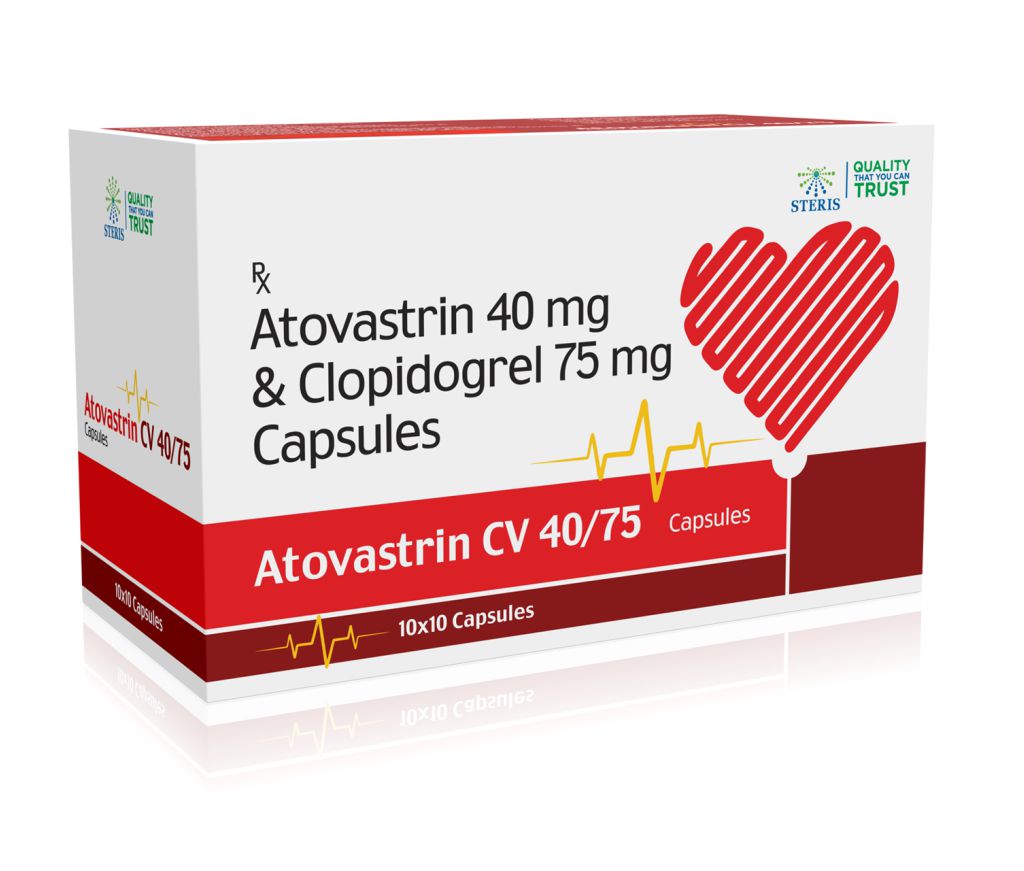
ATORVASTATIN CV 40
 Item requires a valid prescription
Manufactured By Steris Healthcare Pvt Ltd
Composition Atorvastatin (40mg), Clopidogrel (75mg) 15 caps
Rs 190.32
MRP Rs 271.88
(30% OFF)
Includes all taxes
Package SIZE
( For 15 Caps )

100% Authentic
Products

Free
Shipping*

Products
Return Policy
Description:
Atorvastatin CV 40 is a fixed-dose combination tablet containing Atorvastatin 40mg (a statin that lowers LDL "bad" cholesterol) and Clopidogrel 75mg (an antiplatelet that keeps blood cells from clumping together). Doctors in India commonly prescribe it for patients who need cholesterol control and clot prevention at the same time — most often people recovering from a heart attack, stroke, angioplasty/stenting, or those living with coronary artery disease. Understanding atorvastatin uses in this combination is important because atorvastatin alone treats cholesterol, but pairing it with clopidogrel adds protection against dangerous clot formation in narrowed arteries. This tablet is a Schedule H prescription medicine manufactured by Steris Healthcare Pvt. Ltd. and must only be taken under a registered doctor's guidance.
What Is Atorvastatin CV 40 Used For?
| Indication | How Atorvastatin CV 40 Helps |
|---|---|
| Secondary prevention after heart attack (post-MI) | Reduces LDL cholesterol buildup while clopidogrel prevents new clots at the site of arterial injury |
| After angioplasty / coronary stent placement | Clopidogrel keeps platelets from sticking to the stent surface; atorvastatin stabilizes arterial plaque |
| Coronary Artery Disease (CAD) | Dual action lowers cardiovascular event risk in patients with narrowed coronary arteries |
| History of ischemic stroke or TIA | Helps prevent recurrent clot-related strokes alongside cholesterol management |
| Peripheral Arterial Disease (PAD) | Reduces clot risk in narrowed peripheral arteries while managing lipid levels |
| High cholesterol with elevated cardiovascular risk | Atorvastatin component lowers LDL and triglycerides; supports overall heart health |
Mechanism of Action: How Do the Two Components Work?
Atorvastatin (40mg) belongs to the statin class and works by inhibiting the HMG-CoA reductase enzyme, which the liver uses to produce cholesterol. By blocking this enzyme, the liver produces less cholesterol and instead pulls more LDL ("bad" cholesterol) out of the bloodstream, lowering overall LDL and triglyceride levels while modestly raising HDL ("good" cholesterol).
Clopidogrel (75mg) is a P2Y12 platelet receptor blocker. Platelets are blood cells responsible for clotting; clopidogrel stops them from binding to each other by blocking the ADP receptor on the platelet surface. This makes the blood less likely to form dangerous clots inside narrowed or stented arteries, which is critical after a cardiac event.
Together, the two mechanisms address both causes (cholesterol plaque buildup) and consequences (clot formation) of cardiovascular disease — which is why this fixed-dose combination is favoured for high-risk cardiac patients rather than prescribing a statin alone.
Key Benefits of Atorvastatin CV 40
- Combines cholesterol control and clot prevention in a single tablet, improving convenience and treatment adherence
- Helps reduce the risk of recurrent heart attack or stroke in patients with an established cardiovascular event
- Supports stent patency by reducing platelet aggregation around the stented segment
- Once-daily dosing simplifies long-term cardiac medication routines
- Manufactured by Steris Healthcare Pvt. Ltd., a WHO-GMP and ISO-certified facility, offering consistent quality and dissolution standards
Dosage & How to Take Atorvastatin CV 40
- Standard adult dose: One tablet once daily, or as directed by the treating cardiologist/physician
- Timing: Atorvastatin can be taken at any time of day since modern high-intensity statins are less dependent on evening dosing, but clopidogrel is generally most effective when taken consistently at the same time each day to maintain steady antiplatelet activity — many doctors advise a fixed daily time, commonly in the evening after food, for better tolerance
- With or without food: May be taken with or without food; taking it with food can reduce mild stomach upset
- Missed dose: Take it as soon as remembered; if it is almost time for the next dose, skip the missed one — do not double the dose
- Duration: Long-term therapy is common after cardiac events (often 12 months or longer for post-stent patients); never stop this medicine abruptly without consulting your doctor, especially the clopidogrel component, as sudden discontinuation after a stent can raise clot risk
- Do not self-adjust dosage — this is a Schedule H combination and dose changes must be doctor-directed only
Side Effects of Atorvastatin CV 40
Common Side Effects
- Mild stomach upset, indigestion, or nausea
- Headache
- Muscle aches or mild joint pain
- Diarrhea or constipation
- Mild bruising (due to reduced platelet clumping)
Serious Side Effects (Seek Medical Attention)
- Unusual or prolonged bleeding (nosebleeds, bleeding gums, blood in urine/stool)
- Severe or unexplained muscle pain, tenderness, or weakness (possible sign of myopathy)
- Yellowing of skin or eyes, dark urine (possible liver involvement)
- Signs of allergic reaction — rash, swelling, difficulty breathing
- Unusual fatigue accompanied by pale skin (possible blood disorder)
Atorvastatin CV 40 vs Other Options: Substitutes Comparison
| Option | Composition | Best Suited For |
|---|---|---|
| Atorvastatin CV 40 | Atorvastatin 40mg + Clopidogrel 75mg | Patients needing combined cholesterol + clot prevention (post-MI, post-stent, CAD) |
| Atorvastatin alone (10mg/20mg/40mg) | Atorvastatin only | Patients who need cholesterol control but no antiplatelet therapy |
| Clopidogrel alone (75mg) | Clopidogrel only | Patients already on a separate statin who need only antiplatelet therapy |
| Atorvastatin + Aspirin combinations | Atorvastatin + Aspirin | Alternative antiplatelet pairing used in some cardiac protocols |
| Rosuvastatin-based combinations | Rosuvastatin + Clopidogrel/Aspirin | Patients who respond better to rosuvastatin or need a different statin profile |
Precautions Before Taking Atorvastatin CV 40
- Inform your doctor if you have active bleeding, a history of stomach ulcers, liver disease, or a bleeding disorder
- Tell your doctor about all other medicines you take, especially blood thinners (warfarin, heparin), NSAIDs (ibuprofen, aclofenac), or other statins, to avoid interactions
- Avoid or limit alcohol, as it can increase liver strain and bleeding risk
- Not recommended during pregnancy or breastfeeding unless specifically advised by a doctor
- Routine liver function and lipid profile tests may be recommended periodically during long-term use
- Inform your dentist or surgeon that you are on this medicine before any surgical or dental procedure, as it may need to be paused beforehand
- Use with caution in elderly patients and those with kidney impairment — dose review may be needed
- Grapefruit juice in large quantities may interact with atorvastatin; ask your doctor if this applies to you
Conclusion
Atorvastatin CV 40 brings together two proven cardiac medicines — Atorvastatin 40mg for cholesterol management and Clopidogrel 75mg for clot prevention — into one convenient once-daily tablet. For patients recovering from a heart attack, living with coronary artery disease, or managing life after a stent, this combination addresses two major cardiovascular risk factors simultaneously. Because it directly affects clotting and cholesterol metabolism, it should always be taken exactly as prescribed, with regular follow-up and lab monitoring. If you or a loved one has been prescribed Atorvastatin CV 40, understanding these atorvastatin uses, dosage guidelines, and precautions can help you use the medicine safely and get the most benefit from your treatment plan. Always consult your doctor before starting, stopping, or adjusting this medication.
Frequently Asked Questions
1. What is the price of Atorvastatin 40 tablets?
The price varies by brand, pack size, and pharmacy. Atorvastatin CV 40 (pack of 15 tablets) pricing can be checked directly through Steris Healthcare's official channels or your local pharmacy, as this is a prescription-only product.
2. What is atorvastatin used for?
Atorvastatin is used to lower LDL ("bad") cholesterol and triglycerides while raising HDL ("good") cholesterol. It is prescribed to reduce the risk of heart attack, stroke, and other cardiovascular complications, especially in people with high cholesterol, diabetes, or existing heart disease.
3. Is atorvastatin safe or harmful?
When taken exactly as prescribed and monitored by a doctor, atorvastatin is considered safe and is one of the most widely used statins worldwide. Like all medicines, it carries potential side effects (such as muscle pain or, rarely, liver enzyme changes), which is why periodic blood tests are recommended during long-term use.
4. Is atorvastatin safe for kidneys?
Atorvastatin is generally considered kidney-friendly compared to some other statins and is not primarily cleared through the kidneys. However, patients with pre-existing kidney disease should only use it under close medical supervision, as dose adjustments or additional monitoring may be needed.
5. What is clopidogrel mainly used for?
Clopidogrel is mainly used to prevent blood clots in patients with a history of heart attack, stroke, peripheral arterial disease, or those who have undergone stent placement. It works by stopping platelets from sticking together.
6. Is clopidogrel a blood thinner or an anticoagulant?
Clopidogrel is classified as an antiplatelet agent, not a traditional anticoagulant. While both types of drugs are often referred to as "blood thinners" in everyday language, clopidogrel specifically prevents platelets from clumping, whereas anticoagulants like warfarin or heparin work on different clotting factors in the blood.
7. Does clopidogrel reduce BP?
No, clopidogrel is not a blood pressure medication and does not directly lower BP. Its role is limited to preventing platelet aggregation and clot formation. Blood pressure should be managed with dedicated antihypertensive medicines as advised by your doctor.
8. When is the best time to take clopidogrel?
Clopidogrel is usually recommended to be taken at the same time every day to maintain consistent antiplatelet activity in the blood. Many doctors suggest taking it in the evening with food to reduce stomach discomfort, but the most important factor is consistency in timing — follow your doctor's specific instructions.
9. Can Atorvastatin CV 40 be taken without a prescription?
No. This is a Schedule H combination medicine in India and legally requires a valid doctor's prescription for purchase and use.
10. How long do I need to take Atorvastatin CV 40 after a stent?
Duration varies by patient and stent type, and can range from several months to a year or longer. Only your cardiologist can determine the correct duration based on your specific case — do not stop the medicine on your own.
11. Can I take Atorvastatin CV 40 with aspirin?
Some patients are prescribed aspirin alongside this combination as part of triple therapy after certain cardiac procedures, but this significantly raises bleeding risk and must be strictly supervised by a cardiologist.
12. What foods or drinks should I avoid with Atorvastatin CV 40?
Excessive alcohol should be avoided due to added liver and bleeding risk. Large quantities of grapefruit juice may also interact with atorvastatin and should be discussed with your doctor.
13. What happens if I miss a dose of Atorvastatin CV 40?
Take the missed dose as soon as you remember. If it's almost time for your next dose, skip the missed one and continue your regular schedule — never take a double dose to make up for a missed one.
14. Can elderly patients take Atorvastatin CV 40?
Yes, but elderly patients may need closer monitoring for bleeding risk, kidney function, and muscle-related side effects. Dose review by a physician is recommended before starting therapy in older adults.
15. Is it safe to stop Atorvastatin CV 40 suddenly?
No. Sudden discontinuation, particularly of the clopidogrel component after a recent stent, can increase the risk of clot formation and a repeat cardiac event. Always consult your doctor before stopping or changing this medication.
16. Does Atorvastatin CV 40 interact with other blood thinners?
Yes, combining it with other anticoagulants or antiplatelet drugs (like warfarin or aspirin) without medical guidance can significantly increase bleeding risk. Always disclose your full medication list to your doctor.
17. Can Atorvastatin CV 40 be taken by pregnant or breastfeeding women?
It is generally not recommended during pregnancy or breastfeeding unless a doctor determines the benefits outweigh the risks, given the effects of both statins and antiplatelet agents on fetal and infant health.