


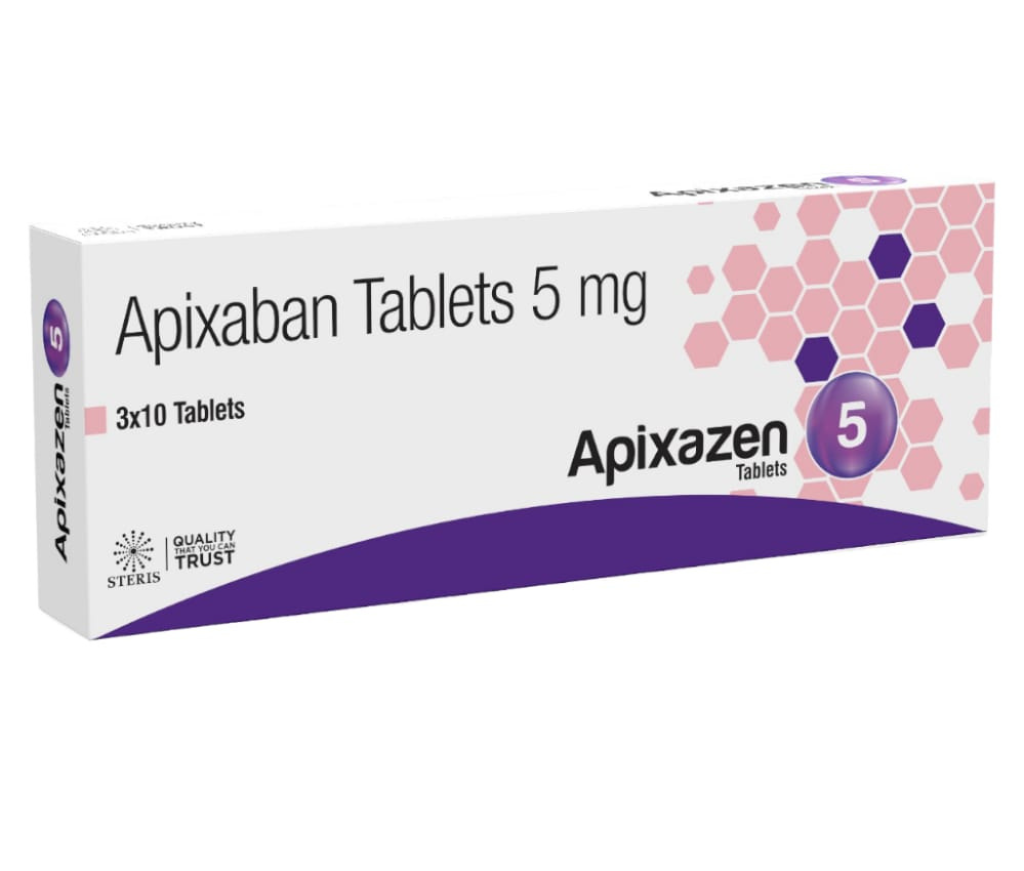
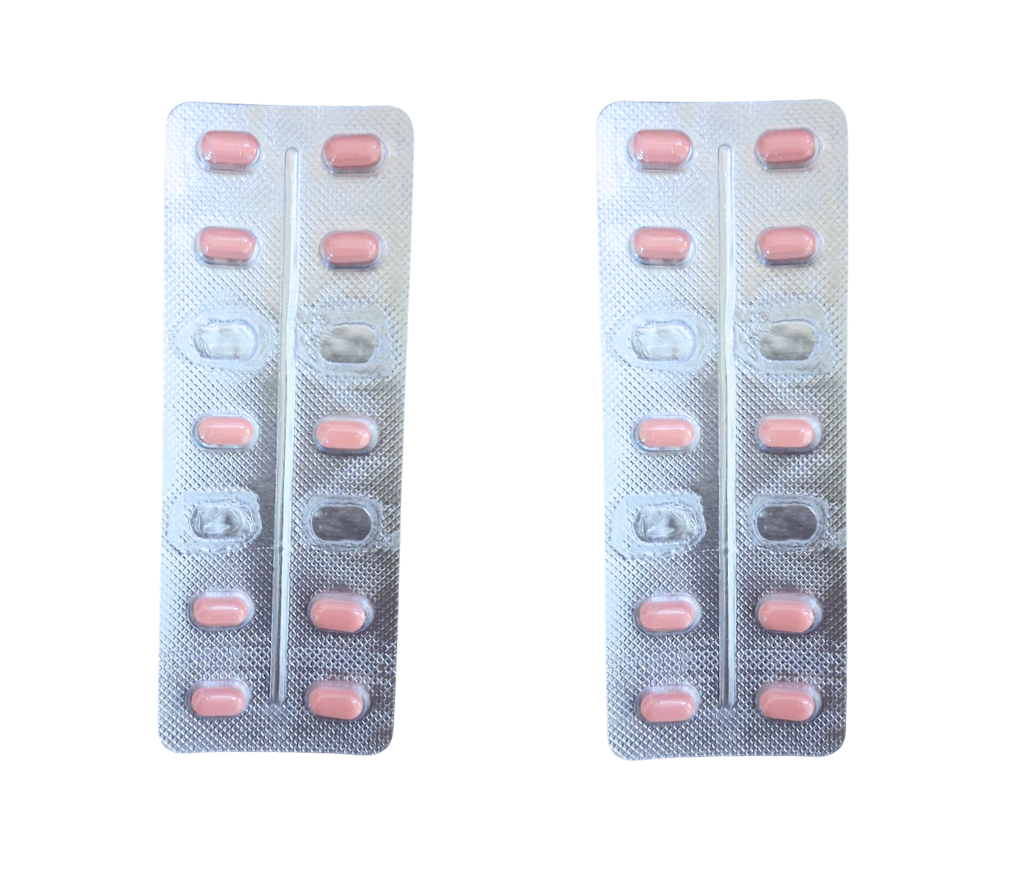
Apixaban 5 mg | APIXAZEN 5
 Item requires a valid prescription
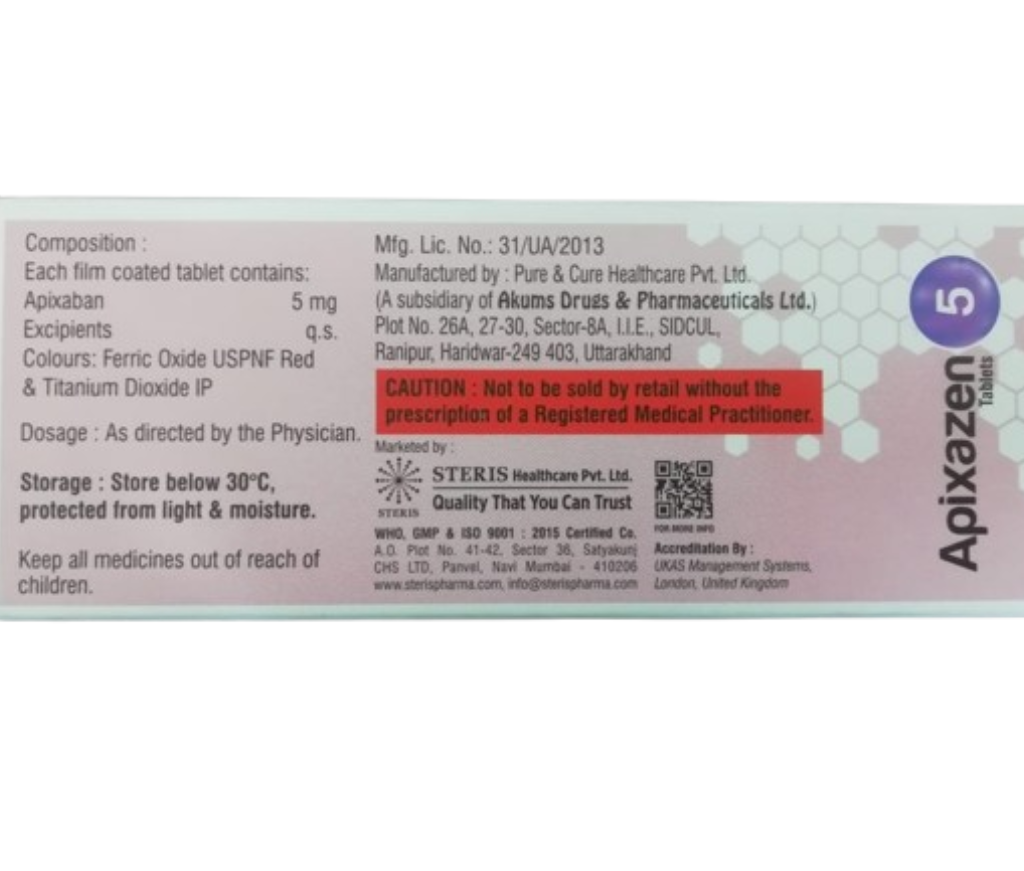
Manufactured By Steris Healthcare Pvt Ltd
Composition apixaban 5 mg
Rs 144.38
MRP Rs 206.25
(30% OFF)
Includes all taxes
Package SIZE
( For 10 Tablets )

100% Authentic
Products

Free
Shipping*

Products
Return Policy
Description:
What is Apixaban 5 mg?
Apixaban 5 mg is an oral anticoagulant used to prevent blood clots, reduce stroke risk in atrial fibrillation, and treat DVT or pulmonary embolism.It helps reduce the formation of harmful blood clots by blocking factor Xa, an important protein involved in the body's blood-clotting process.
Apixaban 5 mg is commonly prescribed for adults with non-valvular atrial fibrillation (AF) to reduce the risk of stroke and systemic embolism. It is also used in specific treatment schedules for deep vein thrombosis (DVT) and pulmonary embolism (PE). The exact dose and duration depend on the medical condition, age, kidney function, body weight, other medicines, and individual bleeding risk.
Apixaban 5 mg Uses
The major medical uses of apixaban include:
- Reducing the risk of stroke and systemic embolism in adults with non-valvular atrial fibrillation.
- Treating deep vein thrombosis (DVT).
- Treating pulmonary embolism (PE).
- Reducing the risk of recurrent DVT and PE after initial treatment.
- Preventing DVT after certain hip or knee replacement procedures, although a lower 2.5 mg dose is generally used for this indication.
How Does Apixaban 5 mg Work?
Apixaban selectively inhibits factor Xa, an enzyme involved in the coagulation cascade. By reducing factor Xa activity, apixaban decreases thrombin generation and makes it harder for blood clots to form.
Unlike medicines that dissolve an existing clot directly, anticoagulants primarily help prevent clots from forming or becoming larger. This is why adherence is particularly important when apixaban has been prescribed to reduce the risk of stroke or recurrent thrombosis.
Apixaban 5 mg Dosage
The appropriate dose of apixaban depends on the reason for treatment.
For adults with non-valvular atrial fibrillation, the FDA prescribing information lists 5 mg twice daily as the recommended dose. However, the recommended dose is reduced to 2.5 mg twice daily when a patient has at least two of these characteristics:
- Age 80 years or older
- Body weight 60 kg or less
- Serum creatinine 1.5 mg/dL or higher
How to Take Apixaban 5 mg
When prescribed at 5 mg twice daily, apixaban is generally taken two times a day at approximately the same times each day, with or without food. Taking doses consistently helps maintain the intended anticoagulant effect.
Key Benefits of Apixaban 5 mg
1. Helps prevent dangerous blood clots
Apixaban reduces the body's ability to form clots, making it useful in several thromboembolic conditions.
2. Helps reduce stroke risk in eligible AF patients
In non-valvular atrial fibrillation, blood can pool in the heart and form clots that may travel to the brain. Apixaban is used to reduce the risk of stroke and systemic embolism in appropriate patients.
3. Used for DVT and PE treatment
Apixaban is indicated for treatment of DVT and PE and for reducing the risk of recurrent venous thromboembolism following initial therapy.
4. Oral administration
Apixaban is available as an oral tablet, providing a convenient alternative to injectable anticoagulation in appropriate situations.
5. No routine INR monitoring like warfarin
Apixaban does not require routine INR monitoring in the same way warfarin does. However, this does not mean that monitoring is unnecessary. Doctors may assess kidney function, liver function, bleeding risk, adherence, drug interactions and the ongoing need for treatment.
Apixaban 5 mg Side Effects
The most important adverse effect associated with apixaban is bleeding because the medicine deliberately reduces blood clotting.
Common or relatively frequent effects may include:
- Easy bruising
- Nosebleeds
- Bleeding gums
- Bleeding that takes longer than usual to stop
- Heavier menstrual bleeding
- Nausea
- Anaemia or symptoms associated with blood loss
- Rash in some patients
Serious Apixaban Side Effects
Seek urgent medical attention for signs of potentially serious bleeding, such as:
- Blood in urine
- Black or bloody stools
- Vomiting blood or material resembling coffee grounds
- Coughing up blood
- Severe or unexplained bleeding
- Severe headache, confusion or neurological symptoms
- Fainting, marked weakness or dizziness
- Significant bleeding following an injury
- Severe allergic symptoms such as swelling or difficulty breathing
What Should You Avoid While Taking Apixaban 5 mg?
Patients taking apixaban should tell their doctor or pharmacist about all prescription medicines, over-the-counter medicines, vitamins, supplements and herbal products they use.
Particular caution is required with:
- Aspirin
- Ibuprofen
- Naproxen
- Other NSAIDs
- Other anticoagulants
- Antiplatelet medicines
- Certain antifungal medicines
- Certain antiviral medicines
- Some antibiotics and other medicines that affect CYP3A4 or P-glycoprotein
- St. John's wort
The FDA prescribing information specifically warns that combined strong P-gp and CYP3A4 inhibitors can increase apixaban exposure, while combined strong inducers can decrease exposure and potentially reduce its effectiveness.
Why Is Apixaban Considered a High-Risk Medicine?
Apixaban is considered a high-risk or high-alert type of medicine in many clinical settings because excessive anticoagulation can cause serious bleeding.
However, "high risk" does not mean that apixaban is unsafe when appropriately prescribed. Its purpose is to balance two competing risks: dangerous blood clots versus bleeding.
Stopping apixaban suddenly without medical advice can increase the risk of thrombotic events. The FDA prescribing information carries a warning about increased thrombotic risk following premature discontinuation when alternative anticoagulation is not provided.
Apixaban 5 mg and Kidney Function
Kidney function can influence anticoagulant treatment decisions. Doctors consider renal function along with age, body weight, the indication for treatment and other clinical factors.
For non-valvular atrial fibrillation, the FDA labeling recommends 2.5 mg twice daily when at least two of the specified age, body-weight and serum-creatinine criteria are present.
People with significant kidney or liver problems should not self-select an apixaban dose. A medical professional should determine whether apixaban is appropriate and which dose is suitable.
Apixaban 5 mg for Elderly Patients
Older adults may receive apixaban when the expected benefit of preventing stroke or thrombosis outweighs the bleeding risk. Age alone does not automatically mean that apixaban 5 mg is inappropriate.
For non-valvular AF, however, age ≥80 years is one of the three dose-reduction criteria, and the FDA labeling recommends 2.5 mg twice daily when at least two of the criteria are present.
Because older patients may also take multiple medicines and may have impaired kidney function or a higher risk of falls, their complete medication profile and clinical status should be reviewed.
Apixaban 5 mg Before Surgery or Dental Treatment
Tell your surgeon, dentist and other healthcare professionals that you take apixaban.
Apixaban may need to be temporarily interrupted before certain procedures, but the timing depends on the procedure, bleeding risk and individual patient factors. Do not stop it on your own. The prescribing information includes specific guidance for temporary interruption and restarting therapy.
Apixaban 5 mg
If you are searching for apixaban 5 mg tablets, the most important purchasing considerations are not simply price or brand name.
Before purchasing, check:
- The exact medicine name and strength.
- Whether the product matches the prescription.
- Manufacturer and packaging information.
- Batch/lot number and expiry date.
- Whether the seller/pharmacy is properly licensed where required.
- Storage and packaging condition.
- Whether the medicine is being supplied against an appropriate prescription.
- Whether the product is intended for your prescribed condition.
Because apixaban is an anticoagulant, purchasing an incorrect strength can have clinically important consequences.
Frequently Asked Questions
1. What are apixaban 5mg tablets used for?
Apixaban 5 mg tablets are used as prescribed to prevent stroke and systemic embolism in eligible adults with non-valvular atrial fibrillation and to treat DVT or PE in specified treatment regimens.
2. What is the most common side effect of apixaban?
Bleeding is the most important and common side effect associated with anticoagulant therapy. This may include easy bruising, nosebleeds, bleeding gums or prolonged bleeding from minor cuts.
3. When is the best time of day to take apixaban?
When prescribed twice daily, apixaban should generally be taken at consistent times each day, commonly once in the morning and once in the evening. Follow the exact schedule provided by your doctor.
4. What should I avoid when taking apixaban?
Avoid starting aspirin, ibuprofen, naproxen, other NSAIDs, other blood thinners, or herbal products such as St. John's wort without discussing them with your doctor or pharmacist. Some medicines can significantly change apixaban levels or increase bleeding risk.
5. Why is apixaban a high-risk drug?
Apixaban can cause serious bleeding because it reduces the body's ability to form blood clots. At the same time, stopping it prematurely can increase the risk of blood clots, so it should be used exactly as prescribed.
6. How long is it safe to take apixaban?
There is no single maximum duration for everyone. Treatment may last for months, years or longer depending on the medical condition and individual risk of clotting and bleeding. Your prescriber should determine the duration.
7. Which is safer, aspirin or apixaban?
Neither is universally "safer." They work differently and are prescribed for different conditions. Combining aspirin with apixaban can increase bleeding risk, so the decision should be based on the patient's specific medical indication.
8. Is there a better alternative to apixaban?
There is no universally better alternative. Depending on the condition, alternatives may include other direct oral anticoagulants, warfarin or injectable anticoagulants. The appropriate choice depends on kidney function, indication, interactions, bleeding risk, cost, adherence and other clinical factors.
9. What is the safest blood thinner for the elderly?
There is no single blood thinner that is safest for every older adult. The choice depends on the indication, kidney function, weight, age, other medicines and bleeding risk. For atrial fibrillation, apixaban dosing may need adjustment when specific age, weight and serum-creatinine criteria are met.
10. Can apixaban 5 mg be taken twice a day?
Yes, 5 mg twice daily is a labeled regimen for several adult indications, including non-valvular atrial fibrillation and the treatment phase of DVT/PE after the initial 7-day 10 mg twice-daily phase. The correct regimen depends on the indication.
11. Can I stop apixaban 5 mg suddenly?
You should not stop apixaban suddenly without medical advice. Premature discontinuation can increase thrombotic risk, and a healthcare professional may need to arrange alternative anticoagulation when appropriate.
12. Does apixaban 5 mg dissolve blood clots?
Apixaban does not directly dissolve an existing clot. It reduces the blood's ability to form or extend clots, allowing the body's natural processes to manage clot resolution.
13. Can apixaban 5 mg be taken with food?
Yes. Apixaban tablets can generally be taken with or without food. The key is to follow the prescribed schedule consistently.
14. What happens if I miss an apixaban dose?
Take the missed dose when remembered unless it is nearly time for the next dose, according to standard patient guidance. Do not take a double dose to make up for a missed tablet.
15. Can I take ibuprofen with apixaban?
Do not take ibuprofen routinely with apixaban unless your healthcare professional specifically advises it. NSAIDs can increase bleeding risk when used with anticoagulants.
16. Does apixaban cause bleeding?
Yes. Increased bleeding or easier bruising is a known effect of apixaban. Severe, unexplained or persistent bleeding requires urgent medical assessment.
17. Is apixaban 5 mg a blood thinner?
Yes. Apixaban 5 mg is an anticoagulant, commonly described as a blood thinner. It is a direct factor Xa inhibitor that reduces blood-clot formation.
18. Can apixaban 5 mg be used for DVT and PE?
Yes. Apixaban is indicated for treatment of DVT and PE. For adults, the labeled treatment regimen starts with 10 mg twice daily for seven days and then changes to 5 mg twice daily.
19. Is apixaban 5 mg safe for everyone?
No medicine is appropriate for everyone. Apixaban requires individualized assessment, particularly in people with bleeding problems, significant liver disease, kidney impairment, interacting medicines, pregnancy or certain medical conditions.
20. Can apixaban 5 mg be used before surgery?
Apixaban may need temporary interruption before some surgical or invasive procedures. The timing depends on the procedure and patient factors. Patients should never independently stop or restart anticoagulation around surgery.
Conclusion
Apixaban 5 mg is an important prescription anticoagulant used to reduce the risk of certain dangerous blood clots. It is commonly prescribed at 5 mg twice daily for eligible adults with non-valvular atrial fibrillation and is also part of the labeled treatment regimen for DVT and PE. However, the correct strength, frequency, and duration depend on the patient's diagnosis and individual clinical factors.
The main benefit of apixaban is effective anticoagulation without the routine INR testing associated with warfarin, while its most important safety concern is bleeding. Patients should therefore understand their prescribed dose, take it consistently, disclose all medicines and supplements to their healthcare professional, and seek medical help for significant bleeding or other serious symptoms.