


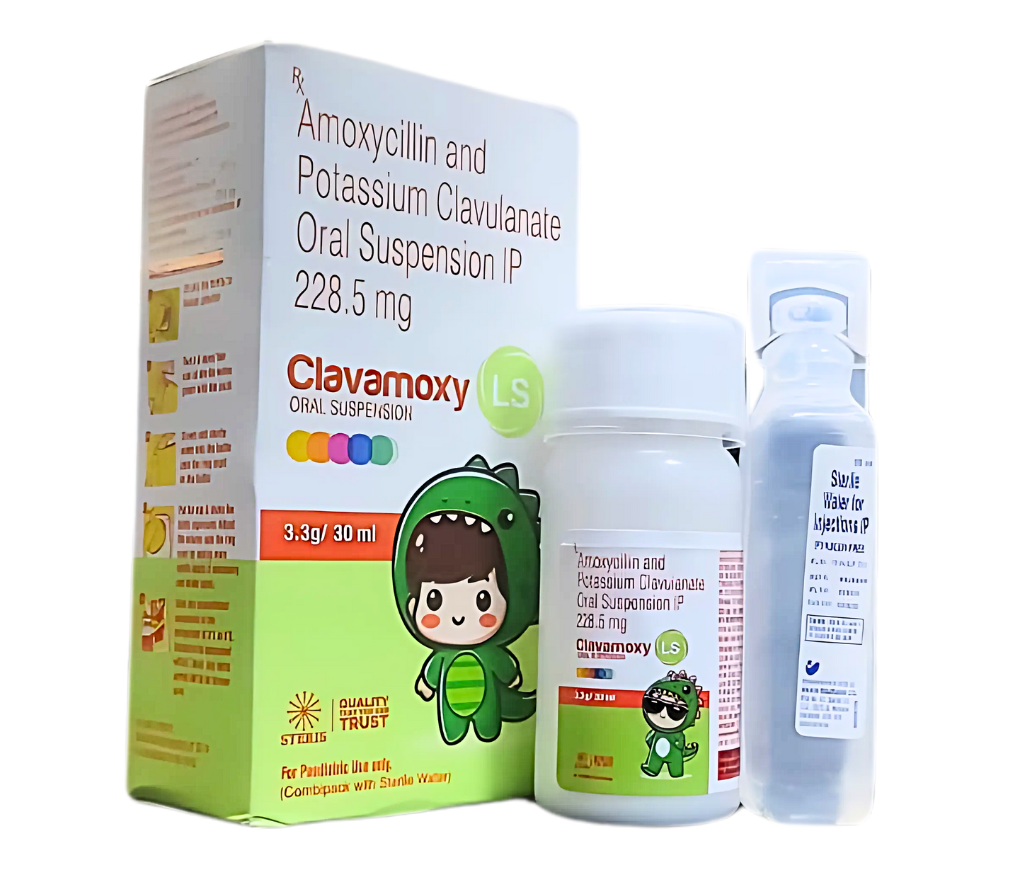
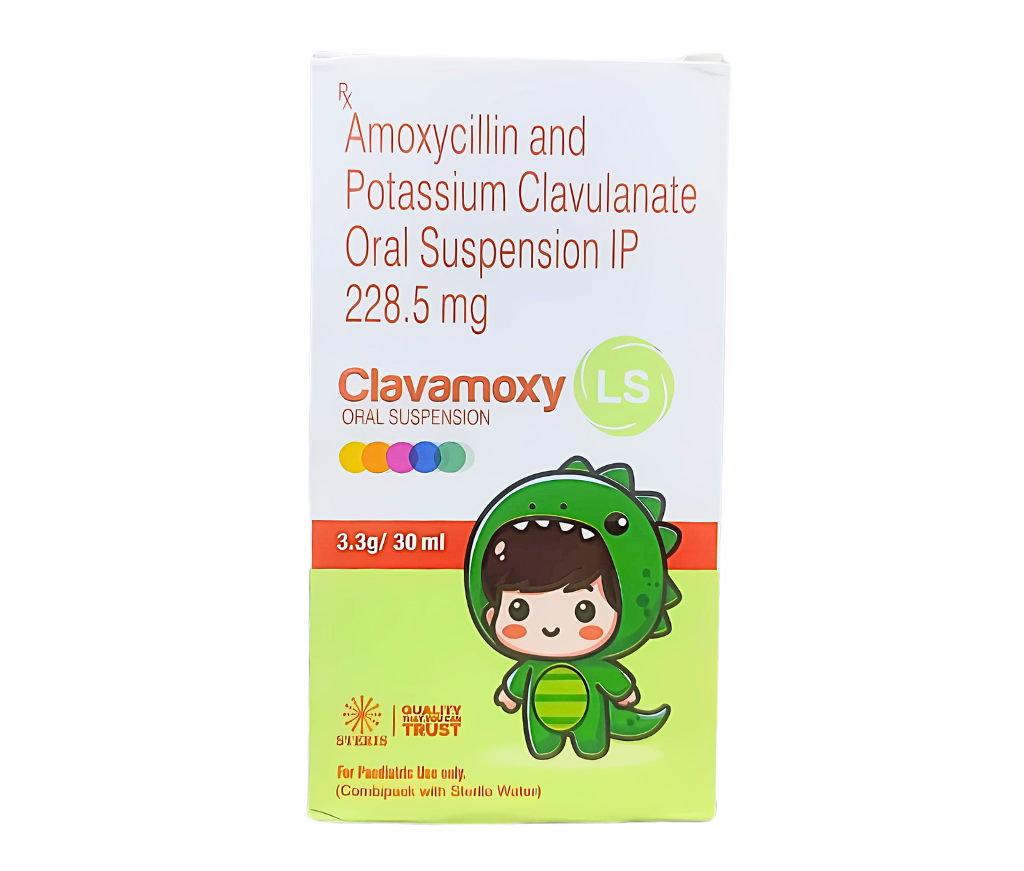
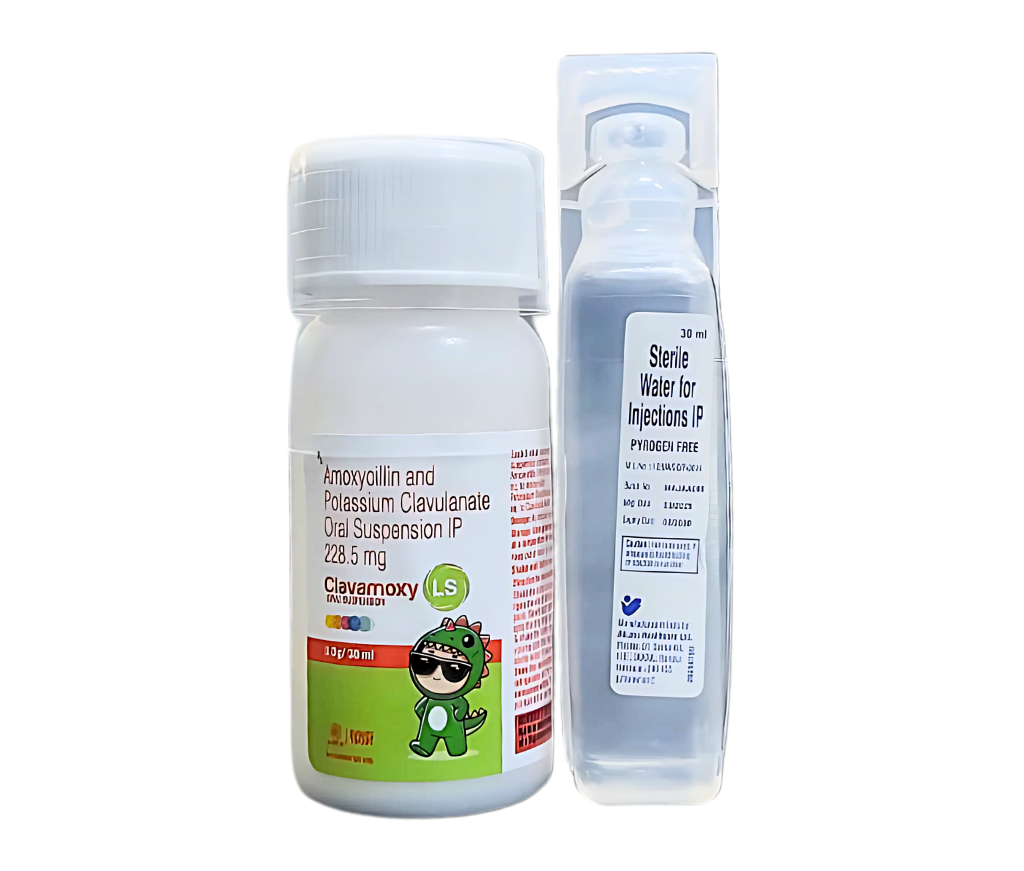


Amoxicillin 200 mg and Clavulanic acid 28.5 mg | CLAVAMOXY LS ORAL SUSPENSION
 Item requires a valid prescription
Manufactured By Steris Healthcare Pvt Ltd
Composition amoxicillin 200 mg and clavulanic acid 28.5 mg
Rs 155.00
Includes all taxes
Package SIZE
( FOR 30ML )

100% Authentic
Products

Free
Shipping*

Products
Return Policy
Description:
Amoxicillin and Potassium Clavulanate Oral Suspension IP is a prescription-only oral antibiotic suspension formulated to treat bacterial infections affecting the ears, sinuses, lungs, urinary tract, and skin. Amoxicillin is a penicillin-type antibiotic that kills bacteria, while potassium clavulanate blocks bacterial enzymes (beta-lactamases) that would otherwise make amoxicillin ineffective. Together, this combination treats a broader range of bacteria than amoxicillin alone, making it a first-line pediatric antibiotic recommended by pediatricians across India. It is available as a great-tasting, easy-to-dose oral suspension for infants, toddlers, and children who cannot swallow tablets.
What Is Amoxicillin and Potassium Clavulanate Oral Suspension IP?
Amoxicillin and Potassium Clavulanate Oral Suspension IP is a pediatric- and adult-friendly liquid antibiotic formulation combining two active pharmaceutical ingredients:
- Amoxicillin — a broad-spectrum penicillin antibiotic that stops bacteria from building their protective cell walls, causing the bacteria to die.
- Potassium Clavulanate — a beta-lactamase inhibitor that does not kill bacteria on its own but protects amoxicillin from being broken down by resistant bacterial enzymes.
This combination is manufactured under strict WHO-GMP and ISO-certified conditions and is reconstituted with water at the pharmacy to form a smooth, flavored suspension that is easy to measure and administer using the calibrated measuring cup or oral syringe provided in the pack.
Clinical Indications Table
| Infection Type | Common Causative Bacteria | Typical Age Group |
|---|---|---|
| Acute otitis media (ear infection) | Streptococcus pneumoniae, Haemophilus influenzae | Infants & young children |
| Acute bacterial sinusitis | S. pneumoniae, Moraxella catarrhalis | Children & adults |
| Tonsillitis / pharyngitis | Streptococcus pyogenes | Children & adults |
| Lower respiratory tract infections | H. influenzae, S. pneumoniae | All ages |
| Urinary tract infections (UTI) | E. coli and other coliforms | Children & adults |
| Skin and soft tissue infections | Staphylococcus aureus, Streptococcus spp. | All ages |
| Dental / odontogenic infections | Mixed oral flora | Adults & older children |
How Amoxicillin and Potassium Clavulanate Oral Suspension IP Works
Amoxicillin belongs to the aminopenicillin class of antibiotics. It works by binding to penicillin-binding proteins on the bacterial cell wall, disrupting cell wall synthesis and causing the bacterial cell to rupture and die. However, many bacteria have evolved an enzyme called beta-lactamase, which breaks down amoxicillin before it can act — making the infection resistant to plain amoxicillin.
This is where potassium clavulanate comes in. It irreversibly binds to and inactivates beta-lactamase enzymes, effectively shielding amoxicillin and restoring its bactericidal activity even against many resistant bacterial strains. This synergistic mechanism is why the combination is preferred over amoxicillin alone for infections where resistant bacteria are suspected or common, such as recurrent ear infections in children.
Key Benefits of Amoxicillin and Potassium Clavulanate Oral Suspension IP
- Broad-spectrum coverage—effective against both gram-positive and gram-negative bacteria and against many amoxicillin-resistant strains.
- Pediatric-friendly dosage form — a palatable, flavored liquid that is far easier to administer to infants and toddlers than tablets.
- Accurate, flexible dosing — supplied with a calibrated oral syringe/measuring cup so doctors can prescribe weight-based doses precisely, which is critical in children.
- Fast onset of action — many parents notice symptom improvement (reduced fever, less ear pain, improved appetite) within 48–72 hours of starting therapy, when used as directed.
- First-line recommendation — commonly prescribed by pediatricians and physicians for common childhood bacterial infections due to its established safety profile.
- WHO-GMP manufacturing standards — produced under stringent quality control to ensure potency, purity, and consistency in every batch.
- Versatile use across age groups — suitable for infants (as advised by a pediatrician), children, and adults with appropriate dose adjustment.
Side Effects of Amoxicillin and Potassium Clavulanate Oral Suspension IP
As with all antibiotics, side effects can occur. Most are mild and resolve once the course is completed, but some require immediate medical attention.
Common Side Effects
- Diarrhea or loose motions
- Nausea or vomiting
- Stomach upset / abdominal discomfort
- Loss of appetite
- Mild skin rash
- Oral thrush (in some children, due to disruption of normal oral flora)
Serious Side Effects (Seek Immediate Medical Help)
- Severe allergic reaction — swelling of the face, lips, tongue, or throat; difficulty breathing (anaphylaxis)
- Severe or watery diarrhea (possible sign of C. difficile-associated colitis)
- Yellowing of the skin or eyes (jaundice), signaling possible liver involvement
- Unusual bruising or bleeding
- Severe skin reactions — blistering, peeling, or widespread rash
- Persistent high fever that does not improve despite treatment
Parents and caregivers should never adjust the dose or stop the course early without consulting the prescribing doctor, even if the child appears to feel better after a few days — incomplete courses contribute to antibiotic resistance.
Substitutes / Alternatives Comparison Table
| Composition | Common Use Case | Typical Form |
|---|---|---|
| Amoxicillin (alone) | Milder infections, penicillin-susceptible bacteria | Suspension/capsule |
| Amoxicillin + Potassium Clavulanate | Resistant or recurrent bacterial infections | Suspension/tablet |
| Cefixime | Alternative for penicillin-sensitive patients | Suspension/tablet |
| Azithromycin | Respiratory infections, penicillin allergy | Suspension/tablet |
Dosage Guidelines
Dosage of Amoxicillin and Potassium Clavulanate Oral Suspension IP is calculated by a doctor based on the child's or adult's body weight, the severity and type of infection, and kidney function. General principles followed in pediatric prescribing include:
- The suspension must be reconstituted correctly by the pharmacist with the specified amount of clean drinking water before use.
- After reconstitution, it should be stored in a refrigerator (not frozen) and used within the period specified on the label — typically discarded after 7–10 days.
- Shake well before every use to ensure the medicine is evenly mixed.
- Use only the measuring cup or oral syringe provided — never a regular kitchen spoon, as this can lead to inaccurate dosing.
- The suspension is usually given with food to reduce the chance of stomach upset.
- The full course must be completed, even if symptoms improve early, unless the doctor advises otherwise.
Precautions and Warnings
- Inform the doctor of any known allergy to penicillin, cephalosporins, or other antibiotics before starting treatment.
- Use with caution in children or adults with a history of liver disease — periodic monitoring may be advised for prolonged use.
- Not recommended in patients with a documented history of amoxicillin/clavulanate-associated jaundice or liver dysfunction.
- Inform the doctor about all other medicines being taken, as interactions (e.g., with allopurinol or oral anticoagulants) are possible.
- Diabetic patients should note that some formulations may contain sugar/sucrose — discuss suitable options with the doctor.
- Complete the full prescribed course; do not share the medicine with another person, even with similar symptoms.
- Keep out of reach of children when not in use, and store as per label instructions.
Conclusion
Amoxicillin and Potassium Clavulanate Oral Suspension IP remains one of the most trusted and widely prescribed antibiotic combinations for treating common bacterial infections in children and adults — from ear and throat infections to urinary and skin infections. Its dual-action formula, combining the bacteria-killing power of amoxicillin with the resistance-fighting protection of potassium clavulanate, makes it especially valuable for infections that don't respond to amoxicillin alone. Manufactured under WHO-GMP and ISO-certified quality standards, this pediatric-friendly suspension offers effective, doctor-guided treatment when used exactly as prescribed. As with any antibiotic, it should only be taken under medical supervision, with the full course completed to ensure the infection is fully treated and to help prevent antibiotic resistance.
Frequently Asked Questions
1. What is amoxicillin potassium clavulanate oral suspension used for?
It is used to treat bacterial infections such as ear infections, throat infections, sinusitis, chest infections, urinary tract infections, and skin infections in children and adults, as prescribed by a doctor.
2. How is amoxicillin oral suspension used for kids?
For children, the doctor calculates a weight-based dose. The suspension is given using the measuring cup or oral syringe provided, usually with food, at evenly spaced intervals for the full prescribed duration.
3. Is amoxicillin clavulanate safe for kids?
Yes, when prescribed and dosed correctly by a pediatrician, it is considered safe and is a commonly recommended first-line antibiotic for children. It should always be used under medical supervision.
4. Can a 1 year old baby take amoxicillin?
Yes, amoxicillin-based suspensions can be prescribed for infants, including 1-year-olds, but only by a pediatrician who determines the correct weight-based dose. Parents should never give this medicine without medical guidance.
5. What is amoxicillin used for in kids?
In children, amoxicillin (alone or combined with potassium clavulanate) is commonly used to treat ear infections, throat infections, sinus infections, chest infections, and certain skin and urinary infections.
6. Is amoxicillin and potassium clavulanate good for fever?
It treats the underlying bacterial infection causing the fever, not the fever itself. As the infection responds to treatment, fever associated with it typically subsides, but it is not a standalone fever medicine.
7. What is the main side effect of amoxicillin clavulanate?
The most commonly reported side effect is gastrointestinal disturbance — particularly diarrhea, along with nausea, vomiting, or stomach upset in some patients.
8. Can amoxicillin remove fever?
Amoxicillin does not directly reduce fever; it treats the bacterial infection causing it. Fever usually improves as the infection clears, but a separate antipyretic may be advised by the doctor if needed.
9. How long does it take for amoxicillin clavulanate to start working?
Many patients notice improvement in symptoms within 48–72 hours of starting the course, though the full course should always be completed as prescribed.
10. Can amoxicillin potassium clavulanate be taken on an empty stomach?
It is generally advised to take this suspension with food to help reduce stomach upset, unless the doctor specifically advises otherwise.
11. What happens if a dose is missed?
If a dose is missed, it should be given as soon as remembered unless it is close to the next dose. Never double the dose to make up for a missed one — consult the doctor if unsure.
12. Can this suspension be given with milk or juice?
It should ideally be given as directed by the doctor or pharmacist; mixing with other liquids is not generally recommended unless specifically advised, as it may affect dosing accuracy.
13. How should the reconstituted suspension be stored?
After reconstitution, the suspension should be stored in a refrigerator, shaken well before each use, and discarded after the period specified on the label, typically 7–10 days.
14. Is this medicine the same as regular amoxicillin? No. Amoxicillin alone treats a narrower range of bacteria. The addition of potassium clavulanate protects amoxicillin from bacterial resistance enzymes, allowing it to treat a broader range of infections.
15. Can adults take amoxicillin and potassium clavulanate oral suspension?
Yes, though tablets are more commonly prescribed for adults, the oral suspension can be used by adults who have difficulty swallowing tablets, at a doctor-determined dose.
16. Are there any foods or medicines to avoid while taking this suspension?
Patients should inform their doctor of all other medicines being taken, as certain interactions are possible. There are no major routine food restrictions, though alcohol is generally best avoided during antibiotic treatment.
17. When should I stop giving this medicine to my child?
Only when the full course prescribed by the doctor is complete — even if the child appears better sooner. Stopping early can lead to incomplete treatment and antibiotic resistance.