


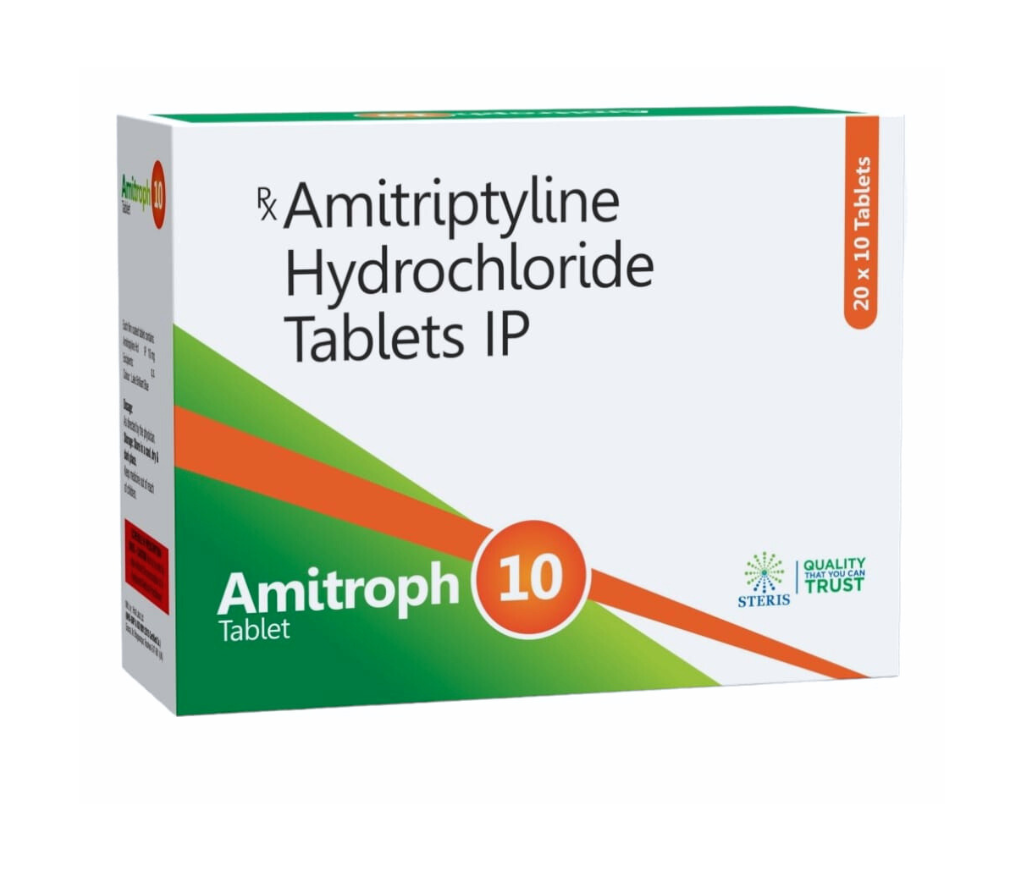
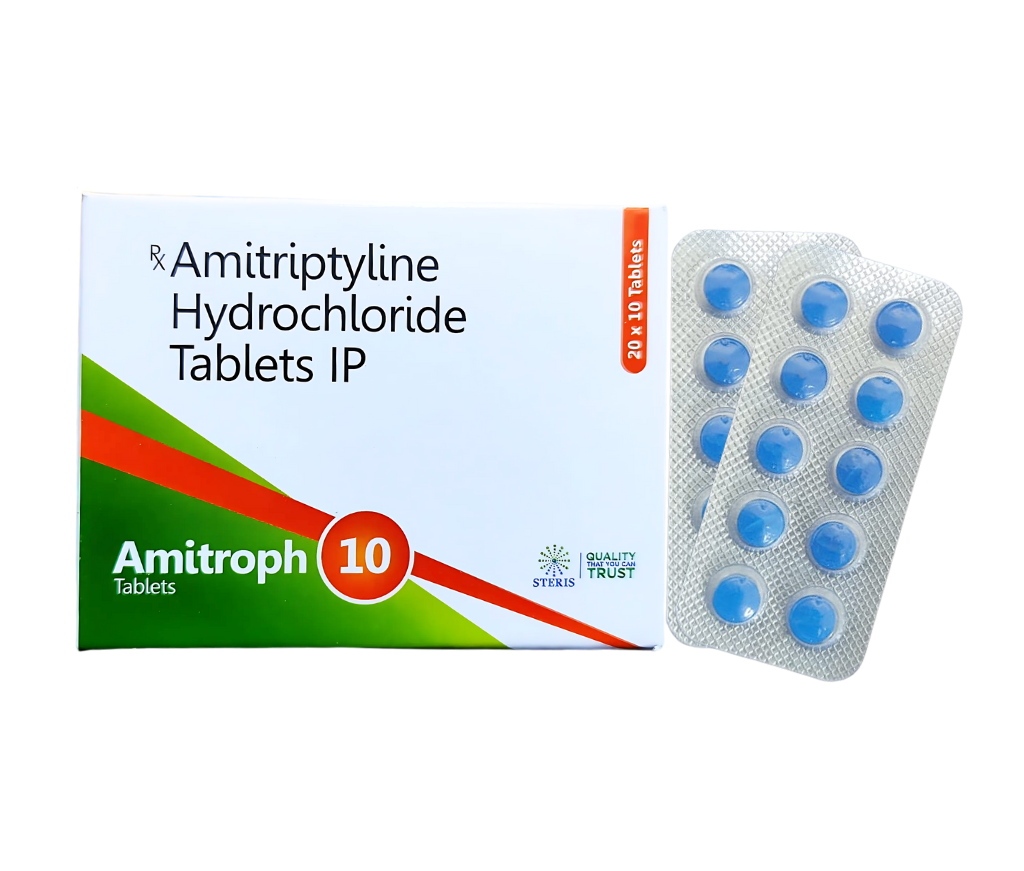
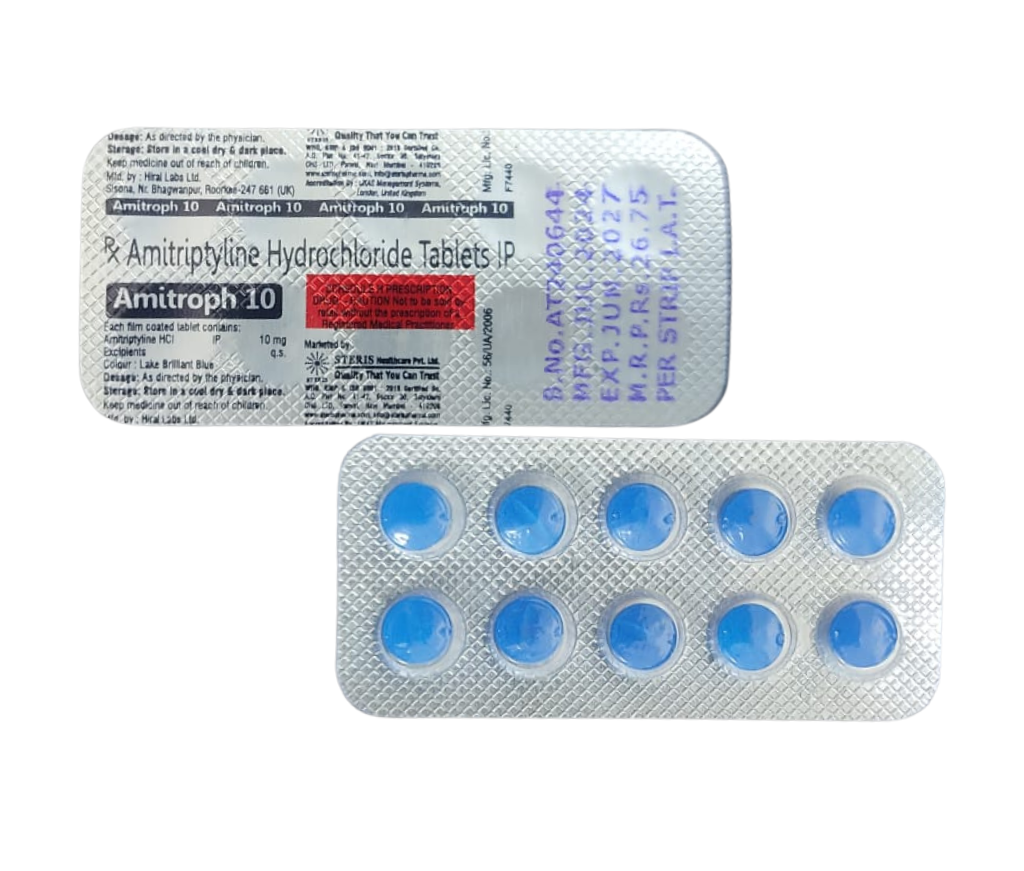
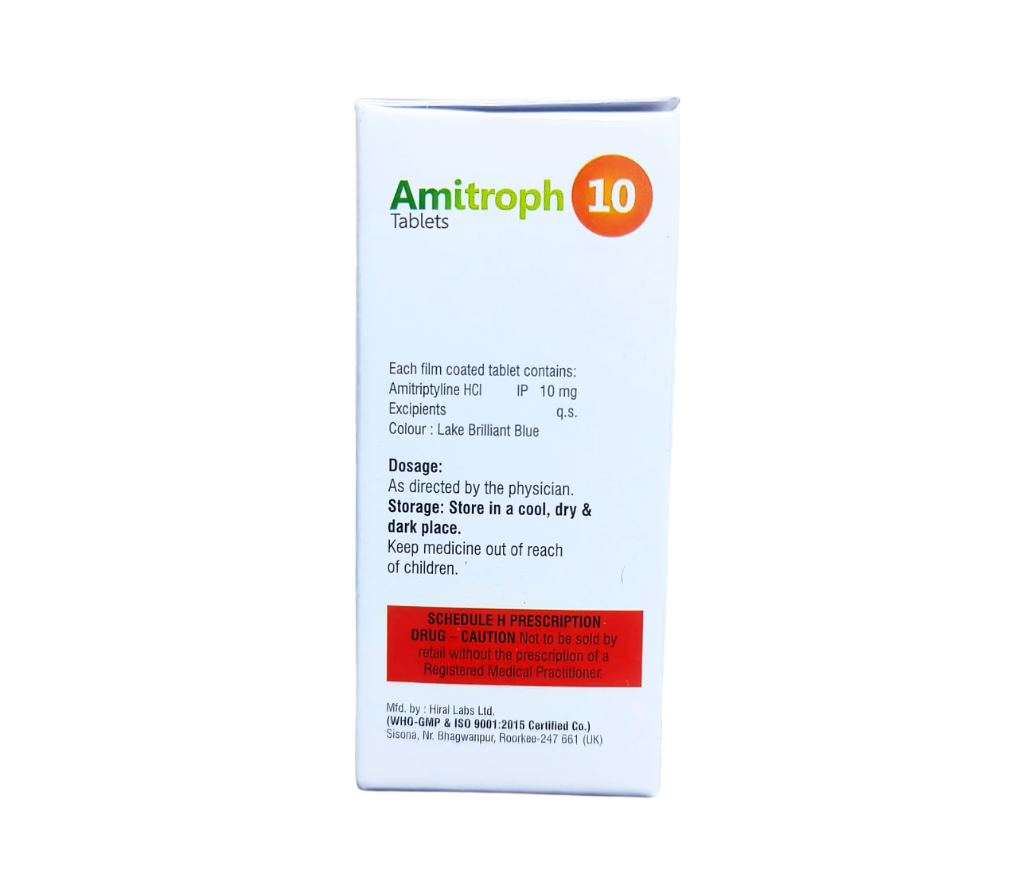
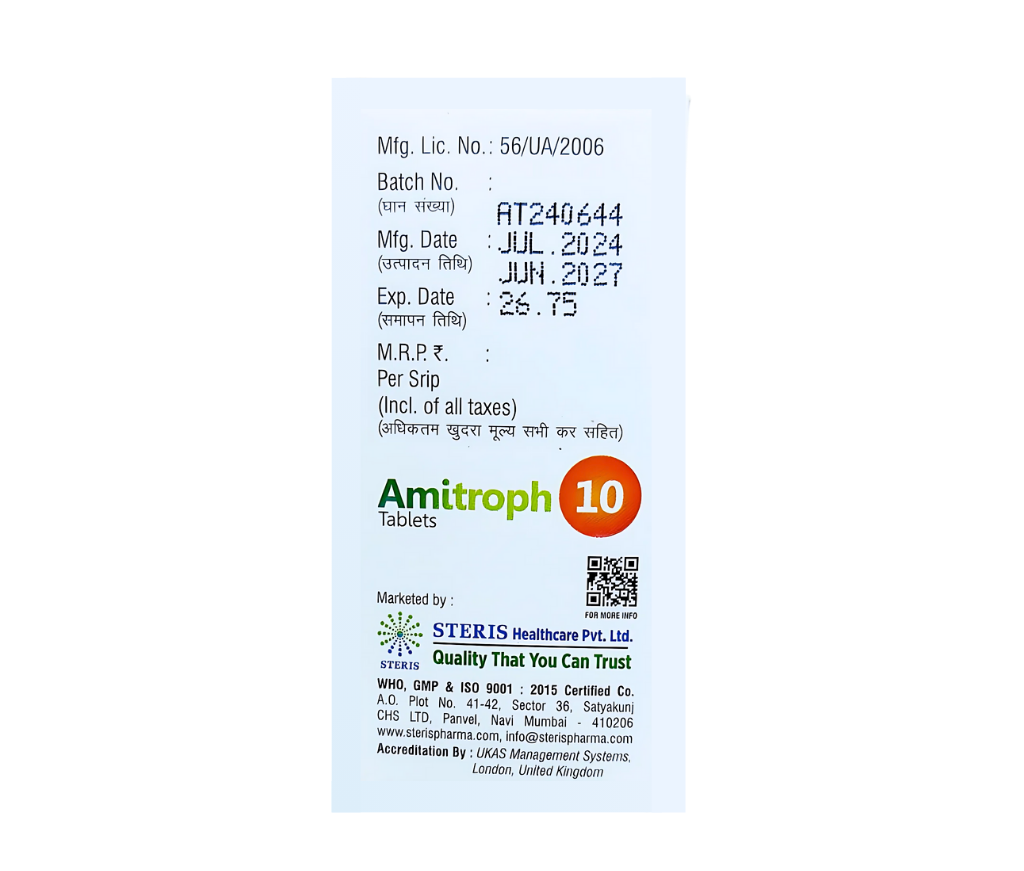
Amitriptyline 10 mg | AMITROPH 10
 Item requires a valid prescription
Manufactured By Steris Healthcare Pvt Ltd
Composition amitriptyline 10 mg
Rs 17.72
MRP Rs 25.31
(30% OFF)
Includes all taxes
Package SIZE
( For 10 Tablet )

100% Authentic
Products

Free
Shipping*

Products
Return Policy
Description:
AMITROPH 10 is manufactured and marketed by Steris Healthcare Pvt. Ltd. It's a tablet containing 10mg of amitriptyline hydrochloride, one of the lowest strengths this medicine is available in. This guide explains its uses accurately, how it works at this dose specifically, important safety information relevant to this medicine class, correct dosing guidance, and how to buy a genuine pack in India.
Product Information
| Field | Details |
|---|---|
| Brand name | AMITROPH 10 |
| Composition | Amitriptyline Hydrochloride 10mg |
| Drug class | Tricyclic Antidepressant (TCA), used at this dose primarily for pain and sleep |
| Product form | Tablet (oral) |
| Pack size | 10 tablets (strip pack) |
| Manufacturer / Marketer | Steris Healthcare Pvt. Ltd. |
| Country of origin | India |
| Therapeutic category | Pain Management / Neurology |
| Primary use | Management of chronic nerve pain, migraine prevention, and certain sleep difficulties, at a low dose individually determined by your doctor |
| Route of administration | Oral |
| Typical dosing | As individually prescribed by your doctor, often taken in the evening — do not self-adjust |
| Prescription status | Schedule H — prescription required |
| Storage | Store below 30°C in a dry place, protected from light and moisture, out of reach of children and anyone at risk of misuse |
| Keep away from | Children and direct sunlight |
| Shelf life | As printed on the pack — do not use beyond the expiry date |
Why It Is Important
Amitriptyline is in the same drug class as antidepressants; its effect on mood is not entirely separate from its effect on pain or sleep, even at low doses like 10mg. In a small number of people it may cause new or worsening low mood, agitation, or thoughts of self-harm, particularly in younger adults and particularly in the first few weeks of treatment or just after a dose change. This is a known class risk and not specific to this brand or strength. It’s important to catch it early because it’s manageable: a quick chat with your doctor can lead to a dose adjustment or a different approach before things escalate into something harder to reverse.
How Amitriptyline Works
Amitriptyline works primarily by blocking the reuptake of two brain chemicals — serotonin and norepinephrine — increasing their availability in the nervous system. At higher doses, this is the basis of its antidepressant effect. At lower doses like 10mg, this same mechanism, alongside amitriptyline's additional effects on histamine and acetylcholine receptors, contributes to how it modulates pain signaling and produces a sedating effect — which is why the same underlying medicine plays such different roles depending on the dose.
Amitriptyline works gradually rather than immediately. For pain or migraine prevention, it typically takes one to a few weeks of consistent use before its full effect becomes clear, which is why doctors usually schedule a follow-up rather than expecting a result within the first few days.
Possible Side Effects and Precautions
This is a general overview, not a complete list. Side effects tend to be milder at this lower dose than at higher ones, but they're still worth knowing about. Read the pack insert and discuss your individual situation with your doctor or pharmacist.
Commonly reported effects can include:
- Drowsiness or sedation, particularly when starting treatment
- Dry mouth
- Mild constipation
- Blurred vision
- Mild dizziness, especially when standing up quickly
Tell your doctor before starting if you:
- Are pregnant, planning pregnancy, or breastfeeding
- Have any heart condition, particularly a history of heart rhythm disturbances
- Have glaucoma, particularly narrow-angle glaucoma
- Have difficulty urinating or an enlarged prostate
- Have epilepsy or a history of seizures
- Have liver disease
- Have taken a medicine called an MAOI (monoamine oxidase inhibitor) in the past two weeks, since combining these is dangerous and requires a specific washout period
- Are taking any other medicine that affects serotonin levels, to avoid a rare but serious interaction
Buy AMITROPH 10 — 10 Tablet Pack
AMITROPH 10 (amitriptyline 10mg) is supplied in a 10-tablet strip pack, sized to match a standard prescription refill cycle so you're not left short before your next scheduled review.
Before you place your order:
- Keep your prescription handy. A clear photo or scan is generally sufficient for verification at checkout, since Schedule H medicines cannot legally be dispensed in India without a valid prescription from a registered medical practitioner.
- Confirm the strength matches. Make sure your prescription specifically says 10mg, since amitriptyline is prescribed at different strengths depending on whether it's for pain, migraine, sleep, or depression.
- Reorder a few days early, so you're not without your medicine unexpectedly, particularly given that abrupt stopping isn't advisable with this medicine.
- Buy only from licensed pharmacies that verify prescriptions and issue a proper bill.
Ready to order? Add your pack to cart, upload your prescription at checkout, and a licensed pharmacist will verify it before your order is dispatched. Still confirming details with your doctor? Bookmark this page and check that amitriptyline 10mg matches your current prescription before you buy.
Frequently Asked Questions
1. Where can I buy Amitriptyline 10 mg online?
Amitriptyline 10 mg can be purchased from licensed pharmacies and authorized pharmaceutical suppliers in India. Before ordering, verify the manufacturer, composition, batch number, expiry date, and prescription requirements.
2. What is the price of Amitriptyline 10 mg?
The price of Amitriptyline 10 mg may vary depending on the brand, manufacturer, pack size, pharmacy, and applicable discounts. Check the current product listing or contact the authorized supplier for the latest price.
3. Can I order Amitriptyline 10 mg online?
Yes, Amitriptyline 10 mg may be ordered online through licensed pharmacies, subject to prescription and applicable regulatory requirements. It should be purchased only from a reliable and authorized source.
4. Is Amitriptyline 10 mg available from Steris Healthcare?
Availability depends on Steris Healthcare's current product range and stock status. Contact Steris Healthcare directly to confirm availability, pack size, price, and ordering options.
5. What is Amitriptyline 10 mg used for?
Amitriptyline 10 mg is a tricyclic antidepressant used for several conditions, including depression and certain types of nerve pain. It may also be prescribed for other conditions at the discretion of a doctor. The appropriate dose depends on the condition being treated.
6. What is the composition of Amitriptyline 10 mg?
Amitriptyline 10 mg contains Amitriptyline 10 mg as the active ingredient. The inactive ingredients may vary by manufacturer, so check the product packaging or official product information for the complete formulation.
7. Is a prescription required for Amitriptyline 10 mg?
Yes, Amitriptyline 10 mg should be used under the supervision of a qualified healthcare professional. A prescription may be required depending on the product and applicable regulations. Do not start, stop, or change the dose without medical advice.
8. How should Amitriptyline 10 mg be taken?
Take Amitriptyline 10 mg exactly as prescribed by your doctor. It is usually taken orally and may be taken with or without food. Because it can cause drowsiness, your doctor may recommend taking it at a particular time, often in the evening. Avoid changing the prescribed dose yourself.
9. What should I know before buying Amitriptyline 10 mg?
Before buying, check the strength, composition, manufacturer, batch number, expiry date, storage instructions, and prescription requirements. Amitriptyline can cause drowsiness, dizziness, dry mouth, constipation, or blurred vision in some people. Tell your doctor about other medicines you take, particularly medicines that affect the nervous system or heart.
10. How can I order Amitriptyline 10 mg online?
To order Amitriptyline 10 mg online, select a licensed pharmacy or authorized pharmaceutical supplier, verify the product details and prescription requirements, and provide a valid prescription when required. For Steris Healthcare products, contact the company directly to confirm availability and ordering procedures.

