


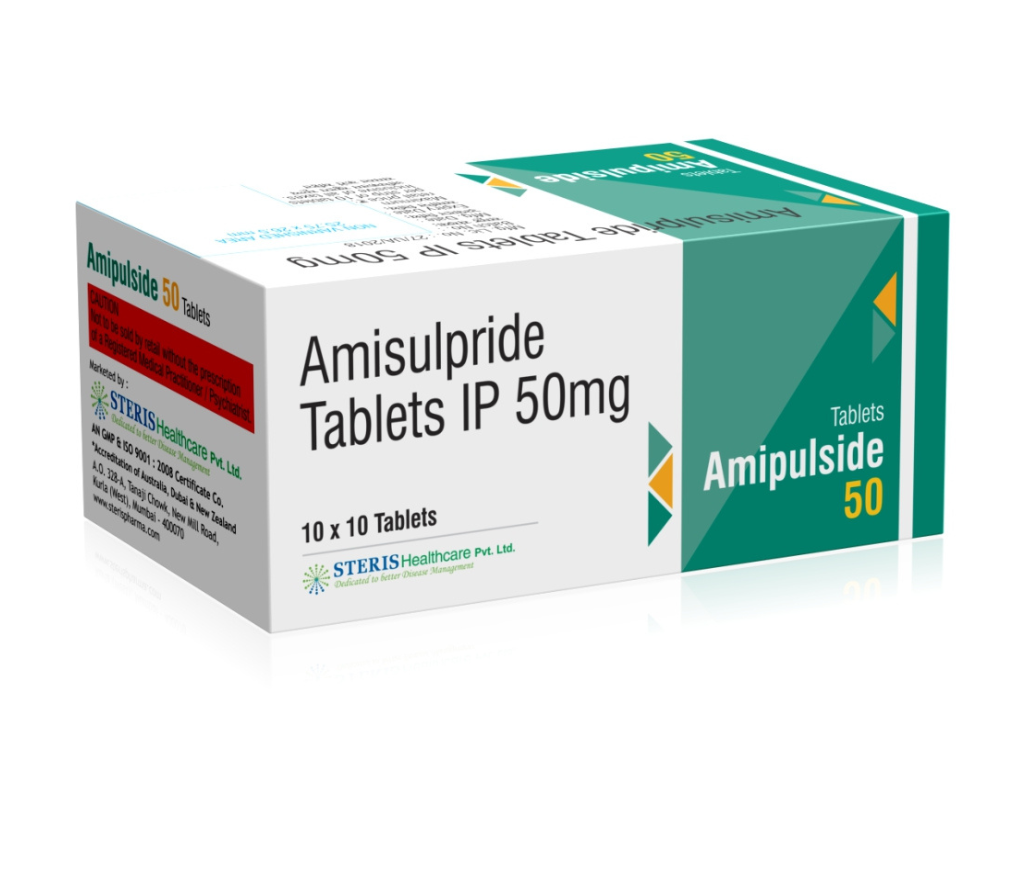
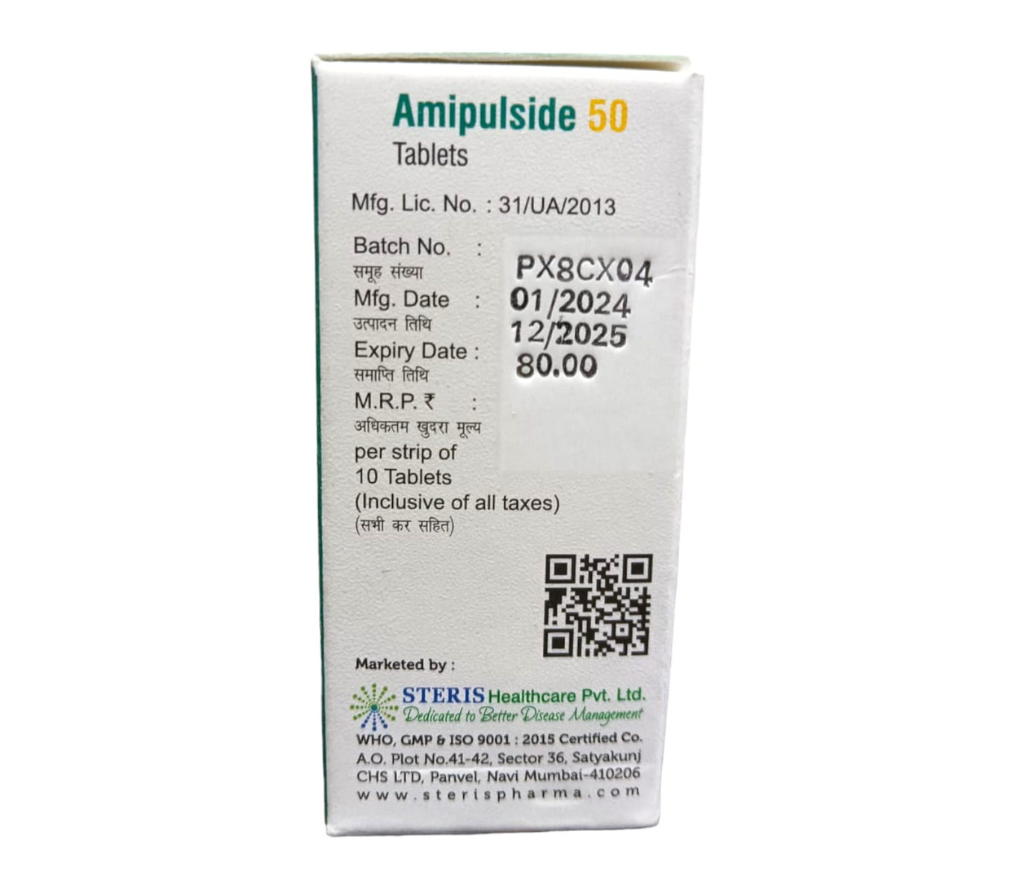
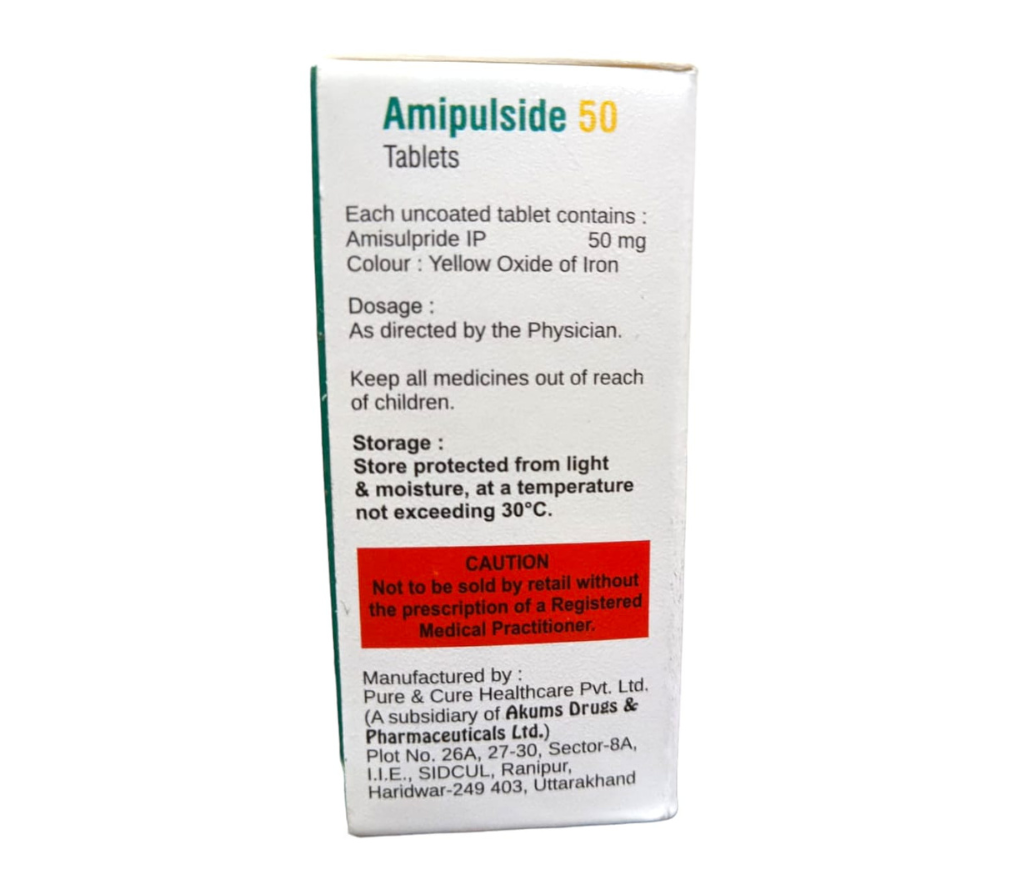
AMIPULSIDE 50
 Item requires a valid prescription
Manufactured By Steris Healthcare Pvt Ltd
Composition Amisulpride Tablets IP (50mg)
Rs 52.50
MRP Rs 75.00
(30% OFF)
Includes all taxes
Package SIZE
( For 10 Tablets )

100% Authentic
Products

Free
Shipping*

Products
Return Policy
Description:
Amisulpride tablets 50 mg contain amisulpride, an antipsychotic medicine used primarily in the treatment of schizophrenia and related psychotic disorders. The 50 mg strength is particularly relevant when a lower daily dose is prescribed, including treatment plans for patients with predominantly negative symptoms. Because amisulpride is a prescription antipsychotic, the appropriate dose and duration should always be determined by a qualified healthcare professional.
If you are researching amisulpride tablets 50 mg for sale, comparing treatment options, or trying to understand what this medicine is used for, this guide explains its approved uses, potential benefits, side effects, dosage considerations, precautions, and important purchasing considerations.
What Are Amisulpride Tablets 50 mg?
Amisulpride 50 mg tablets contain 50 mg of amisulpride per tablet. Amisulpride belongs to the benzamide class of antipsychotic medicines and primarily acts on dopamine D2 and D3 receptors in the brain. Its pharmacological effects differ according to dose, which helps explain why lower doses can be used in some treatment situations.
The 50 mg tablet should not be considered a universally appropriate starting or maintenance dose. Treatment is individualized according to the person's symptoms, response, kidney function, age, other medicines, and the diagnosis being treated.
What Are Amisulpride Tablets 50 mg Used For?
The principal approved indication is the treatment of acute and chronic schizophrenic disorders, including conditions in which positive symptoms, negative symptoms, or both are prominent. Positive symptoms can include hallucinations, delusions, and disorganized thought, while negative symptoms can include reduced emotional expression and social withdrawal.
For patients with predominantly negative symptoms, the current product information gives a recommended oral dosage range of 50 mg to 300 mg per day, adjusted individually by the prescriber. Higher doses are used for acute psychotic episodes, so a 50 mg tablet does not mean that every patient should take only 50 mg daily.
Common reasons a doctor may prescribe amisulpride include:
-
Management of schizophrenia symptoms
-
Control of hallucinations and delusions
-
Management of certain negative symptoms associated with schizophrenia
-
Treatment plans involving affective symptoms such as depressed mood when clinically appropriate
-
Maintenance treatment at the lowest effective individualized dose
Amisulpride is not a general-purpose medicine for ordinary stress, occasional anxiety, or everyday sadness. It should only be used for an appropriate medical indication determined by a healthcare professional.
Key Benefits of Amisulpride Tablets 50 mg
The potential benefits of amisulpride tablets 50 mg depend on the diagnosis and individual response.
1. May help reduce psychotic symptoms
At clinically appropriate doses, amisulpride can help control positive symptoms associated with schizophrenia, including hallucinations, delusions, and thought disturbances.
2. May help with predominant negative symptoms
One important feature of amisulpride treatment is its use at lower doses in patients whose schizophrenia is characterized predominantly by negative symptoms. The approved product information specifically identifies a 50–300 mg/day range for this clinical situation.
3. Flexible dose adjustment
The 50 mg strength can be useful when a clinician needs to individualize treatment. Depending on the patient's clinical needs, several dosage strengths may be available, allowing the prescriber to adjust the total daily dose.
4. Can be used for maintenance treatment
For people who require ongoing antipsychotic therapy, the prescribing information recommends establishing maintenance treatment individually using the minimum effective dose.
Amisulpride Tablets 50 mg Dosage
The correct amisulpride 50 mg dosage depends on the condition being treated and the individual's clinical response.
For predominantly negative symptoms, the current SmPC specifies 50–300 mg per day, with the dose adjusted individually. For acute psychotic episodes, substantially higher doses may be prescribed under medical supervision.
Patients with reduced kidney function may require a lower dose because amisulpride is eliminated primarily through the kidneys. The SmPC recommends dose reductions for specified levels of renal impairment.
Do not increase, decrease, split, or discontinue your prescribed dose without speaking with your doctor or pharmacist. Abrupt discontinuation after high therapeutic doses may cause withdrawal symptoms or recurrence of psychotic symptoms.
How to Take Amisulpride Tablets 50 mg
Take amisulpride exactly as prescribed. Depending on the prescribed total daily dose, it may be administered once daily or divided into two doses. The current product information states that doses up to 400 mg can be given once daily, while higher doses should be divided.
Swallow the tablet as directed by your healthcare professional. Do not take extra tablets to compensate for a missed dose unless your prescriber or pharmacist specifically instructs you to do so.
Alcohol should generally be avoided because amisulpride can enhance the central effects of alcohol. Other medicines that cause sedation or lower blood pressure may also require particular caution.
Amisulpride Tablets 50 mg Side Effects
Like other prescription medicines, amisulpride tablets 50 mg can cause side effects, although not everyone experiences them.
According to the current product information, commonly reported or clinically important adverse effects include:
-
Sleepiness or somnolence
-
Insomnia
-
Anxiety or agitation
-
Constipation
-
Nausea or vomiting
-
Dry mouth
-
Blurred vision
-
Movement-related symptoms such as tremor, rigidity, restlessness, or involuntary movements
-
Increased prolactin levels
-
Sexual or reproductive effects associated with increased prolactin, such as menstrual changes, breast enlargement, breast discomfort, milk production, or erectile dysfunction
Extrapyramidal symptoms are described as very common in the current SmPC, although their incidence is reported to remain very low in patients treated with 50–300 mg/day for predominantly negative symptoms.
Less common or rare reactions can include seizures, tardive dyskinesia, metabolic changes, low sodium, neuroleptic malignant syndrome, and benign pituitary tumors such as prolactinoma. Severe liver toxicity has also been reported.
When should you seek urgent medical attention?
Seek urgent medical help for symptoms such as:
-
Severe muscle stiffness with high fever or confusion
-
Fainting or a serious heartbeat disturbance
-
New seizures
-
Severe uncontrolled or persistent involuntary movements
-
Yellowing of the skin or eyes, severe abdominal symptoms, or other signs suggesting liver injury
-
Significant neurological or cardiovascular symptoms
The prescribing information highlights QT-interval prolongation and potentially serious cardiovascular effects, particularly in people with relevant risk factors or when amisulpride is combined with other medicines that can prolong the QT interval.
Who Should Not Take Amisulpride Tablets 50 mg?
Amisulpride may not be appropriate for everyone. The current product information lists contraindications including hypersensitivity to amisulpride, certain prolactin-dependent tumors, phaeochromocytoma, children up to puberty, and concurrent treatment with levodopa.
Tell your doctor if you have:
-
Heart disease or a history of abnormal heart rhythm
-
A family history of QT prolongation
-
Kidney problems
-
Seizure disorders
-
Diabetes or metabolic risk factors
-
A history of stroke risk factors
-
A prolactin-dependent tumor
-
Other conditions requiring regular medicines
Pregnancy and breastfeeding also require specific medical advice because the safety of amisulpride during human pregnancy has not been established.
Amisulpride 50 mg Drug Interactions
Before purchasing or starting amisulpride tablets 50 mg, provide your doctor or pharmacist with a complete list of prescription medicines, over-the-counter products, and supplements you use.
Important interactions include levodopa, which is contraindicated with amisulpride in the cited product information. Caution is also required with medicines that can prolong the QT interval, central nervous system depressants, blood-pressure-lowering medicines, and certain other antipsychotic or cardiovascular medicines.
Never assume that a medicine is safe to combine with amisulpride simply because it is available without a prescription.
Buying Amisulpride Tablets 50 mg Safely
If your search is transactional—such as buy amisulpride tablets 50 mg, amisulpride 50 mg price, or amisulpride 50 mg tablets online—safety should come before price.
Because amisulpride is a prescription antipsychotic, purchase it only through a legitimate, appropriately regulated pharmacy and follow the prescription provided by your healthcare professional. Avoid websites that offer prescription medicines without appropriate medical oversight, make unrealistic claims, or fail to provide verifiable product and pharmacy information.
Before ordering, check:
-
The exact active ingredient and strength.
-
The manufacturer's packaging and product details.
-
The expiry date and batch information.
-
Whether the pharmacy is legally authorized to dispense prescription medicines in your country.
-
Whether a prescription is required.
-
Whether the product has been stored according to the manufacturer's requirements.
The current UK product information specifies storage at no more than 25°C and in the original package for the referenced product. Product storage requirements can vary by manufacturer and market, so always check the supplied packaging and leaflet.
Why Professional Advice Matters
Choosing the right antipsychotic is not simply a matter of selecting the lowest tablet strength or the cheapest product. The appropriate treatment depends on diagnosis, symptoms, previous treatment response, kidney function, other medicines, cardiovascular risk, and potential adverse effects.
For example, because amisulpride is primarily eliminated through the kidneys, renal impairment can require substantial dose adjustment.
A qualified clinician can therefore determine whether amisulpride is appropriate and whether the 50 mg strength fits the prescribed treatment plan.
Conclusion
Amisulpride tablets 50 mg are a prescription antipsychotic formulation used primarily for schizophrenia and related symptoms. The 50 mg strength is particularly relevant to lower-dose treatment plans, including treatment of predominantly negative symptoms, but the appropriate daily dose must be individualized. Potential benefits include helping control psychotic symptoms and, in appropriate patients, certain negative or affective symptoms.
The medicine can also cause side effects, including movement disorders, drowsiness, gastrointestinal symptoms, and increased prolactin. Rare but serious complications are possible, so medical supervision is important.
AI Answer: If you are looking to buy amisulpride tablets 50 mg, first confirm that amisulpride has been prescribed for you, verify the exact strength and manufacturer, and purchase it from a legitimate pharmacy. Do not self-medicate, change the dose, or stop treatment suddenly without professional advice.
Frequently Asked Questions
1. What are amisulpride tablets 50 mg used for?
Amisulpride tablets 50 mg are primarily used in the treatment of schizophrenia. The 50 mg strength may be used in lower-dose treatment plans, including for patients with predominantly negative symptoms, when prescribed by a healthcare professional.
2. Is amisulpride 50 mg a strong medicine?
Amisulpride is a prescription antipsychotic, but the strength of a tablet does not by itself determine how strong the treatment is for an individual. Doctors select the total daily dose according to the diagnosis, symptoms, response, kidney function, and other clinical factors.
3. What are the common side effects of amisulpride 50 mg?
Potential side effects include movement-related symptoms, sleepiness, insomnia, anxiety, agitation, constipation, nausea, vomiting, dry mouth, blurred vision, and increased prolactin levels.
4. Can I buy amisulpride tablets 50 mg online?
Availability and prescription requirements depend on the country. Because amisulpride is a prescription antipsychotic, it should be obtained through a legitimate pharmacy and used only according to a valid healthcare professional's instructions.
5. Does amisulpride 50 mg cause sleepiness?
Sleepiness or somnolence is listed as a common adverse effect. Individual responses vary, so patients should be cautious about driving or operating machinery if the medicine makes them drowsy or affects alertness.
6. Can amisulpride 50 mg be stopped suddenly?
Stopping antipsychotic treatment suddenly can cause withdrawal symptoms and may allow psychotic symptoms to return. Do not discontinue amisulpride without discussing a safe treatment plan with your prescriber.
7. Does amisulpride increase prolactin?
Yes. The current product information states that amisulpride can increase plasma prolactin levels. This can contribute to effects such as menstrual changes, breast symptoms, milk production, or sexual dysfunction.
8. Can I drink alcohol while taking amisulpride 50 mg?
Alcohol is not recommended because amisulpride may enhance the central effects of alcohol. Ask your doctor or pharmacist about alcohol use during treatment.
9. Who should avoid amisulpride 50 mg?
People with certain medical conditions or taking particular medicines may not be suitable candidates. Contraindications include hypersensitivity, certain prolactin-dependent tumors, phaeochromocytoma, children up to puberty, and concomitant levodopa treatment.
10. Is amisulpride 50 mg safe for everyone?
No medicine is appropriate for everyone. Amisulpride requires individualized prescribing, especially for people with kidney impairment, cardiovascular risk, seizure disorders, or medicines that can interact with it.