


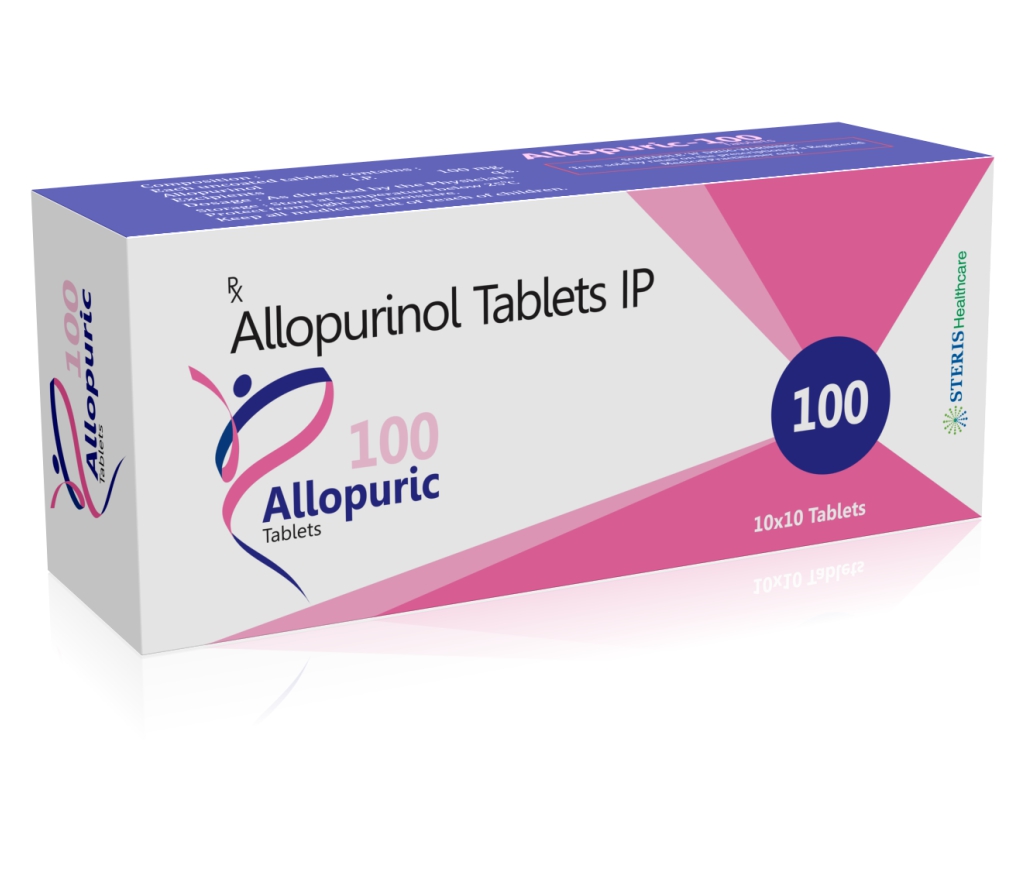
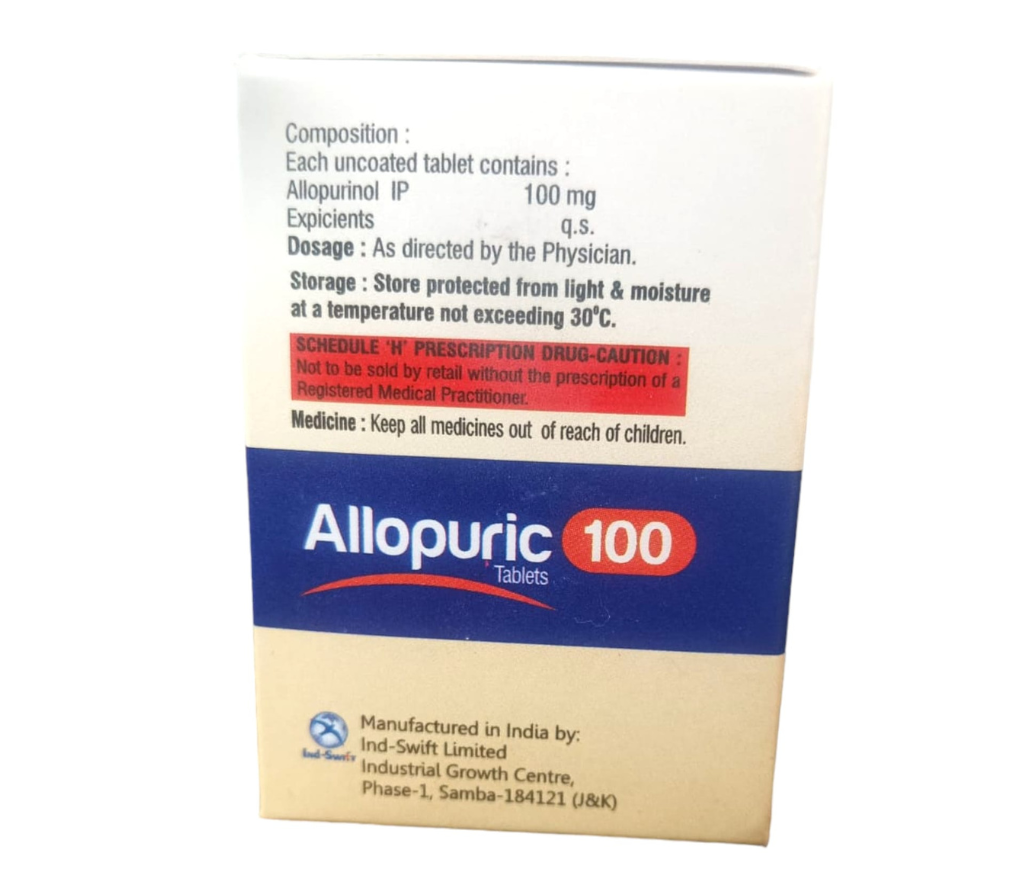
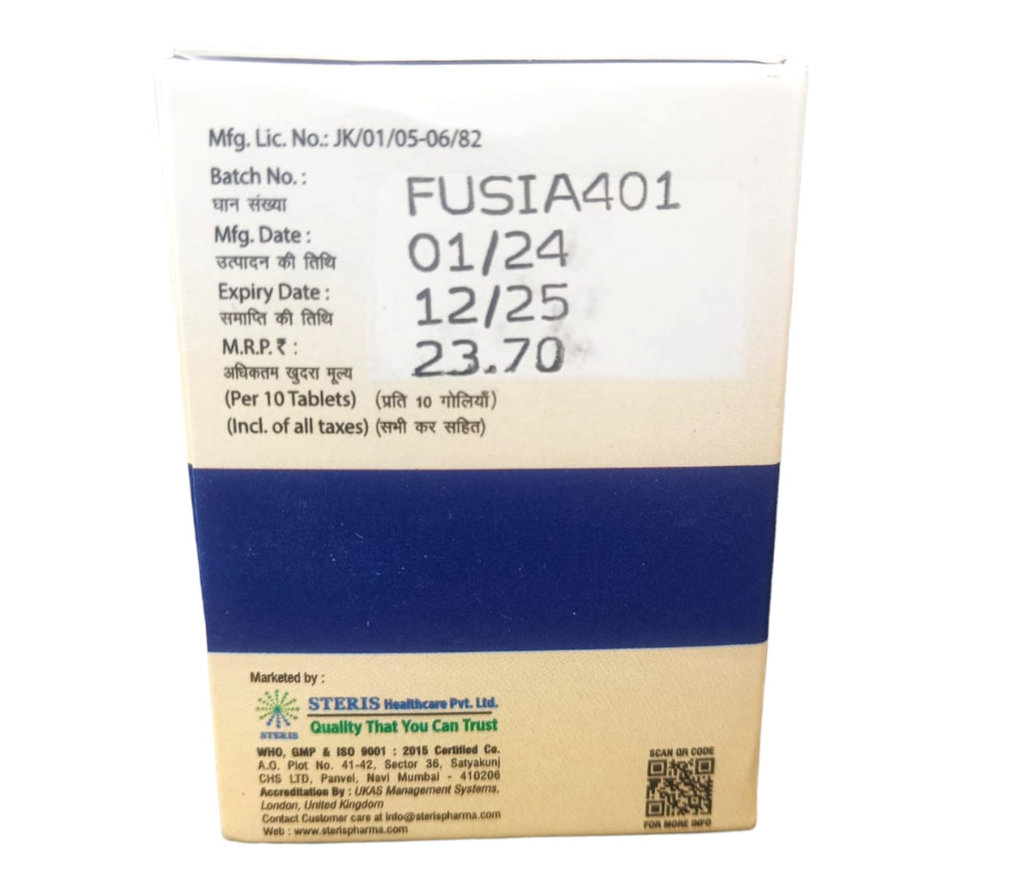
ALLOPURIC 100
 Item requires a valid prescription
Manufactured By Steris Healthcare Pvt Ltd
Composition Allopurinol (100mg)
Rs 13.94
MRP Rs 19.91
(30% OFF)
Includes all taxes
Package SIZE
( For 10 Tabs )

100% Authentic
Products

Free
Shipping*

Products
Return Policy
Description:
Allopurinol is a daily prescription medicine for treating gout, high uric acid levels, and preventing recurrent kidney stones. It is primarily prescribed to prevent gout attacks and reduce the risk of uric acid kidney stones in people with hyperuricemia (high uric acid). Allopurinol does not treat an acute gout flare directly — it works over time to lower uric acid production, which is why doctors often recommend taking it consistently, sometimes at night, to align with the body's natural overnight uric acid production cycle and improve tolerability. Common side effects include skin rash, nausea, and mild digestive upset; serious effects such as severe skin reactions are rare but require immediate medical attention. Allopurinol is generally considered kidney-friendly and is even used to protect kidney function from urate-related damage, though dose adjustment is required in patients with pre-existing kidney impairment. It is a Schedule H prescription medicine and should only be used under medical supervision.
What Is Allopurinol?
Allopurinol is a xanthine oxidase inhibitor, a class of medication that reduces the production of uric acid in the body. It is one of the most commonly prescribed medicines worldwide for managing chronic hyperuricemia, gout, and certain uric acid-related kidney conditions.
Unlike medications that treat the pain and inflammation of an acute gout attack, allopurinol works preventively—by lowering the amount of uric acid the body produces in the first place, it reduces the frequency and severity of future gout flares and helps prevent the formation of uric acid crystals in joints and kidneys.
Allopurinol is available as a prescription-only oral tablet and should be taken strictly as directed by a registered medical practitioner, since dosing depends on individual uric acid levels, kidney function, and treatment goals.
Clinical Indications
| Condition | How Allopurinol Helps |
|---|---|
| Chronic gout | Lowers uric acid production, reducing frequency of gout attacks over time |
| Hyperuricemia | Directly reduces elevated serum uric acid levels |
| Recurrent uric acid kidney stones | Prevents stone formation by lowering uric acid excretion into urine |
| Tumor lysis syndrome (in cancer therapy) | Used prophylactically to prevent uric acid buildup during chemotherapy |
| Secondary hyperuricemia (e.g., from certain blood disorders) | Manages elevated uric acid arising from other underlying conditions |
Mechanism of Action
Allopurinol's uric-acid-lowering effect works through a well-defined enzymatic pathway:
- Uric acid is produced in the body when purines (from cell breakdown and diet) are metabolized through a series of enzymatic steps.
- The final two steps of this pathway are catalyzed by the enzyme xanthine oxidase, which converts hypoxanthine to xanthine, and xanthine to uric acid.
- Allopurinol and its active metabolite, oxypurinol, inhibit xanthine oxidase, blocking this final conversion step.
- As a result, uric acid production decreases, while hypoxanthine and xanthine — which are more water-soluble and easier for the kidneys to excrete — increase slightly.
- Over weeks of consistent use, this lowers overall serum uric acid levels, reducing crystal deposition in joints (gout) and kidneys (stones).
Key Benefits of Allopurinol
- Long-term gout prevention — reduces frequency and severity of future gout attacks by addressing the root cause (elevated uric acid), not just symptoms
- Kidney stone prevention — lowers risk of recurrent uric acid stones by reducing uric acid excretion load on the kidneys
- Once-daily dosing convenience—most patients can maintain effective control with a single daily dose
- Suitable for long-term maintenance therapy — widely used for years or decades under medical supervision without significant tolerance issues
- Supports kidney protection — helps prevent urate nephropathy (kidney damage from uric acid crystal deposition)
- Useful in cancer treatment support — prevents tumor lysis syndrome-related uric acid spikes during chemotherapy
- Cost-effective, well-established therapy — decades of clinical use with a well-understood safety profile
Dosage Guidelines
- Starting dose: Often begins at a low dose and is gradually increased based on serum uric acid monitoring
- Maintenance dose: Adjusted individually; higher doses may be split into multiple daily intakes if needed
- Timing: Many doctors recommend taking allopurinol at night or with the evening meal, since uric acid production tends to peak overnight, and taking it before bed can align drug action with this cycle while also reducing daytime stomach upset
- Administration tip: Take with food or a full glass of water to minimize stomach irritation; adequate fluid intake is recommended to support kidney excretion of uric acid byproducts
- Duration: Typically a long-term, ongoing therapy rather than a short course
- Missed dose: Take as soon as remembered unless close to the next dose; do not double the dose
Side Effects
Common Side Effects
- Skin rash (mild)
- Nausea
- Diarrhea or stomach upset
- Headache
- Drowsiness
Less Common / Serious Side Effects
- Severe skin reactions (e.g., Stevens-Johnson syndrome) — rare but require emergency medical attention
- Liver function abnormalities
- Blood disorders (rare, with long-term use)
- Worsening of gout symptoms temporarily when starting therapy (due to mobilization of uric acid crystals)
- Signs of kidney function changes in predisposed individuals
Substitutes & Alternative Therapies Comparison
| Medicine | Class | Primary Mechanism | Best Suited For |
|---|---|---|---|
| Allopurinol | Xanthine oxidase inhibitor | Reduces uric acid production | Long-term gout & hyperuricemia management |
| Febuxostat | Xanthine oxidase inhibitor | Reduces uric acid production (alternative mechanism profile) | Patients intolerant to allopurinol |
| Probenecid | Uricosuric agent | Increases uric acid excretion via kidneys | Patients with under-excretion of uric acid |
| Colchicine | Anti-inflammatory | Reduces inflammation during acute gout flare | Acute gout attack, not long-term prevention |
Precautions
- Inform your doctor about kidney or liver conditions before starting allopurinol, as dose adjustment may be required
- Do not stop or start allopurinol during an acute gout attack unless advised, as this can temporarily worsen symptoms
- Maintain adequate fluid intake while on allopurinol to support kidney function
- Report any skin rash immediately, as some reactions can become serious if the medicine is continued
- Avoid alcohol in excess, as it can raise uric acid levels and reduce treatment effectiveness
- Not recommended to start or stop abruptly without medical guidance
- Inform your doctor of all other medications, as allopurinol can interact with certain drugs (e.g., azathioprine, warfarin, some diuretics)
Conclusion
Allopurinol remains the gold-standard, first-line therapy for long-term management of gout and hyperuricemia, working by directly reducing the body's uric acid production rather than merely masking symptoms. Its proven track record, once-daily convenience, and role in protecting both joints and kidneys make it a cornerstone medication for millions of patients worldwide. Taking it consistently — often at night, as advised by your doctor — helps align its action with the body's natural uric acid cycle for the best results. As with any prescription medicine, allopurinol should only be used under the guidance of a qualified healthcare provider who can tailor the dose to your individual uric acid levels and kidney function.
Frequently Asked Questions
1. What is the main use of allopurinol?
Allopurinol is mainly used to lower high uric acid levels in the body, preventing gout attacks and reducing the risk of uric acid kidney stones.
2. Why should allopurinol be taken at night?
Many doctors recommend taking allopurinol at night because uric acid production tends to peak overnight, so dosing in the evening can align the medicine's action with this natural cycle and may also reduce daytime stomach discomfort.
3. Which is the best tablet for uric acid?
Allopurinol is widely considered the first-line, most commonly prescribed tablet for managing high uric acid levels, though the best option for you depends on your kidney function, tolerance, and doctor's assessment.
4. Is allopurinol harmful to the kidneys?
Allopurinol is generally considered kidney-friendly and is often used to protect the kidneys from uric acid crystal damage. However, dose adjustment is needed in patients with existing kidney impairment, so it should always be used under medical supervision.
5. How does allopurinol work?
It blocks the enzyme xanthine oxidase, which the body uses to produce uric acid, thereby lowering overall uric acid levels in the blood.
6. How long does allopurinol take to work?
It may take several weeks of consistent use to see a meaningful reduction in uric acid levels and a decrease in gout attack frequency.
7. Can allopurinol be taken during an acute gout attack?
Starting allopurinol during an acute attack is generally avoided, as it can temporarily worsen symptoms; however, if already on treatment, it is usually continued as advised by the doctor.
8. What are the common side effects of allopurinol?
Common side effects include mild skin rash, nausea, diarrhea, and headache.
9. Can allopurinol be taken with food?
Yes, taking allopurinol with food or a full glass of water is often recommended to reduce stomach irritation.
10. Is allopurinol safe for long-term use?
Yes, allopurinol is widely used for long-term, ongoing management of gout and hyperuricemia under regular medical monitoring.
11. Can allopurinol cause a skin rash?
Yes, mild skin rash is a recognized side effect. Any spreading rash, blistering, or fever should be reported to a doctor immediately, as rare but serious skin reactions can occur.
12. What happens if I miss a dose of allopurinol?
Take the missed dose as soon as you remember, unless it is close to the time for your next dose. Do not double the dose.
13. Can allopurinol interact with other medicines?
Yes, it can interact with drugs like azathioprine, warfarin, and certain diuretics, so it's important to inform your doctor of all medications you are taking.
14. Is allopurinol available without a prescription?
No, allopurinol is a Schedule H prescription medicine and requires a valid doctor's prescription for purchase.
15. Does allopurinol cure gout permanently?
Allopurinol does not cure gout but effectively manages and prevents future attacks by controlling uric acid levels as long as treatment is continued.
16. Can allopurinol help prevent kidney stones?
Yes, by lowering uric acid excretion, allopurinol reduces the risk of recurrent uric acid kidney stones.
Brand name: ALLOPURIC 100 (STERIS HEALTHCARE PVT LTD)
Composition Name: Allopurinol Tablets IP 100 mg
Formulation: Tablet
Pack size: 10 × 10 Tablets
Marketed By: Steris Healthcare Pvt Ltd
Regulatory standard: WHO-GMP Certified
Schedule: Valid Prescription Required (Prescription Only)
If You Need More Information About ALLOPURIC 100 Click here