


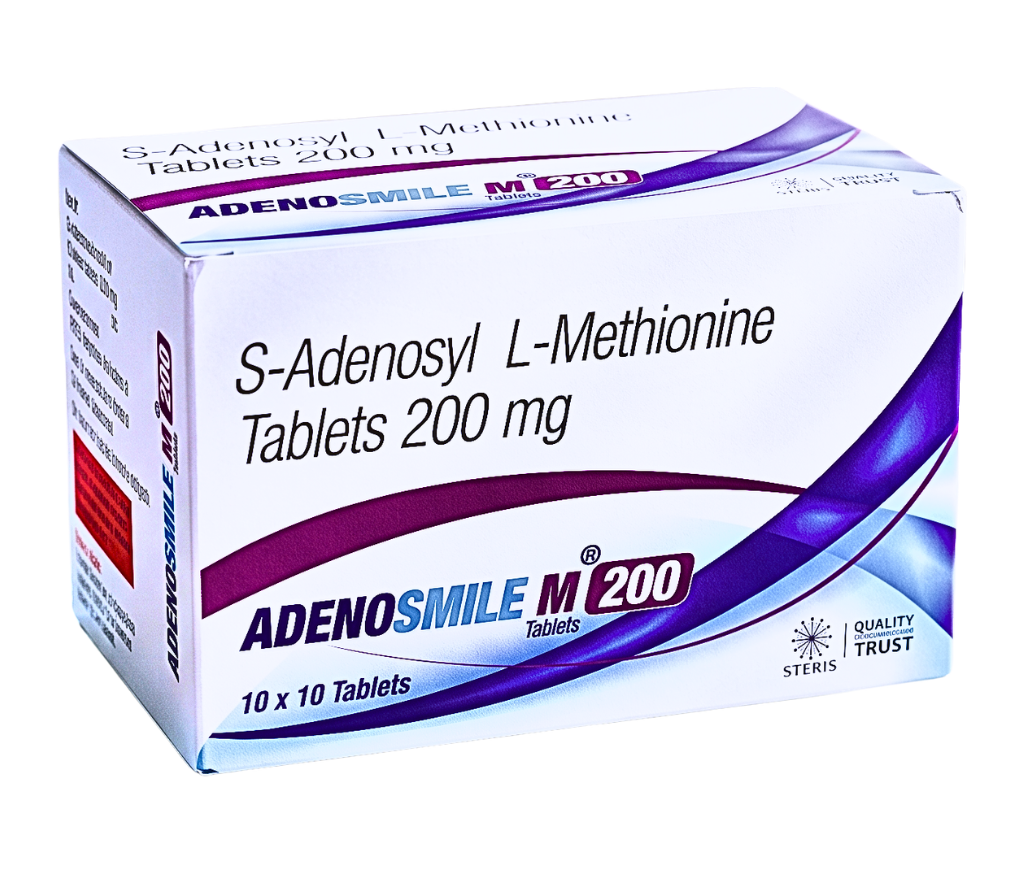
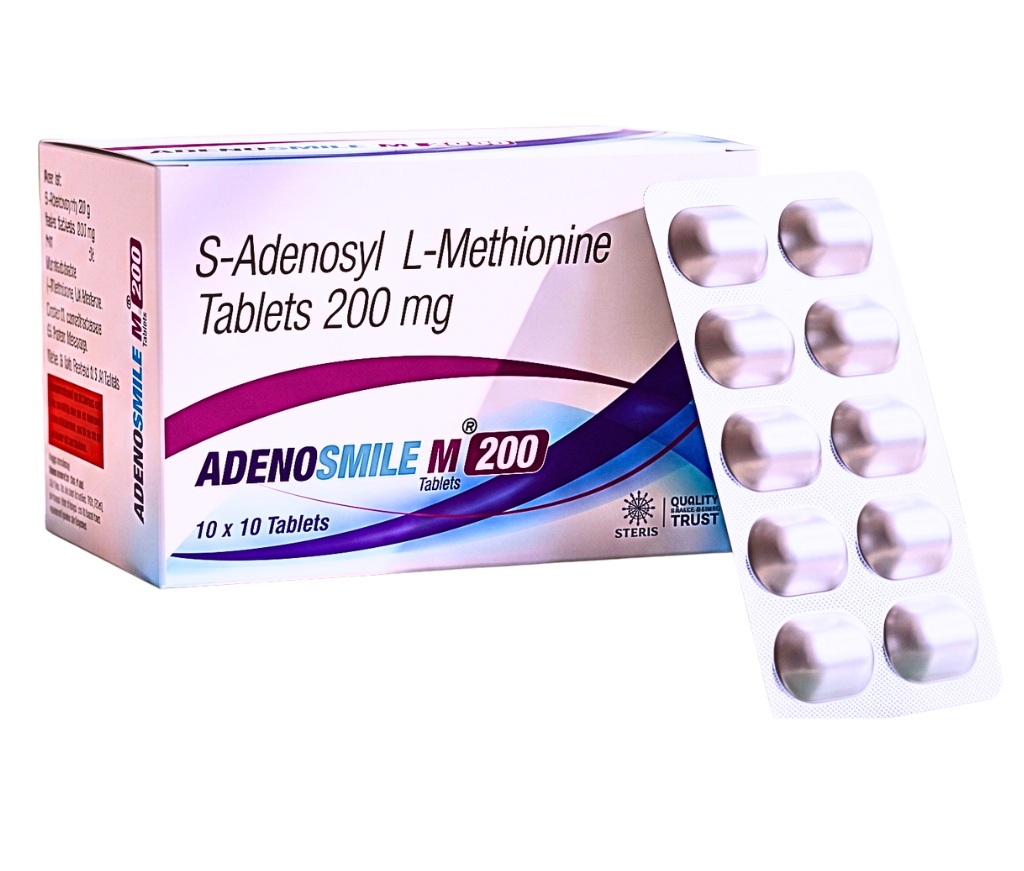
ADENOSOLE M 200
 Item requires a valid prescription
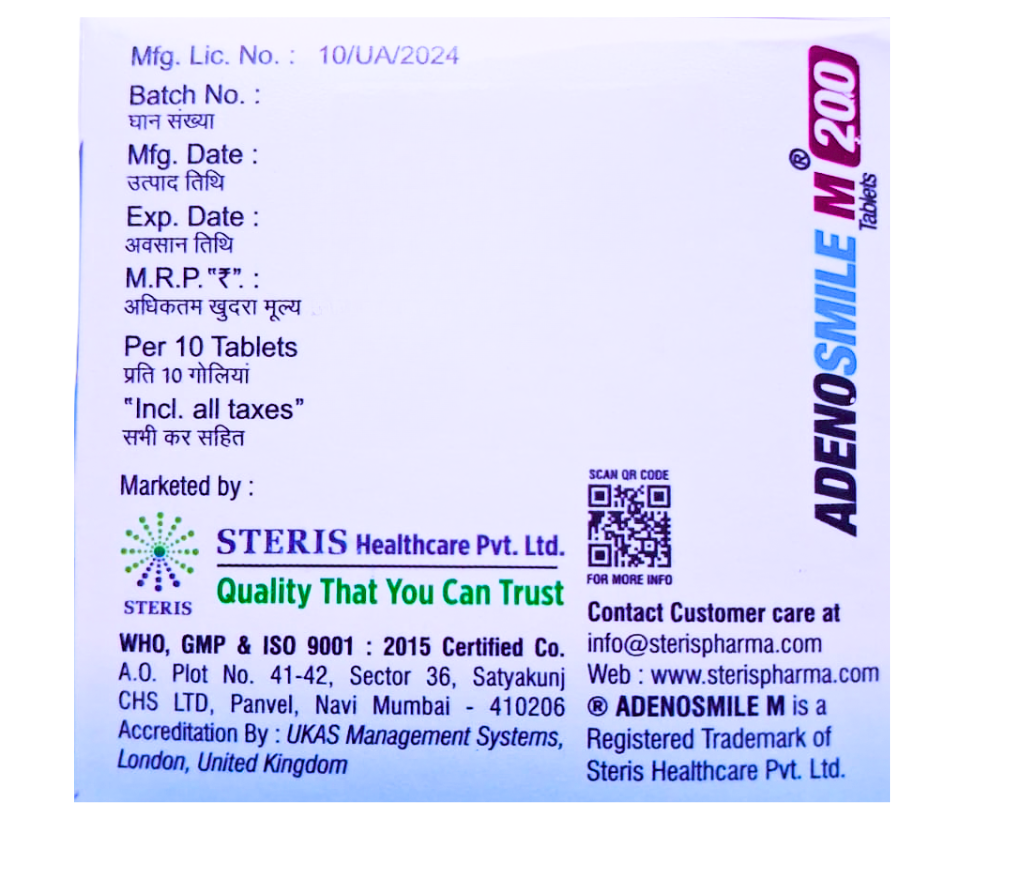
Manufactured By Steris Healthcare Pvt Ltd
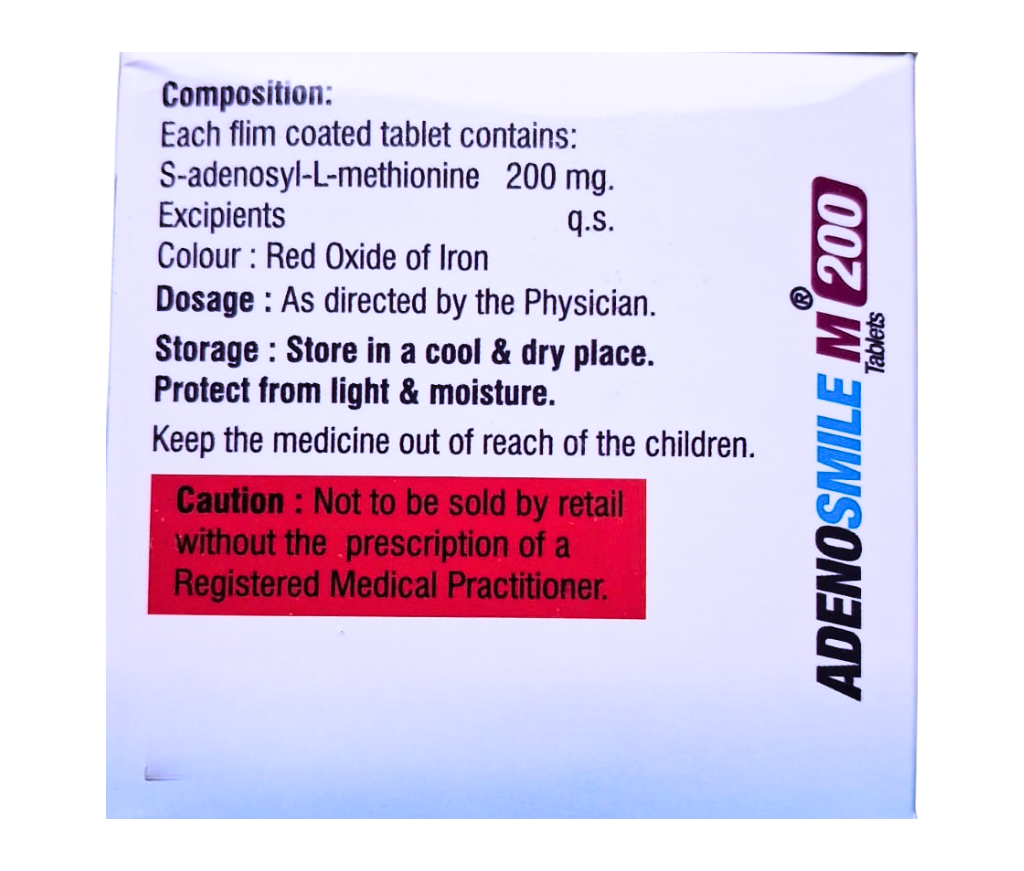
Composition S- Adenosyl L-Methionine tablets 200 mg
Rs 272.30
MRP Rs 389.00
(30% OFF)
Includes all taxes
Package SIZE
( For 10 Tablet )

100% Authentic
Products

Free
Shipping*

Products
Return Policy
Description:
Ademetionine 200 mg is a tablet strength of ademetionine, also known as S-adenosyl-L-methionine (SAMe or AdoMet). It is a naturally occurring compound involved in important biochemical reactions in the body, including methylation and pathways involved in the production of glutathione and other sulfur-containing compounds.
In India, official Central Drugs Standard Control Organisation (CDSCO) records state that ademetionine enteric-coated tablets in 200 mg and 400 mg strengths were approved in 2010 for management of intrahepatic cholestasis and liver disease. More recent CDSCO gastroenterology/hepatology committee documentation from May 2026 also confirms the existing approval of the 200 mg/400 mg oral tablet strengths in India.
This makes ademetionine 200 mg tablets particularly relevant to people researching medicines used in liver-related conditions, especially conditions involving intrahepatic cholestasis.
However, it is important to distinguish an approved indication from claims that a product can "detox" or "clean" the liver. Ademetionine is a medicine with specific therapeutic uses; it should not be marketed as a general-purpose liver detox supplement.
Ademetionine 200 mg Uses
The primary use of ademetionine 200 mg in the Indian regulatory context is the management of intrahepatic cholestasis and liver disease.
What is intrahepatic cholestasis?
Cholestasis occurs when the formation, secretion or flow of bile is impaired. When the problem originates within the liver, it is described as intrahepatic cholestasis.
Depending on the underlying condition, cholestasis may be associated with symptoms such as:
-
Itching or pruritus
-
Jaundice
-
Dark urine
-
Pale stools
-
Fatigue
-
Abdominal discomfort
-
Abnormal liver-function tests
Ademetionine may be used as part of a clinician-directed treatment strategy when cholestasis is present. It does not replace investigation and treatment of the underlying cause.
Ademetionine for liver disease
Ademetionine has been studied in several types of liver disease involving cholestasis. A systematic review of studies in adults with intrahepatic cholestasis found evidence that AdoMet improved several biochemical liver parameters and some symptoms during the first weeks of treatment, although the available studies varied in design and quality.
An Indian multicentre observational study involving patients with intrahepatic cholestasis associated with chronic non-alcoholic liver disease reported improvements in biochemical markers and symptoms after six weeks of treatment and described the treatment as generally well tolerated. Because it was observational rather than a randomized controlled trial, its findings should be interpreted accordingly.
How Does Ademetionine 200 mg Work?
Ademetionine is involved in several metabolic pathways.
It functions as a methyl-group donor in numerous biochemical reactions and participates in pathways connected with:
-
Methylation
-
Glutathione synthesis
-
Transsulfuration
-
Polyamine synthesis
-
Cellular metabolism
The liver has a particularly important role in ademetionine metabolism.
One proposed therapeutic mechanism in cholestatic liver disease is support of hepatic biochemical processes involved in bile formation and cellular protection. Research suggests that ademetionine can influence membrane phospholipid methylation and glutathione-related pathways, which may contribute to its effects in cholestatic conditions.
This complex mechanism is why it is more accurate to describe ademetionine as a metabolically active medicine used in selected liver-related conditions rather than simply calling it a "liver detoxifier."
Key Benefits of Ademetionine 200 mg
1. Supports management of intrahepatic cholestasis
The most relevant established use in Indian regulatory documentation is management of intrahepatic cholestasis and liver disease.
Clinical research has reported improvements in certain biochemical markers associated with cholestasis, including liver enzymes and bilirubin-related parameters. A systematic review found improvements in some biochemical measures within the first two weeks in several studies.
2. May help reduce cholestasis-related symptoms
Symptoms such as itching and fatigue can significantly affect quality of life in people with cholestatic liver disease.
Studies included in a systematic review reported improvement in symptoms of cholestasis, although the strength of evidence differs among individual outcomes and study designs.
An older meta-analysis also reported improvements in pruritus and several biochemical markers among patients treated for intrahepatic cholestasis, although those findings should be considered alongside more recent evidence and current clinical practice.
3. May improve some liver-function markers
Research has examined the effects of ademetionine on laboratory measurements such as:
-
ALT
-
AST
-
Alkaline phosphatase
-
Gamma-glutamyl transferase
-
Bilirubin
The 2020 systematic review found that placebo-controlled randomized studies reported reductions in some liver enzymes during early treatment. However, improvement in laboratory markers does not automatically mean that the underlying liver disease has been cured.
4. May help with fatigue associated with liver disease
Fatigue is common in chronic liver disease and cholestatic disorders.
A systematic review specifically evaluating ademetionine for hepatogenic fatigue found published evidence supporting investigation of ademetionine for this symptom, although evidence quality and study characteristics should be considered before making broad claims of effectiveness.
5. Oral 200 mg formulation may be convenient
For patients prescribed an oral formulation, ademetionine 200 mg enteric-coated tablets provide a defined strength that can be incorporated into a clinician-directed treatment plan.
The precise administration instructions depend on the product's local prescribing information. Patients should follow the label supplied with their specific medicine rather than relying on dosing information for another brand or formulation.
Ademetionine 200 mg Dosage
A common search query is "How many ademetionine 200 mg tablets should I take?"
There is no universally appropriate answer based only on tablet strength.
The dose and duration can depend on:
-
The underlying liver condition
-
Severity of cholestasis
-
Treatment response
-
Oral versus injectable formulation
-
Other medicines being used
-
Age and overall health
-
The local approved product information
Therefore, 200 mg describes the tablet strength, not necessarily the total daily dose for every patient.
Do not increase the number of tablets because symptoms have not improved quickly. Likewise, do not discontinue treatment without discussing it with the prescribing clinician.
For a product intended for a particular indication, the manufacturer's current package insert and local regulatory labeling should take priority over generalized internet dosage information.
Ademetionine 200 mg Side Effects
Like other medicines, ademetionine can cause adverse effects.
Reported side effects may include:
-
Nausea
-
Diarrhea
-
Abdominal discomfort
-
Headache
-
Dizziness
-
Insomnia or sleep disturbance
-
Anxiety or agitation in some patients
-
Sweating
-
Skin reactions
-
Fatigue or malaise
The exact adverse-effect profile depends on the formulation, dose and patient population.
Because ademetionine affects biochemical pathways throughout the body, patients should report unexpected or persistent symptoms to their healthcare professional rather than assuming that all symptoms are related to the liver condition itself.
Is Ademetionine 200 mg Safe?
For appropriately selected patients, clinical studies have generally described ademetionine as reasonably well tolerated. For example, the Indian observational study of patients with non-alcoholic liver disease and intrahepatic cholestasis reported favourable tolerability during treatment.
However, "well tolerated" does not mean "risk-free."
A patient's medical history and other medicines should be considered before treatment.
Particular attention is appropriate if you:
-
Have significant liver disease
-
Have kidney disease
-
Are pregnant or planning pregnancy
-
Are breastfeeding
-
Take medicines affecting mood or serotonin
-
Have bipolar disorder or a history of mania
-
Have a history of medication allergies
-
Are taking several prescription medicines
Always provide your doctor or pharmacist with a complete list of medicines, supplements and herbal products you use.
Ademetionine 200 mg and Mental Health: An Important Distinction
Ademetionine/SAMe has also been studied in depression and other psychiatric settings. However, a product's approved indication varies by country, and evidence from clinical research does not automatically mean that every ademetionine 200 mg liver product is approved to treat depression.
This distinction is particularly important for SEO content because online pages sometimes make broad claims about SAMe as an antidepressant.
If ademetionine is being considered for depression, anxiety or another psychiatric condition, it should be discussed with a qualified mental-health or medical professional.
People with bipolar disorder should be especially cautious about self-treatment with mood-active substances because SAMe has been investigated for effects on mood, and inappropriate use could present risks.
Ademetionine 200 mg for Liver Detox: Is It a Detox Medicine?
No—not in the marketing sense of a general "liver detox."
The liver naturally performs detoxification and metabolic functions. Ademetionine is a pharmacologically active compound used for specific medical purposes, particularly conditions involving cholestasis in jurisdictions where it is approved.
Using ademetionine simply because you feel that your liver needs "cleansing" is not an appropriate substitute for medical evaluation.
If liver enzymes are elevated, the underlying reason should be investigated. Causes can include:
-
Fatty liver disease
-
Alcohol-related liver disease
-
Viral hepatitis
-
Medication-related liver injury
-
Autoimmune liver disorders
-
Biliary obstruction
-
Genetic or metabolic disorders
Treating the underlying condition is more important than taking a medicine based solely on a general "liver detox" claim.
Ademetionine 200 mg Benefits: What the Evidence Actually Shows
An E-E-A-T-focused approach should distinguish between potential benefits supported by research and exaggerated product claims.
A 2020 systematic review evaluated nine studies of AdoMet in intrahepatic cholestasis and reported that randomized and non-randomized studies suggested improvements in some liver biochemical parameters and symptoms during early treatment. However, the authors also highlighted differences among studies and limitations in the evidence base.
An Indian real-world observational study involving 244 evaluable patients reported statistically significant improvements in biochemical markers and signs and symptoms of intrahepatic cholestasis after six weeks. Because this was observational and ademetionine was prescribed as part of routine treatment, it cannot establish the same level of causal certainty as a well-designed randomized trial.
The practical takeaway: ademetionine has evidence supporting a role in selected cholestatic liver conditions, but it should not be promoted as a universal cure for liver disease.
Who May Be Prescribed Ademetionine 200 mg?
A clinician may consider ademetionine when a patient has an appropriate diagnosis involving cholestasis or liver disease and the medicine is approved and clinically appropriate in that jurisdiction.
The Indian regulatory record specifically identifies intrahepatic cholestasis and liver disease as the approved management context for 200 mg/400 mg enteric-coated tablets.
Treatment should be individualized based on the underlying diagnosis rather than symptoms alone.
For example, persistent itching could be caused by cholestasis, but it can also occur with dermatological, allergic, renal, endocrine and other conditions. A medicine should not be selected without identifying the likely cause.
Buying Ademetionine 200 mg: Transactional Buyer Guide
If you are searching for "buy ademetionine 200 mg," "ademetionine 200 mg price," "ademetionine 200 mg tablets online," or "ademetionine 200 mg manufacturer," product verification should come before price comparison.
1. Verify the active ingredient
Check that the package clearly identifies:
Ademetionine / S-adenosyl-L-methionine, according to the product's approved nomenclature.
Some products may specify a particular salt, such as ademetionine 1,4-butanedisulfonate. Do not assume that different formulations, strengths or salts are interchangeable without pharmacist or physician confirmation.
2. Confirm the strength
A 200 mg product is not automatically interchangeable with a 400 mg product.
Do not split or double tablets unless the product information specifically permits it and your healthcare professional has instructed you to do so.
3. Check whether it is enteric-coated
Some ademetionine tablets are enteric-coated.
If your prescribed product is enteric-coated, follow the package instructions regarding swallowing the tablet. Do not crush or chew a formulation unless the manufacturer specifically says this is acceptable.
4. Check the manufacturer and packaging
Before purchasing, verify:
-
Manufacturer name
-
Batch number
-
Expiry date
-
Manufacturing details
-
Product registration/authorization where applicable
-
Intact packaging
-
Storage instructions
Avoid products with damaged packaging or unclear labeling.
5. Use a legitimate pharmacy
Prescription or medicinal products should be purchased from an appropriately licensed and reputable pharmacy.
In India, CDSCO provides official regulatory information regarding medicines and approvals. Current CDSCO documentation confirms the regulatory history of oral ademetionine 200 mg/400 mg tablets and continues to document ademetionine-related regulatory activity in 2026.
6. Don't choose based only on the lowest price
A very low advertised price can be attractive, but medication authenticity, correct formulation, expiry date, storage and pharmacy legitimacy are more important.
The safest purchasing decision is the one that combines authentic product + correct strength + legitimate pharmacy + valid prescription/medical advice.
Ademetionine 200 mg vs 400 mg
The difference between 200 mg and 400 mg is the amount of active ingredient in the individual tablet.
That does not mean that 400 mg is automatically twice as effective for every patient.
The appropriate dose depends on the diagnosis, formulation, treatment plan and response.
A patient prescribed 200 mg should not independently switch to 400 mg because a larger strength appears more convenient or economical.
Important Drug and Treatment Considerations
Before taking ademetionine, discuss all medicines you use with your doctor or pharmacist.
This is particularly important if you take medicines affecting the central nervous system or mood.
Because ademetionine/SAMe has biological activity related to methylation and neurotransmitter pathways, self-treatment alongside antidepressants or other psychiatric medicines is not advisable without professional guidance.
Also tell your doctor if you are taking:
-
Prescription medicines
-
Over-the-counter medicines
-
Vitamins
-
Herbal products
-
Nutritional supplements
-
Medicines for depression or anxiety
The goal is to identify potential interactions and prevent unnecessary duplication of therapy.
When Should You Seek Medical Advice?
Seek prompt medical assessment if you develop symptoms suggesting worsening liver or biliary disease, such as:
-
New or worsening jaundice
-
Severe or persistent abdominal pain
-
Very dark urine
-
Pale stools
-
Persistent vomiting
-
Significant confusion
-
Severe weakness
-
Rapidly worsening swelling
-
A serious allergic reaction
Do not assume that a liver-related symptom is simply a temporary side effect.
Conclusion
Ademetionine 200 mg is a medicinal tablet strength of S-adenosyl-L-methionine that is used in selected liver-related conditions, particularly intrahepatic cholestasis. Indian CDSCO records identify 200 mg and 400 mg enteric-coated ademetionine tablets as approved for management of intrahepatic cholestasis and liver disease.
The potential benefits include improvement in some cholestasis-related symptoms and biochemical liver parameters. Research, including a systematic review and an Indian observational study, provides evidence for improvements in selected outcomes, although the strength and design of available evidence vary.
The most important buyer takeaway is simple: do not choose ademetionine 200 mg solely because of a "liver detox" claim or the lowest online price. Verify the exact formulation, strength, manufacturer, expiry date and pharmacy legitimacy, and use the product according to professional medical advice.
For anyone experiencing abnormal liver tests, jaundice, persistent itching or other symptoms, the underlying cause should be evaluated rather than treated through self-medication.
Frequently Asked Questions
1. What is ademetionine 200 mg used for?
Ademetionine 200 mg is used in selected liver-related conditions, particularly intrahepatic cholestasis. In India, CDSCO records identify 200 mg and 400 mg enteric-coated tablets as approved for management of intrahepatic cholestasis and liver disease.
2. What are the benefits of ademetionine 200 mg?
Potential benefits include improvement in some cholestasis symptoms and liver biochemical markers. Clinical evidence suggests improvements in parameters such as certain liver enzymes and symptoms including fatigue or pruritus in some patients.
3. What are the side effects of ademetionine 200 mg?
Possible side effects include nausea, diarrhea, abdominal discomfort, headache, dizziness, sleep disturbance, sweating and skin reactions. Individual responses vary, so persistent or severe symptoms should be discussed with a healthcare professional.
4. Is ademetionine 200 mg a liver detox medicine?
No. Ademetionine is a medicinal compound used for specific clinical indications, including intrahepatic cholestasis where approved. It should not be treated as a general-purpose "liver detox" product or a substitute for diagnosing the cause of abnormal liver tests.
5. Can ademetionine 200 mg improve liver function?
It may improve certain biochemical markers associated with cholestasis in appropriately selected patients. A systematic review found reductions in some liver enzymes during early treatment, but laboratory improvement does not necessarily mean that the underlying liver disease has been cured.
6. How should I take ademetionine 200 mg?
The correct dose and administration instructions depend on the specific product, diagnosis and treatment plan. Do not determine your daily dose solely from the 200 mg tablet strength. Follow your prescription and the manufacturer's current package information.
7. Can I buy ademetionine 200 mg online?
Availability and prescription requirements vary by country. If buying online, choose a legitimate pharmacy and verify the active ingredient, 200 mg strength, formulation, manufacturer, batch number, expiry date and packaging before use.
8. Is ademetionine 200 mg safe for everyone?
No medicine is appropriate for everyone. Your doctor should consider your liver condition, other illnesses, pregnancy or breastfeeding status, and all prescription medicines and supplements you use before recommending ademetionine.
9. Does ademetionine 200 mg help with itching caused by cholestasis?
It may help reduce cholestasis-associated pruritus in some patients. Research summarized in a systematic review found improvement in some symptoms of cholestasis following AdoMet treatment.
10. Is ademetionine 200 mg the same as SAMe?
Ademetionine and S-adenosyl-L-methionine (SAMe/AdoMet) refer to the same naturally occurring compound. Product names, salt forms and formulations can differ, so always check the exact medicine label before substituting one product for another.

