


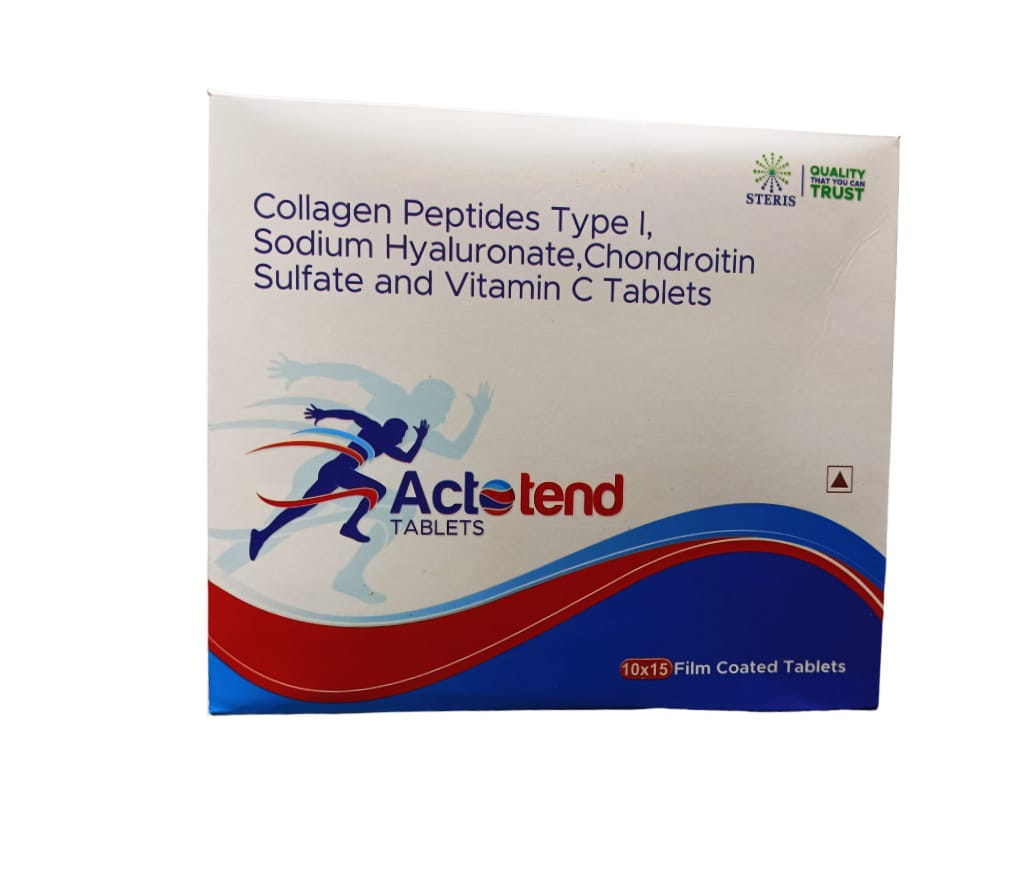
ACTOTEND
 Item requires a valid prescription
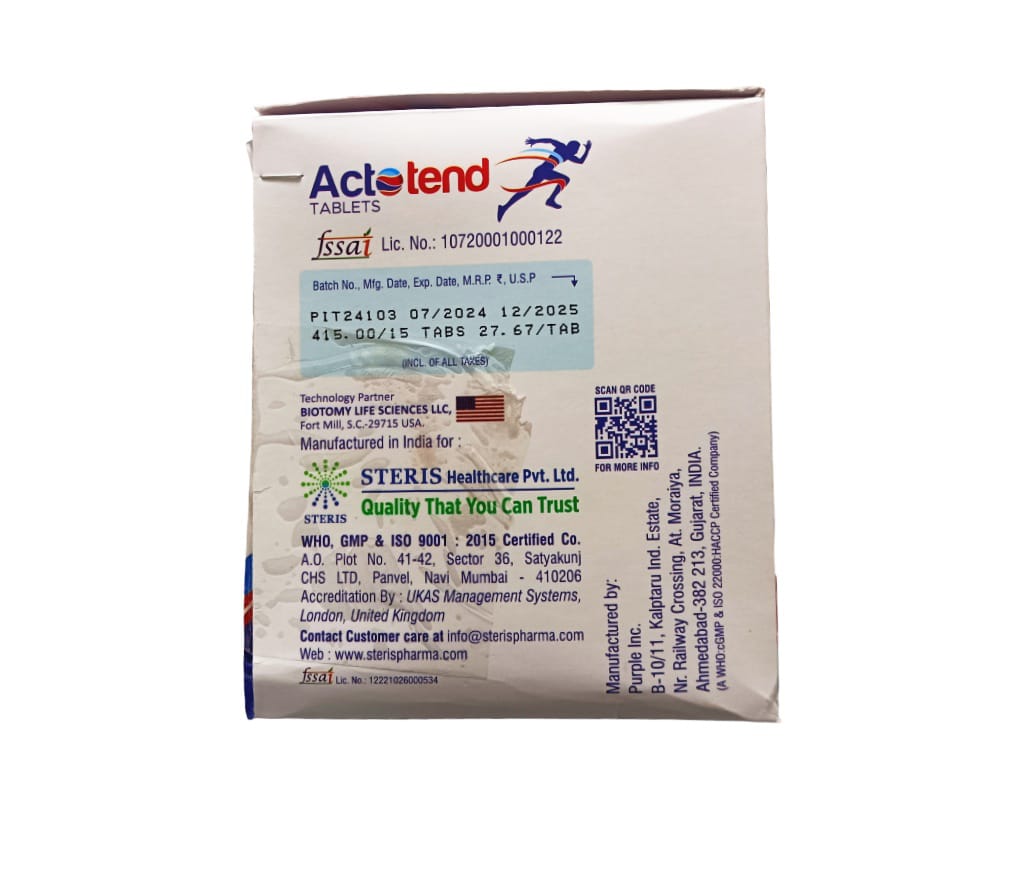
Manufactured By Steris Healthcare Pvt Ltd
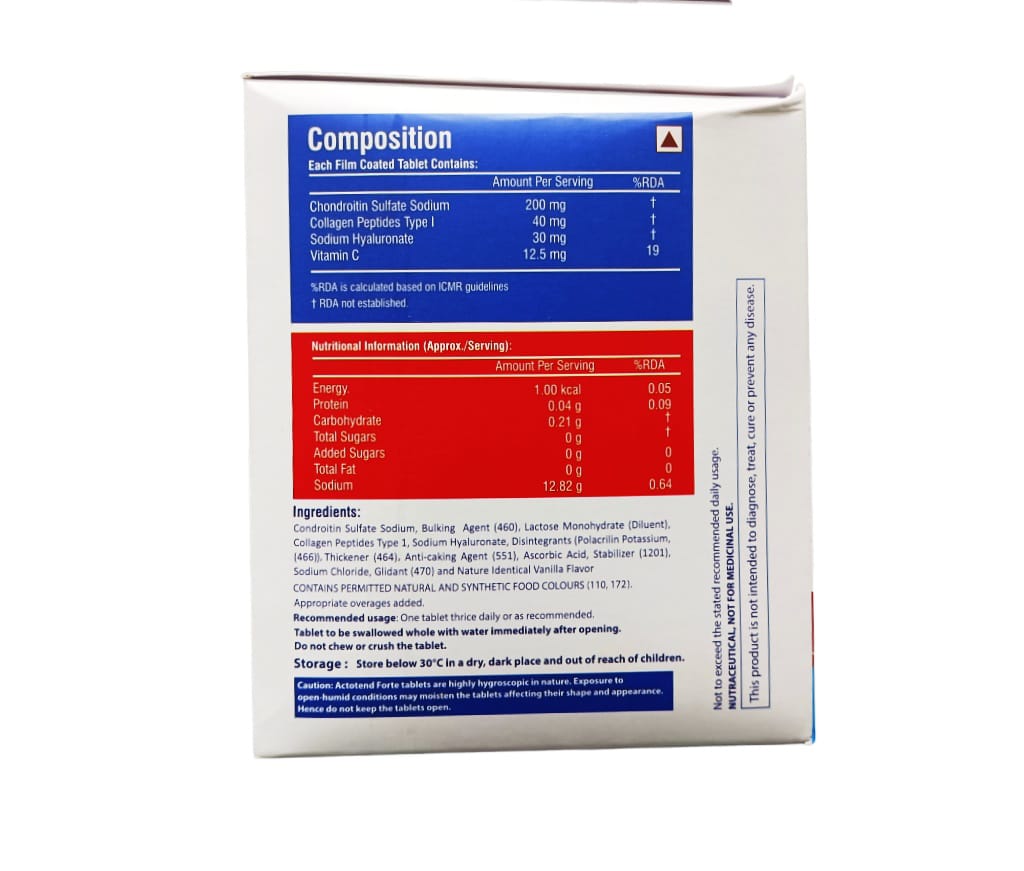
Composition Chondroitin Sulfate Sodium 200mg, Collagen Peptides Type 40mg, Sodium Hyaluronate 30mg, Vitamin C 12.5mg
Rs 272.34
MRP Rs 389.06
(30% OFF)
Includes all taxes
Package SIZE
( For 15 TABLETS )

100% Authentic
Products

Free
Shipping*

Products
Return Policy
Description:
Chondroitin Sulfate Sodium 200mg, Collagen Peptides Type 40mg, Sodium Hyaluronate 30mg, Vitamin C 12.5mg is a multi-ingredient joint-health formulation combining four nutrients or compounds commonly associated with cartilage, connective-tissue, and joint support.
The formula contains:
- Chondroitin sulfate sodium – 200 mg
- Collagen peptides – 40 mg
- Sodium hyaluronate – 30 mg
- Vitamin C – 12.5 mg
Each ingredient has a different role. Chondroitin sulfate is a structural component associated with cartilage. Collagen provides peptides that can contribute amino acids and bioactive signals relevant to connective tissue. Sodium hyaluronate is a form of hyaluronic acid associated with lubrication and the extracellular matrix. Vitamin C is required for normal collagen formation and also functions as an antioxidant.
This combination is therefore designed around a multi-pathway approach to joint support, rather than relying on a single ingredient.
However, it is important to distinguish nutritional or supportive benefits from medical treatment. A supplement should not be presented as a cure for osteoarthritis, cartilage loss, arthritis, or any other joint disease.
Key Uses of This Joint-Support Formula
People commonly look for a formulation containing chondroitin, collagen, hyaluronate, and vitamin C when they want nutritional support for joints, cartilage, mobility, and connective tissue.
Potential product-use categories include:
1. Joint and Cartilage Support
Chondroitin sulfate is one of the best-known dietary ingredients studied for osteoarthritis and joint symptoms. Research has produced mixed results, with some analyses finding benefits while guidelines have differed because the quality and consistency of evidence vary. The U.S. National Center for Complementary and Integrative Health notes that evidence for chondroitin differs substantially between products and studies.
That means the presence of chondroitin in a product does not guarantee the same outcome for every consumer.
2. Support for Normal Connective-Tissue Function
Collagen is a major structural protein found in connective tissues. Collagen-derived supplements have been investigated for joint symptoms, and a 2024 meta-analysis of 35 randomized controlled trials involving more than 3,000 participants reported small-to-moderate improvements in pain and function with collagen derivatives compared with controls.
Importantly, studies have used different collagen products, sources, doses, and formulations. Therefore, results from one collagen preparation should not automatically be attributed to every product containing 40 mg of collagen peptides.
3. Joint Lubrication and Hyaluronate Support
Sodium hyaluronate is a salt form of hyaluronic acid. Hyaluronic acid naturally occurs in the body, including connective tissues and joint fluid.
Oral hyaluronate is marketed in nutritional products for joint support, but consumers should not confuse an oral sodium-hyaluronate supplement with intra-articular hyaluronic-acid injections. They are different products and routes of administration, and evidence for one cannot automatically be applied to the other.
For example, clinical guidance has found no benefit from intra-articular hyaluronic-acid injections for hip osteoarthritis, illustrating why route and formulation matter when interpreting evidence.
4. Vitamin C for Collagen Formation
Vitamin C has a well-established biological role in collagen production. It also supports normal immune function and acts as an antioxidant.
The 12.5 mg of vitamin C in this formulation contributes to total daily vitamin C intake, but it should not be described as a high-dose vitamin C product.
Key Benefits of Chondroitin Sulfate Sodium 200mg, Collagen Peptides Type 40mg, Sodium Hyaluronate 30mg, Vitamin C 12.5mg
The potential benefits of this combination are best described as joint and connective-tissue nutritional support.
Supports Joint Comfort and Mobility
Chondroitin and collagen ingredients have been studied in people with osteoarthritis and other joint complaints. Some research suggests collagen derivatives may improve pain and physical function, although the evidence varies by formulation and study quality.
A sensible product description is therefore “supports joint comfort and mobility,” rather than promising to eliminate joint pain or reverse cartilage damage.
Provides Multiple Joint-Support Ingredients
Instead of using a single active ingredient, this formulation combines chondroitin sulfate, collagen peptides, sodium hyaluronate, and vitamin C.
The theoretical advantage is that the ingredients address different aspects of connective-tissue nutrition and joint biology.
Supports Collagen Production
Vitamin C is necessary for normal collagen formation. This makes its inclusion particularly relevant in a formula centered on collagen peptides and connective-tissue support.
Convenient Daily Nutritional Support
For consumers who prefer combination products, a multi-ingredient formula may be more convenient than purchasing several individual supplements.
Convenience, however, should not be confused with superior clinical effectiveness. The effectiveness of the complete formulation depends on its ingredients, doses, quality, bioavailability, and the individual using it.
How Do the Ingredients Work Together?
Understanding the individual ingredients makes the formulation easier to evaluate.
Chondroitin sulfate sodium 200 mg: Chondroitin is a naturally occurring component of cartilage and has been studied extensively as a supplement for osteoarthritis. Evidence remains inconsistent across products and clinical trials.
Collagen peptides 40 mg: Collagen peptides are smaller collagen-derived molecules. Research on collagen derivatives suggests possible improvements in osteoarthritis pain and function, but the doses and preparations used in clinical research vary considerably.
Sodium hyaluronate 30 mg: Sodium hyaluronate supplies hyaluronic acid in a salt form and is included in many joint-support formulations. Oral supplementation should not be equated with medical hyaluronic-acid injections.
Vitamin C 12.5 mg: Vitamin C contributes to normal collagen formation and antioxidant protection.
Chondroitin Sulfate Sodium 200mg Side Effects
Chondroitin is generally considered reasonably well tolerated in studies, but side effects can occur.
Possible adverse effects may include:
- Mild stomach discomfort
- Nausea
- Diarrhea or digestive changes
- Headache
- Bloating or gastrointestinal discomfort
The overall safety profile can depend on the complete formulation and the person's health status.
A particularly important consideration is blood-thinning medication. NCCIH notes that glucosamine and chondroitin have been associated with increased bleeding risk in people taking the anticoagulant warfarin.
Anyone taking warfarin or another anticoagulant or antiplatelet medicine should discuss the product with a healthcare professional before use.
Collagen Peptides Side Effects
Collagen supplements are generally considered well tolerated in clinical research, although individual reactions are possible.
Potential complaints can include:
- Digestive discomfort
- Feeling full
- Unpleasant taste or aftertaste
- Sensitivity to the source of the collagen
The source of collagen matters for people with specific food allergies. Consumers should check the complete product label for the collagen source and other ingredients.
Clinical research on collagen derivatives in osteoarthritis has generally found no significant increase in adverse events compared with control groups, although individual products and populations differ.
Sodium Hyaluronate 30mg Side Effects
Oral sodium hyaluronate is generally marketed as a joint-support ingredient, but individual tolerance can vary.
Possible mild reactions may include digestive discomfort or intolerance to the complete supplement formulation.
Consumers should also remember that oral sodium hyaluronate is not the same as injectable hyaluronic acid. Evidence for injections should not be used to make claims about an oral supplement.
Vitamin C 12.5mg Side Effects
The amount of vitamin C in this formulation is relatively modest compared with high-dose vitamin C supplements.
Vitamin C is generally well tolerated, but excessive total vitamin C intake can cause gastrointestinal symptoms such as diarrhea, nausea, and abdominal cramps.
People who already take vitamin C-containing multivitamins or supplements should consider their total daily intake rather than looking at this product in isolation.
Who May Consider This Product?
A joint-support formulation containing chondroitin, collagen peptides, sodium hyaluronate, and vitamin C may be of interest to adults seeking nutritional support for:
- Everyday joint health
- Mobility and flexibility
- Cartilage-support nutrition
- Active lifestyles
- Age-related joint comfort
- General connective-tissue support
It is not appropriate to assume that everyone with joint pain needs a supplement. Persistent, severe, swollen, hot, or suddenly painful joints warrant professional medical evaluation because joint symptoms can have many causes.
How to Choose a Quality Joint Supplement
When purchasing Chondroitin Sulfate Sodium 200mg, Collagen Peptides Type 40mg, Sodium Hyaluronate 30mg, Vitamin C 12.5mg, consumers should look beyond marketing claims.
Check:
- Exact ingredient quantities: Confirm that the label actually lists 200 mg chondroitin sulfate, 40 mg collagen peptides, 30 mg sodium hyaluronate, and 12.5 mg vitamin C.
- Ingredient source: Especially important for collagen if you have food allergies or dietary restrictions.
- Manufacturer information: Choose a product from a transparent manufacturer with appropriate quality controls.
- Batch and expiry information: Avoid products with unclear traceability.
- Directions for use: Follow the manufacturer's recommended serving rather than assuming that a higher amount is better.
- Other ingredients: Check excipients, flavors, sweeteners, allergens, and potential sensitivities.
- Regulatory status: Product classification and permitted health claims differ between countries.
Important Safety Considerations
Pregnant or breastfeeding individuals, people with chronic kidney or liver conditions, people preparing for surgery, and those taking prescription medicines should seek professional advice before starting a new supplement.
People using warfarin or other medicines that affect blood clotting should be particularly cautious with chondroitin-containing products.
A supplement should also not replace prescribed treatment for diagnosed osteoarthritis, inflammatory arthritis, injury, or another medical condition.
Frequently Asked Questions
1. What is Chondroitin Sulfate Sodium 200mg, Collagen Peptides Type 40mg, Sodium Hyaluronate 30mg, Vitamin C 12.5mg used for?
It is a multi-ingredient nutritional formulation intended primarily for joint, cartilage, connective-tissue, and mobility support.
2. What are the main benefits of this joint-support formula?
Its potential benefits include nutritional support for cartilage, connective tissue, joint comfort, mobility, and normal collagen formation.
3. Does chondroitin sulfate help joint pain?
Some studies report improvements in osteoarthritis symptoms, but evidence is inconsistent and clinical guidelines differ. Product quality and formulation can influence outcomes.
4. Does collagen help osteoarthritis?
Research suggests collagen derivatives may provide small-to-moderate improvements in pain and function, although evidence varies among products and studies.
5. What is sodium hyaluronate used for in joint supplements?
Sodium hyaluronate is included as a source of hyaluronic acid and is commonly used in nutritional products intended to support joint and connective-tissue health.
6. Why is vitamin C included in a joint supplement?
Vitamin C is required for normal collagen formation, making it relevant to connective-tissue nutrition.
7. Can this product help with knee pain?
It may support joint comfort, but a supplement should not be presented as a guaranteed treatment for knee pain. Persistent or severe knee pain should be evaluated to determine its cause.
8. Can chondroitin sulfate rebuild damaged cartilage?
It is not appropriate to promise that a supplement will rebuild damaged cartilage. Chondroitin has been studied for osteoarthritis symptoms, but evidence does not justify a blanket claim that it reverses cartilage loss.
9. Is chondroitin sulfate safe to take every day?
Chondroitin has generally shown a favorable safety profile in studies, but individual suitability depends on health conditions, medicines, allergies, and the complete product formulation.
10. Can chondroitin cause stomach problems?Yes. Some users may experience gastrointestinal discomfort or other digestive symptoms.11. Can I take chondroitin if I use blood thinners?
Ask your healthcare professional first, particularly if
you take warfarin. NCCIH reports an association between glucosamine/chondroitin and increased bleeding risk with warfarin.
12. Is collagen safe for daily use?
Collagen derivatives have generally been well tolerated in clinical studies, but the safety of an individual product depends on its ingredients, source, dose, and the user.
13. Can vitamin C cause side effects?
High amounts of vitamin C can cause diarrhea, nausea, abdominal cramps, and other gastrointestinal symptoms.
14. Is 12.5 mg of vitamin C a high dose?
No. 12.5 mg is not considered a high-dose vitamin C amount. Total intake from food and other supplements should still be considered.
15. Is sodium hyaluronate the same as hyaluronic acid?
Sodium hyaluronate is the sodium salt form of hyaluronic acid. However, an oral sodium-hyaluronate supplement should not be considered equivalent to injectable hyaluronic-acid treatment.
16. How long does it take for a joint supplement to work?
There is no universal timeline. Results vary according to the ingredients, formulation, individual response, and underlying condition. Clinical studies of joint supplements commonly evaluate outcomes over several weeks or months rather than expecting an immediate effect.
17. Can this product replace arthritis medicine?
No. A joint supplement should not automatically replace prescribed arthritis treatment. Anyone diagnosed with arthritis should discuss treatment changes with their healthcare professional.
18. Who should avoid chondroitin supplements?
People with relevant allergies, those taking medicines that affect blood clotting, and people with certain medical conditions should obtain professional advice before use. Pregnancy and breastfeeding also warrant individualized guidance.
19. Can I take collagen, chondroitin, and vitamin C together?
These ingredients are commonly combined in joint-support products. Whether the complete formulation is appropriate for you depends on your medical history, diet, medications, allergies, and other supplements.
20. What should I check before buying this joint supplement?
Check the exact ingredient amounts, collagen source, manufacturer quality information, expiry date, directions, allergens, other ingredients, and applicable regulatory information.
21. Is this product a medicine or a dietary supplement?
That depends on how the specific product is registered and marketed in its country. Consumers should check the product label and local regulatory classification rather than assuming that all formulations containing these ingredients have the same legal status.
22. What is the simplest way to describe this product?
Chondroitin Sulfate Sodium 200mg, Collagen Peptides Type 40mg, Sodium Hyaluronate 30mg, Vitamin C 12.5mg is a multi-ingredient joint-support formulation designed to provide nutritional support for cartilage, connective tissue, joint comfort, mobility, and normal collagen formation.

