


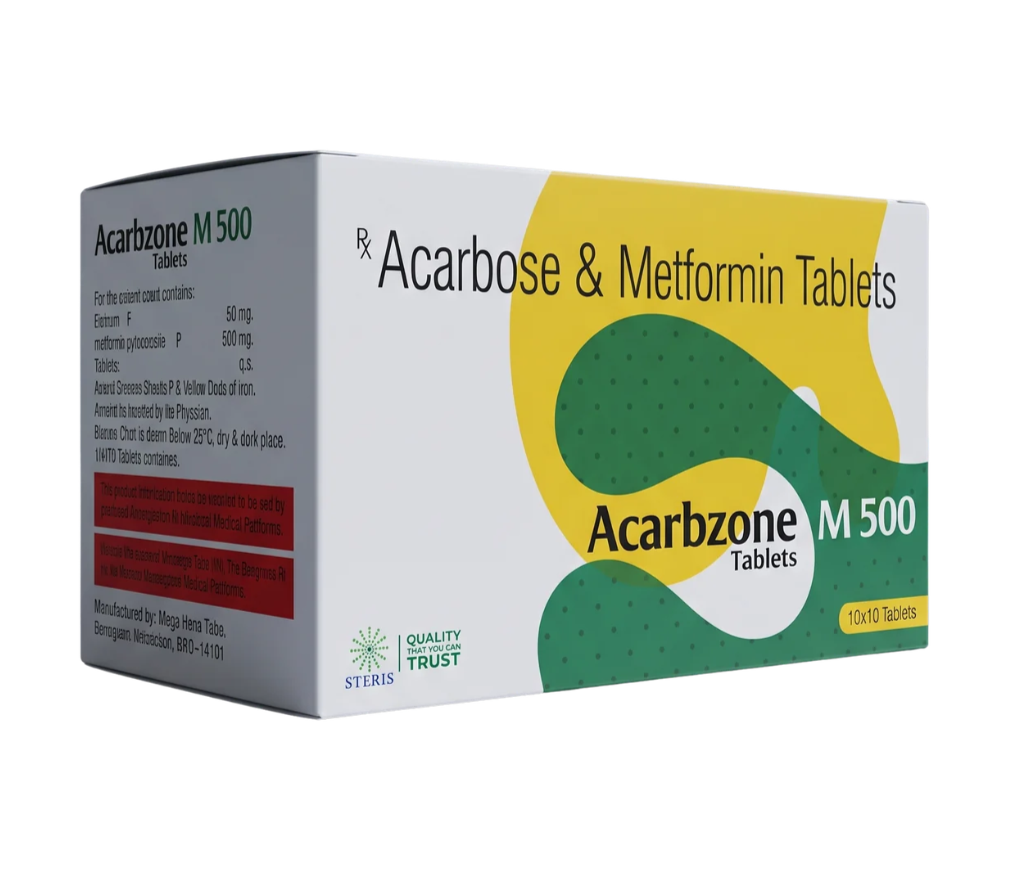
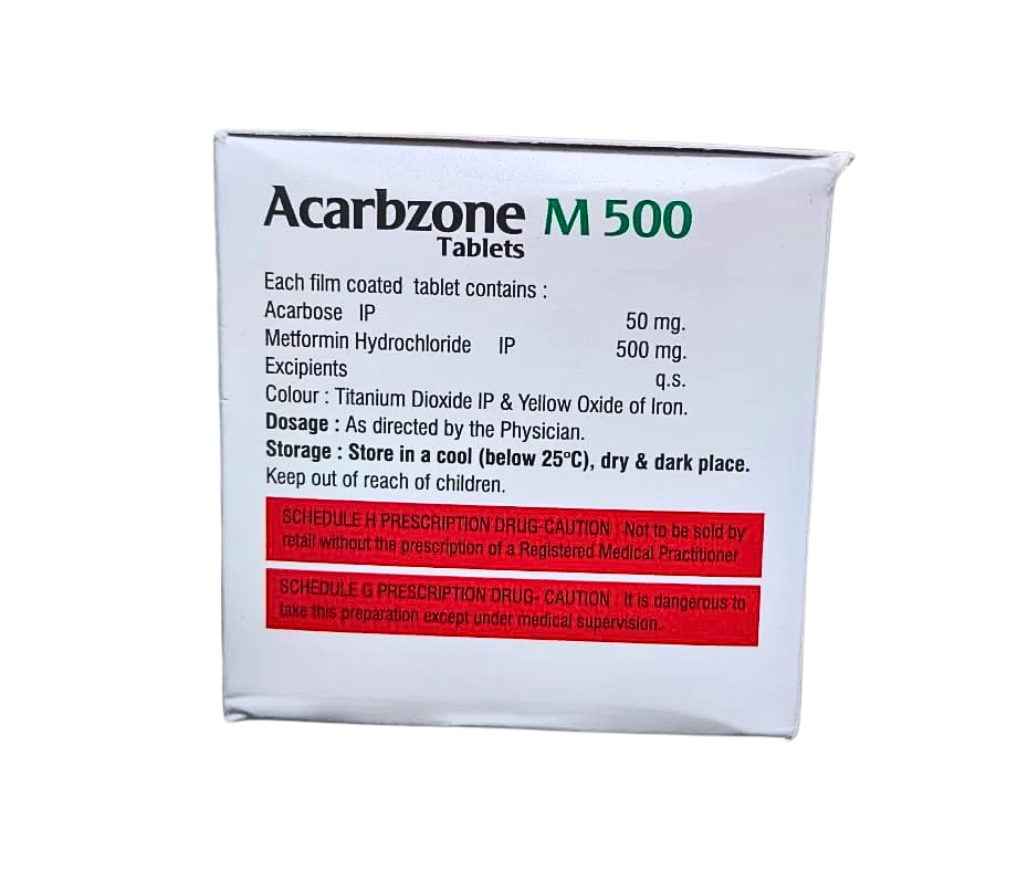
ACARBZONE M 500
 Item requires a valid prescription
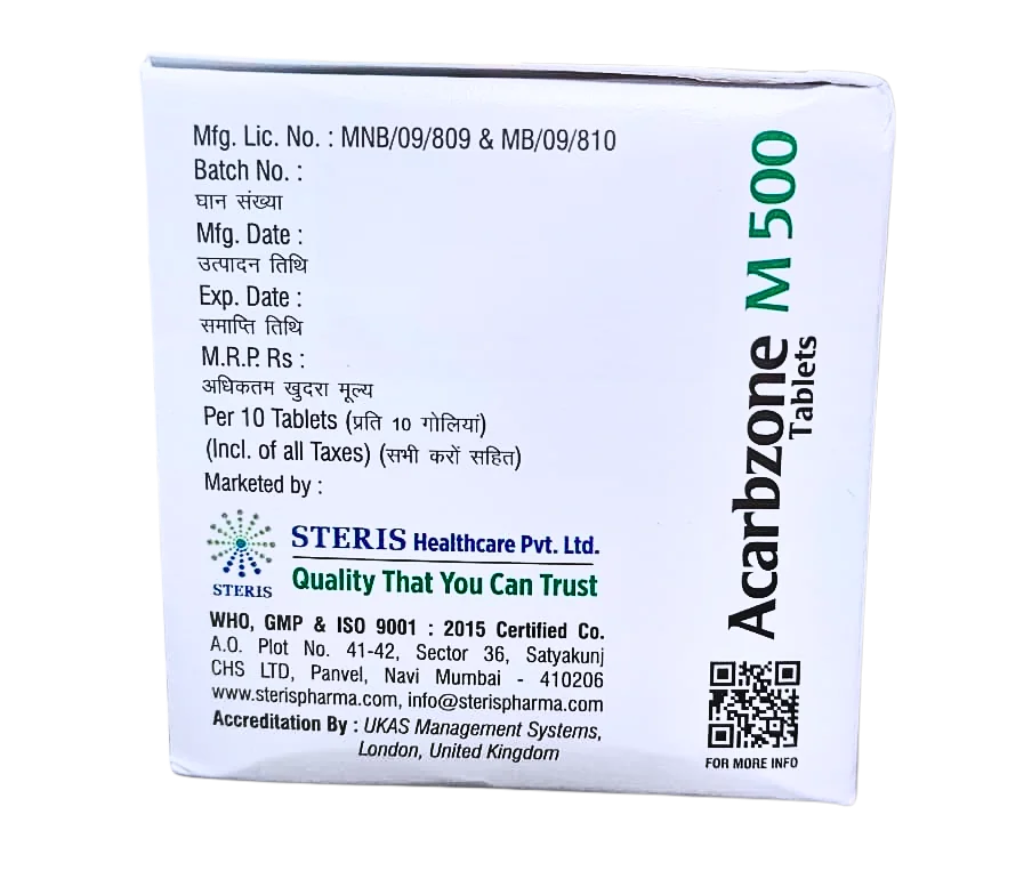
Manufactured By Steris Healthcare Pvt Ltd
Composition Acarbose (50mg), Metformin (500mg)
Rs 108.22
MRP Rs 154.68
(30% OFF)
Includes all taxes
Package SIZE
( For 10 Tablet )

100% Authentic
Products

Free
Shipping*

Products
Return Policy
Description:
ACARBZONE M 500 is a prescription fixed-dose combination tablet from Steris Healthcare Pvt. Ltd. Each tablet contains Acarbose 50 mg and Metformin 500 mg. It is prescribed for adults with type 2 diabetes mellitus whose blood sugar is not adequately controlled by diet and exercise alone, or by a single medicine.
Acarbose is an alpha-glucosidase inhibitor. It works in the intestine and slows the breakdown of complex carbohydrates into glucose. Glucose then enters the blood more gradually, which blunts the sharp rise after eating (post-prandial hyperglycaemia).
Metformin is a biguanide, the most widely prescribed first-line oral medicine for type 2 diabetes. It reduces the amount of glucose the liver releases into the blood. It also improves how muscle and fat tissue respond to the body’s own insulin. Metformin alone does not usually cause hypoglycaemia.
The two medicines act at different points in glucose metabolism: acarbose on how much sugar is absorbed after a meal, and metformin on how much the liver produces and how well the body uses insulin. A doctor may prescribe this combination when the fixed doses suit the patient’s blood sugar profile, kidney function and tolerance.
This is a Schedule H medicine. It should be started, adjusted and stopped only on the advice of a registered doctor.
Product Information
| Detail | Information |
|---|---|
| Brand Name | ACARBZONE M 500 |
| Composition | Acarbose (50 mg) + Metformin (500 mg) |
| Dosage Form | Tablet |
| Pack Size | 10 Tablets |
| Manufacturer / Marketer | Steris Healthcare Pvt. Ltd. |
Why Is ACARBZONE M 500 Important?
Type 2 diabetes is a long-term condition. India has one of the largest diabetic populations in the world, and many patients are diagnosed only after complications have begun. Sustained high blood sugar can damage the eyes, kidneys, nerves, heart and blood vessels. Keeping both fasting and post-meal glucose in the target range is one of the most effective ways to lower these risks.
Post-meal sugar spikes matter because a person with diabetes may have a near-acceptable fasting reading and still experience high glucose for hours after each meal. Fasting-focused treatment can miss this. Acarbose is useful here because it acts when carbohydrates are being digested. Metformin supports control across the day and night.
A combination tablet has practical value. Fewer tablets can make a regimen easier to follow, and better adherence is a major factor in long-term diabetes outcomes. Acarbose and metformin also do not by themselves push blood sugar dangerously low, which is a concern with some other antidiabetic drug classes. Hypoglycaemia is still possible if the combination is taken together with insulin or a sulfonylurea, so a doctor will adjust the plan in those cases.
The medicine works best alongside a balanced diet, regular physical activity, weight management and regular glucose and HbA1c monitoring. It supports these lifestyle measures; it does not replace them.
Key Benefits
- Targets post-meal sugar spikes. Acarbose slows carbohydrate digestion, so glucose rises more gradually after meals.
- Reduces glucose production by the liver. Metformin lowers the sugar the liver releases, which helps fasting glucose.
- Improves insulin sensitivity. Metformin helps the body use its own insulin more effectively.
- Two complementary mechanisms in one tablet. The combination addresses both absorption of dietary glucose and the body’s handling of glucose.
- Low risk of hypoglycaemia when used alone. Neither component usually causes very low blood sugar on its own, though the risk rises when combined with insulin or sulfonylureas.
- Weight-neutral or weight-friendly profile. Metformin and acarbose are generally not associated with significant weight gain, which is relevant for patients who are overweight.
- Convenience. A single fixed-dose tablet can simplify the treatment schedule and may support adherence.
- Helps reduce HbA1c. Used with diet and exercise as directed, the combination can contribute to lower long-term average blood glucose.
- Acts locally in the gut (acarbose). Very little acarbose is absorbed into the bloodstream, so its main action is in the intestine.
- Well-established medicines. Both acarbose and metformin have been used in clinical practice for many years.
Precautions While Using
- Take only as prescribed. Do not change the dose or stop the medicine without consulting your doctor.
- Timing with food. Acarbose works only when food is present in the gut. It is generally taken with the first bite of the main meal, as directed by your doctor. Skipping the meal usually means skipping the dose, but confirm this with your doctor.
- Do not use if you are allergic to acarbose, metformin or any ingredient in the tablet.
- Kidney function. Metformin is cleared by the kidneys. Tell your doctor if you have kidney disease. Kidney function is usually checked before and during treatment. The medicine is not suitable in severe kidney impairment.
- Liver disease. Inform your doctor if you have liver problems. Liver enzymes may be monitored, particularly in the early period of acarbose use.
- Lactic acidosis risk. Metformin carries a rare but serious risk of lactic acidosis. Seek urgent medical help for unusual muscle pain, difficulty breathing, severe weakness, stomach pain with nausea or vomiting, or unusual sleepiness.
- Bowel conditions. Acarbose is not suitable for people with inflammatory bowel disease, intestinal obstruction, chronic intestinal disorders involving digestion or absorption, or conditions that may worsen with increased gas.
- Alcohol. Avoid heavy or binge drinking. Alcohol increases the risk of lactic acidosis with metformin and affects blood sugar.
- Imaging with contrast dye. Tell the radiologist and your doctor that you take metformin. Treatment may need to be paused around certain contrast procedures.
- Surgery, serious infection, dehydration, or severe vomiting and diarrhoea. Inform your doctor, as the medicine may need to be paused temporarily.
- Heart failure, recent heart attack or serious circulatory problems. Discuss the risks with your doctor before use.
- If you also take insulin or a sulfonylurea, low blood sugar can occur. Because acarbose blocks the digestion of table sugar (sucrose), treat a hypoglycaemic episode with pure glucose or dextrose tablets, not sugar cubes or sweets. Always keep glucose with you.
- Pregnancy and breastfeeding. Do not use unless your doctor judges it necessary. Insulin is often the preferred option in pregnancy.
- Children and older adults. The combination is intended for adults. Older patients should have kidney function checked more regularly.
- Vitamin B12. Long-term metformin use can lower vitamin B12. Your doctor may check B12 levels periodically.
- Drug interactions. Tell your doctor about all medicines you take, including other antidiabetic drugs, digestive enzyme or charcoal preparations, certain diuretics, corticosteroids, and any cholesterol or heart medicines.
- Monitoring. Check blood sugar at home as advised, and get HbA1c, kidney and liver tests done at the intervals your doctor recommends.
- Missed dose. Do not double up. Follow your doctor’s guidance.
- Storage. Keep in a cool, dry place away from direct sunlight and out of reach of children.
Side Effects
Many people tolerate the combination well. Digestive effects are the most common, and they often ease as the body adjusts. Starting at a lower dose and increasing gradually, as your doctor advises, can help.
Common side effects
- Flatulence (gas) and bloating
- Abdominal discomfort or cramps
- Loose stools or diarrhoea
- Nausea
- Loss of appetite
- Metallic taste in the mouth
- Indigestion