


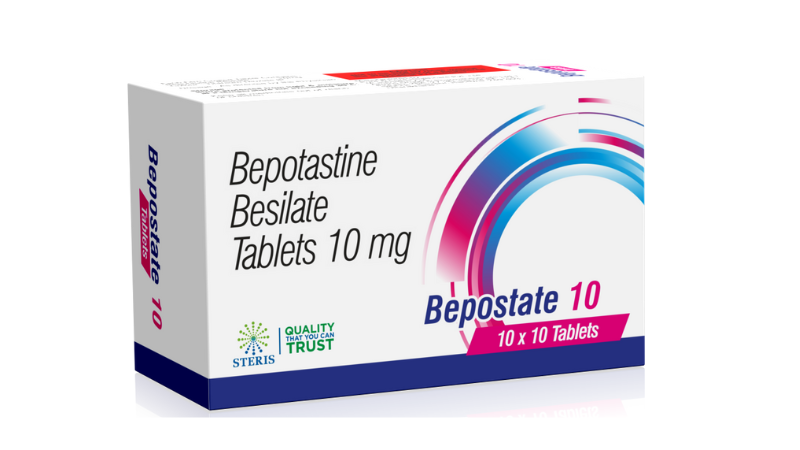



BEPOSTATE 10 Mg :View Uses, Dosage, Side Effects …
May 13, 2024
Bepotastine besilate 10mg is a second-generation, non-sedating antihistamine used to treat allergic rhinitis, chronic urticaria (hives), and allergic conjunctivitis. It works by selectively blocking H1 histamine receptors and additionally inhibiting the release of chemical mediators from mast cells. Adults take one 10mg tablet twice daily. Unlike first-generation antihistamines, bepotastine has minimal sedative effects and does not significantly impair cognitive performance or driving ability.
What Is Bepotastine Besilate 10mg?
Bepotastine besilate 10mg is an oral second-generation selective histamine H1-receptor antagonist belonging to the piperidine class of antihistamines. It is available as a film-coated tablet for adults and children above 15 years of age, prescribed for the symptomatic relief of allergic conditions including allergic rhinitis, chronic idiopathic urticaria, and pruritus (itching) associated with skin disorders.
Bepotastine besilate was first developed in Japan by Ube Industries and Tanabe Seiyaku Co., Ltd., and has been approved in Japan since 2000 under the brand name Talion. It is also marketed in India under brand names including Bepogard, Bepocet, Bepotine, and Histafree. In the United States, bepotastine is approved as an ophthalmic solution (Bepreve) for allergic conjunctivitis; the oral tablet form is predominantly used across Asian markets including India, Japan, and South Korea.
Bepotastine is classified as a non-sedating antihistamine because it has very poor penetration across the blood-brain barrier, making it a preferred choice over older antihistamines like chlorpheniramine or hydroxyzine in patients requiring daytime functionality.
What Is Bepotastine Besilate 10mg Used For?
Bepotastine besilate 10mg is prescribed for a range of allergic and hypersensitivity-mediated conditions. Below are the primary approved indications:
Approved Clinical Indications:
- Allergic rhinitis – both seasonal (hay fever) and perennial (year-round) types; relieves sneezing, nasal congestion, rhinorrhoea (runny nose), and nasal itching
- Chronic idiopathic urticaria (CIU) – also called chronic spontaneous urticaria; reduces hive formation, whealing, and associated pruritus
- Prurigo and pruritic skin disorders – eczematous dermatitis, atopic dermatitis-related itch, and other inflammatory skin conditions with itching as the dominant symptom
- Allergic conjunctivitis – itchy, watery, and red eyes due to allergen exposure (oral form used; ophthalmic drop form available separately)
- Drug-induced or contact allergic reactions – adjunct treatment of hypersensitivity-related pruritus
Off-Label and Investigational Uses:
- Symptomatic relief in food allergy reactions (mild)
- Adjunct in insect bite hypersensitivity reactions
- Post-procedural itch management in dermatology
How Does Bepotastine Besilate Work?
Bepotastine besilate works through a dual mechanism of action that distinguishes it from most other second-generation antihistamines — it is both an H1-receptor antagonist and a mast cell stabiliser.
Step-by-step mechanism:
- Absorption: After oral administration of a 10mg tablet, bepotastine is rapidly absorbed from the gastrointestinal tract. Peak plasma concentration (Cmax) is achieved within 1–2 hours of dosing.
- H1-receptor blockade: Bepotastine selectively and competitively binds to peripheral H1 histamine receptors, blocking the action of histamine released during an allergic response. This prevents the downstream cascade that causes sneezing, itch, vasodilation, and increased vascular permeability.
- Mast cell stabilisation: Beyond H1 antagonism, bepotastine inhibits the IgE-mediated release of histamine, leukotrienes, and other inflammatory mediators from mast cells and basophils — preventing the allergic cascade at its origin.
- Eosinophil inhibition: Bepotastine has been shown to suppress the chemotaxis (migration) of eosinophils into inflamed tissue, reducing the late-phase allergic response that prolongs symptoms after the initial allergen exposure.
- CNS selectivity: Due to its low lipophilicity and active efflux via P-glycoprotein at the blood-brain barrier, bepotastine has minimal central H1 receptor occupancy — explaining its non-sedating profile.
- Metabolism: Bepotastine undergoes minimal hepatic metabolism. Approximately 75–90% of the dose is excreted unchanged in urine, making it one of the least hepatically metabolised antihistamines available.
- Elimination: Renal excretion is the primary elimination route, with a half-life of approximately 2.5–3.0 hours in healthy adults.
Bepotastine Besilate 10mg Dosage Guide
| Patient Group | Dose | Frequency | Daily Total | Duration |
|---|---|---|---|---|
| Adults and adolescents (≥15 years) | 10mg | Twice daily | 20mg/day | As directed by physician |
| Children (under 15 years) | Not recommended (oral tablet) | — | — | — |
| Elderly patients | 10mg | Twice daily | 20mg/day | Use with caution; monitor renal function |
| Renal impairment (mild–moderate) | 10mg | Once daily | 10mg/day | Dose reduction advised |
| Renal impairment (severe) | Avoid or use with extreme caution | — | — | Consult nephrologist |
| Hepatic impairment | 10mg | Twice daily | 20mg/day | Generally safe; monitor |
Important: Bepotastine 10mg tablets are typically taken with or without food. The tablet should be swallowed whole with water. Do not crush or chew. Always follow the prescribing physician's instructions regarding dose and duration.
Bepotastine Besilate 10mg Side Effects
Common Side Effects (affect 1–10% of users)
- Mild drowsiness or sedation (notably less frequent than first-generation antihistamines)
- Bitter or unpleasant taste in the mouth (dysgeusia)
- Dry mouth (xerostomia)
- Mild headache
- Nausea or mild gastrointestinal discomfort
- Fatigue or general tiredness
Less Common Side Effects (affect <1% of users)
- Palpitations
- Dizziness or light-headedness
- Skin rash or urticaria (paradoxical reaction — rare)
- Elevated liver enzyme values (ALT/AST) — detected on routine monitoring
- Insomnia or sleep disturbance
Serious Side Effects — Seek Immediate Medical Attention
- Severe hypersensitivity / anaphylaxis: Although rare, any sign of facial swelling, throat tightness, difficulty breathing, or widespread hives following bepotastine ingestion requires emergency medical attention.
- Hepatic dysfunction: Jaundice, dark urine, significant right-sided abdominal discomfort — discontinue and seek medical review if these occur.
- QT prolongation: Theoretical concern with antihistamines; clinical significance with bepotastine at therapeutic doses is not firmly established, but use with caution in patients on other QT-prolonging medications.
Note: Bepotastine does not carry a Black Box Warning in markets where it is approved. It is generally considered one of the safest antihistamines in its class due to its minimal CNS and cardiac profile.
Who Should NOT Take Bepotastine Besilate 10mg?
- Patients with known hypersensitivity to bepotastine besilate or any excipient in the tablet formulation
- Children under 15 years of age (oral tablet form)
- Patients with severe renal impairment (creatinine clearance <15 ml/min) — avoid unless under specialist supervision
- Pregnant or breastfeeding women — use only if clearly necessary and under physician guidance
- Patients with a history of QT interval prolongation — use with caution and ECG monitoring if co-prescribed with other QT-prolonging agents
Frequently Asked Questions
What is bepotastine besilate 10mg used for?
Bepotastine besilate 10mg is used to treat allergic conditions including seasonal and perennial allergic rhinitis, chronic idiopathic urticaria (hives), and pruritic skin disorders such as atopic dermatitis. It works by blocking H1 histamine receptors and stabilising mast cells to prevent the release of allergy-triggering chemicals. It is suitable for adults and adolescents aged 15 years and above and offers symptom relief with a low risk of drowsiness compared to older antihistamines.
Does bepotastine besilate 10mg cause drowsiness?
Bepotastine besilate 10mg is classified as a non-sedating antihistamine and has a significantly lower risk of drowsiness compared to first-generation antihistamines such as chlorpheniramine or diphenhydramine. Clinical PET scan studies have demonstrated that bepotastine occupies only approximately 5% of central H1 receptors at therapeutic doses, compared to 25% or more for cetirizine. Most patients can take bepotastine without significant impairment of driving ability or daily tasks, though individual responses may vary.
How long does bepotastine besilate 10mg take to work?
Bepotastine besilate 10mg begins to exert its antihistaminic effect within approximately 1 hour of oral ingestion. Maximum symptom relief typically occurs around the time of peak plasma concentration (1–2 hours post-dose). For allergic rhinitis and urticaria, most patients report noticeable symptom reduction within the first day of twice-daily dosing, with significant improvement seen by the end of the first week of treatment.
Can bepotastine besilate 10mg be taken during pregnancy?
There is limited clinical data on the safety of oral bepotastine besilate in pregnant women. Animal reproductive studies have not demonstrated clear teratogenicity, but human data is insufficient for a definitive safety classification. It is generally recommended to avoid bepotastine during pregnancy unless the prescribing physician determines that the potential benefit clearly outweighs the risk. Safer, better-studied alternatives such as loratadine (Category B) are often preferred during pregnancy. Always consult your obstetrician before starting any antihistamine.
Is bepotastine besilate 10mg safe for children?
The oral 10mg tablet form of bepotastine besilate is not recommended for children under 15 years of age due to insufficient safety and efficacy data for the oral formulation in paediatric populations. For allergic conjunctivitis in children aged 2 years and above, the ophthalmic (eye drop) formulation of bepotastine (Bepreve) is approved in the US. Parents should consult a paediatric allergist or dermatologist for appropriate antihistamine choices for younger children.
Can I take bepotastine besilate 10mg with food?
Yes — bepotastine besilate 10mg can be taken with or without food. Food does not significantly affect its absorption or bioavailability. Taking the tablet with a small amount of water at the same time each day (morning and evening) helps maintain consistent plasma levels and maximises therapeutic benefit for conditions such as allergic rhinitis and urticaria.
What is the difference between bepotastine tablets and bepotastine eye drops?
Bepotastine is available in two distinct formulations for different routes of administration. The oral 10mg tablet is used for systemic allergic conditions including allergic rhinitis, chronic urticaria, and generalised pruritus. The ophthalmic 1.5% solution (eye drops) — marketed as Bepreve in the US — is applied directly to the eye for localised relief of allergic conjunctivitis. The two formulations are not interchangeable, and the eye drop should never be taken orally.
For Further More Information:
Mail Us: contact@sterispharma.com or info@sterispharma.com
Call Now: +918824175417, +919982524671
Recent Post
Semaglutide 4mg vs Pancreatitis Risk: What Doctors Want You to Know
Semaglutide 8mg Injection: Frequently Asked Questions Answered by Experts
Mycophenolate Mofetil 500mg (Mycofortic M 500): Uses, Benefits & Precautions – Complete Guide
What is Bisogard 1.25? Bisoprolol 1.25mg Uses, Dosage & Side Effects Explained
Can Semaglutide Injection Be Used Without Diabetes?
What Are Nintedanib Soft Gelatin Capsules Used For? Complete Guide
Where to Buy Semaglutide Injection in India: Price, Pen & Prescription Guide
ERITOCOX BENZ 60/5 Dosage Guide: How to Take Etoricoxib & Cyclobenzaprine Tablets Safely
Gabapentin and Methylcobalamin Tablets Side Effects: What Patients Should Know
Thyroxine sodium tablets IP: उपयोग, फायदे और साइड इफेक्ट्स